
 By Wononuo Salifu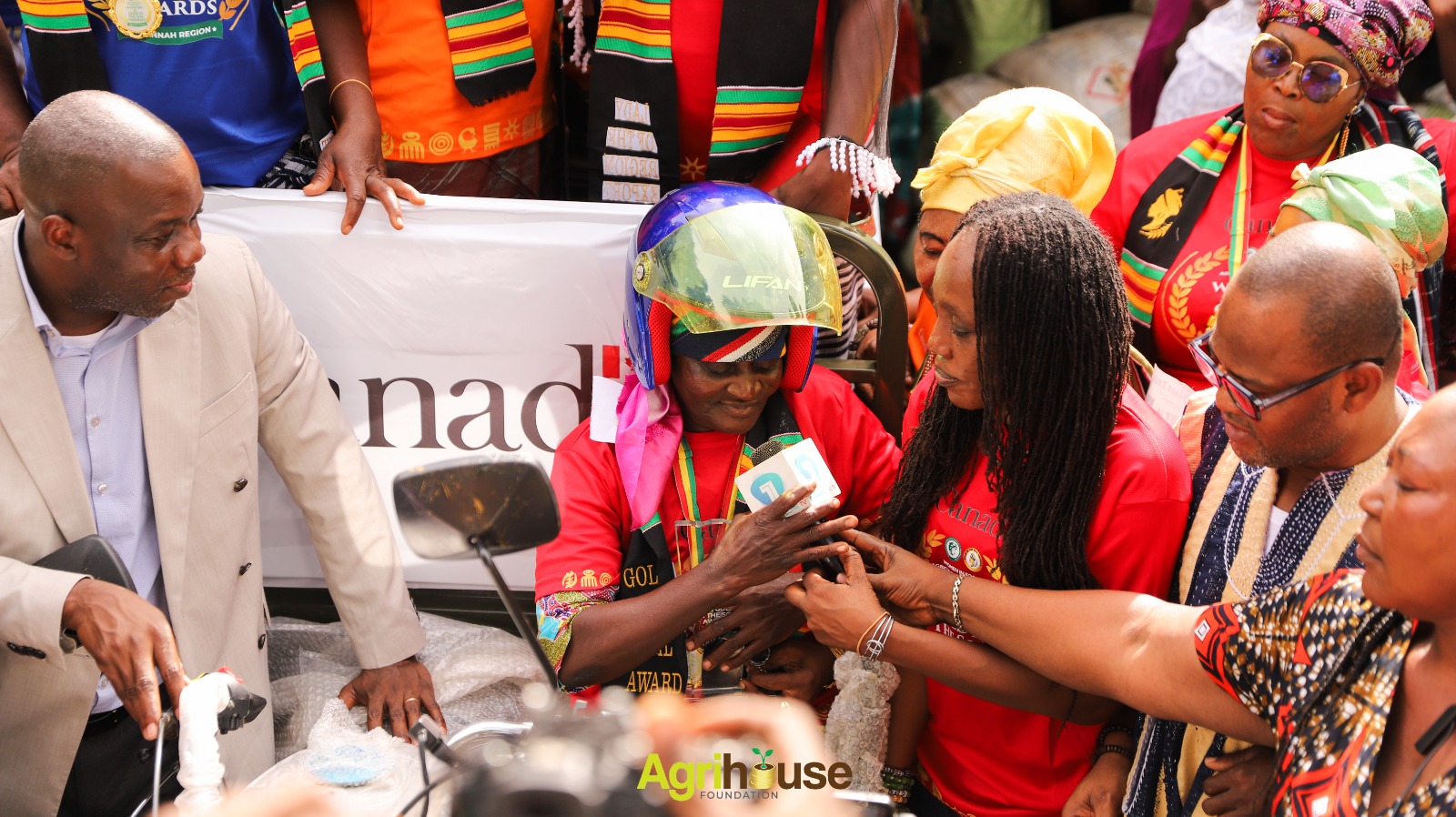
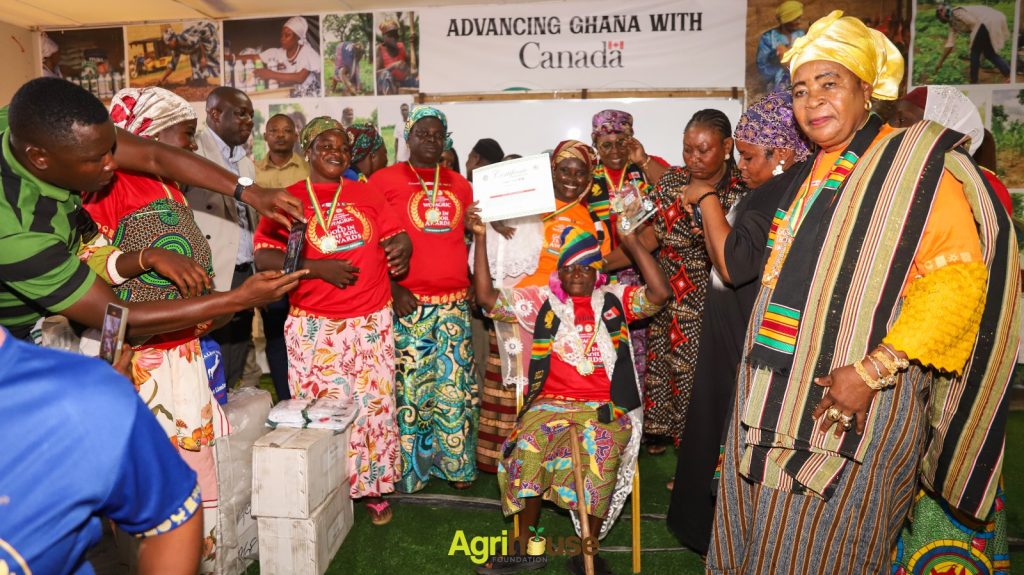
Savannah Region – When Bawa Damata slowly made her way to the stage to receive the 2026 Ultimate Gold in the Soil Award , the packed auditorium rose in applause. For many in the audience, it was not merely the announcement of a winner; it was the recognition of a remarkable story of courage, perseverance and hope.
At 45 years old, Damata, a physically challenged mixed- farmer (poultry, rice, maize and Soyabeans farmer) from Nominayili in the North East Gonja District, had just emerged as the highest-ranked winner among more than 50 nominees for 18 categories, drawn from different parts of the Savannah Region Her achievement instantly became one of the defining moments of this year’s Women in Food and Agricultural Leadership Training Forum (WOFAGRIC) and Gold in the Soil Awards held in Damongo in the Savannah Region.
For years, despite the physical difficulties that often make routine farming activities far more demanding. Yet those who know her describe a woman who has refused to allow disability to define her future. Through persistence, discipline and hard work, she has managed and maintained her poultry couple with crop production and become a source of encouragement to many women in her community.
As the overall winner, she received a brand-new tricycle, fertilizers and several agricultural input products intended to help her grow her business further and increase her contribution to local food production.
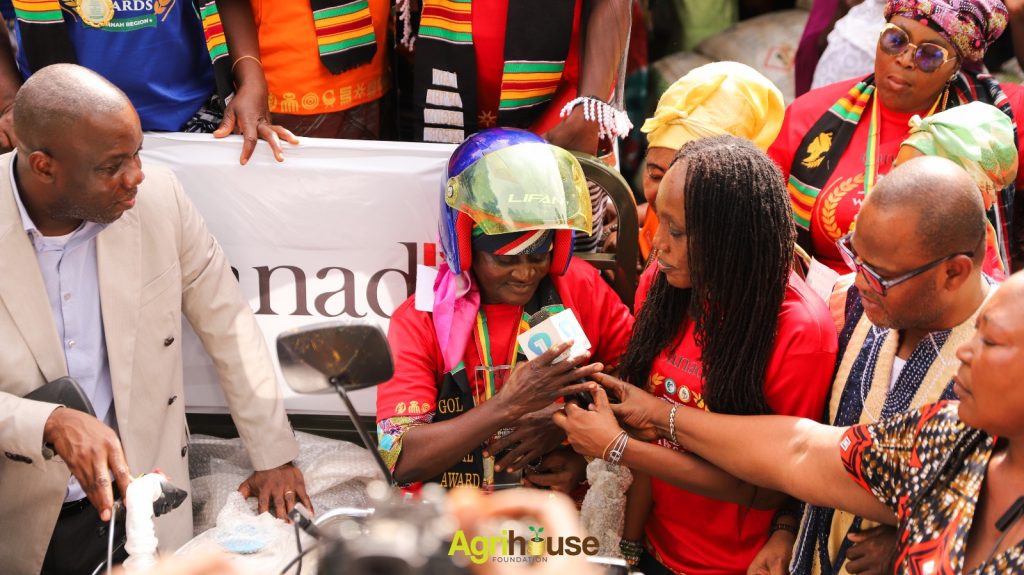
Speaking shortly after receiving the award, Damata struggled to hide her emotions. She thanked Agrihouse Foundation and Global Affairs Canada for creating a platform that recognizes women whose efforts often remain unseen.
“This award tells me that my work matters. I want other women, especially those living with disabilities, to know that they can also succeed in farming,” she said to loud cheers from the audience.
Her victory captured the broader spirit of the 8th edition of WOFAGRIC and the Gold in the Soil Awards, which brought together more than 500 women farmers, women farmers with disabilities, young agripreneurs, policymakers, financial institutions, development partners and actors across the agricultural value chain.
Held from July 22 to 23, the two-day forum combined practical training, policy dialogue, business networking and national recognition for outstanding women farmers whose contributions continue to strengthen Ghana’s agrifood system.
Over the past eight years, the initiative has evolved from a modest leadership programme into one of the country’s most influential platforms for empowering women in agriculture. Organizers say more than 12,000 women farmers, processors, marketers, agribusiness entrepreneurs and farmers with disabilities have benefited from training, mentorship, leadership development and market-access opportunities since the programme began.
This year’s edition placed particular emphasis on practical skills that could directly improve productivity and profitability. Throughout the first day, participants moved between training sessions on agronomy, climate-smart agriculture, mechanization, extension services, input management, agribusiness development and access to finance.
Industry experts from Yara Ghana, Qualiplast Limited, Ghana EXIM Bank, Ecobank, Chemico Limited, Sino Machinery Ghana and the Ministry of Food and Agriculture guided participants through hands-on demonstrations and discussions on how to manage farms more efficiently.
For many of the women, the forum was also an opportunity to interact directly with banks, machinery suppliers and input dealers, connections that are often difficult to establish in rural communities. Several participants left with new business contacts and a clearer understanding of how to access financing and modern agricultural technologies.
Beyond the technical sessions, the event carried a strong message about women’s leadership in agriculture. Speakers repeatedly urged participants to see themselves not only as farmers but also as entrepreneurs, employers and decision-makers capable of transforming local economies.
On his part, the Senior Development Officer at Global Affairs Canada, Majeed Mohammed assured the participants of Canada’s commitment to supporting women farmers and promoting gender equality through agriculture.
He noted that women remain at the center of agricultural production in many developing economies, yet continue to face barriers in accessing land, finance, technology, mechanization and markets.
According to him, Global Affairs Canada has invested more than $67 million in programmes aimed at empowering women farmers and entrepreneurs across Ghana, including WOFAGRIC and the Gold in Soil Awards, the Grow2 Programme and other initiatives implemented with development partners.
He disclosed that these interventions have supported more than 52,000 smallholder women farmers, 5,800 women entrepreneurs and 59 agribusinesses through improved access to finance, quality inputs, training, financial literacy and market opportunities.
“We want to see more Ghanaian women in agribusiness scaling beyond local markets. We want women entrepreneurs to thrive not only as producers but also as innovators, investors and business leaders who create sustainable livelihoods,” he said.
Global Affairs Canada has remained the principal development partner of WOFAGRIC and Gold in the Soil Awards for eight consecutive years, helping to sustain what many participants now describe as a national movement for inclusive agricultural growth.
Delivering the keynote address, Savannah Regional Minister Salisu Be-Awuribe Issifu described women farmers as indispensable to Ghana’s food security.
He argued that increasing investment in women through improved access to finance, quality inputs, modern technologies, training and mechanization would significantly raise agricultural productivity and improve household incomes across the country.
The Regional Minister also thanked Agrihouse Foundation and Global Affairs Canada for selecting the Savannah Region to host the 8th edition of the forum, saying the event had brought valuable attention to the region’s agricultural potential.
He further reiterate government’s commitment to policies that strengthen agricultural value chains and create more opportunities for farmers, particularly women and young people.
For Alberta Nana Akyaa Akosa, Executive Chairperson of Agrihouse Foundation, the growing success of WOFAGRIC and the Gold in the Soil Awards demonstrates the importance of investing deliberately in rural women.
She explained that the initiative was designed not simply as an annual event but as a long-term platform that builds confidence, develops practical skills and connects women farmers to opportunities capable of transforming their businesses.
“Many women work tirelessly behind the scenes to feed families and support local economies, yet their contributions often go unnoticed. Recognizing them is essential if we want to build resilient and inclusive agrifood systems,” she said.
As the awards ceremony unfolded, each category highlighted a different aspect of agricultural excellence, from climate-smart farming and extension services to agribusiness innovation and community leadership.
The winners included Adams Safia, Benkrowarche Hawa Haruna, Dr. Hajia Azara Bukari Kansawurche, Mary Badu, Emmanuel Korankye, Wuma Naa, Yakubu Memuna, Abonjuah Zinatu Wandaga, Rafiatu Iddisah, Salamatu Sankara, Stephen Abibata, Ayi Yakubu, Sanatu Zuberu, Salifu Jamila and Justina Blessing Asagtimbey.
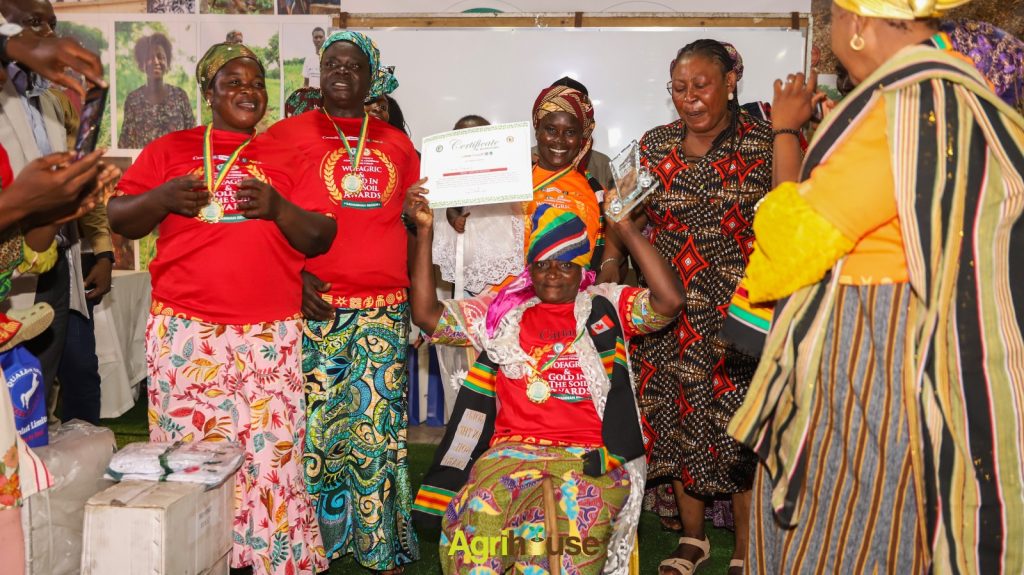
Yet it was Bawa Damata’s story that lingered most strongly in the minds of many attendees. In a society where people living with disabilities are often underestimated, her triumph stood as a powerful reminder that opportunity, recognition and support can unlock extraordinary potential.
As the forum came to a close, participants departed Damongo with new knowledge, new partnerships and renewed determination. But they also carried with them the image of a woman who turned personal hardship into a source of strength.
For Damata, the journey does not end with a trophy or a tricycle. She hopes to expand her farm, employ young people and mentor other women who may be struggling to establish themselves in agriculture.
For Ghana, her victory sends an even broader message: that when women farmers are given the tools, training and recognition they deserve, they do not simply improve their own lives, they help feed the nation, create jobs and drive the transformation of the country’s agricultural economy. In the end, the loudest applause in Damongo was not only for a winner, but for the enduring belief that resilience can triumph over adversity and that the future of Ghanaian agriculture will be stronger when no woman is left behind.
 Mudasiru Techi Dari
  Ishmael Junourgh