
 By Ishmael Junourgh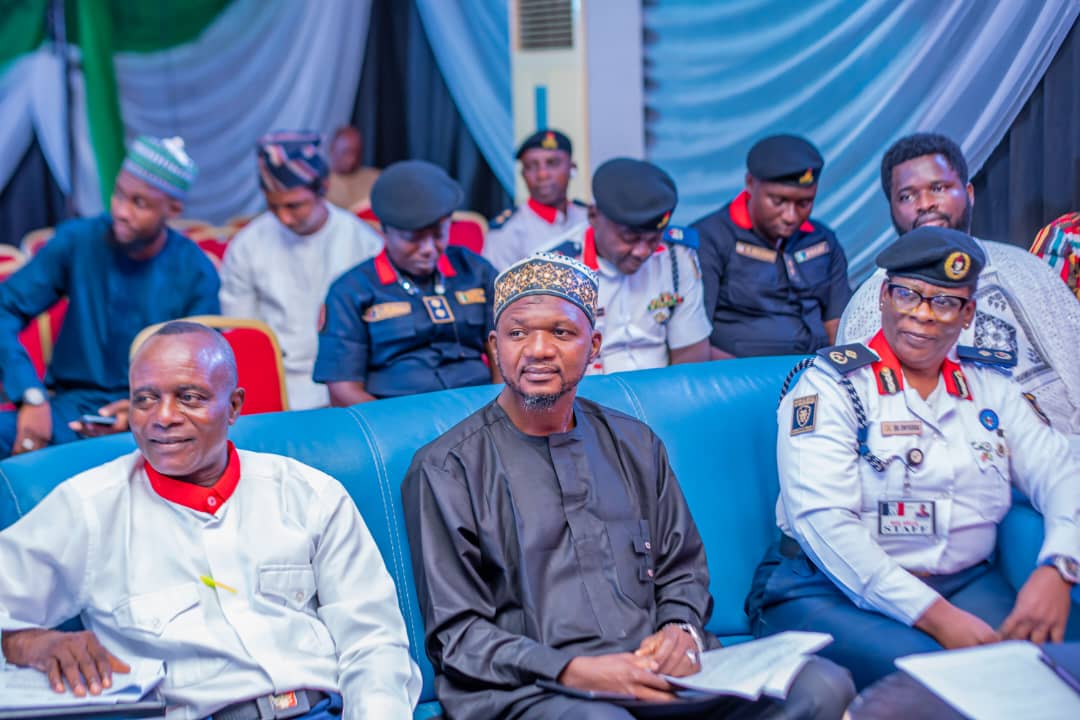
Mohammed B. Abubakar
Founder, Centre for Peacebuilding Organizations (CFPO)
“If prophesying who becomes the next president of the country would cause division and incite violence, religious leaders should refrain from such acts. The unity and peaceful coexistence of the citizens is more paramount.“
With those words, Bishop Ugochukwu Ugwoke Prince set the tone for one of the most timely peace gatherings in recent times — the National Religious Leaders Peace and Security Summit held on Monday, 22nd September, 2026 at the NICON Luxury Hotel, Abuja.
The summit, convened to commemorate this year’s World Peace Day, marked globally on 21st September, came at a defining moment for Nigeria. As the country gradually inches towards the 2027 general elections, the atmosphere is already charged with political permutations, ethnic sentiments, and, most dangerously, religious predictions that have historically heated up the polity.
I was honoured to be invited to this summit, representing Centre for Peacebuilding Organizations (CFPO), a non-governmental organization committed to promoting peace in Africa through peace advocacy, community dialogue and youth empowerment. The summit provided a rare platform for quiet but impactful engagements. Meeting people from different backgrounds shared their thoughts extensively further reinforced a conviction I have held for years.
The Power and Peril of the Pulpit
Nigeria is arguably one of the most religious countries in the world. Recent surveys show that over 90% of Nigerians say religion is very important in their lives. In many communities, especially in rural areas, the Imam and the Pastor are more trusted than the political class, more believed than the media, and more listened to than government officials. That trust is an asset for national development, but it can also become a weapon if misused.
History has shown that when religious leaders prophesy political outcomes — who will win, who will die, who is ordained by God — it does not just stay in the church or mosque. It travels to the market, to the motor park, to WhatsApp groups, and often, it incites fear, suspicion, and sometimes, outright violence. Ahead of 2015, 2019 and 2023, we witnessed how some of such prophecies created tension among followers who interpreted political contest as a spiritual war.
Bishop Ugochukwu’s caution, therefore, was not an attack on prophecy or on faith. It was a call for responsibility. Freedom of speech and freedom of religion are constitutional rights, but responsible leadership demands that we weigh the consequences of our utterances on national cohesion. If a prophecy will break a community, divide a family, or set a state on fire, then silence is holier.
A Summit of Uncommon Diversity
What made the Abuja summit different was not just its theme but its composition. Under the distinguished chairmanship of His Excellency, Barr. James Bala Nggilari, former Governor of Adamawa State, the hall brought together people who rarely sit in the same room.
On the blue sofas where I was seated in the middle, flanked by senior officers of the Nigerian security services, I saw firsthand this uncommon synergy. In attendance were Christian and Muslim leaders from across the six geopolitical zones, traditional rulers, retired and serving security operatives including officers of the Police and Civil Defence, political leaders, non-governmental organizations, captains of industries, women leaders, youth groups and well-meaning citizens from within and outside Nigeria. The very seating arrangement was a message — peace can not be preached by one faith alone.
The deliberations went beyond rhetoric. Discussions centred on early warning and early response mechanisms, the role of faith leaders in peacebuilding, youth radicalization, fake news and the misuse of social media by clerics, and the urgent need to institutionalize peace education in our seminaries and Islamic schools.
My Submission: The Pulpit and the Mimbar as Peace platforms
In my personal interactions at the summit, I shared a submission that has guided our work at CFPO. Religious leaders remain the most trusted personalities in society. If the pulpit and the mimbar are sincerely, consistently, and strategically used, the world will be much more peaceful.
At CFPO, we have tested this theory through our Sermon/Khutbah Model, a structured peace messaging initiative capable of reaching large number of worshippers across Nigeriaa and Africa as a whole. The model is simple: we work with selected Imams and Pastors to integrate standardized, non-partisan peace messages into their Friday Khutbahs and Sunday Sermons for a period. We do not tell them what to preach doctrinally; we support them with contextual peace narratives drawn from both the Qur’an and the Bible that emphasize tolerance, non-violence, and national unity.
The initial results have been encouraging. Worshippers who before saw members of other faiths as rivals are now engaging in joint community clean-ups and joint security watch groups. This is proof that the sacred space can be a platform for peace, not a factory for division.
I also shared with some colleagues my plan to use my book, UNDERSTANDING THE PEACE WE NEED: A GLOBAL DISCOURSE ON PEACE as a resource we hope will be useful for peace education in tertiary institutions. Our goal is to move peace from the conference hall to the classroom.
Beyond 2027: What Must Be Done
As we move closer to 2027, three practical steps were echoed by many participants I spoke with:
First, we need a voluntary Code of Conduct for faith leaders during elections, similar to the peace accord signed by politicians. Such a code would commit leading clerics to avoid prophecies, hate speech, and partisan endorsements from the sacred altar.
Second, security agencies must deepen their partnership with religious institutions, not just for intelligence, but for prevention. The presence of uniformed officers at the summit was a welcome development; it must translate into regular dialogue at the state and LGA levels.
Third, media organizations, including faith-based media, must prioritize peace journalism. The highlight reels from the summit should not just show glamour but the substance of unity.
Conclusion
The National Religious Leaders Peace and Security Summit was more than an event. It was a reminder that Nigeria’s unity is not the responsibility of government alone. It rests on all of us, but especially on those who hold the microphone every Friday and Sunday.
I left NICON Luxury with a renewed conviction that peace coexistence in Nigeria and across Africa is possible if all stakeholders in the peace industry play their part as expected.
If we get it right with our religious leaders, we will get it right with our nation. The 2027 elections can be peaceful if the pulpit and mimbar choose to be part of the solution.
Peace is possible.