
 By Mudasiru Techi Dari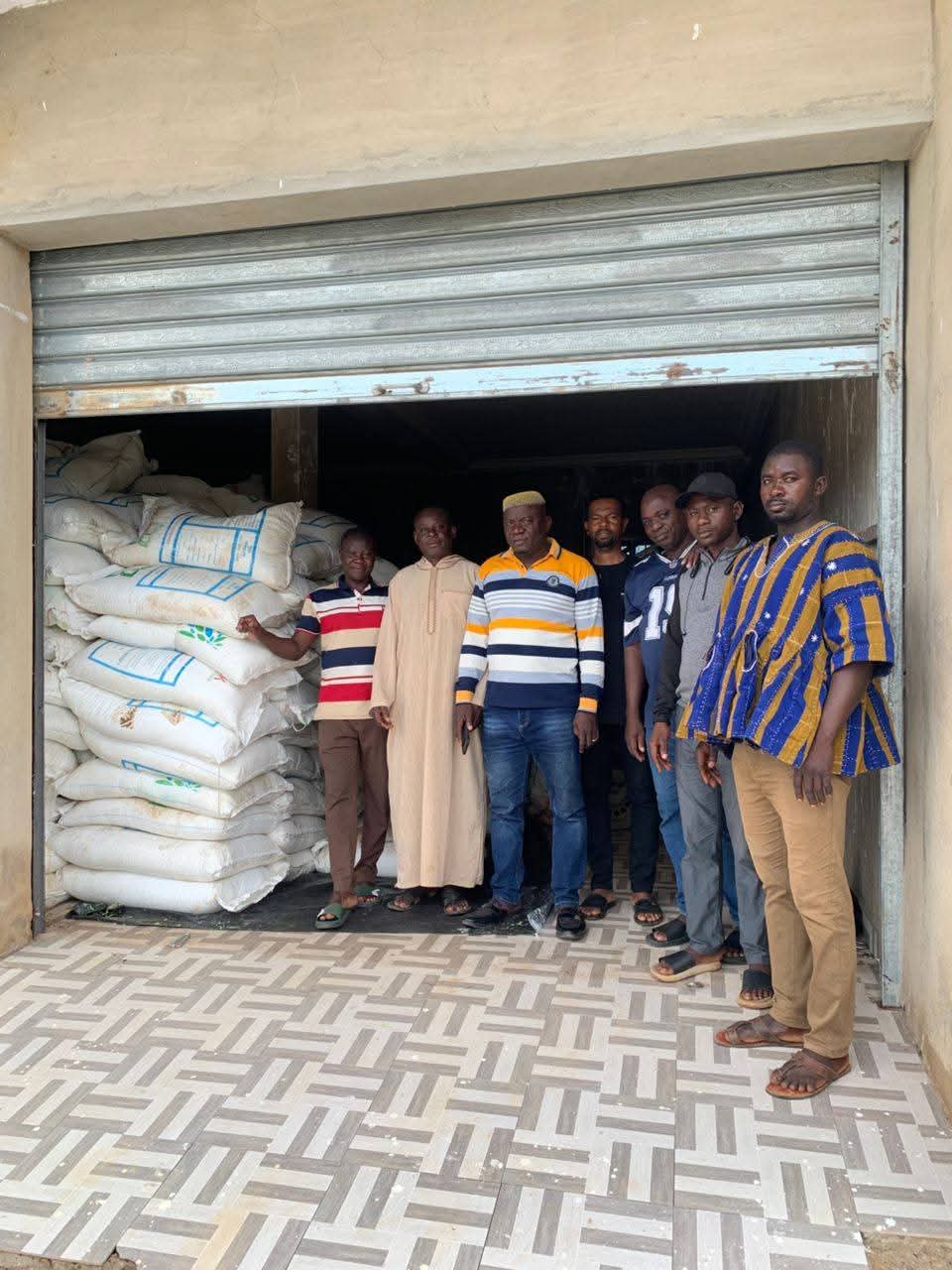
Thousands of farmers in the Sawla-Tuna-Kalba Constituency are expected to receive a critical boost to their farming activities following the securing of 3,000 bags of fertiliser for distribution during the current farming season.
The intervention, secured by the Member of Parliament for the constituency, Andrew Dari Chiwitey, comes against the backdrop of persistent challenges confronting smallholder farmers, particularly the rising cost of farm inputs and the increasing financial burden associated with agricultural production.
For communities where farming remains a principal source of food and household income, access to essential inputs can have consequences far beyond the farm. Improved access to fertiliser can support crop productivity, strengthen household food supplies and create opportunities for farmers to generate income from surplus production.
Supporting the people behind the food system
Sawla-Tuna-Kalba is predominantly rural, with agriculture serving as a major economic activity for households across the constituency. Farmers contribute not only to the food needs of their communities but also to the wider food supply chain in the Savannah Region and beyond.
Yet, the ability of smallholder farmers to maintain production is increasingly influenced by the cost and availability of agricultural inputs.
Fertiliser is among the key inputs required by farmers seeking to maintain soil fertility and improve crop performance. For farmers operating with limited financial resources, however, the cost of purchasing adequate quantities can become a major constraint.
It is against this backdrop that the distribution of 3,000 bags is being positioned as an intervention aimed at reducing some of the input pressures facing farmers and helping them remain productive during the farming season.
From inputs to livelihoods
Speaking during the official presentation of the fertiliser to Constituency Executives for onward distribution, Chiwitey described agriculture as a backbone of the local economy and emphasised the importance of interventions that directly strengthen farmers’ productive capacity.
He noted that the increasing cost of farm inputs had placed considerable pressure on farmers, making targeted support necessary to help sustain agricultural production.
The MP encouraged beneficiaries to use the fertiliser appropriately to maximise its impact on their farms and improve their yields.
The support, he indicated, forms part of a broader commitment to initiatives capable of improving livelihoods and creating development opportunities across communities in the constituency.

Potential food-security implications
The significance of the intervention extends beyond individual farmers.
When farmers are able to cultivate their fields effectively and achieve improved yields, the benefits can ripple through rural economies. Higher farm output can increase household food availability, generate income, support local markets and strengthen the economic activity of communities whose livelihoods depend heavily on agriculture.
In this sense, agricultural input support can be viewed not simply as the distribution of farm materials, but as an investment in the productive capacity of rural households.
However, input access is only one component of sustainable agricultural development. Improved yields and resilient farming communities also depend on timely access to extension services, quality seeds, irrigation, storage facilities, roads, markets and appropriate climate-adaptation practices.
For Sawla-Tuna-Kalba, therefore, the fertiliser intervention could serve as one part of a broader effort to make farming more productive, profitable and resilient.
Ensuring equitable distribution
The fertiliser is expected to be distributed to deserving farmers across the constituency through a coordinated process involving Constituency Executives.
The effectiveness of the intervention will depend significantly on ensuring that the inputs reach genuine farmers in a transparent and equitable manner, particularly those whose limited resources may otherwise prevent them from purchasing adequate fertiliser.
The Constituency Executives expressed appreciation for the intervention, describing it as timely support for farmers at a critical point in the farming season.

Measuring impact beyond distribution
Ultimately, the development value of the initiative will not be determined solely by the 3,000 bags of fertiliser distributed, but by what happens on the farms afterwards.
The more important questions will be whether farmers record improved yields, whether household food supplies increase, whether farm incomes improve and whether beneficiaries are better positioned to sustain production into subsequent seasons.
For farmers in Sawla-Tuna-Kalba, the hope is that the intervention will translate into healthier crops, better harvests and stronger household livelihoods.
And for a constituency where agriculture remains at the heart of the rural economy, every improvement in farm productivity has the potential to contribute to a much larger objective: building food-secure, economically resilient and sustainable farming communities.Credit: Yagbonradio
 Ishmael Junourgh
  Zakaria Rafique Seinu