
 By Johannes Jafo Akunatu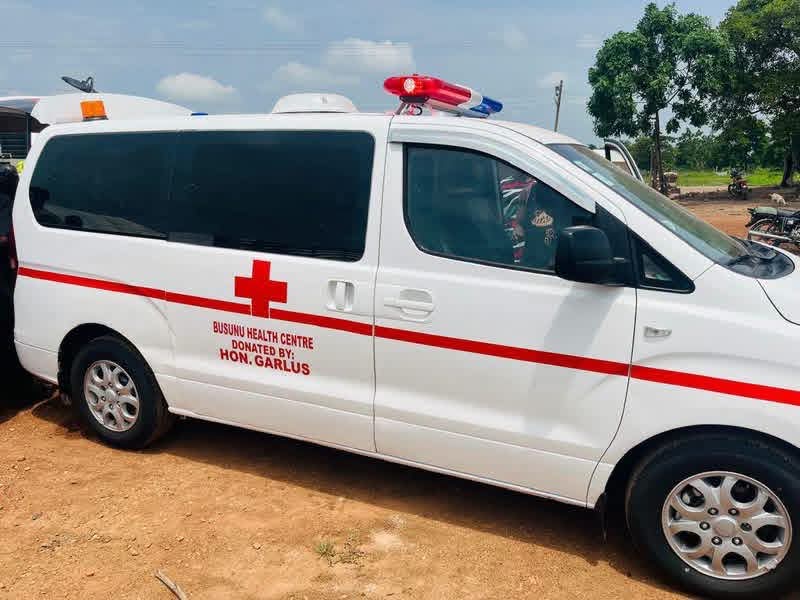
A functioning ambulance can mean the difference between life and death, particularly in rural communities where access to advanced healthcare is often many kilometres away. For expectant mothers facing complications, victims of road crashes, snakebite patients, children with severe malaria or people suffering strokes, every minute matters. The World Health Organization has long held that timely emergency transport significantly improves survival and treatment outcomes, a principle behind the medical concept of the golden hour, the narrow window after a serious injury or crisis during which prompt care sharply raises the odds of survival. In Ghana, where many rural communities continue to struggle with access to emergency care, ambulances have become more than vehicles. They are lifelines, and in places like the Savannah Region, often the only lifeline available.
Busunu, a fast growing community in the West Gonja Municipal of Savannah Region, presents a remarkable but troubling paradox. It is one of the few communities in northern Ghana to receive two ambulances, through the generosity of two sons of the constituency: former MP for Damongo Constituency and current Managing Director of Ghana Water Limited, Hon. Adam Mutawakilu, and the current Member of Parliament, Hon. Samuel Abu Jinapor. While many rural communities continue to plead for a single ambulance, Busunu found itself with two. The story should have symbolized progress.
Instead, it has exposed how political rivalry, weak community ownership and poor management can undermine even the noblest development initiatives. The latest chapter unfolded when Hon. Adam Mutawakilu funded the repair of the ambulance he had facilitated through his National Health Insurance Scheme allocation while serving as Member of Parliament in 2020. The request came directly from the Busunuwura during a courtesy visit. Representing the Managing Director, his Executive Secretary, Lawyer Kudus Gbeadese, later returned to Busunu to hand over the repaired ambulance, restoring a vital emergency service to the community.
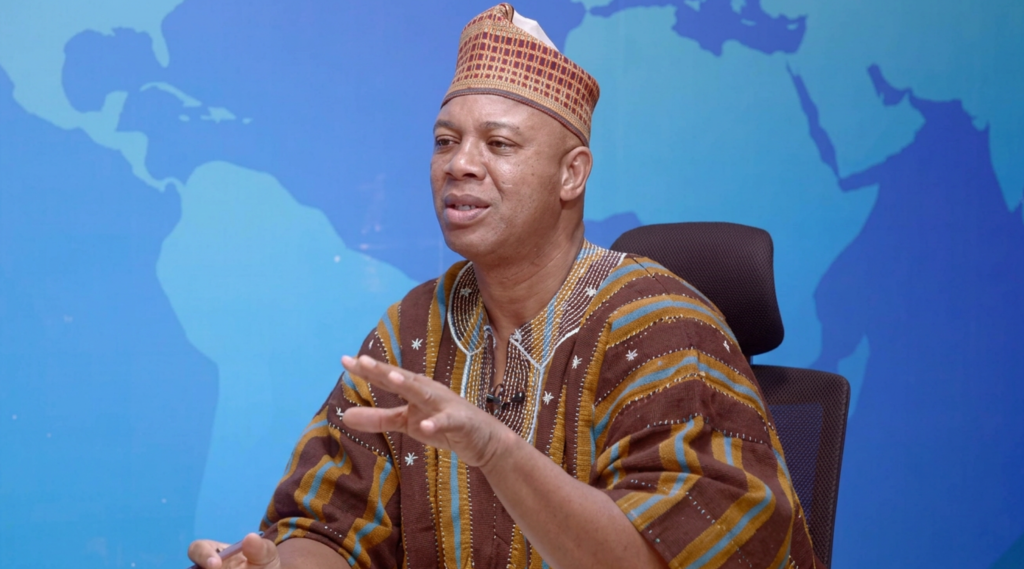
Speaking in an exclusive interview, Lawyer Kudus Gbeadese explained that the ambulance was never a personal gift from the former MP but a public asset procured with NHIS funds which is about GHS 100,000 allocated to Members of Parliament for health-related interventions. He clarified that procurement began in 2018 and required two years of allocations, because a single year’s funding proved insufficient to cover the cost. So they had to for the 2019 allocation to fully purchased to ambulance. Once purchased, ownership passed to the Ghana Health Service through the West Gonja Municipal Health Directorate, for the benefit of the people of Busunu, not for the benefit of any individual officeholder.
He argued that after leaving Parliament, Hon. Adam Mutawakilu carried no legal obligation to repair the ambulance, since responsibility for its maintenance rested with the health authorities and the community itself. Nevertheless, after the Busunuwura appealed to him directly, he responded out of a sense of duty to his hometown rather than any formal requirement. According to Lawyer Kudus, the repair became necessary after the engine had failed completely, with technicians reportedly suspecting deliberate sabotage after discovering salt inside the engine. No one has been identified in connection with that damage.
Lawyer Kudus Gbeadese stressed that the repaired ambulance should now become a shared community responsibility rather than a standing favour owed to any single benefactor. He proposed establishing a community management committee comprising representatives of the traditional authority, youth, health committee and the health centre, to monitor maintenance, accountability and long-term sustainability. His central message was direct: public assets survive only when communities take ownership of them, rather than viewing them through partisan political lenses that assign upkeep to whichever politician’s name happens to be attached.
The Assembly Member for the Busunu Electoral Area, Hon. Dari Osman Thomas, offered a different perspective on the matter. While declining to comment extensively on Hon. Adam Mutawakilu’s ambulance, saying he was not involved in either its donation or its management, he explained that the ambulance donated by Hon. Samuel Abu Jinapor followed established local procedure from the outset. According to him, it was handed over through the appropriate channels to the health centre, where arrangements were made for a driver, servicing and fuel, while the Member of Parliament continued to support its operational costs through a monthly allowance to the driver.
Hon. Thomas recalled that Hon. Adam Mutawakilu’s ambulance had broken down more than once, and indicated that on an earlier occasion Hon. Samuel Abu Jinapor had supported repairs for both vehicles when they failed around the same time. He attributed many of Busunu’s challenges to excessive political division, arguing that development projects in the community are too often judged by who initiated them rather than by how well they serve the people who depend on them.
He maintained that community unity and respect for proper institutional process remain essential to protecting public investments of this kind, and said he was never formally consulted or informed as the ambulance moved from donation, through breakdown, to repair, despite his role as the area’s elected representative. The concerns raised by a young resident in Busunu, Musah Abdul Jalil point to another important dimension of this story. He questioned why patients reportedly pay substantial transport fees during emergencies, sometimes as much as five to six hundred cedis (GHS 500 to GHS 600) for a single trip and, in one documented case, a one thousand cedis ( GHS 1,000) demanded at midnight, while the community still depends on political figures whenever an ambulance requires repair. The young resident have called for greater transparency regarding how revenues from the ambulances are managed and appealed for stronger financial accountability, so that maintenance can be financed sustainably from the fees already being collected, without waiting on the next courtesy call to a benefactor.
These concerns extend well beyond Busunu. Across Ghana, ambulance services continue to face persistent challenges, including inadequate funding, high maintenance costs, fuel shortages and rising operational demand. Ghana’s National Ambulance Service, established in 2004 following the 2001 Accra Sports Stadium disaster that claimed 127 lives, now has at least one ambulance station in each of the country’s 261 districts and responds to more than 20,000 emergency calls each year, a significant achievement by regional standards. Even so, in 2022 Ghana had only 1.13 ambulances per 100,000 people, well below the commonly cited planning benchmark of about two ambulances per 100,000 people, or one ambulance for every 50,000 residents. Across Africa, the gap is even wider, with researchers estimating that fewer than one in ten people have reliable access to a functioning emergency medical service.
Rural communities are particularly vulnerable because long distances, poor roads and limited health infrastructure make emergency transport indispensable rather than optional. Ghana’s road safety data underscores the scale of what is at stake. The Motor Traffic and Transport Department of the Ghana Police Service recorded 14,135 road crashes nationwide in 2023, resulting in 2,276 deaths and 15,409 injuries. Between January and June 2024, the National Road Safety Authority recorded a further 6,653 crashes that claimed 1,237 lives. Across Africa, road traffic death rates remain among the highest in the world, a burden that researchers attribute to poor road infrastructure, inconsistent traffic law enforcement and limited access to timely emergency medical care after crashes occur.
Maternal health data tells a similarly urgent story. The Ghana Health Service’s 2024 Annual Report recorded an institutional maternal mortality ratio of 101.68 deaths per 100,000 live births, up slightly from 100.22 in 2023. During the same period, skilled delivery coverage declined from 60.62% to 55.26%, a trend Health Minister Kwabena Mintah Akandoh described as worrying. The burden is particularly acute in many northern and rural regions, where shortages of midwives and specialist maternal health staff coincide with longer distances to referral hospitals. In these settings, ambulances are often the only practical means of reaching emergency obstetric care. When they are unavailable, delays in referral increase the risk of preventable deaths among mothers, newborns and other critically ill patients.
The Busunu experience also raises a broader national question about how development gets planned and prioritized. While every community welcomes investment, scarce public resources should be guided by a careful assessment of local priorities rather than by the political calendar. Communities like Busunu often require improved schools, health facilities, water, agricultural support and employment opportunities alongside emergency healthcare, and a single coordinated investment, built around an honest audit of what a town actually lacks, tends to stretch further than two donations competing for the same recognition. Ghana’s own legal framework already anticipates this kind of coordination. The Local Governance Act obligates district assemblies to plan and fund basic services within their jurisdiction, including health infrastructure, and sets aside a defined health component within the district assembly common fund for that purpose, while the Civil Service Act, together with the administrative process Lawyer Kudus Gbeadese described, gives every sitting Member of Parliament an annual NHIS allocation intended for requests exactly like ambulance repair. Stronger consultation between political leaders, traditional authorities, local assemblies and residents can help ensure that development interventions respond to the most pressing needs while avoiding unnecessary duplication, and Lawyer Gbeadese himself pointed to this principle when he stressed that collaboration between political and traditional institutions is critical, warning that development efforts risk losing their way without it.
Ultimately, the story of Busunu is not about which political figure deserves greater recognition. It is about the responsibility that follows public investment, wherever that investment originates. The repair of the ambulance demonstrates commendable responsiveness by Hon. Adam Mutawakilu following an appeal from the Busunuwura. The continued operational support provided for the second ambulance also reflects an important and ongoing contribution by Hon. Samuel Abu Jinapor. Both interventions have the potential to save lives. Their greatest value, however, will be realized only if the people of Busunu, together with the health authorities and traditional leadership, commit themselves to protecting these assets from neglect, division and political contestation, starting with the oversight committee Lawyer Gbeadese has proposed and a transparent accounting of the fees Musah Abdul Jalil have already asked publicly. Development achieves its highest purpose when it rises above party colours and personal rivalries. Ambulances do not distinguish between political parties when responding to an emergency. Neither should the people entrusted with managing them. The greatest tribute Busunu can pay to those who invested in its healthcare is not merely expressing gratitude but ensuring that both ambulances remain roadworthy, transparent in their management and available to serve every resident, regardless of political leaning, whenever the next emergency strikes.
 Ishmael Junourgh