
 By Ishmael Junourgh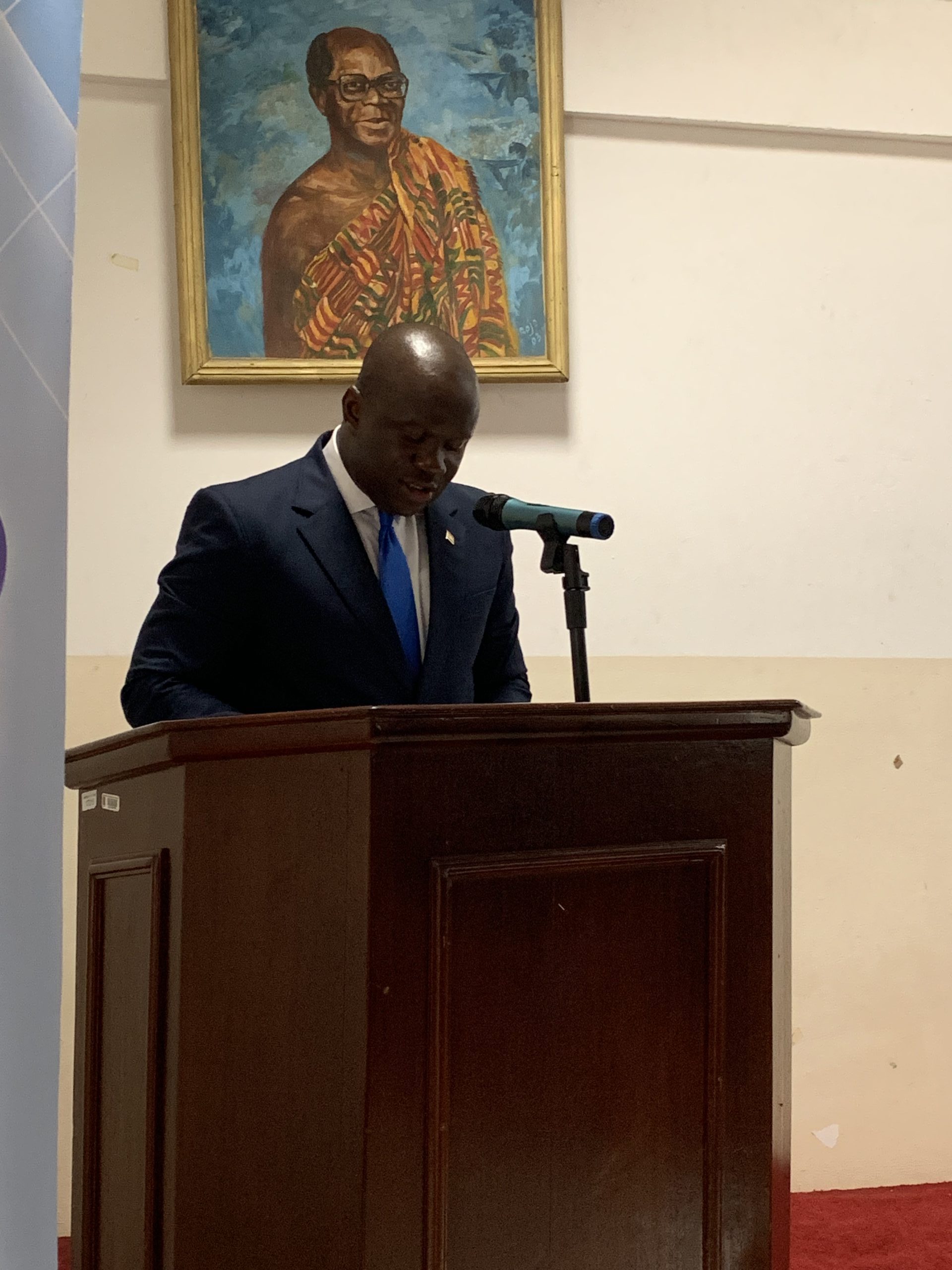
As Ghana prepares to exploit lithium and other critical minerals, researchers, policymakers and communities are confronting a defining question: will the green-energy revolution transform Africa’s resource economy; or reproduce the old “dig and ship” model?
Ghana’s emerging lithium industry is forcing an old question back onto Africa’s development agenda: will the continent’s mineral wealth once again leave its shores as raw material, while the greatest economic value is created elsewhere?
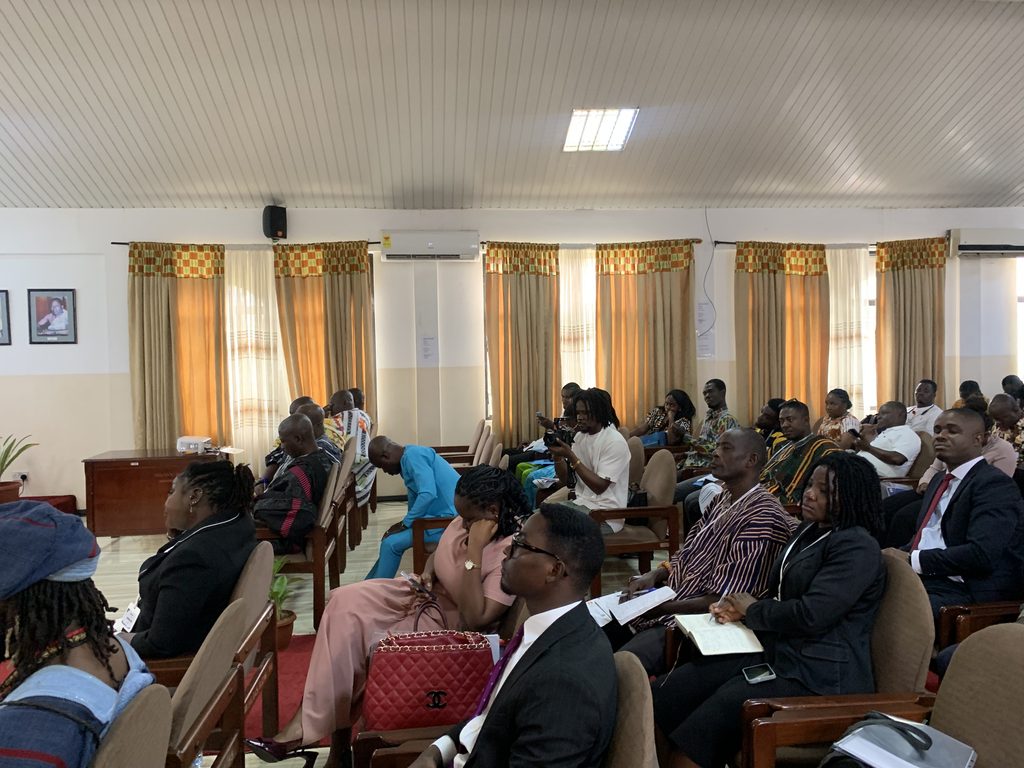
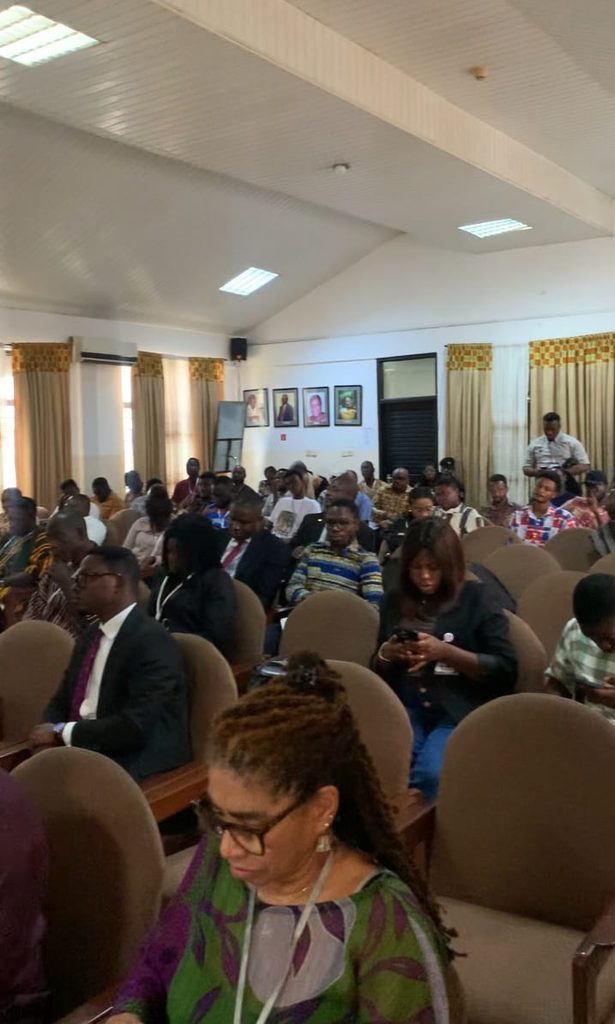
The question took centre stage in Accra as researchers, policymakers, traditional authorities, civil society actors and development practitioners gathered to launch Ghana’s component of an international research project examining justice in the governance of critical minerals and the global transition to cleaner energy.
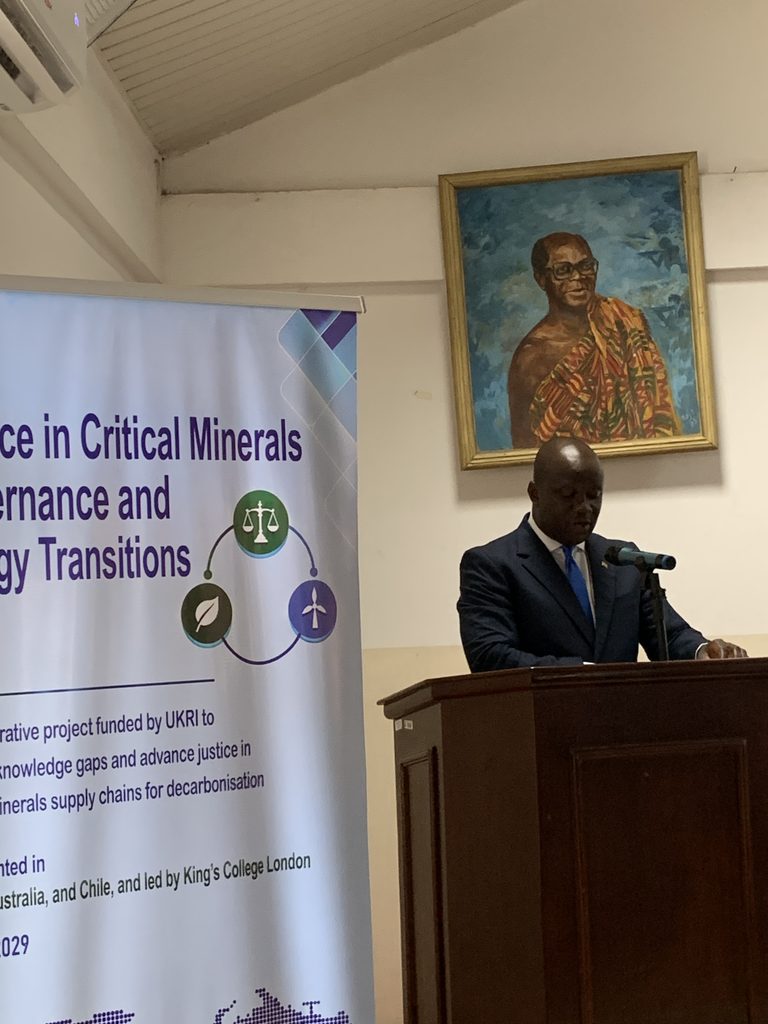
The project, “Justice in Critical Minerals Governance and Energy Transitions,” is funded by UK Research and Innovation (UKRI) and led by King’s College London. It brings together research across Ghana, Australia and Chile, with a broader comparative dimension involving Europe, for a four-year period running from December 2025 to November 2029.
In Ghana, the project is being hosted by the Institute of African Studies (IAS), University of Ghana, in partnership with the Ministry of Lands and Natural Resources and 715House Productions Limited.
The Ghana component was formally launched on 24 August 2026 at the J.H. Kwabena Nketia Conference Hall at the Institute of African Studies.
But beneath the formalities of a research launch lies a much larger contest over the future of African mineral economies.
As countries race to decarbonise their economies, minerals such as lithium, graphite, cobalt, nickel and rare earth elements have become strategic commodities for batteries, electric vehicles, renewable-energy infrastructure and other clean technologies.
For Africa, this presents both an opportunity and a warning.
The continent possesses enormous mineral wealth, but its historical experience with gold, bauxite, manganese, oil and other commodities has often been characterised by the export of raw materials and the import of higher-value processed products.
The question now is whether the green-energy revolution will break that pattern—or reproduce it under a new name.
Beyond “Dig and Ship”
Former Minister for Lands and Natural Resources Samuel Abu Jinapor, delivering a keynote address at the launch, warned against allowing critical minerals to become another chapter in Africa’s long history of extracting resources without capturing sufficient value from them.
He framed the global debate around whether the energy transition will generate shared prosperity or reproduce the historical pattern of “dig and ship.”
History, he argued, shows that the mere presence of natural resources does not automatically translate into development.
Ghana’s own experience is instructive.
Despite producing gold for more than a century and remaining Africa’s leading gold producer, the country has struggled to build sufficient domestic refining capacity.
Its bauxite story is similarly revealing. Ghana has the Volta Aluminium Company, yet has historically exported bauxite in raw form while importing alumina—the refined form of bauxite—for aluminium production.
For Jinapor, the critical-minerals era provides an opportunity to change that trajectory.
He pointed to Ghana’s green-minerals policy, which sought greater state and Ghanaian participation, enhanced local content, value addition and beneficiation.
Under the policy framework, he said, Ghana pursued increased royalties, greater state and Ghanaian participation and stronger local-content provisions.
The first lithium mining lease, he noted, was negotiated with a 10% royalty rate, 13% free-carried interest and provisions for the establishment of a refinery.
The ambition is significant: rather than simply extracting lithium and exporting it, Ghana should progressively build the industrial, technological and human-capital capacity to participate further along the value chain.
That means processing facilities, research institutions, engineering expertise, skilled employment, technology transfer and, eventually, industries capable of transforming mineral wealth into broader economic development.
The Green Transition Has a Justice Problem
Yet the debate cannot be reduced to how much revenue Ghana earns from lithium.
There is another, more uncomfortable question:
Who bears the cost of producing the minerals needed to make the world greener?
The communities where minerals are found often experience the immediate consequences—land acquisition, displacement, changes to livelihoods, pressure on water resources, environmental degradation and disruption of social systems.
It is here that the project’s central concept of justice becomes critical.
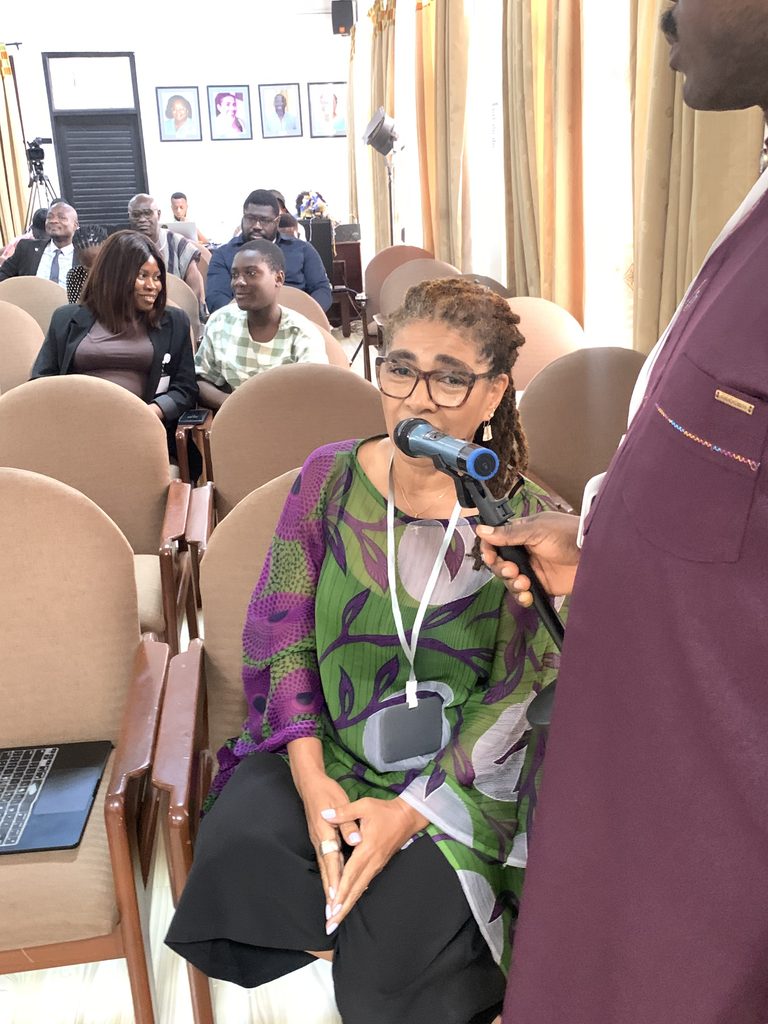
Speaking to The Bridge News, project lead Dr. Clement Sefa-Nyarko, a Senior Lecturer at King’s College London, explained that the research is not simply about critical minerals or energy transition.
Its deeper concern, he said, is the question of justice surrounding how those minerals are governed.
The global push towards electric vehicles, solar energy and other cleaner technologies is increasing demand for minerals required by those technologies.
But the benefits and burdens of the transition are not necessarily distributed equally.
“You mine for the good of society, but some people have more devastating impacts than others,” Dr. Sefa-Nyarko explained.
Mining communities, he said, are frequently “at the receiving end” of the negative consequences.
The project therefore seeks to bring their voices into the policy conversation—not simply through conventional interviews, but by examining the broader ways communities communicate their aspirations, concerns and understandings of justice.
Science Must Inform Policy
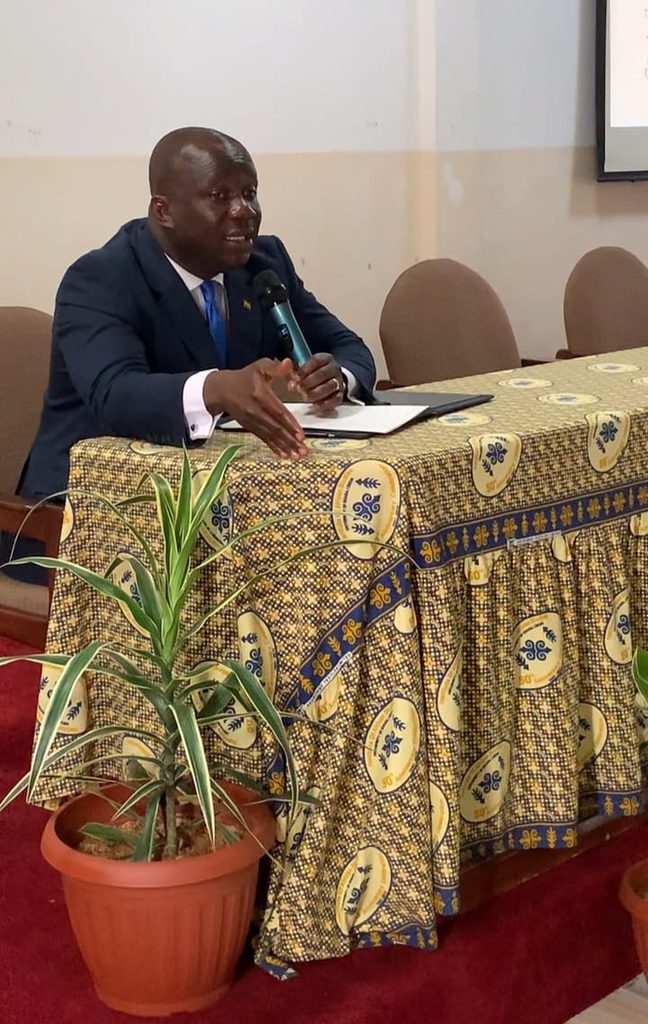
That emphasis on community voices was reinforced by Prof. David Millar, President of Millar Open University, who argued that research of this nature must ultimately produce evidence capable of influencing policy.
For Prof. Millar, policy should not operate independently of evidence.
“Policy should be informed by science,” he argued, stressing the importance of empirical evidence in determining whether one policy pathway produces better outcomes than another.
He welcomed the project’s international and comparative design, noting that its engagement across different continents provides an opportunity to examine contrasting governance systems, strengths and weaknesses and generate evidence capable of informing policy.
The comparative dimension, he suggested, gives the research greater rigour.
But Prof. Millar challenged the researchers to answer a more fundamental question: how can research generate data that genuinely reflects the governance preferences and voices of communities where critical minerals are located?
For him, one of the project’s most important performance indicators should be whether its research tools actually amplify community voices.
The communities, he argued, should not merely provide data for researchers.
They should help define the questions and shape the process.
“Communities lead the process,” he said, proposing that community perspectives should subsequently be placed alongside formal policy positions.
That proposition takes the research beyond conventional academic boundaries.
Beyond the Boundaries of Academia
Prof. Millar advocated a transdisciplinary approach capable of bringing together formal scientific knowledge and forms of knowledge that are often excluded from conventional research.
Such knowledge could include local histories, cultural practices, spirituality, stories, community memory and other forms of indigenous understanding.
He described the philosophical orientation as transcendentalist—an approach that seeks to move beyond the boundaries of strictly positivist or constructivist frameworks and examine dimensions of knowledge that may otherwise be dismissed as spiritual, cultural or mundane.
The objective is not to abandon science but to broaden the understanding of what constitutes relevant knowledge in questions of justice and sustainability.
In communities where mineral deposits overlap with ancestral lands, sacred landscapes or culturally significant places, this distinction can be profound.
A geological survey can identify a lithium deposit.
A mining agreement can establish royalties and compensation.
But neither necessarily captures what that landscape means to the people who have lived there for generations.
And this, Prof. Millar argued, is where community sovereignty becomes critical.
From Community Rights to Community Sovereignty
In one of the most significant interventions at the launch, Prof. Millar argued that discussions about community rights should be expanded to include the idea of people’s sovereignty.
Rights, he suggested, can be granted or defined through laws and formal institutions.
Sovereignty, by contrast, emerges from the people’s own determination of who they are, what their resources mean to them and how those resources should affect their lives.
For communities hosting critical minerals, governance therefore cannot be confined to written laws and formal regulations.
It must also consider unwritten rules, cultural obligations, spiritual values and systems of knowledge that protect community identity and wellbeing.
“If you are going to look at resources that are located within a community, issues of sovereignty are critical,” Prof. Millar said.
His argument touches one of the most sensitive fault lines in African resource governance: the distance between statutory ownership of minerals and the customary relationship communities maintain with the lands beneath which those minerals are found.
That tension can become particularly pronounced when governments and mining companies negotiate over resources that local communities regard as part of their inherited cultural landscape.
Prof. Millar said the sovereignty dimension remains underexplored in conventional research on mineral governance.
For Africa, he argued, sovereignty should be central to the conversation.
Listening in the Language of the Community
Prof. Millar proposed practical tools for bringing community knowledge into the research process.
The first is spirituality.
Researchers, he argued, should examine how communities understand the spiritual meaning of minerals, land and natural resources and how those beliefs influence people’s actions and responses to development.
The second is the identification of local experts—people who may not possess formal academic qualifications but have accumulated generations of knowledge through experience, history and community participation.
Such people, he argued, should not be treated simply as informants but as knowledge holders.
The third is vocabulary mapping.
Language, he suggested, is itself a repository of meaning.
Researchers should therefore understand how communities describe minerals, governance, exploitation and development in their own languages rather than relying exclusively on dominant academic or official terminology.
When research adopts a community’s vocabulary, he argued, it creates a greater sense of partnership.
When only dominant languages are used, sections of the community can effectively be excluded from the conversation.
The fourth is a gender-sensitive, three-generational analysis.
Instead of asking only what current leaders or adult men think about mineral development, researchers should capture the perspectives of grandparents, parents and younger generations while also distinguishing the experiences and aspirations of women and girls.
“What do the grandfathers say? What do the fathers say? What do the youth or the children say?” he asked, extending the same inquiry to grandmothers, mothers and young girls.
Such an approach, he argued, could provide a more representative picture of how communities understand resource development across time and gender.
The Ewoyaa Test
Ghana’s own Ewoyaa lithium project offers an early test of how these principles might work in practice.
Jinapor recalled that during his tenure as Lands and Natural Resources Minister, government, in consultation with chiefs and communities in the project’s catchment area, negotiated a 1% retention of gross production for a community development fund.
The fund, he said, was intended exclusively for development in communities affected by mining.
Such mechanisms could become increasingly important as Ghana moves deeper into the critical-minerals economy.
But the larger question remains whether community participation will occur before major decisions are made, rather than after agreements have already been concluded.
Justice Beyond Ghana’s Borders
The project also expands the meaning of justice beyond the relationship between mining companies and communities.
Jinapor identified another dimension: justice between states.
For decades, resource-rich African countries have supplied raw materials to industrial economies while much of the processing, technological development and manufacturing has taken place elsewhere.
The green transition risks reproducing this unequal structure.
A country may possess lithium, but extraction alone does not automatically create an industrial economy.
Dr. Sefa-Nyarko acknowledged that Ghana needs to operate within the global market system.
“If you mine your lithium and no one buys it, what do you do with it?” he asked, while noting that developing domestic processing capacity requires technology, resources and time.
This creates a difficult policy balancing act.
African states want greater control over their resources, but they also require foreign capital, technology, markets and international partnerships to develop complex mineral value chains.
The answer, he suggested, may lie in what he described as “responsible sovereignty”—protecting national interests while recognising the interconnected nature of global markets.
Africa Must Negotiate Collectively
Jinapor argued that African countries must avoid competing against one another in ways that weaken their bargaining position.
If one country demands local processing, greater indigenous participation and stronger fiscal returns while another offers companies unrestricted access to export raw minerals, companies can exploit those differences.
The African Continental Free Trade Area (AfCFTA), he suggested, provides a platform for African countries to coordinate their positions and strengthen their collective negotiating power.
The African Union’s African Green Minerals Strategy, adopted in 2025, similarly reflects an ambition to position Africa not merely as a mineral warehouse for the global energy transition but as an active participant in green industrialisation.
That distinction may determine whether the energy transition becomes another extractive cycle or the foundation for structural transformation.
The Intergenerational Question
There is, however, an even longer horizon.
Lithium and other critical minerals are finite. Once extracted, they cannot simply be replaced.
That raises the question of what today’s generation owes those who will inherit the consequences of today’s mining decisions.
Jinapor framed this as intergenerational justice.
The true measure of success, he argued, should not simply be the number of tonnes extracted or the value of mineral exports in a particular year.
It should be whether mineral wealth is converted into assets that survive the mine itself.
Education.
Infrastructure.
Research.
Technology.
Skills.
Industrial capacity.
These are the assets capable of transforming temporary mineral wealth into permanent development.
Future generations, he noted, have no seat at today’s negotiating tables, yet they will live with the consequences of decisions being made today.
That places a particular responsibility on policymakers.
Galamsey Is a Warning—But Not the Whole Story
Ghana’s persistent illegal mining crisis, or galamsey, inevitably entered discussions at the launch.
But Dr. Sefa-Nyarko cautioned against conflating the country’s illegal gold-mining crisis with the emerging lithium sector.
Lithium, he explained, has not yet faced the same scale of illegal or small-scale mining activity seen in Ghana’s gold sector, partly because of the technical and commercial requirements involved.
That does not mean Ghana is immune.
Nigeria, he noted, provides an example of how lithium can become associated with small-scale and illegal extraction.
For Ghana, the warning is therefore less about an existing lithium crisis than about preventing one from developing.
The country’s experience with gold should serve as an early lesson in regulation, environmental protection and community governance.
A Four-Year Experiment in Listening
The Ghana project is now moving from the conference hall towards the communities where the real research will take place.
Dr. Sefa-Nyarko said a methodology workshop is scheduled to take place in Chile in September, after which field engagement in Ghana is expected to begin around October.
The research will continue through 2029, with key constituencies expected to reconvene in 2027 and 2028 to deliberate on both the research process and its outcomes.
For the Institute of African Studies, the project represents an opportunity to bring African knowledge systems into a global conversation increasingly dominated by technological, economic and geopolitical concerns.
For Ghana, the stakes are considerably larger.
Lithium may be only one mineral, but the decisions made around it could establish precedents for how the country manages an entire generation of critical minerals.
And for Africa, the question is no longer simply whether the continent possesses the resources required for the world’s green transition.
It is whether the people who live on those resources, the countries that own them and the generations that come after today’s mining boom will receive a fair share of the prosperity they make possible.
The interventions by Jinapor, Dr. Sefa-Nyarko and Prof. Millar converge on a common proposition: a green transition cannot be considered just merely because it replaces fossil fuels with cleaner technologies.
Justice must extend to where minerals are extracted, how decisions are made, whose knowledge is recognised, who controls value chains, who bears environmental costs and what is left for future generations.
The real test of Ghana’s lithium moment may therefore not be how much mineral wealth is extracted.
It may be whether the country can build a governance system in which science informs policy, communities shape decisions, indigenous knowledge is taken seriously, sovereignty is respected, value is retained locally, and the benefits of today’s mineral wealth outlive the mines themselves.
If Ghana and other African mineral-producing countries can achieve that, the critical-minerals boom could become more than another commodity cycle. It could become an opportunity to rewrite Africa’s longstanding relationship with its natural resources, and make the continent not merely a supplier to the world’s green transition, but a meaningful architect and beneficiary of it.