
 By Ishmael Junourgh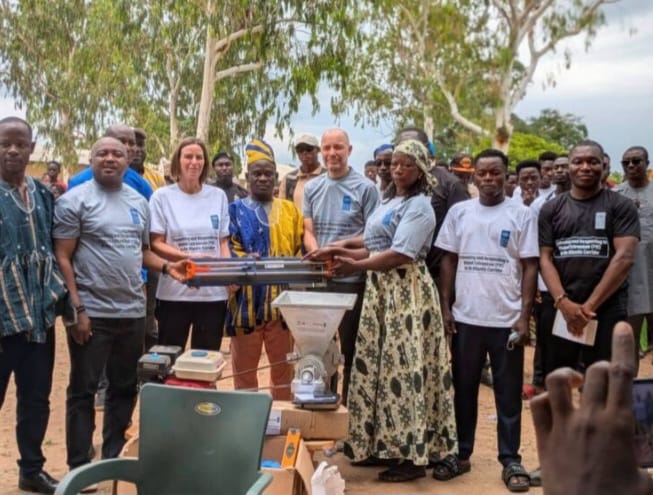
Residents of Fatchu in the Sissala West District of the Upper West Region have received livelihood support from Capacity Enhancement and Community Support (CAPECS) and its development partners to strengthen household incomes, promote self-reliance and build resilience within the community.
About 100 selected men and women benefited from a range of livelihood tools and equipment provided under the Preventing and Responding to Violent Extremism in the Atlantic Corridor project.
Equipping Residents for Sustainable Livelihoods
The intervention, supported by the United Nations Development Programme (UNDP), Denmark and Norway, provided equipment for dressmaking, hairdressing, bread-making, animal-feed production, electrical works and gardening, among other economic activities.
The support is expected to enable beneficiaries to establish new businesses or expand existing ones, creating opportunities for income generation and improving their capacity to provide for their families.
For a rural community where access to sustainable economic opportunities can be limited, the intervention offers beneficiaries practical tools with which to translate skills into livelihoods and greater financial independence.
CAPECS Emphasises Self-Reliance
Speaking at the presentation ceremony, the Executive Director of CAPECS, Mr Abu Dokuwie Alhassan, said the initiative formed part of the organisation’s commitment to empowering vulnerable families and communities to become economically self-reliant.
He expressed appreciation to the development partners for their continued and long-term support, stressing the importance of ensuring that the donated items generate lasting benefits for the beneficiaries.
Mr Alhassan urged the recipients to put the equipment to productive and sustainable use, saying the ultimate objective was to help beneficiaries grow viable businesses and improve their livelihoods.
Solar-Powered Garden Opens New Agricultural Opportunity
Beyond the distribution of livelihood equipment, CAPECS and its partners also commissioned a 1.58-acre solar-powered mechanised water garden to support dry-season farming in Fatchu.
The facility is expected to provide residents with access to water for vegetable production during the dry season, creating opportunities to improve household nutrition while generating additional income through the sale of farm produce.
The initiative adds an agricultural dimension to the livelihood intervention, potentially allowing community members to maintain productive activities beyond the main farming season.
Development Partners Support Community Resilience
The presentation and commissioning ceremony brought together representatives of the Embassies of Denmark and Norway in Ghana, officials from UNDP, CAPECS staff, representatives of the Regional Peace Council, the Upper West Regional Minister, Hon. Charles Lwanga Puozuing Esq., and the District Chief Executive, Hon. Gbene Abudu Fuseini.
Community members, traditional and local stakeholders, as well as the beneficiaries, also attended the event.
The collaboration reflects a broader development approach that places economic empowerment and community resilience alongside efforts to prevent violent extremism.
By expanding access to livelihood opportunities, skills-based economic activities and agricultural resources, the intervention seeks to strengthen the ability of vulnerable communities to withstand economic and social pressures that can deepen insecurity and exclusion.
Beneficiaries Welcome Support
The beneficiaries expressed gratitude to CAPECS and its development partners, describing the intervention as an important opportunity to improve their economic circumstances.
They said the equipment would help them establish businesses, expand their sources of income, support their families and work towards long-term financial independence.
For many of the beneficiaries, the value of the intervention extends beyond the immediate items received, offering the possibility of turning skills and available local resources into sustainable sources of livelihood.
Building Hope Through Livelihoods
The intervention in Fatchu demonstrates how targeted livelihood support can complement broader community development and peacebuilding efforts.
With access to business equipment and a solar-powered mechanised garden, beneficiaries now have additional opportunities to engage in productive economic activities and improve household incomes.
About 100 males and females from Fatchu community benefited from the intervention on Thursday, August 27, 2026.Credit: GwolluFm