
 By Ishmael Junourgh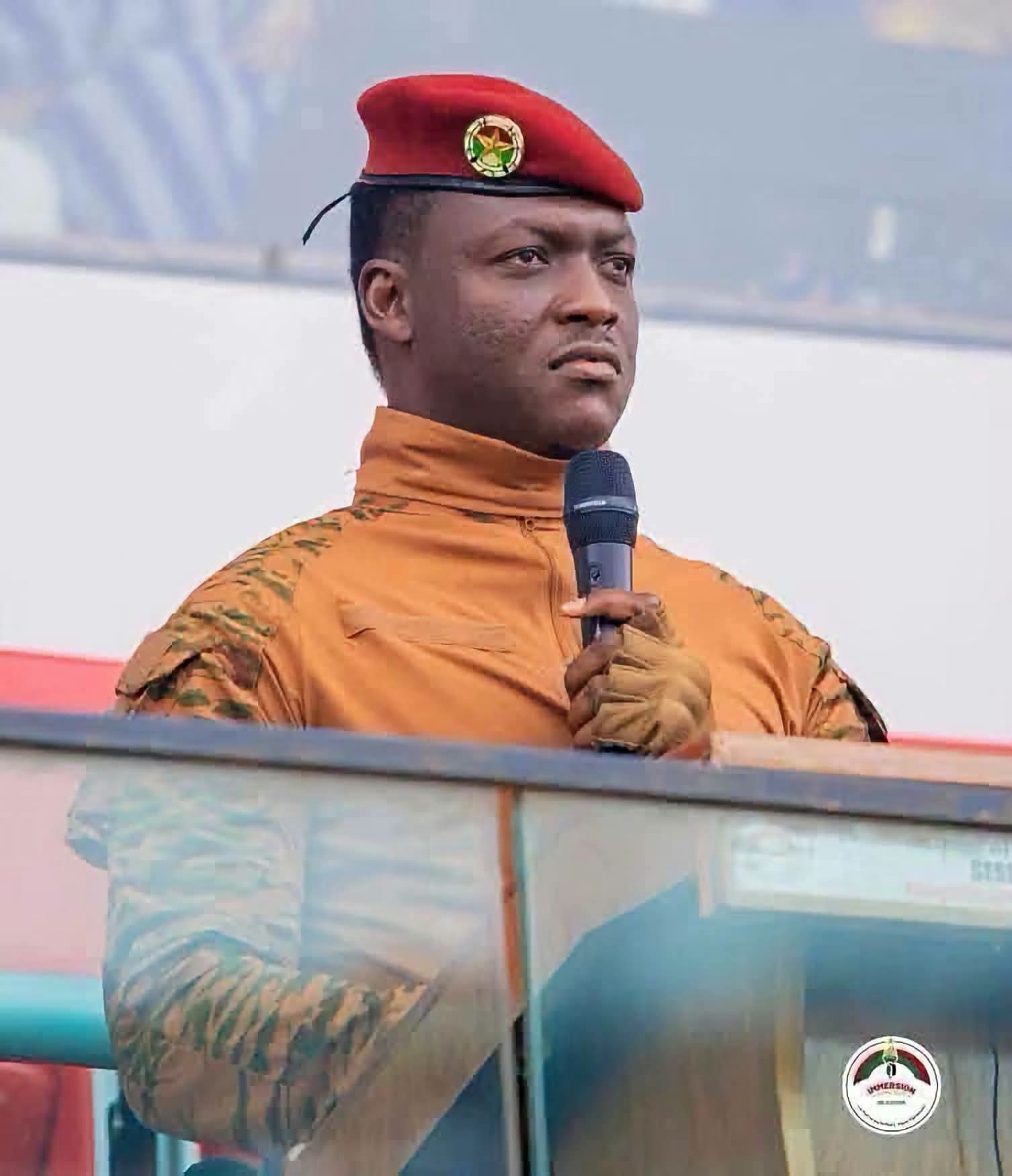
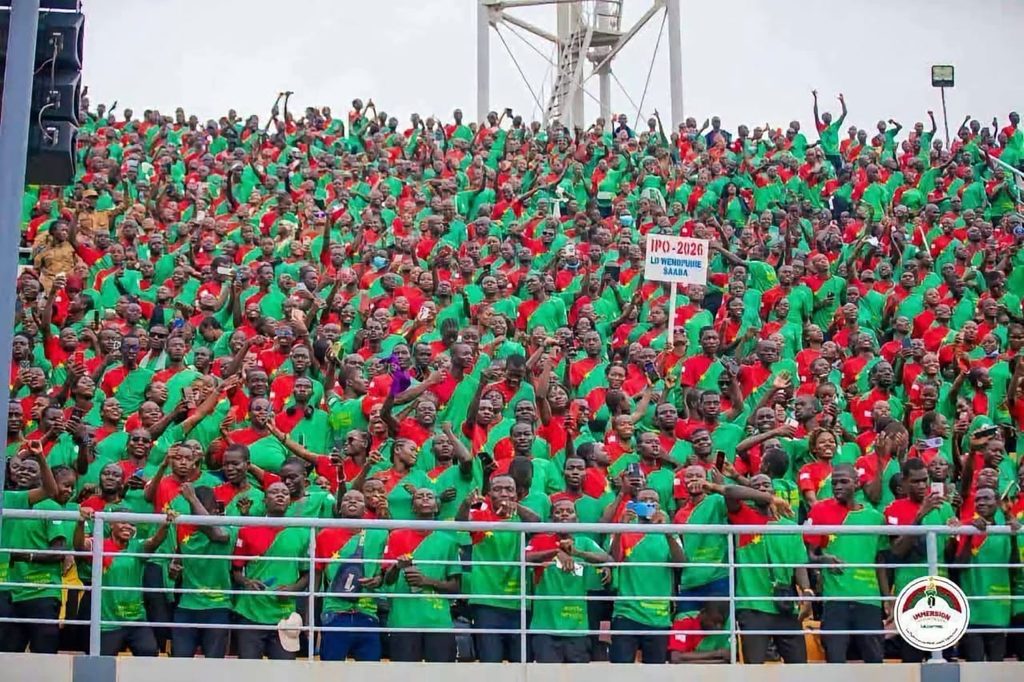
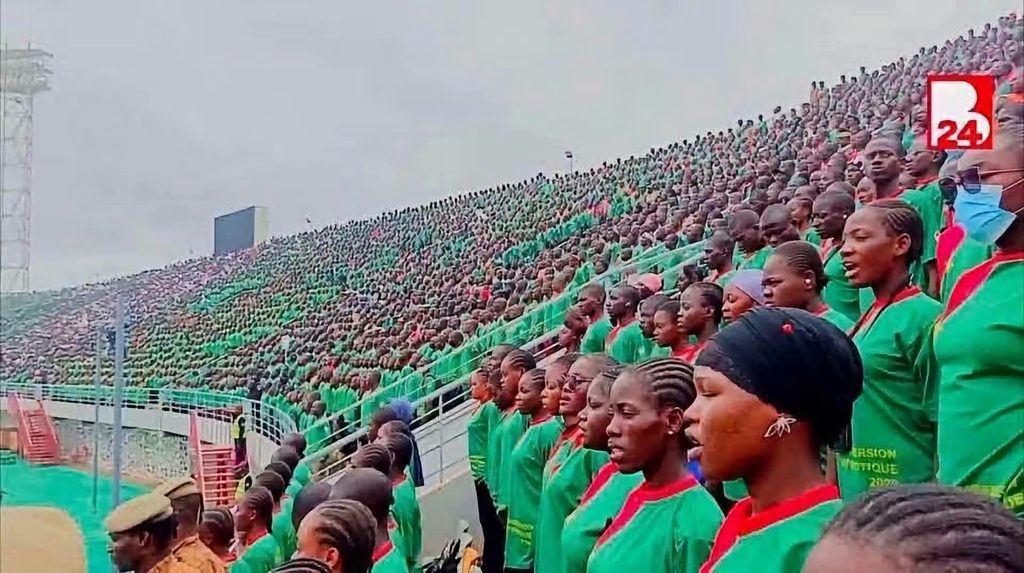
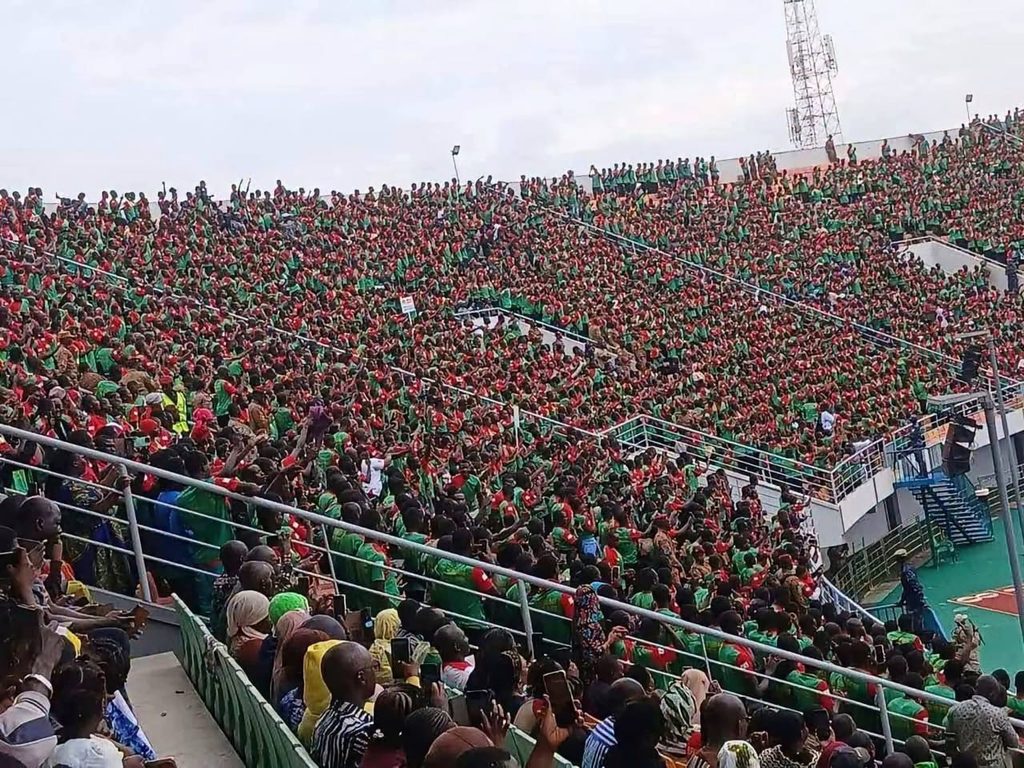
In Koupéla, eastern Burkina Faso, more than 65,000 young people have entered a classroom unlike the one they left behind after completing their baccalaureate examinations.
They are not beginning university lectures or preparing for the conventional transition into adulthood. Instead, they are being introduced to a state-mandated programme designed to shape how they understand their country, its history, its security challenges and their responsibilities as citizens.
The second cohort of Burkina Faso’s Immersion Patriotique Obligatoire (IPO) opened this week, bringing together tens of thousands of new high school graduates for a period of patriotic and civic training.
The programme, made mandatory by the government in May 2025, reflects a country attempting to respond to one of the most consequential questions facing societies at war: how do you prepare a generation not only to survive conflict, but also to rebuild a nation afterwards?
“Learn your history”
President Ibrahim Traoré did not attend the opening ceremony in person. Instead, he sent a message to the young participants.
His emphasis was striking.
He urged them to deepen their knowledge of Burkina Faso’s history, understand the geopolitical forces shaping the region and appreciate the security circumstances confronting their country. He also encouraged them to continue seeking knowledge, learning new skills and broadening their understanding of the world.
The underlying message was straightforward: a generation cannot meaningfully build a country it does not understand.
For Burkina Faso, history is not being presented merely as an academic subject. It is being positioned as part of national consciousness at a time when the country’s sovereignty, territorial integrity and social cohesion remain under immense pressure.
A programme born from conflict
The patriotic immersion programme cannot be separated from Burkina Faso’s security crisis.
For years, the country has confronted armed groups linked to the wider Sahel insurgency, particularly in its northern and eastern regions. The conflict has caused extensive civilian deaths, disrupted livelihoods and forced millions from their homes.
The crisis has also transformed the relationship between the state and its young population.
For many Burkinabè youths, insecurity is not something encountered in history books. It is part of lived experience: disrupted schooling, displaced families, abandoned farms, economic uncertainty and communities struggling to maintain social cohesion.
Against that backdrop, the government’s decision to bring tens of thousands of young people into a common programme carries significance beyond the classroom.
It is an attempt to cultivate a sense of citizenship during a period in which the very meaning of nationhood is being contested.
Patriotism, education and the question of indoctrination
The programme is not without controversy.
Critics, particularly outside Burkina Faso, have raised concerns about the line between civic education and political indoctrination. Any state-led programme that seeks to shape young people’s understanding of national identity, history and security inevitably raises questions about what is taught, who determines the curriculum and whether participants are encouraged to think critically.
Those questions deserve serious attention.
But the debate should also be placed within Burkina Faso’s particular historical and geopolitical context.
Across the world, states have long used education, civic instruction, national service and youth programmes to cultivate patriotism and a sense of collective responsibility. The difference in Burkina Faso is that such efforts are unfolding amid an active security crisis and a profound political reorientation.
The central question, therefore, is not simply whether young Burkinabè are being taught patriotism.
It is what kind of patriotism they are being taught; and what kind of country that patriotism is expected to build.

A generation at a crossroads
The figure; more than 65,000 young people in a single cohort; is significant.
These are young men and women standing at the threshold between secondary education and adulthood. They represent a generation that will inherit the consequences of today’s political, economic, environmental and security decisions.
Their country needs more than soldiers.
It needs teachers, engineers, farmers, entrepreneurs, journalists, researchers, health workers, administrators and community leaders capable of rebuilding institutions and local economies.
That makes the educational dimension of the programme particularly important.
If patriotic training is to have lasting developmental value, it must go beyond slogans. It must equip young people with historical knowledge, critical thinking, practical skills, civic responsibility and an understanding of the complex forces shaping the Sahel.
Patriotism becomes meaningful when it is translated into service.
Beyond the battlefield
Burkina Faso’s experience also raises a broader question for Africa.
Across the continent, young people are often caught between limited economic opportunities, weak public services, rural-urban migration, political frustration and growing insecurity. Governments frequently speak about youth empowerment, but programmes that connect citizenship with practical national development remain comparatively limited.
The Burkinabè experiment therefore deserves attention; not simply as a political initiative under Traoré, but as a case study in how a state confronting conflict attempts to mobilise its younger generation.
Its ultimate success will not be measured by the number of young people who attend the programme.
It will be measured by what those young people do afterwards.
Can they return to their communities with a stronger sense of responsibility? Can they contribute to rebuilding local economies? Can they preserve social cohesion? Can they participate constructively in democratic and civic life? Can they challenge misinformation while understanding their country’s history critically? And, perhaps most importantly, can the state create the conditions in which their patriotism translates into opportunity?
The lesson from Koupéla
For now, thousands of young Burkinabè are gathered in Koupéla, beginning a journey that places history, citizenship and national responsibility at the centre of their transition into adulthood.
Traoré’s message to them was not simply about war.
It was about memory.
A country fighting to define its future must also decide how its younger generation understands its past. History can become propaganda when it is stripped of complexity. But it can also become a source of confidence and agency when young people are given the tools to understand where their society came from, why it arrived at its present crossroads and what choices remain available to them.
For Burkina Faso, the experiment is unfolding under extraordinary circumstances.
The young people in Koupéla are being asked to learn their history before they help write the next chapter. What that chapter ultimately looks like will depend not only on what they are taught; but on the country they are given the opportunity to build.
 The Bridge News