
 By Ishmael Junourgh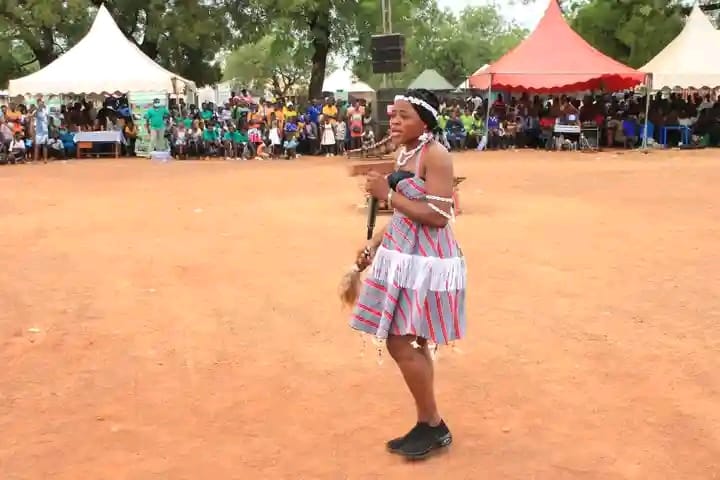
At Burkina Faso’s FESCUDA festival, a young performer from Ghana’s Upper West Region turns indigenous music, dance and storytelling into a powerful case for cultural tourism, youth development and African creative enterprise
The music begins, and the atmosphere changes.
Then Gifty steps forward.
Her movements are energetic, precise and unmistakably rooted in the Dagaaba cultural tradition. Her voice rises above the rhythm as the audience responds with cheers, movement and applause.
For a moment, the distinctions between performer and audience disappear.
There is simply music, dance and collective celebration.
At the Festival de la Culture Dagara (FESCUDA) in Burkina Faso, Gifty’s performance was more than entertainment. It became a living demonstration of how indigenous African culture can travel across borders without losing its identity.
From Domangye in Ghana’s Nandom area to an international cultural platform in Burkina Faso, the young performer is emerging as one of a new generation of artists attempting to turn indigenous music and dance into a bridge between communities, countries and generations.
Her story also points to a larger development question facing Africa: can cultural heritage become not merely something communities preserve, but something through which young people build livelihoods, attract tourism, create businesses and project their identities onto the global stage?
Gifty believes it can.
Her manager, operating under the music brand Da-Roo J Music, believes even more strongly in the possibility.
“I want the world to also hear the Dagaaba people,” he says.
That ambition captures the significance of her journey.
A festival born out of cultural anxiety
FESCUDA was established in January 2010 by Burkinabè cultural promoter Serge Dabiré, at a time when concerns were growing about the gradual erosion of traditional practices and the weakening transmission of indigenous knowledge between generations.
Its mission was to preserve, promote and transmit Dagara cultural and artistic heritage, with particular emphasis on traditional music, dance and cultural expression.
More than a decade later, that mission has acquired a new urgency.
Across the Sahel, insecurity, displacement, migration, urbanisation and economic pressures are reshaping communities.
The consequences are not limited to physical displacement.
When communities are uprooted, cultural ceremonies can be interrupted. Young people can become disconnected from elders. Languages and traditional skills may lose their everyday environments. Musicians, dancers, storytellers and artisans can struggle to pass their knowledge to younger generations.
The danger is therefore not necessarily that African culture will suddenly disappear.
It is that individual practices may gradually become detached from the communities that gave them meaning.
FESCUDA represents one response to that challenge.
By bringing together traditional performers, young people, cultural practitioners and audiences, the festival creates a space where culture is not merely displayed but performed, experienced and transmitted.
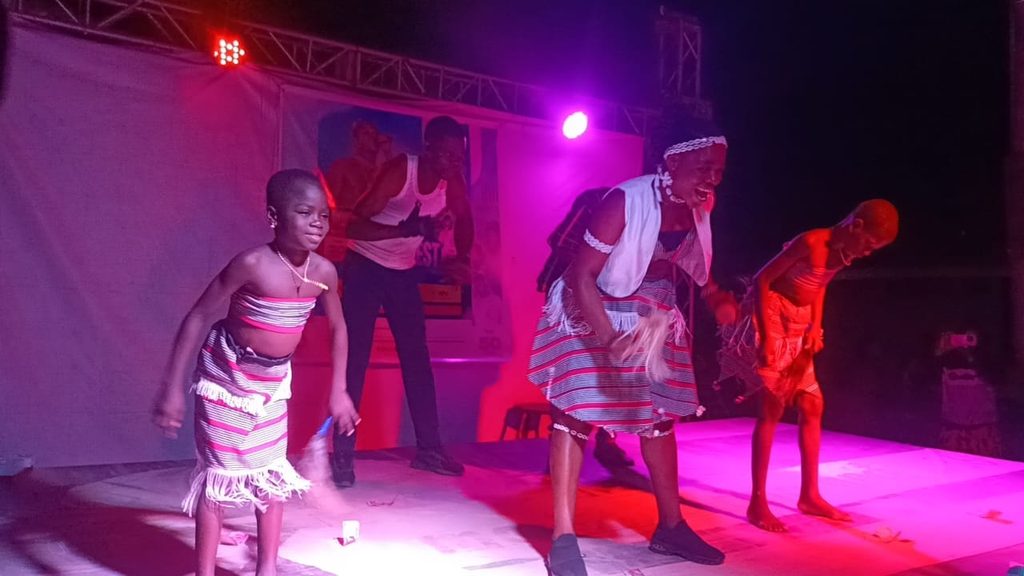
And when Gifty walked onto the stage, that transmission took on a distinctly cross-border character.
When Nandom met Dissin
The cultural geography of the Dagaaba and Dagara peoples does not correspond neatly to the political boundaries drawn by modern states.
Communities and cultural traditions extend across Ghana and Burkina Faso.
Gifty’s participation at FESCUDA therefore carried significance beyond an individual performance.
It demonstrated the ability of cultural expression to reconnect people whose shared heritage predates the modern national border.
Her performance was particularly striking because she was not presenting Dagaaba culture as an abstract historical artefact.
She embodied it.
Through her singing, costume, movement and interaction with traditional music, audiences encountered a culture through a living performer.
That distinction is important.
A museum can preserve an object.
An archive can preserve a recording.
But a performer can make heritage breathe.
The dance that opened the door
Gifty’s journey into traditional performance was almost accidental.
Neither of her parents was a musician, and she did not emerge from a famous family of performers.
While living in the Greater Accra Region, however, she found herself constantly singing.
When she returned to the Upper West Region in 2017, the habit continued.
She sang in class. A friend eventually asked why she was always singing.
Her answer was simple: she did not really know.
She simply wanted to sing.
Her opportunity to develop that instinct came through a Catholic Renewal group.
When she joined one of its rehearsals, she immediately began singing as though she had always been part of the group.
Then came an opportunity to lead a children’s traditional dance troupe.
During preparations for a Catholic festival, Gifty noticed that a group of children had Bewaa costumes but no one to train them.
She volunteered.
The children were trained, registered for the festival and eventually took to the stage.
The performance attracted attention.
Among those watching was the person who would become her manager.
“I saw her perform marvellously and said, ‘Wow, this is a talent. We need to grab her,’” he recalls.
The troupe went on to be selected as the festival’s best dance troupe.
For Gifty, the recognition provided more than a trophy.
It was a signal that something she had instinctively loved could become a serious artistic vocation.
Bewaa: entertainment with cultural memory
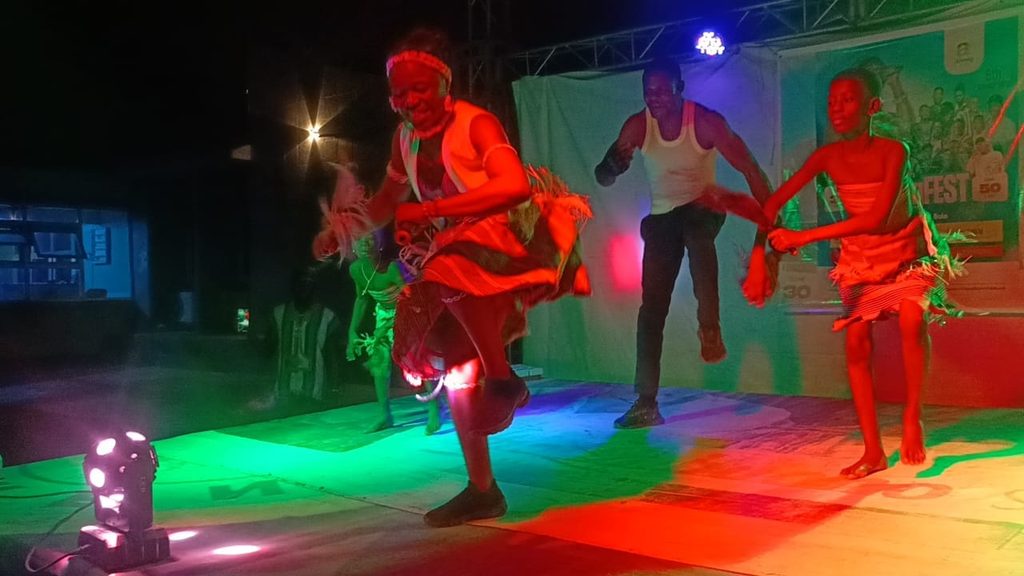
At the centre of Gifty’s performance is Bewaa, an energetic Dagaaba entertainment dance.
But her repertoire does not stop there.
She also performs Binee, associated with funeral traditions, and Bagr-Binee, a traditional religious dance connected to specific ceremonial contexts.
She sings indigenous Dagaaba songs as well.
The distinctions matter because Dagaaba traditional performance is not a single category of entertainment.
Different dances belong to different social and spiritual contexts.
Bewaa is principally associated with celebration and entertainment.
Binee is connected with mourning and funeral traditions.
Bagr-Binee belongs to a more sacred ceremonial sphere.
The music, therefore, carries social information.
Knowing what is being performed, when it is performed and how it is performed is itself a form of cultural knowledge.
Gifty’s artistry sits inside that knowledge system.
When the xylophone speaks
Perhaps the most fascinating dimension of the tradition is the relationship between music and language.
According to Gifty’s manager, the traditional Dagaaba xylophone is more than a melodic instrument.
It can communicate.
For people familiar with its musical language, particular phrases and patterns can convey meanings that outsiders may hear simply as sound.
In that sense, the xylophone becomes a language instrument.
Alongside it are traditional percussion and rhythmic instruments, including the kuor, as well as a prepared clay-pot instrument known in the interview as Dagara.
Together, they form a musical vocabulary through which communities have historically expressed celebration, sorrow, spirituality, identity and memory.
This gives indigenous music a significance that extends well beyond the entertainment industry.
It is a knowledge system.
And Gifty is becoming one of the people carrying that system into contemporary spaces.
Songs that remember people
Traditional music can also function as an archive.
Gifty’s manager describes songs within the broader Dagaaba tradition as carrying stories of love, hunting, sorrow, family, genealogy and death.
Funeral songs and dirges can contain information about the deceased — their family, character, history and place within society.
For those who understand the cultural codes, a performance can therefore preserve a biography.
The song becomes a record.
The rhythm becomes memory.
The dancer becomes a cultural narrator.
This is why the work of performers such as Gifty matters in an era when many African communities are confronting the rapid transformation of oral traditions.
The preservation of heritage does not necessarily require freezing culture in the past.
It can mean giving traditional knowledge new spaces in which it can continue to live.
A young woman choosing tradition
Gifty could have pursued contemporary music.
Instead, she chose indigenous performance.
“This is my line,” she explains. “When I’m doing any of them, I don’t feel like I’m forcing myself. I just do it by my passion.”
That sense of belonging has become central to her identity.
She is not performing Dagaaba culture simply because it offers a market niche.
She performs it because she feels at home within it.
That cultural confidence may ultimately be one of her greatest assets.
In an international entertainment market saturated with increasingly similar sounds and aesthetics, distinctiveness has value.
Gifty’s distinctiveness is her cultural specificity.
She sings in an indigenous tradition.
She dances traditional forms.
She performs with traditional instruments.
She wears cultural identity rather than hiding it.
And she is demonstrating that indigenous authenticity and international ambition do not necessarily have to be opposites.
From performer to teacher
There is another dimension to Gifty’s work that makes her story particularly important from a development perspective.
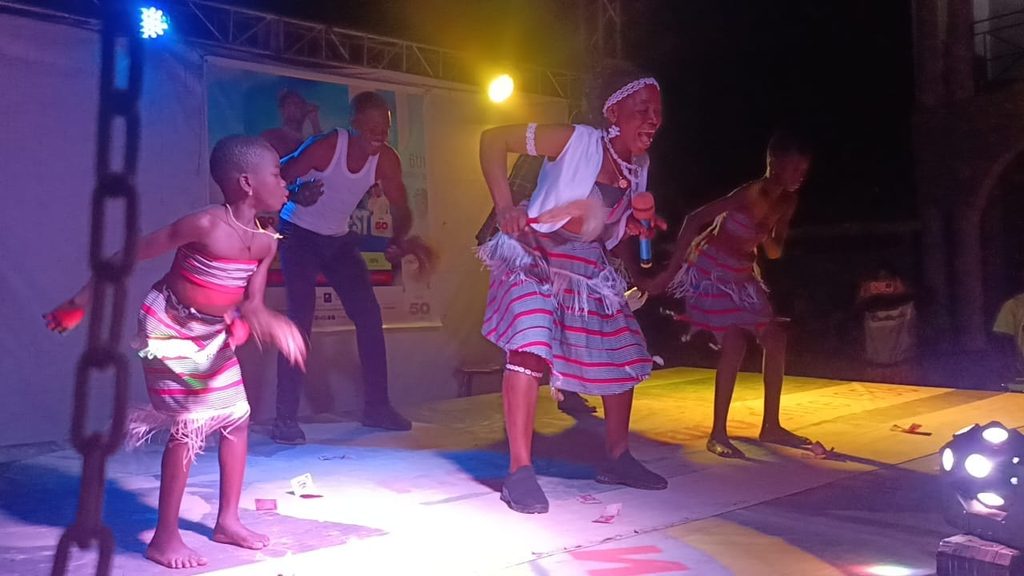
She is now training younger children in traditional dance.
That changes the meaning of her career.
She is no longer simply a performer consuming cultural knowledge.
She is transmitting it.
Her manager says some of the young dancers she has trained can “wow any crowd at any time.”
Behind the entertainment value lies an intergenerational process.
An elder teaches a younger person.
A performer teaches a child.
A child eventually becomes a performer.
The tradition survives because somebody learns it.
In communities where migration and changing aspirations increasingly separate young people from traditional knowledge, such transmission can become an important form of cultural resilience.
Culture as an economic resource
There is also a significant economic argument.
Africa’s cultural industries are often discussed primarily in terms of entertainment, yet their potential extends into tourism, hospitality, fashion, crafts, food, education and local enterprise.
A successful cultural festival can create markets for musicians, dancers, tailors, artisans, food vendors, transport operators, photographers, accommodation providers and other small businesses.
For rural communities, cultural tourism can provide an additional economic pathway alongside agriculture.
The potential is particularly significant for young people and women involved in creative enterprises.
A performer such as Gifty sits at the intersection of several sectors.
She belongs to the music industry.
She belongs to the dance sector.
She belongs to cultural heritage.
She can contribute to tourism promotion.
She can support cultural education.
And she can create opportunities for younger performers.
Seen from that perspective, indigenous culture is not simply a relic to be protected.
It can become an economic asset — provided communities retain ownership and receive meaningful benefits from its commercialisation.
The tourism opportunity hiding in plain sight
Ghana’s Upper West Region possesses cultural resources that remain relatively underdeveloped as international tourism products.
Traditional dances, indigenous music, architecture, festivals, sacred landscapes, cuisine, storytelling and craftsmanship could form part of a more integrated cultural tourism strategy.
Gifty’s journey demonstrates the kind of human story that can make such tourism meaningful.
International visitors do not necessarily want only monuments.
Increasingly, cultural tourism is about experience.
They want to hear the music.
See the dance.
Taste the food.
Meet the people.
Understand the story.
Learn why a particular rhythm matters.
Discover how a xylophone can communicate.
Experience a cultural festival rather than merely photograph it.
Performers become therefore not only entertainers but interpreters of place.
A dancer from Nandom can become part of the story that introduces international visitors to the cultural landscape of northern Ghana.
From Dissin to Ouagadougou; and beyond
FESCUDA itself illustrates the possibilities of cultural mobility.
The festival has extended its platforms into Ouagadougou and maintained a presence in Bobo-Dioulasso, while retaining its roots in Dissin and the wider South-West Region.
This movement between rural communities and cities reflects the changing geography of African identity.
People migrate.
They study elsewhere.
They work in capitals.
They establish communities abroad.
Yet cultural identity continues to connect them to their ancestral territories.
Festivals become meeting points.
They allow dispersed communities to return, reconnect and share.
Gifty’s participation adds another layer to that process: a Ghanaian performer entering a Burkinabè cultural space and using shared heritage to create connection.
It is cultural diplomacy from the ground up.
When culture crosses the border
The interest in Gifty’s performances among Dagaaba communities in Burkina Faso is particularly significant.
Her manager says some communities have invited her not simply because she is a musician but because they want to see and celebrate the cultural expression she represents.
That is a powerful reminder that cultural borders rarely coincide perfectly with political borders.
The same cultural family can exist across different countries.
Music can cross a frontier without a passport.
Dance can travel without translation.
And a shared cultural memory can create relationships where formal diplomacy may never reach.
In an era when the Sahel is often portrayed internationally through the language of terrorism, military coups, poverty and humanitarian crisis, cultural exchange provides another narrative.
It tells the story of people who are still creating, dancing, singing, trading, remembering and building connections.
The resilience dimension
Burkina Faso’s security crisis has made the work of cultural institutions more complicated.
Displacement and insecurity can disrupt festivals and cultural gatherings.
Yet that is precisely why cultural resilience matters.
Communities need institutions through which they can maintain social relationships and preserve collective identity.
FESCUDA’s evolution demonstrates how a cultural festival can become part of that process.
Its platform brings together Dagara traditions with performers from other cultural backgrounds, including Mossi and Fulani artists, alongside contemporary performers.
That intercultural dimension matters.
Music and dance cannot replace security policy, development investment or efforts to address violent extremism.
But cultural encounters can create spaces in which people meet as human beings rather than through the identities imposed by political conflict.
In fragile environments, social cohesion is itself a development resource.
An African creative economy built from identity
Gifty’s story also challenges an assumption that African artists must become less indigenous to become more global.
Her manager recalls being encouraged to produce more English or Twi music.
Instead, he chose to invest in Dagaaba music.
His reasoning was straightforward:
“I want the world to also hear the Dagaaba people.”
That approach could become increasingly relevant as Africa’s creative economy expands.
Global audiences are already consuming African music, fashion, film and dance at unprecedented levels.
But the international market should not only receive the most commercially dominant African genres.
There is enormous cultural diversity beneath the continent’s better-known creative exports.
From the Sahel to the coast, from the savannah to the forest, Africa contains thousands of musical and performance traditions.
The opportunity is to build creative industries that allow those traditions to participate in the global economy without surrendering their cultural meaning.
Gifty’s international stage
For Gifty, the road ahead remains open.
She is not yet being presented as an established international star.
Her significance lies partly in the fact that she is emerging.
She represents a generation of African performers who can inhabit two worlds simultaneously: the local cultural environment that formed them and the global creative economy that increasingly seeks distinctive African voices.
European cultural festivals, museums, universities, world-music programmers, diaspora organisations and cultural institutions could find in her work a point of entry into Dagaaba heritage.
She can perform.
She can teach.
She can demonstrate traditional dance.
She can participate in cultural exchanges.
She can work with musicians from other traditions.
She can help tell the story of a community whose cultural world extends across Ghana and Burkina Faso.
That versatility is an asset.
Beyond Afrobeats
There is a tendency to speak of African music internationally through the dominant language of Afrobeats.
But Africa is much larger than any single genre.
There is another Ghana waiting to be discovered.
A Ghana of indigenous xylophones.
Of dances that distinguish celebration from mourning and ritual.
Of songs that carry genealogies and stories.
Of traditional instruments that function as communication systems.
Of women and men preserving cultural knowledge through performance.
Of rural communities whose artistic traditions could become engines of tourism and local enterprise.
Gifty stands within that other Ghana.
Her stage is not only a platform for entertainment.
It is a cultural classroom.
A tourism gateway.
A development opportunity.
A cross-border bridge.
And, potentially, an international creative enterprise.
The road from Nandom to the world
The story that began with a young girl who simply could not stop singing has become something larger.
She discovered dance.
She trained children.
She became a recording artist.
She developed a partnership with Da-Roo J Music.
She embraced indigenous music when contemporary sounds might have appeared easier to market.
And now she has performed on a major Dagara cultural platform in Burkina Faso.
Her journey is still unfolding.
But its message is already clear.
African cultural heritage does not have to remain trapped between preservation and extinction.
It can be taught.
Performed.
Documented.
Commercialised responsibly.
Taken across borders.
Used to attract tourists.
Used to create jobs.
Used to empower young people.
Used to connect communities.
And used to tell the world stories that might otherwise remain unheard.
At FESCUDA, Gifty did more than entertain.
She carried a piece of Nandom with her.
And when she danced, the audience did not merely see a performer.
They saw a culture moving.
A tradition refusing to become an archive.
A young woman turning inheritance into artistry.
And perhaps, most importantly, an invitation.
Come and hear the Dagaaba people.
Come and see their dance.
Come and experience their music.
Come and discover the Ghana beyond the familiar global soundtrack.
From Nandom to Dissin, from the Upper West Region to the wider Sahel, Gifty’s journey suggests that the road to the world does not always begin by leaving home. Sometimes, it begins by taking home with you.
 Johannes Jafo Akunatu