
 By Ishmael Junourgh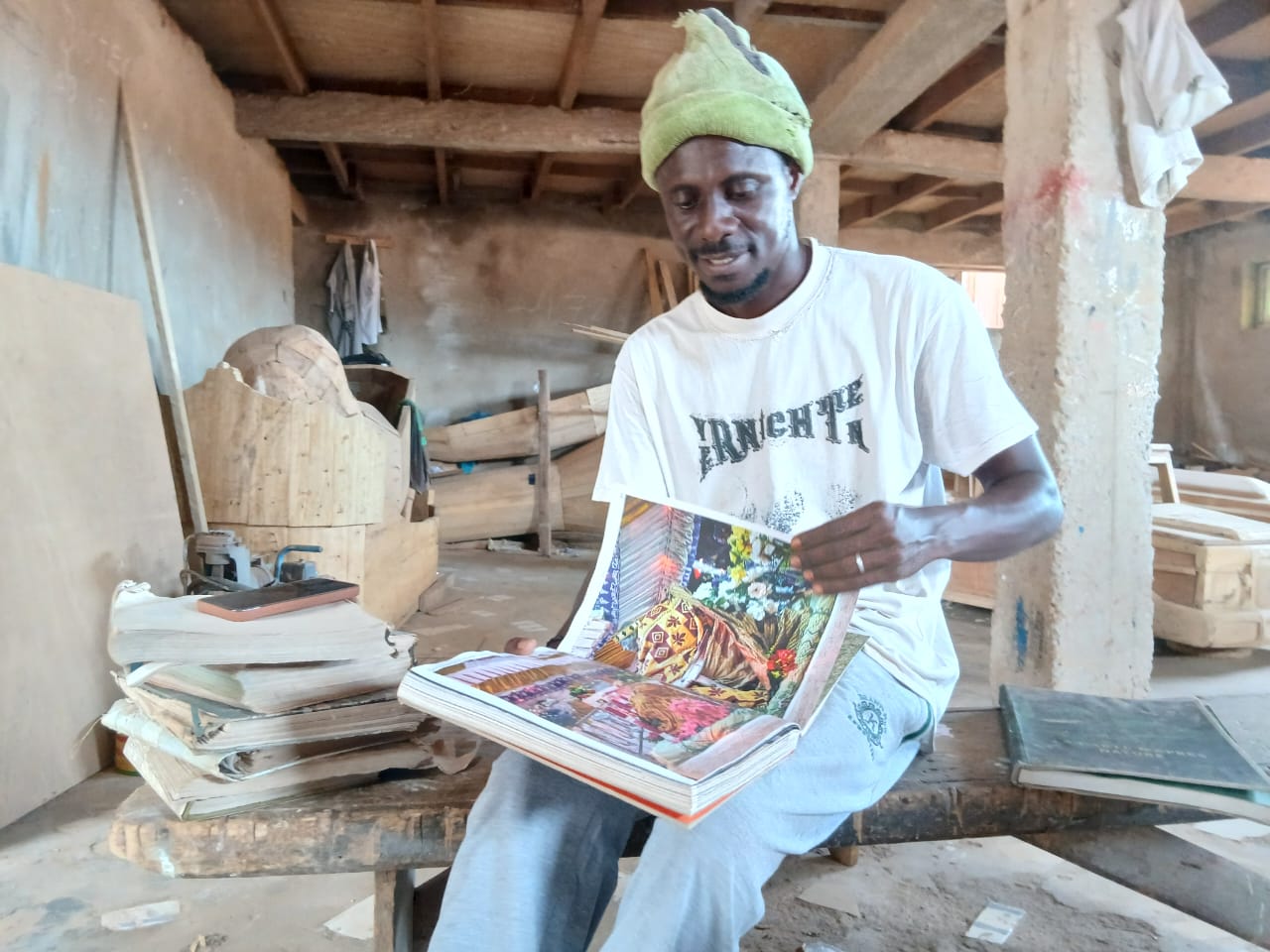
What began with a childhood fascination has grown into a life devoted to art, cultural heritage and training the next generation of Ghanaian craftsmen. Sometimes, a life’s direction begins with a single moment. Kudjoe Akuffu, it was the sight of a beautiful fish.
As a young boy in Accra, he saw a huge fish and felt an immediate pull towards creating something like it. He went home and told his parents what he wanted to do. Two years later, they helped him take his first step towards that dream.
In 2002, Affutu began an apprenticeship under renowned Ghanaian coffin artist Paa Joe. He would spend years developing a craft that has since taken him beyond Ghana and introduced his work to international audiences.
Today, Kudjoe runs a coffin art gallery in Awutu Breku in the Central Region, creating distinctive works that bring together imagination, craftsmanship and Ghanaian cultural identity.
Looking back, the journey may seem extraordinary. But it began with a boy who saw something beautiful and wanted to learn how to make it.
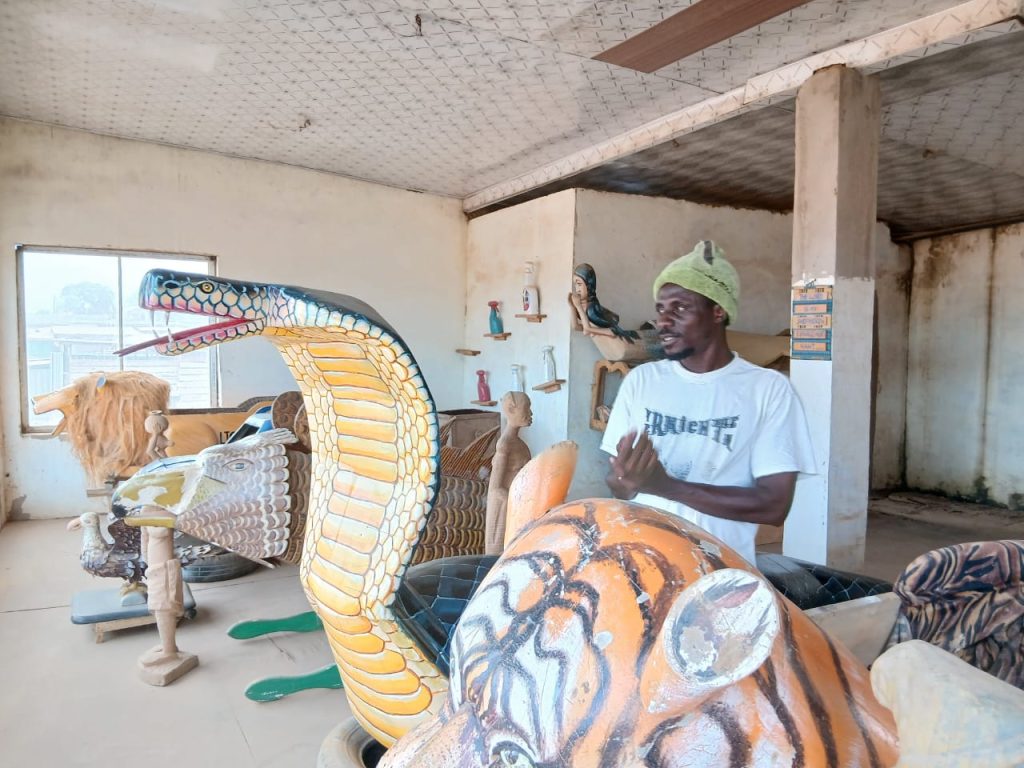
“I was learning the art, not the coffin”. When he joined Paa Joe’s workshop, he did not fully understand the specialised tradition he was entering. He had studied visual arts at Senior High School, but the deeper meaning of figurative coffin-making became clearer through practical experience.
“I’m learning the art, the art of it, not the coffin,” he recalled. That distinction helps explain the creativity behind his work.
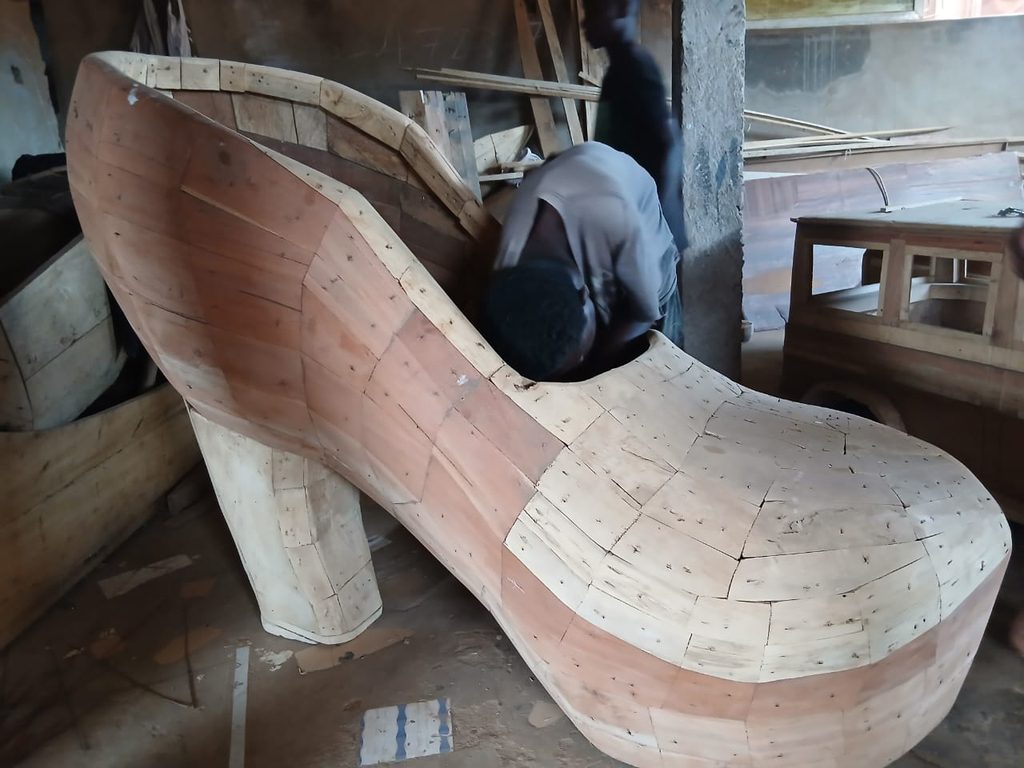
In Ghana, figurative coffins are designed to reflect aspects of a deceased person’s life, occupation, family identity or aspirations. A coffin might take the shape of a fish, a lion, a car or a football, depending on what carries meaning for the individual and their family.
For a footballer, it could be a football or boot. For a mechanic, the design might draw inspiration from vehicles or tools associated with the person’s trade.
These are not simply unusual burial objects. They are personal statements, crafted to tell stories about the people they commemorate.
He also explained that some animal forms and family symbols can be used in ceremonial palanquins, connecting the designs to a wider cultural tradition. The craft offers almost limitless room for artistic expression. Its purpose may be tied to burial, but the creativity behind it reaches far beyond the finished object.
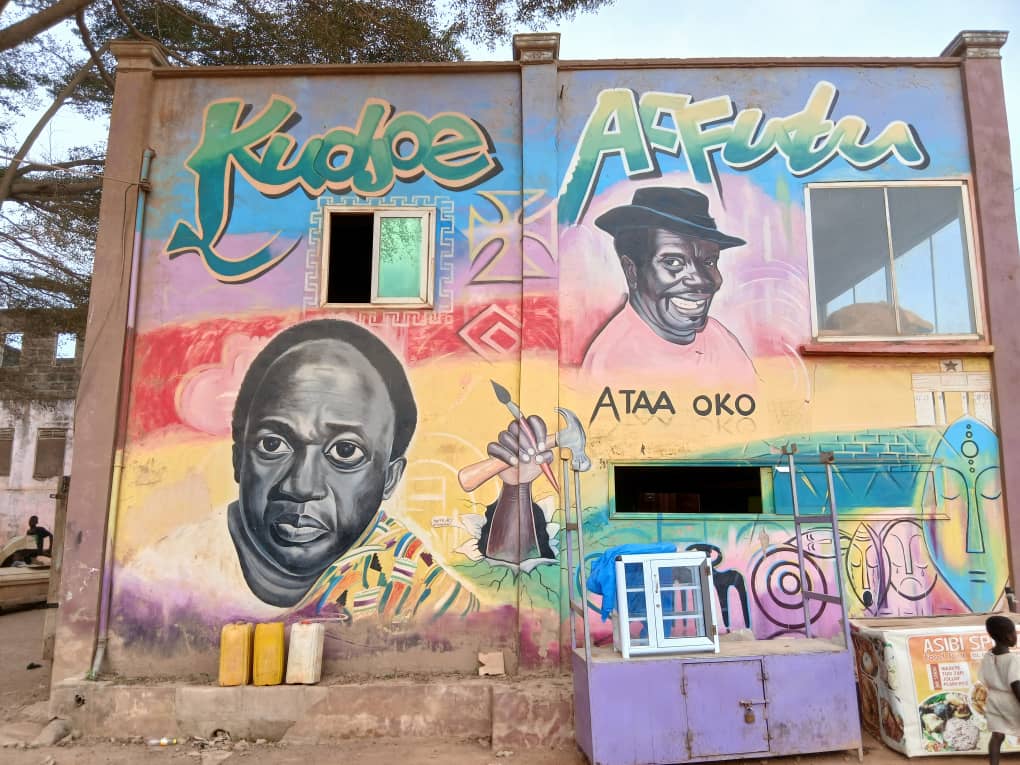
When the world comes calling he did not begin his journey expecting to travel internationally because of his art. He said one of the biggest turning points came when visitors from different countries started arriving at his gallery to see his creations.
People who had encountered the work through media coverage or other sources wanted to experience it in person. That interest has taken him to Belgium, France, Switzerland, Germany and Monaco in connection with his artistic work.
He said the reception in Europe has been encouraging, with audiences showing respect for the craftsmanship and cultural significance of Ghanaian figurative coffins.
For an artist working in Awutu Breku, the international interest carries a meaning beyond travel or recognition. It shows that work rooted in a local tradition can speak to people who come from entirely different cultural backgrounds.
A coffin shaped like a familiar object may first attract a visitor’s attention because of its unusual appearance. Understanding the story behind it reveals something deeper about Ghanaian ideas of identity, family and remembrance.
That connection between the visual and the cultural is what makes the tradition so compelling.
Success measured in more than recognition
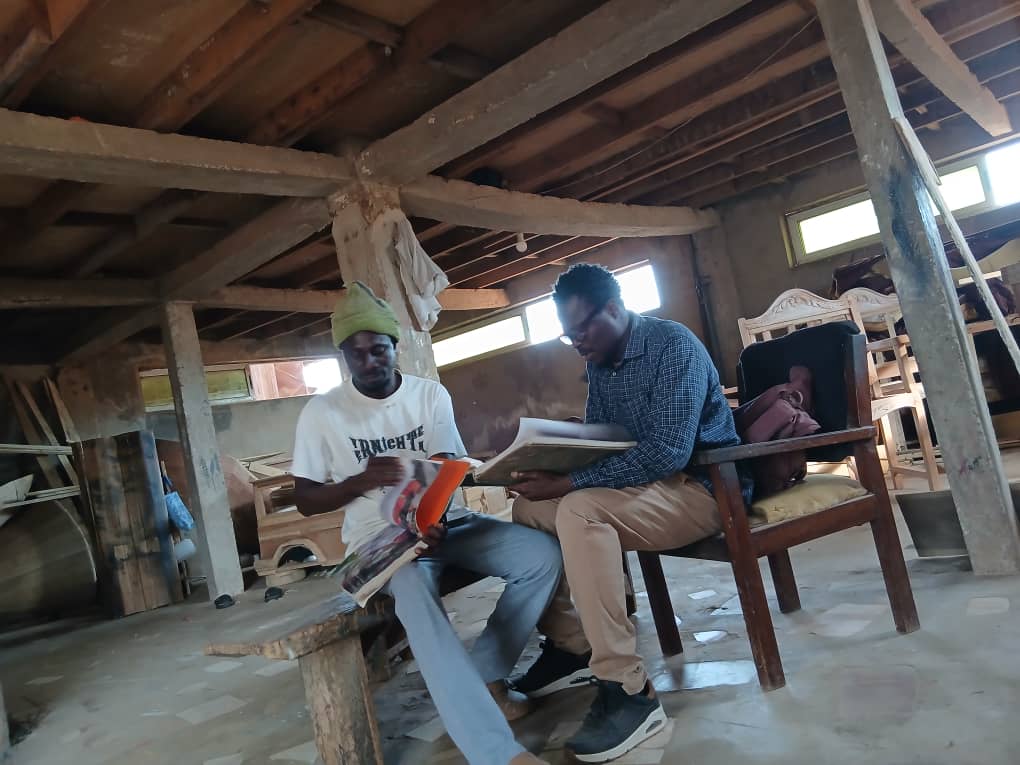
For him, the journey is not only about the people who visit his gallery or the countries in which his work has attracted interest. It is also about the young people who come to learn from him.
He currently has six apprentices working under him, although he said he has trained as many as 14 at different times. Some of his former apprentices have gone on to establish workshops of their own in the Central, Volta and Greater Accra regions.
Their progress gives him another reason to value the work he does. The skills he acquired under Paa Joe are being passed on, allowing others to build their own futures through the craft.
His experience reflects the enduring importance of apprenticeship in Ghana, where practical knowledge is often transferred through close, hands-on training.
For a young person entering the workshop, the process is about more than learning to shape wood. It is an opportunity to develop discipline, patience, artistic judgement and a skill that may eventually support an independent business. He once depended on a master to help him find his footing. Now, he has become a mentor to others.
A message to young African artists
His advice to aspiring artists is rooted in the experience of someone who has seen his work reach audiences beyond the place where it began.
“What I want to tell any young artist in Africa is that you have to push hard and push further because artworks don’t have limit, and the whole world love art,” he said.
His message is simple, but his own journey gives it weight. His talent needed training. His interest needed direction. And his craft needed time to develop before it could open new opportunities.
He encourages young artists not to give up simply because their work may not immediately receive the recognition they hope for at home.
The world, he believes, is open to creativity, provided artists continue to develop their skills and find ways to share their work.
It is a lesson that extends beyond coffin-making to the many young people across Ghana who possess creative abilities but are still searching for a path to turn them into a livelihood.
Keeping Ghana’s artistic heritage alive
Ghana’s figurative coffin tradition demonstrates how cultural heritage can remain alive through the work of practising artists. Family emblems, occupations and familiar objects become designs that preserve personal stories while introducing others to the country’s cultural imagination.
But traditions survive because people continue to practise them, teach them and find opportunities to make a living from them.
That is where his work carries significance beyond his individual achievements. His gallery is both a place of creation and a space where younger artists learn a specialised craft.
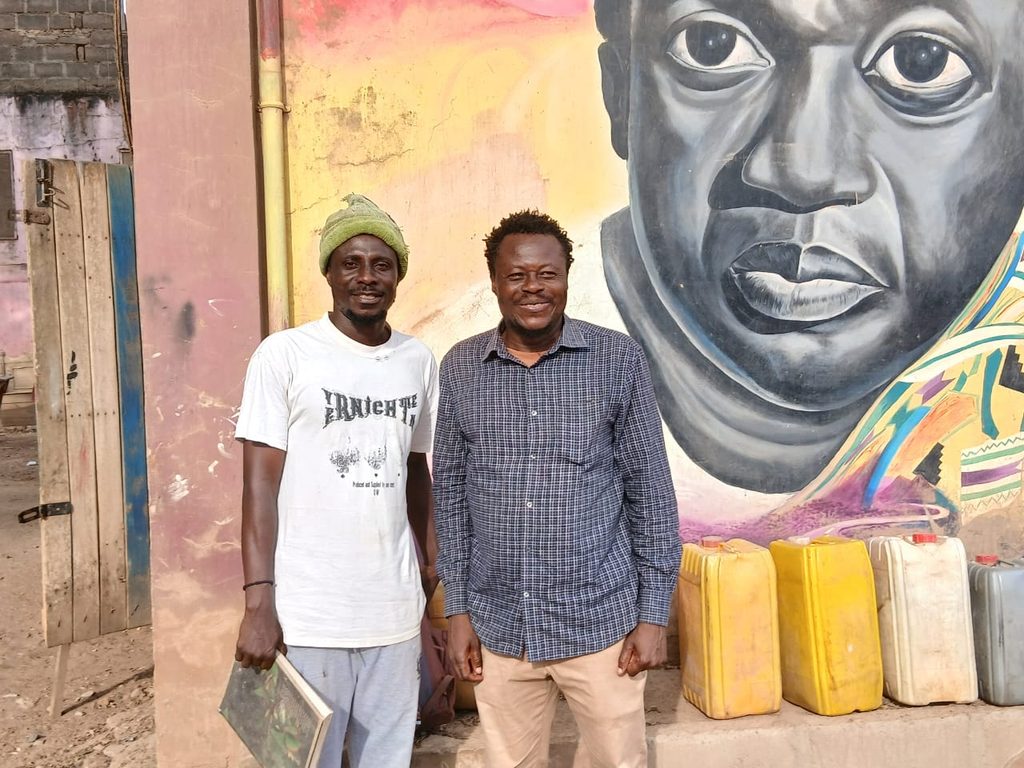
His journey also highlights the importance of recognising traditional artists as skilled professionals whose work can contribute to cultural tourism, entrepreneurship and the wider creative economy. For him, the path from apprentice to artist has brought international experiences he never expected when he first entered Paa Joe’s workshop.
Yet the foundation of his story remains close to home: a childhood interest, the support of his parents and the guidance of a master craftsman. Today, he is helping others begin their own journeys.
At Awutu Breku, he is doing more than making coffins. He is turning imagination into a livelihood, passing knowledge to a new generation and showing how a distinctly Ghanaian art form can find an audience around the world. His story is a reminder that sometimes, all it takes to begin an extraordinary journey is the courage to follow something that captures your imagination.
 Charles Prempeh PhD