
 By Ishmael Junourgh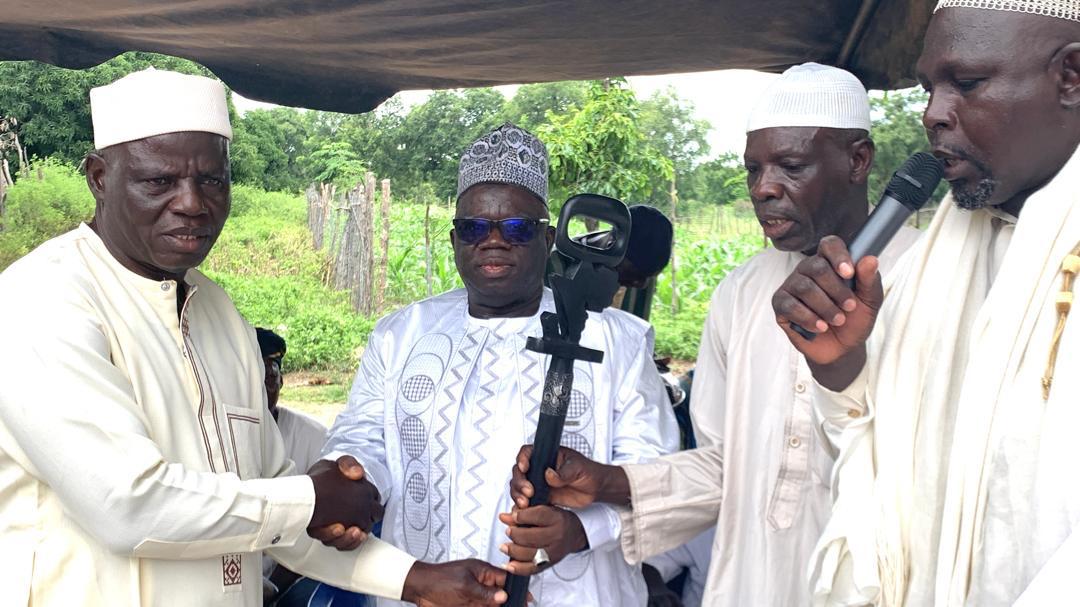
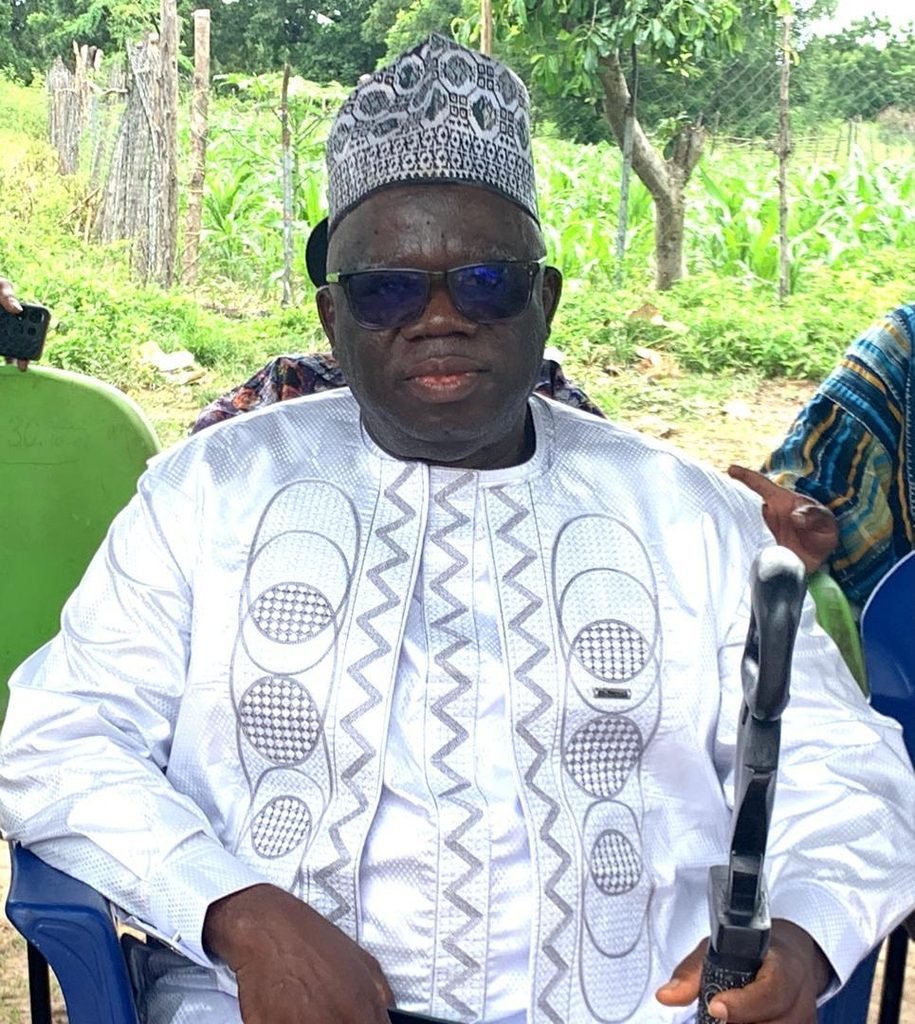
From a childhood marked by bereavement and long walks to school in a village without a classroom, Dr. Abdulai Darimani’s journey was shaped by family sacrifice, a passion for African literature and an early commitment to leadership.
Dr. Abdulai Darimani’s childhood was a chequered one, marked by early loss, family support and a determination to pursue education against the odds.
He was barely one or two years old when his father, Saaka Tunanaa, passed away. His mother, Mariama, raised him for a period, but following her remarriage, he spent about three to five years living with his maternal uncle.
His elder brother eventually brought him back home and insisted that he attend school. Looking back, Abdulai recognises that his brother played a decisive role in setting him on the educational path that would shape his life.
Abdulai grew up in Naaha, a village that had no school at the time. The nearest school was in Ponyentanga, a settlement that developed along a road after a change in the original route diverted traffic away from Naaha. As people moved closer to the new roadside, Ponyentanga gradually grew into a settlement in its own right.
He began his education there, walking from Naaha to school and back every day. Roads were poor, motor vehicles and motorbikes were rare, and even bicycles were uncommon. An entire village might have only three or four serviceable bicycles. Yet the young boy made the journey five days a week in pursuit of an education.
An Aunt’s Intervention and a Turning Point
When Abdulai reached Primary Three, his maternal aunt, Hawa, who lived in Babile, visited his mother and found him walking home from Ponyentanga. She was shocked that a child of his age had to make such a journey every school day.
She proposed that he move to Babile, where a school stood close to her home. His mother and elder brother agreed, determined to ensure that he received an education.
After spending only about three years in Primary Three at Ponyentanga, Abdulai moved to Babile and continued at Babile LA Primary School, where he completed his primary education.
The decision became a turning point in his childhood. What began as a practical response to the difficulty of getting to school opened the way for further educational opportunities.
From Wa Junior Secondary School to Wa Secondary School
After completing primary school, Abdulai enrolled at Wa Middle Day School. In the same year the Wa Middle Day School was converted to the first Junior Secondary School (JSS) in the then Upper West Area. While this JSS was the dream for most of his cohort, Abdulai had his eyes set on Wa Secondary School, whose boarding-school experience appealed to him.
He admired the students in their green shirts and wanted to experience boarding-school life himself. He discussed the idea with his friend, Suraj Adamu, and the two decided to sit the entrance examination for Wa Secondary School. Both passed and secured admission.
Their JSS headmaster was unhappy with their decision and warned them that they were abandoning their existing educational path without fully considering the implications. Nevertheless, they persisted.
At Wa Secondary School, Abdulai developed a deep interest in literature. He found himself among friends who enjoyed reading and learning, and they competed to see who had read the most books, particularly titles published under the African Writers Series.
Chinua Achebe was among their favourites. They immersed themselves in his works and those of other African writers, discovering stories and ideas that broadened their understanding of society and human experience.
Their enthusiasm extended beyond reading. They sometimes gathered, put their books aside and acted out the stories they had encountered. They memorised passages so thoroughly that they could recite them without consulting the original texts. They also assigned themselves imaginary diplomatic and leadership positions, turning their friendships into an informal community of ideas and ambition.
Among the people Abdulai remembers from that period are Adamu Suraj, Moen, Kwesi Nyantakyi, Francis, Issahaku Froko, Yahaya Froko, Mustapha (Stuff), Abu and one Osman (Candidate). Dr Solomon Dansie, who later became an academic and held a senior position at a polytechnic in Wa was a classmate.
Those years helped nurture his appreciation of literature, critical thinking and public engagement. They also laid the foundation for his later involvement in poetry and community mobilisation.
Speaking Up for What Was Right
Abdulai’s years at Wa Secondary School taught him lessons beyond the classroom. They helped shape his understanding of leadership, courage and the responsibility to speak out when he believed someone had been treated unfairly.
During the PNDC government, an Investigative body was constituted known as the Hawk a wider house-cleaning exercise that affected educational institutions and their officials. The Hawk came in two phases so there was Hawk One and Hawk Two.
Mr. Joseph Poobe, the headmaster of Abdulai’s school (Wa Secondary School), faced dismissal. Abdulai and some of his colleagues believed the decision was unjustified.
While in sixth form, Abdulai proposed that they should not remain silent. If they genuinely believed their headmaster was doing a good job, he argued, they had a responsibility to express their concerns.
He led his colleagues to Poobe’s house as the headmaster packed his belongings. They explained that they disagreed with the decision and wanted their position heard.
Poobe listened but cautioned that he did not expect the authorities to reverse the decision.
The students nevertheless wrote a letter challenging the dismissal. Without computers or printers, they prepared it by hand. To their surprise and delight, the ddismissal was reversed. Abdulai drafted the letter, one Simon Kuunyagna who had very good handwriting re-wrote the draft and Kwesi Nyantakyi who was then the SRC President signed the letter.
The experience demonstrated to Abdulai and his colleagues that students could make their voices heard and that collective action could influence decisions. It strengthened his conviction that leadership involves more than holding a position; it also requires the courage to defend what one believes is right.
He completed the five-year secondary-school programme in 1985 and finished sixth form in 1987 in the same Wa Secondary School.
Poetry, National Service and Political Mobilisation
After completing sixth form, Abdulai joined a group of young people undertaking their first year of national service with the National Youth Organising Commission in Wa. The district coordinator at the time was Dr. Rashid Hassan Pelpuo Member of Parliament for Wa Central, whom he already knew through earlier associations.
Those were politically active years. Abdulai and his colleagues became involved in the Democratic Youth League of Ghana (DYLG), travelling to villages, mobilising communities, delivering talks and bringing people from different settlements together for meetings and discussions.
Abdulai was elected to a leadership position in the Youth League specifically the Regional Secretary, while Rashid also assumed a leadership role the Regional President.
The experience exposed him to grassroots organising and gave him opportunities to interact with communities beyond his immediate surroundings.
It was also during this period that Abdulai and Rashid developed a more serious interest in poetry. Public functions offered opportunities to recite poems and exchange ideas, while their experiences in community mobilisation provided inspiration for their writing.
One of Abdulai’s poems was titled Black Is Beauty. It was inspired partly by the practice of skin bleaching among some women and by his reflections on colonialism and the influence of colonial attitudes on people’s perceptions of themselves.
Through the poem, he sought to affirm the beauty of Black identity and challenge ideas that associated beauty with lighter skin.
Unfortunately, Abdulai did not preserve all his early writings. He had collected books from the African Writers Series and other publications, some obtained through correspondence with organisations and contacts abroad. He kept them carefully in a box, believing they would remain part of his personal library.
However, a cousin who had developed a drug problem sold the books without his knowledge. When Abdulai eventually returned to retrieve them, he discovered that the box was empty.
It was a painful loss. The books represented years of reading, intellectual companionship and literary development. Some of his early poems also disappeared, leaving him without a complete record of that formative period.
Education, Family Sacrifice and Perseverance
Abdulai’s educational journey was shaped by the people who believed in him, particularly his elder brother Alhaji Yakubu Issahaku (Liman) and the teachers who recognised his potential.
He grew up in a community where access to formal education was limited. In his generation, he was the only person from his village to progress through school in the way he did. Many children who had started schooling around the same time dropped out, while only one or two people in the preceding generation had attended school.
This reality gave him a strong sense of responsibility. He was determined not to disappoint his community.
To support his education, he sometimes worked during school holidays, engaging in farming and other activities to raise money. He did not always tell his brothers and mother when he had obtained money for his school fees because he wanted to solve some of his problems independently rather than continually burden them.
His determination was tested when he contracted guinea worm disease during secondary school and became unable to walk for seven months.
He was worried about falling behind his classmates and possibly having to repeat a year. He asked his elder brother to visit the headmaster, M.A. Seidu, and explain his circumstances.
His elder brother later told him that the headmaster considered him a good student and believed he should be allowed to continue once he recovered.
When Abdulai returned to school, he discovered that no letter had been issued requiring him to repeat the year. He took his books and joined his colleagues in the appropriate class.
The experience reinforced the importance of perseverance but also demonstrated the difference a supportive teacher can make. M.A. Seidu’s confidence helped Abdulai continue his education at a time when illness could easily have derailed it, and today he holds a PhD.
A Family History Preserved in Names
His family history also taught him that memory can be preserved in ways that are not always written down.
His father’s name was Saaka Tunanaa. According to the family account, the name Tunanaa is connected to an episode in the family’s history during the period of slave raiding.
His ancestors reportedly fled when raiders arrived. During one such displacement, his great-grandmother reached Tuna, where she gave birth to his grandfather. When the family eventually returned, the name Tunanaa was used to preserve the memory of that experience and the place associated with it.
His maternal family had a similar naming history. His mother was known as Mariama Sonipa Issahaku, while his aunt Hawa was known as Hawa Sonipa Amadu. The name Sonipa was associated with their family and its history of travel and connections beyond their home community.The Sonipa is the mutilated version of sro-nipa, which means “fear people”.
For Abdulai, these traditions illustrate how names can carry memories of displacement, survival and return across generations, even when no written document records the events.
They also demonstrate that history is preserved not only in books and formal archives but in names, family stories and memories passed from one generation to another.
From Naha to a Life of Possibility
Dr. Abdulai Darimani’s journey began with loss and uncertainty but was sustained by family commitment, education and the support of people who believed in him.
His mother wanted him to attend school. His elder brother brought him home and insisted that he pursue an education. His aunt created an opportunity for him to continue his primary education in Babile, while his teachers helped him progress through school.
His friends at Wa Secondary School nurtured his love of literature, while student leadership and national service broadened his understanding of public life.
For a boy from a village where very few people had progressed through formal schooling, education represented more than personal achievement. It offered an opportunity to change the direction of his life and contribute to the wider community.
The boy who once walked from Naaha to Ponyentanga in search of an education had begun a journey shaped by family sacrifice, a love of literature, leadership and intellectual curiosity.
His story is a reminder that the journey from a village with limited educational opportunities to a wider world of possibilities is rarely travelled alone. Behind it are often the sacrifices of family members, the guidance of teachers and the determination of a young person unwilling to give up on the opportunities education offers.
 Charles Prempeh PhD