
 By Johannes Jafo Akunatu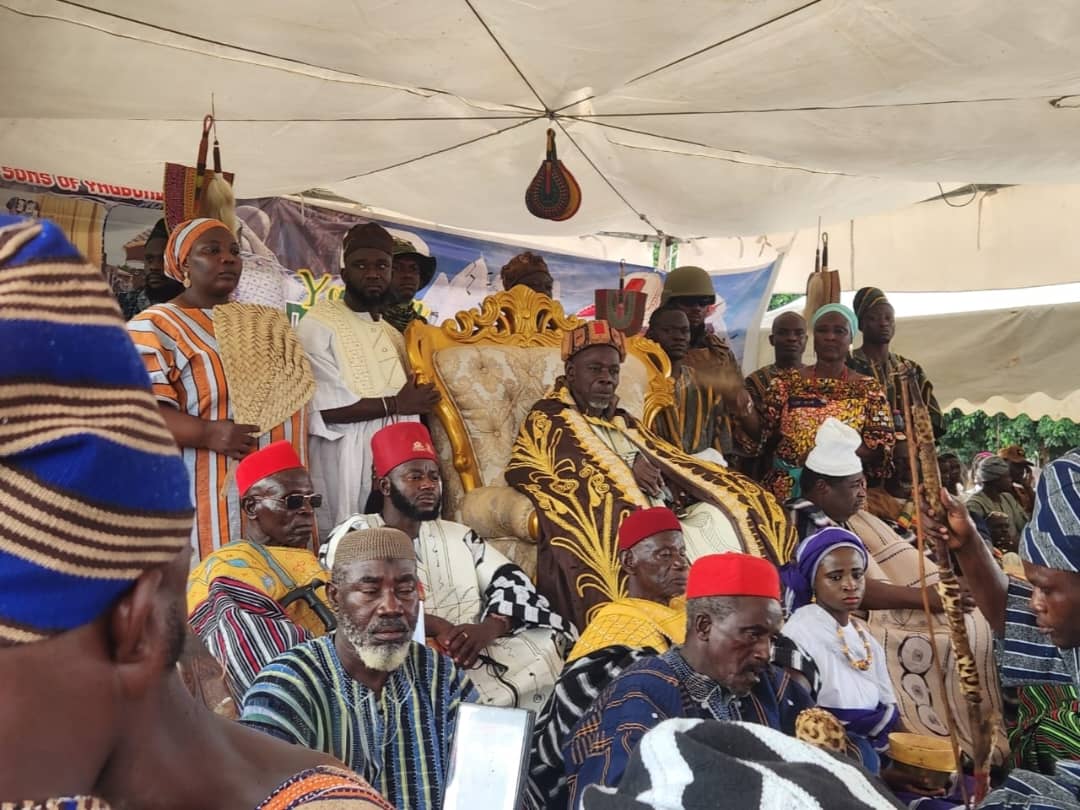
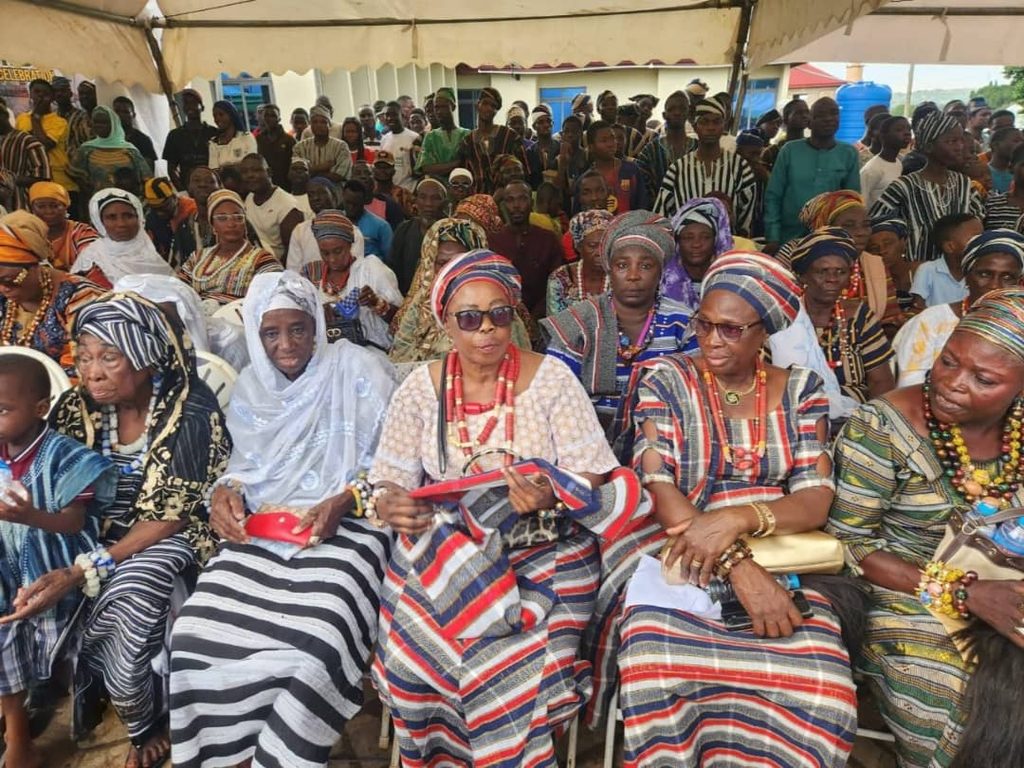
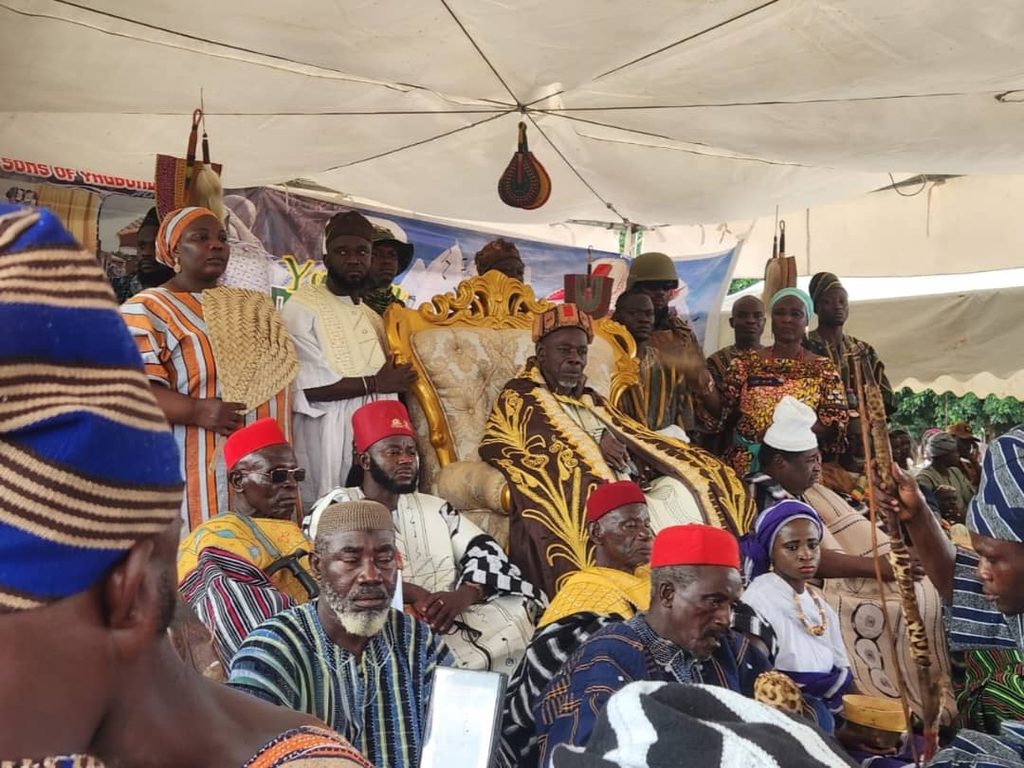
On Sunday, August 30, Damongo turned into the heart of Gonjaland. Sons and daughters of the Gonja Kingdom travelled home. Traditional authorities, government officials, politicians, business leaders, religious leaders and everyday citizens filled the grounds of the Jakpa Palace. Together they marked the 2026 Yagbon Damba Festival with His Royal Majesty Yagbonwura Bii-Kunuto Jewu Soale I, King and Overlord of the Gonja Kingdom.
This year’s theme set the tone: Celebrating Our Heritage, The Role of Traditional Leadership in Promoting Unity and Development. The celebration went beyond smocks, royal regalia, drumming and dancing. It stood as a public statement about identity and a reminder that a community forgets its own story at a cost.
More Than a Festival
Damba carries deep religious and traditional meaning for the Gonja people. The festival marks the birth and naming of the Holy Prophet Muhammad, and over time it has grown into a celebration of chieftaincy, history, royalty and kinship. Ghana’s National Commission on Culture describes Damba as a festival that honours the Prophet’s birth and naming while glorifying chieftaincy. Visit Ghana calls it a season of thanksgiving, family reunion, reflection and planning for the future.
For Gonjas, Damba is a living institution. Young people watch customs passed down from their forebears. Elders pass on knowledge no book can hold. Families scattered across the country return home. Chiefs receive homage. Communities repair strained relationships. Research on Gonja society names Damba the kingdom’s greatest festival, one rooted in the Islamic calendar and now woven into the fabric of Gonja identity and traditional authority.
Unity Beyond Politics
People travelled from every corner of Ghana to reach the royal seat of the Gonja Kingdom. Their presence turned the festival into a meeting point for the Gonja diaspora, traditional institutions, government, business and ordinary citizens. Politicians from different sides of Ghana’s political divide stood together on the same palace grounds. For a few hours, party lines gave way to a shared Gonja identity.
Reports from the celebration describe the Yagbonwura urging chiefs, politicians, religious leaders, youth groups and citizens to place the collective good above party and personal interest. This message matters for Gonjaland today. Politics decides who holds office. It does not decide who belongs to the kingdom. Elections end. Campaigns end. Governments changes. Family, ancestry and shared history stay.
Government Shows Up
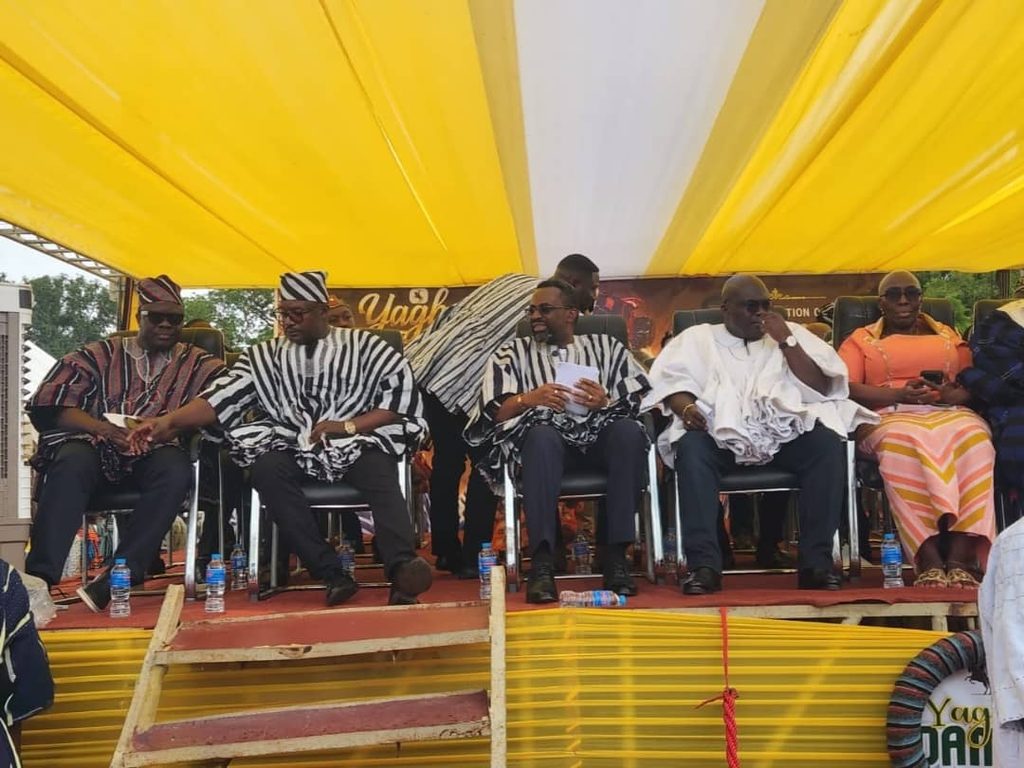
Chief of Staff Dr Julius Debrah and Madam Marietta Brew-Oppong, legal adviser to President John Dramani Mahama, represented the President, who was unable to attend in person. Dr Debrah passed on the President’s greetings to the Yagbonwura and the people of Gonjaland, and confirmed government’s respect for traditional leadership and its readiness to work alongside traditional authorities on development.
Dr Debrah linked the meaning of Damba to the daily responsibilities of citizenship. Democracy allows disagreement. Development demands scrutiny. Accountability requires citizens to question their leaders. None of that requires hatred between neighbours.
Investing in Education
Dr Debrah announced a personal contribution of GH¢200,000 to the Bii-Kunuto Educational Fund. President Mahama, through Dr Debrah, pledged government support for the initiative and called on the private sector and Gonjas around the world to contribute.
This gift builds on work already underway through the Fund. The Yagbonwura shared that the Fund paid US$20,000 in outstanding fees for Kassim Bakari, a Gonja student training for a Commercial Pilot Licence in Johannesburg. The payment let him resume training after his programme stalled. The King said he hopes Kassim becomes the first commercial pilot from Gonjaland.
The Fund exists to support brilliant students who lack the money to pursue their education. In July, the same initiative was linked to a new Guidance and Counselling Centre at Damongo Senior High School. Reports show the Fund has invested more than GH¢300,000 in tertiary students, including some studying Dentistry and Medicine in China.
Heritage only means something when it produces results for the living. If the ancestors passed down a kingdom, this generation owes the next one educated children, peaceful communities, working institutions and a stronger economy.
Money Talk From the Bank of Ghana
Dr Johnson Pandit Asiama, Governor of the Bank of Ghana, chaired the event and used the platform to connect culture with economic opportunity. He announced approval for three new National Investment Bank branches in the Savannah Region, a response to concerns of the people.
Culture and economic development sit closer together than people think. A festival draws a crowd. The quality of daily life between festivals depends on jobs, credit, functioning businesses and access to financial services. Dr Asiama spoke about community banking and digital credit tools designed to reach borrowers who cannot get to a physical branch.
He shared strong numbers too. Inflation fell from about 24 percent last year to 4.6 percent last month. Average bank lending rates dropped from 27 to 28 percent down to 15 to 16 percent. The Bank’s goal is to push lending rates toward 10 percent so businesses can borrow at a lower cost.
These numbers matter inside a Damba celebration. A festival fills hotels, feeds traders, hires drivers and gives artisans a market for their work. Dr Asiama named traditional festivals directly as engines that support local business and the rural economy.
From Celebration to Sustained Value
Damba works as both a cultural treasure and an economic resource. Thousands of people gather in Damongo for the festival. That same energy has a place in tourism, hospitality, handicrafts, agriculture, cultural education and small business growth. The pageantry draws the crowd. Leadership decides whether that attention turns into opportunity.
Traditional Leadership With a Job to Do
The theme chosen for this year carried real weight. Celebrating Our Heritage points to preservation. The Role of Traditional Leadership in Promoting Unity and Development places responsibility on the chief. A chief holds more than history. In today’s Ghana, traditional authorities mediate disputes, mobilize communities, protect cultural identity, support education and give people a platform for collective action.
Yagbonwura Bii-Kunuto Jewu Soale I has leaned into that role. Earlier this year he called on traditional authorities across Ghana to prove the continued relevance of chieftaincy by leading efforts that improve the welfare of their people. He argued that chiefs remain a pillar communities organize and build around.
That same philosophy showed up again at Damba 2026. The Yagbonwura called for cooperation among chiefs, politicians, religious leaders, youth groups and citizens, and warned against letting political differences fracture relationships. He also raised concern about substance abuse among young people and called on families, chiefs, teachers, religious leaders and security agencies to protect the future of Gonja youth.
The Youth Question
The future of Gonjaland rests on its young people, not on the grandeur of its festivals alone. A kingdom with a proud history needs young people with education, skills, discipline and the confidence to build businesses, enter professions, improve agriculture and compete beyond the region.
Dr Debrah called on young people to build ideas and create opportunities rather than wait for government jobs that will never reach everyone. Government carries responsibility, but no government employs every young person in a country. The answer lies in a system where education, skills, affordable credit, agriculture, entrepreneurship, infrastructure and peace work together.
Peace as Infrastructure
Development stalls where conflict lingers. Dr Debrah pointed to land and succession disputes and warned they delay projects and stall community progress. He assured traditional authorities of government support for lawful and peaceful resolution of these disputes.
This matters for Gonjaland directly. Roads, schools, hospitals, water systems and economic investment all need stability. Investors need confidence. Farmers need peaceful access to their land. Young people need communities where their ambitions have room to grow. Peace is not only a moral good here. Peace is development infrastructure.

Business Steps Up
Businesses and institutions supported the celebration alongside government and traditional authorities. MTN Ghana gave GH¢20,000 along with airtime and assorted drinks. The Ghana Tourism Authority contributed GH¢5,000 and assorted items.
This support shows Damba reaches beyond the palace walls. The festival has become part of the wider cultural and economic life of the Savannah Region. Companies get a chance to show their commitment to the communities they operate in. The community gets a stage to show its heritage and its potential.
A Palace With Deep Roots
The Jakpa Palace itself carried symbolic weight as the setting. It stands as the physical centre of an institution with a history that stretches beyond the borders of modern Ghana. Earlier this year, Yagbonwura Bii-Kunuto Jewu Soale I described the Gonja and Asante kingdoms as two royal houses connected for more than three centuries, tracing their shared roots back to the era of Ndewura Jakpa and the rise of powerful pre-colonial states.
Damba gives that history a voice you can hear. You hear it in the drums. You see it in the royal procession. You find it in the language of the elders and the smock worn by every guest. You watch it in the chiefs seated in state and the families who travel home each year. You feel it renewed each time young people watch traditions performed before them and understand they stand as custodians, not spectators.
What Comes Next?
The deepest value of Damba sits beyond the celebration itself. It sits in the question of what the Gonja people want their heritage to build for the next generation. Heritage that connects the wisdom of the past with the needs of the future carries a foundation for national development.
Damba 2026 gathered the kingdom around its history while pointing attention toward its future. The speeches from the palace touched education, financial inclusion, youth development, peace, infrastructure, traditional leadership and economic opportunity. That is how a festival earns its place in a modern society.
Damongo will return to its usual rhythm in the coming days. The palace grounds will empty. The visitors who came from Accra, Kumasi, Tamale and further afield will make their way back to their daily lives. But the message of this year’s Damba will linger longer than the dust that our foots kicked up on the durbar grounds. Gonjaland gathered, stood together, and once again proved that its story is still being written, one Damba at a time.
What stays behind is the message.
Gonjaland must protect its heritage, guard its unity, educate its children, strengthen its economy and settle its differences with wisdom. Damba means memory. Damba means identity. Damba means reunion. Above all, Damba reminds a people that knowing where you came from puts you in a stronger position to decide where you are going.
 Charles Prempeh PhD
  Ishmael Junourgh