
 By Zakaria Rafique Seinu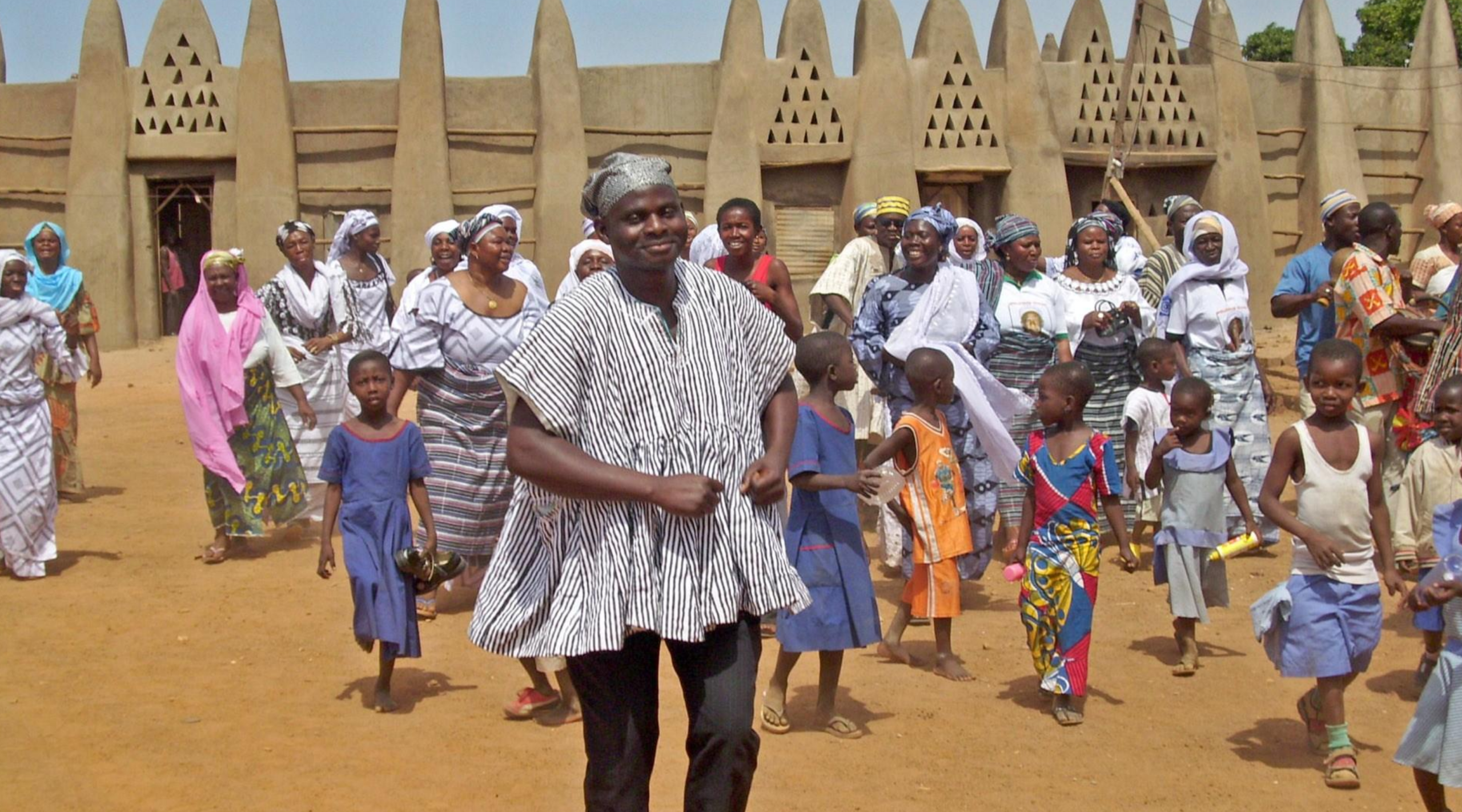
In Wa, on a market morning, a woman will call across the compound and the name that comes back is not just an answer. It is a story. Biihima, come here. Libirima, bring water._ To an outsider it sounds ordinary. To a Dagaaba or Waala ear, it sounds like history speaking.
Among the Dagaaba and Waala people of Northwestern Ghana, names do not sit lightly on the tongue. They are heavy with memory. They record the year a child was born, the mood in the house that week, the prayer the parents were making, and the lesson the community wanted the child to carry for life. Say Dakurah. Say Yuoni. Say Junoo. You are not calling a person. You are reciting an event.
The Dagaaba speak Dagaare and its related dialects, and the Waala speak Waale, a southern form of the same language family. Both groups live mainly in the Upper West Region, with deep ties across the border into Burkina Faso and Côte d’Ivoire. Their world has long been organised around the compound, the farm, the elders, and the ancestors. Writing came late. So memory had to find other homes. It found them in people, and the first way to lodge memory in a person is to name them.
That is why naming among Dagaaba and Waala is rarely random. A child is named for what was happening when he or she arrived. Was it a year of hunger or a year of plenty? Was the family reconciling after a quarrel? Was this the first child after many years of waiting? The answer becomes the name. As one Dagaaba cultural commentator puts it, names are given “based on where the child is born, the situation at hand around the time the baby is born, and many others.” Two siblings can therefore have names that sound like they come from different books, because the world was different on the days they were born.
In Wa in particular, place itself became part of the name. People were often identified by their ancestral home or their place of origin. You will hear Abu Nandorloo — Abu from Nandom. You will hear Issah Jirapaloo — Issah from Jirapa. The suffix –loo literally marks “person of” or “from.” It is a way of carrying your village with you, even when you move to town.
This is also how whole communities got their names in Wa. The Kantonsi people who settled in Wa are called Samunee. Samunee simply means “people from the east,” because they came from the eastern part of Wa. The name did not erase where they came from. It recorded it, and made it part of how Waala people remember their own town’s make-up. In this way, a name becomes a map.
Sometimes the story is deeply personal. My paternal grandfather was named Kokorikoe. Literally, “our throat is dried.” He was the only child of his parents. In Dagaaba speech, a
dry throat is not just thirst. It is longing, it is waiting, it is a prayer said for years without answer. To name their only son Kokorikoe was for his parents to tell the whole compound: we waited, we suffered, we almost gave up. And then he came. The name carries that thirst and that relief in two words. Fifty years later, grandchildren still hear the story every time the name is called.
Take Yuoni. It comes from the word for year, for farm year. Farming sets the calendar in this part of Ghana. A Yuoni carries the weight of that season. In Dagaare proverbs, a man is told to farm a year and change his fortune. To name a child Yuoni is to tie that child to labour, to timing, to the land.
Then there is Mwininie, “life is good.” It is often given after loss. A family buries someone, and then a child is born. Instead of silence, they give a testimony. The name argues with grief. It says to neighbours and to ancestors: we have suffered, but we still affirm life.
Junoo belongs in that same family of gratitude. From ju, to come or arrive, and noo, goodness. “Goodness has arrived.” It is the name you give when the waiting is over. After years without a child. After a long dry spell. After trouble. In Waale, people use junoo in daily speech to mean “it is a blessing.”So the child walks around with a blessing for a name.
Other names work as instruction. Biihima means “the child is to be respected.” It is a prayer, but it is also a charge to the community and to the child. Conduct yourself in a way that deserves respect. Libirima comes from “to forgive, to endure.” Families give it when they need healing. Years later, when there is a quarrel, an elder can point to the girl in the room and say, “We called her Endurance. Let us endure.” The name becomes a tool for peace.
Ajaasuma says “the world is good.” It sounds optimistic, and sometimes it is. But Dagaare is a language that loves irony. It can also be said after someone has been cheated, with a lift of the eyebrow. The child learns early that words have tone, and that life has both faces.
Gbolo is rock, strength. It is for the child expected to stand firm when the winds come. Pogdaa and Pognaa mark womanhood and standing. The slight difference in ending reflects the difference between Dagaare and Waale speech, but both carry expectation: hospitality, continuity, dignity. Dakurah is linked to compound and wealth, not just money but people, granary, and reputation. It is also a common surname in the Upper West, which shows how a personal name can grow into clan memory.
Religion has also written itself into this naming tradition, especially Islam, which has deep roots in Wa and across the Upper West. As Islam spread through trade and scholarship, Arabic names entered Dagaare and Waale speech, but they did not arrive unchanged. The community adapted them to fit the mouth and the music of the language.
So Osman became Sumani. Rahman became Darimani. Suleiman was shortened to Sule. Idris turned into Iddisu or Idriha. Yunus is heard as Inusah. On the female side, Mary is often rendered as Mieri. A child might be registered as Ibrahim at school and called Iddrisu at home, or be Aisha on paper and Ashetu in the compound.
This was not replacement. It was layering. A family could give a child a Qur’anic name for faith, a place-name for origin, and a Dagaare name for circumstance. Inusah Nandorloo Junoo tells you three things at once: his faith, where his people came from, and the story of his birth. In Wa, where the central mosque and the chief’s palace sit close together, it is common to hear all these traditions in one sentence. The Arabic name gives spiritual lineage. The place-name gives geography. The Dagaare name gives social memory.
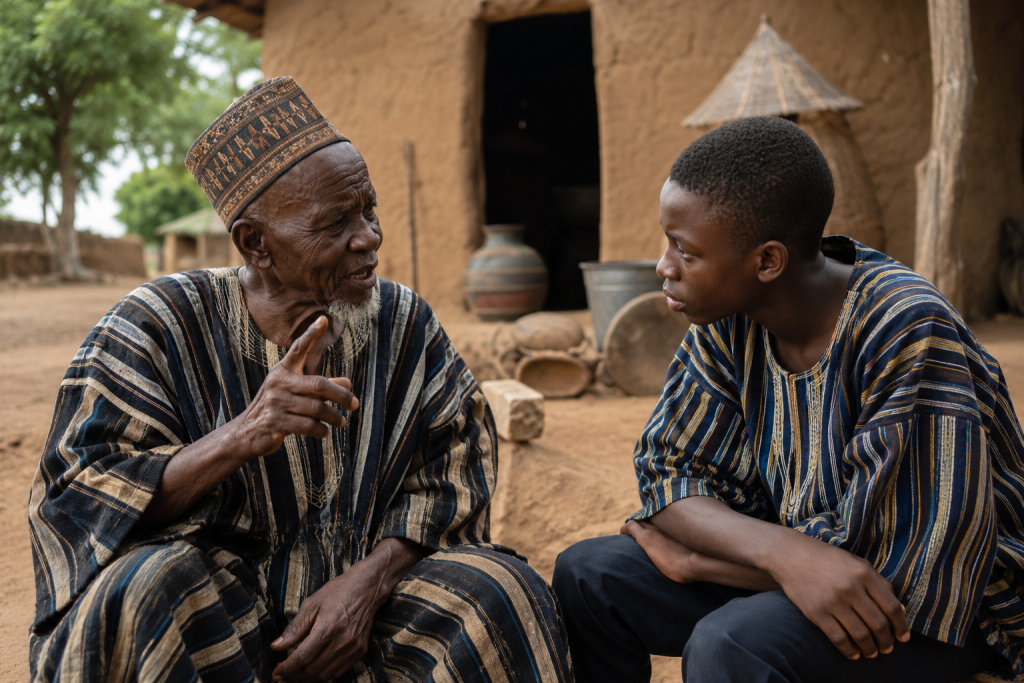
Scholars who have studied Dagara naming call it a vast cultural and literary area, because it exposes so much about tradition and moral values. That is exactly what happens in practice. Without textbooks, children learn ethics by hearing their own names explained. Why are you called Samunee? “Because our people came from the east of Wa.” Why Kokorikoe? “Because your grandparents waited so long, their throat was dry.” Why Libirima? “Because the year you were born, we had to forgive each other.” Why Junoo? “Because you came when goodness finally came to us.” Why Sumani? “Because we are Muslim and we honour the name of Osman.” In thirty seconds, a value, a hardship, a faith, and a place are passed on.
There are social benefits that go beyond sentiment. Psychologically, a child who grows up hearing “life is good” or “goodness has come” attached to them carries a frame of resilience. In conflict, names like Libirima give elders a reference point. In the city, a young man introducing himself as Dakurah Nandorloo in Accra or Kumasi immediately signals both his clan and his village. The name becomes a bridge. It creates kinship at a distance. And for historians, clusters of names are data. A run of Yuoni births might point to a significant agricultural year. A wave of Sumani and Darimani names tracks the long influence of Islam in Wa. Names like Samunee record migration. And a name like Kokorikoe preserves one family’s private waiting and makes it public memory.
None of this means the tradition is frozen. Christianity, formal schooling, and migration have also brought new names into the mix. Many children now carry three or four: a Qur’anic or biblical name, an English name for school, a place identifier, and a Dagaare name for home. The danger is not the new name. The danger is when the story behind the old name is no longer told. If Junoo becomes just a pleasant sound, or if Iddisu is said
without remembering Idris, or if Nandorloo is dropped until no one asks where Nandom is, or if Kokorikoe is shortened until no one asks why the throat was dry, we lose the archive.
That is why elders still do the important work at naming ceremonies and at evening fires. They tell the story. They connect the child to the moment, to the faith, to the place, and to the people. Projects like the Dagaare Wikimedia Community are also trying to put some of this on record, to promote Dagaare online and keep the language visible for the next generation.
What remains true is that for Dagaaba and Waala, a name is inheritance without material. You cannot sell it, but you can live it. Dakurah reminds you of substance. Yuoni reminds you of work. Mwininie reminds you to affirm life even after hardship. Junoo reminds you to notice when goodness arrives and to name it out loud. Kokorikoe reminds you that waiting itself is part of the story. Nandorloo and Samunee remind you where you came from. Sumani, Darimani, Sule, Iddisu, Inusah, Mieri remind you that faith also found a home in this language, and was welcomed by changing its coat to fit.
In a world that moves fast and forgets faster, these names slow us down. They ask simple, stubborn questions. What was happening when you were born? Where did your people come from? What did they endure? What did they believe? What do they want you to be now? That is the something in a name. For the Dagaaba and Waala, it is culture, history, tradition, place, and faith spoken in one word, passed from mouth to mouth so that it does not die.
 Ishmael Junourgh
  Charles Prempeh PhD