
 By Ishmael Junourgh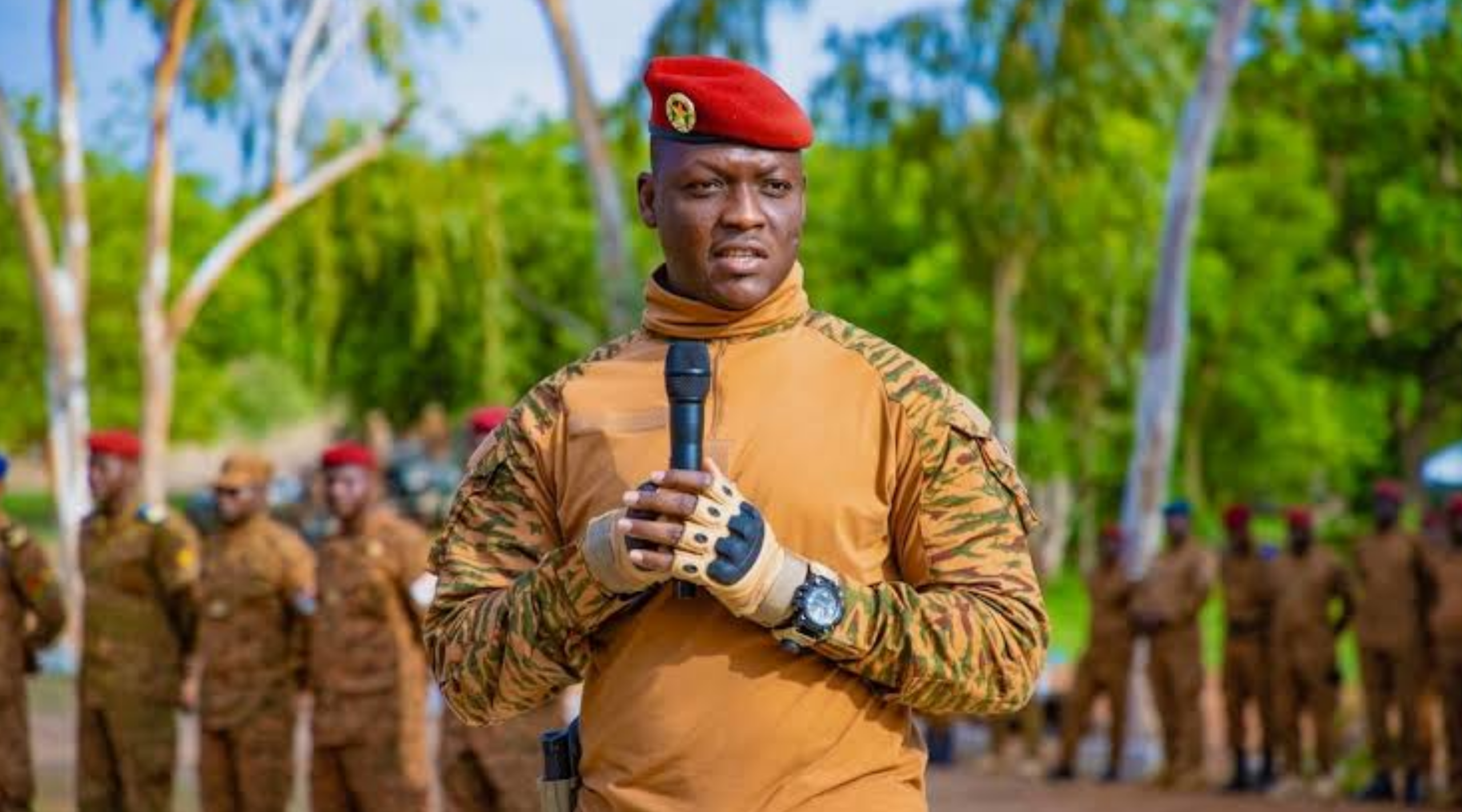
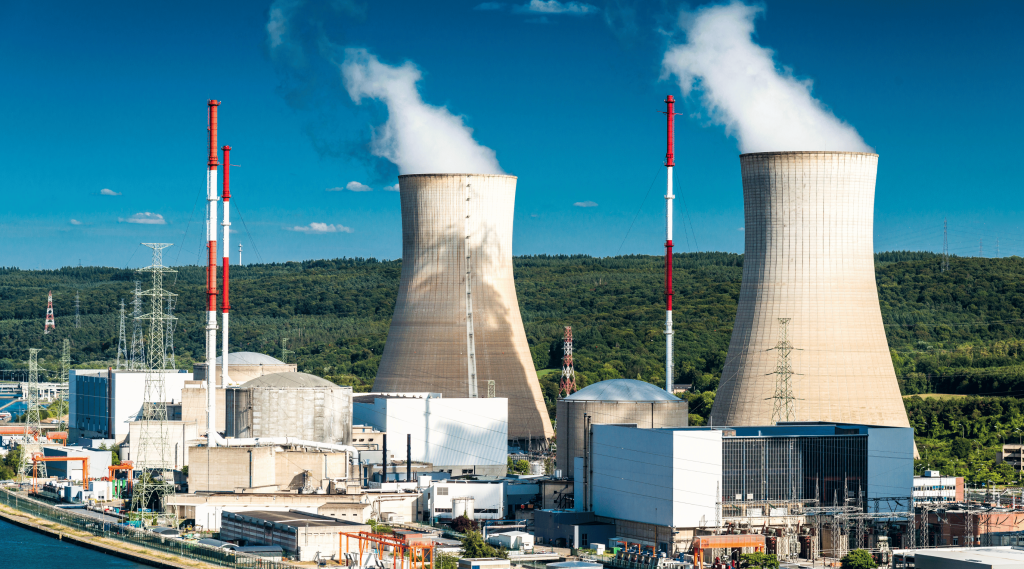
Burkina Faso’s decision to pursue civilian nuclear power with Russia has opened a new front in the country’s increasingly assertive search for energy sovereignty, while reviving an older African question: can postcolonial states master advanced technologies and use them to transform their own economies?
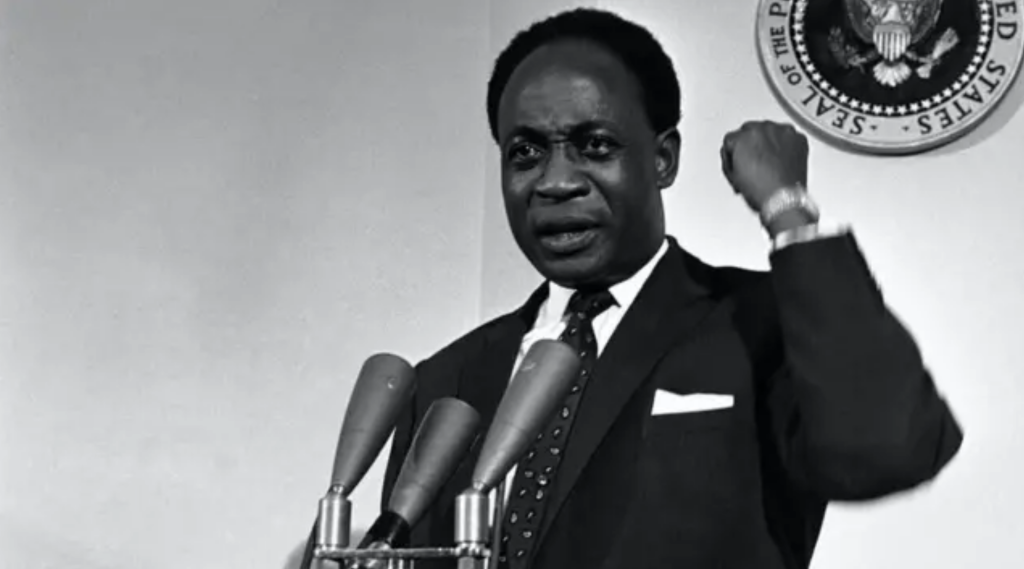
More than six decades ago, Ghana’s first President, Dr. Kwame Nkrumah, was asking essentially the same question.
Today, President Ibrahim Traoré’s government is looking towards Russia’s state nuclear corporation, Rosatom, to help establish a civilian nuclear-energy programme in Burkina Faso.
The historical connection is striking.
Nkrumah’s nuclear initiative was developed with Soviet assistance in the early 1960s. Burkina Faso’s current nuclear ambition is again being pursued in partnership with Moscow.
The political circumstances are different. The technology has evolved. But the developmental argument remains remarkably familiar: political independence is incomplete without scientific and technological capacity.
Burkina Faso’s nuclear turn
On 19 June 2025, Burkina Faso and Russia signed an intergovernmental agreement on cooperation in the peaceful use of nuclear energy.
The agreement was signed in St Petersburg by Burkina Faso’s Energy Minister Yacouba Zabré Gouba and Alexey Likhachev, Director General of Rosatom.
It followed an October 2023 memorandum of understanding between Ouagadougou and Rosatom and further agreements signed in June 2024.
The cooperation covers the development of a civilian nuclear power programme, nuclear medicine, agricultural applications, research, radiation and nuclear safety, as well as the training of Burkinabè specialists.
This distinction matters.
Burkina Faso has not yet built or commissioned a nuclear power plant.
The 2025 agreement established an important framework for cooperation, while technical and financial arrangements still have to be developed and assessed.
Burkina Faso’s Energy Ministry said Rosatom was expected to submit a technical and financial proposal for consideration by the Burkinabè authorities.
The country is therefore at the development and preparation stage rather than the operational stage.
Why nuclear power matters to Burkina Faso
The ambition becomes more understandable when placed against Burkina Faso’s electricity deficit.
World Bank data indicates that only about 21.7 percent of Burkina Faso’s population had access to electricity in 2023.
For a country seeking to industrialise, expand manufacturing, improve healthcare and process more of its agricultural and mineral resources domestically, reliable electricity is not simply an infrastructure issue.
It is the foundation upon which almost every other development ambition rests.
Factories need power.
Hospitals need power.
Water systems need power.
Schools and universities need power.
Digital infrastructure needs power.
Agricultural processing requires power.
Burkina Faso’s nuclear ambition therefore forms part of a wider political and economic project centred on energy security and national self-reliance.
The government is effectively asking whether a country with limited electricity access should continue relying principally on existing sources or attempt to introduce a new generation of large-scale, continuous power production.
Beyond electricity
The nuclear programme is also bigger than electricity.
According to Burkina Faso’s Energy Ministry, the cooperation with Russia includes applications in nuclear medicine, agriculture, research and industry, alongside specialist training and nuclear safety.
That could eventually mean the development of technologies capable of supporting cancer diagnosis and treatment, medical isotope production, food preservation and agricultural research.
The training component may be equally important.
Burkina Faso will need engineers, physicists, technicians, regulators and other specialists capable of managing a nuclear programme over decades.
That means the real project is not merely the construction of a reactor.
It is the construction of a national nuclear ecosystem.
The Russia question
Burkina Faso’s choice of Russia is politically significant.
Since the military takeover, Ouagadougou’s relationship with France and several other traditional Western partners has deteriorated sharply.
The government has instead moved closer to Russia, particularly in strategic sectors such as security and energy.
Rosatom has consequently become an important vehicle for that relationship.
Russian and Burkinabè technical teams have already discussed the institutional and technical requirements for a national nuclear programme, including human-resource development and industrial participation.
In August 2024, Rosatom technicians visited Ouagadougou to discuss aspects of the proposed nuclear facility, including the possible location and related infrastructure.
The June 2025 intergovernmental agreement represented a further step towards the project.
But the project remains subject to the difficult questions that accompany every nuclear programme: financing, construction, regulation, security, radioactive-waste management, human-resource development and long-term maintenance.
This is not a nuclear weapons programme
Another important distinction has been lost in some public discussions.
The Burkina Faso-Russia agreement concerns peaceful nuclear technology.
Civilian nuclear power and nuclear weapons are fundamentally different programmes, even though civilian nuclear technology requires stringent safeguards and security.
Burkina Faso’s agreement explicitly covers electricity generation and peaceful applications in medicine, agriculture, research and industry.
The country therefore needs to be judged on the seriousness of its nuclear regulation, safety systems and institutional capacity — not on assumptions that nuclear technology automatically means weapons development.
But the critics have legitimate questions
Burkina Faso’s critics raise serious questions.
Can a country facing a major security crisis sustain a nuclear programme?
Can it finance a project that could require enormous capital expenditure?
Does it have enough nuclear engineers and technicians?
Can it establish an independent and credible regulatory system?
How will radioactive waste be managed?
Can the country secure nuclear infrastructure against terrorism and other threats?
And does nuclear power make economic sense alongside Burkina Faso’s abundant solar potential?
These are legitimate questions.
They should not be dismissed as Western hostility.
A nuclear programme is not a political slogan. It requires competence, money, institutions and decades of continuity.
But those questions should also not become an argument that African countries are inherently incapable of handling advanced technology.
The appropriate standard should be competence and safety, not geography.
Then came Nkrumah
This is where Burkina Faso’s story reaches back across more than six decades to Ghana.
In 1961, President Kwame Nkrumah’s government launched the Ghana Nuclear Reactor Project.
In 1963, Ghana established the Ghana Atomic Energy Commission to institutionalise the country’s nuclear ambitions.
Nkrumah believed science and technology were central to genuine independence.
For him, the political liberation of Ghana could not be separated from the country’s ability to develop its own scientific institutions and technological capacity.
The nuclear programme was part of that broader vision.
The original Ghanaian project centred on a research reactor, rather than a commercial nuclear power plant. The facility was intended to support scientific research, training and peaceful applications of nuclear technology.
And, significantly, the Soviet Union was involved in Ghana’s nuclear development.
The Ghana Atomic Energy Commission records that Soviet experts assisted Ghana during the development of the country’s nuclear programme.
The parallels with today’s Burkina Faso are therefore remarkable.
In the early 1960s, Nkrumah’s Ghana looked towards Moscow for nuclear cooperation.
In the 2020s, Traoré’s Burkina Faso is again looking towards Moscow — this time through Rosatom — to develop a civilian nuclear programme.
The coup that interrupted Ghana’s nuclear dream
But Nkrumah’s nuclear ambition did not reach its intended conclusion.
On 24 February 1966, Nkrumah was overthrown in a military coup while he was abroad.
The political order that had championed his scientific and technological vision disappeared.
The nuclear project was consequently disrupted.
Historical accounts indicate that substantial infrastructure had already been developed at Kwabenya, where Ghana’s proposed research reactor was being established.
The reactor itself, however, was never commissioned as originally envisioned under Nkrumah.
Ghana’s nuclear story eventually continued in a different form.
The Ghana Research Reactor-1 was later commissioned in 1994, providing the country with research and training capabilities and supporting applications in medicine, agriculture and industry.
But the original Nkrumah-era vision had been interrupted.
The lesson for Burkina Faso
That history offers Burkina Faso both inspiration and warning.
The inspiration is obvious.
Nkrumah demonstrated that an African government in the early years of independence could think seriously about nuclear science.
He understood that the technological gap between Africa and the industrialised world was itself a form of dependency.
His ambition was to build institutions capable of producing African scientists and engineers rather than keeping African countries permanently dependent on foreign expertise.
But Ghana’s experience also demonstrates the vulnerability of ambitious national projects to political instability.
Nuclear programmes cannot depend entirely on one president.
They must survive governments.
They must be supported by institutions.
They must be backed by legislation, financing, trained personnel, regulatory independence and long-term national commitment.
That may be Burkina Faso’s most important lesson from Ghana.
If Traoré’s government wants its nuclear programme to succeed, it must ensure that it becomes a Burkinabè national project rather than simply a Traoré-era project.
From Kwabenya to Ouagadougou
The geographical distance between Ghana’s Kwabenya and Burkina Faso’s capital may be relatively small.
Historically, however, the distance spans more than half a century.
At Kwabenya, Nkrumah’s generation attempted to place Ghana inside the emerging nuclear age.
At Ouagadougou, Traoré’s generation is attempting to do something potentially much larger: establish a civilian nuclear power programme capable of contributing to national electricity generation.
The two projects are not identical.
Nkrumah’s initiative was primarily a research-reactor programme.
Burkina Faso is pursuing a framework for a future nuclear power plant.
But the philosophy behind both projects contains an unmistakable common thread.
Africa should not merely consume advanced technology. It should develop the capacity to master it.
The wider Sahel shift
Burkina Faso’s nuclear ambition also fits into a broader transformation across the Sahel.
Mali has signed nuclear cooperation agreements with Russia, including discussions around the development of a low-power nuclear plant.
Niger has also deepened nuclear cooperation with Russia.
The three countries — Burkina Faso, Mali and Niger — now form the Alliance of Sahel States (AES) and have increasingly sought strategic partnerships outside the traditional Western framework.
Their approach is often described as anti-Western.
But another interpretation is possible.
The Sahel states may be attempting to diversify their external partnerships and reduce their dependence on a single geopolitical bloc.
Russia is one partner.
China is another.
Other international powers remain relevant.
The fundamental question is whether these partnerships produce actual domestic capacity or simply replace one form of external dependence with another.
That is the test Burkina Faso will ultimately face.
Energy sovereignty versus energy reality
The rhetoric of energy sovereignty is powerful.
But nuclear power is expensive, technically demanding and unforgiving of institutional weakness.
Burkina Faso cannot build a reactor simply because it wants to demonstrate independence.
It must prove that the project is technically viable, economically sustainable and safe.
It must establish credible regulatory institutions.
It must train generations of specialists.
It must create emergency-response systems.
It must secure the facility.
It must determine how radioactive materials and waste will be managed.
And it must ensure that the project survives changes in government.
The real measure of sovereignty will therefore not be the signing ceremony.
It will be whether Burkina Faso can eventually operate the programme safely and sustainably with increasingly strong domestic expertise.
Africa’s unfinished atomic story
The story of Burkina Faso’s nuclear ambition should therefore not be presented as Africa suddenly discovering nuclear technology because Russia has arrived in the Sahel.
Africa’s nuclear story is much older.
It runs through Nkrumah’s Ghana.
It runs through South Africa’s nuclear programme.
It runs through research institutions in countries such as Nigeria and Egypt.
It runs through Ghana’s present-day nuclear research infrastructure.
And it now extends to a new generation of African states exploring nuclear power as part of their development strategies.
Nkrumah’s vision was born at the height of the Cold War.
Traoré’s vision has emerged in a world of geopolitical competition, climate change, energy insecurity and renewed African demands for strategic autonomy.
Yet the underlying question remains remarkably similar:
Who decides what Africa is capable of building?
The unfinished dream
Nkrumah’s nuclear project ultimately did not become the technological foundation he imagined.
The political upheaval of 1966 interrupted the programme.
But the idea did not die.
Ghana eventually developed its own nuclear research capacity, and today the country continues to explore nuclear power as part of its long-term electricity strategy.
Burkina Faso is now taking its own step.
The proposed Russian-backed nuclear programme may succeed.
It may encounter financial or technical obstacles.
It may be delayed.
It may even be abandoned.
But it deserves to be examined as an African development project rather than simply as a geopolitical contest between Russia and the West.
The strongest argument for Burkina Faso’s nuclear ambition is not that Russia can build reactors.
It is that Burkina Faso wants to acquire the knowledge, infrastructure and energy capacity to determine more of its own future.
That ambition carries enormous risks.
But it also carries an important historical resonance.
More than sixty years after Kwame Nkrumah looked towards atomic science as part of Ghana’s development future, another West African government is once again looking towards Moscow.
Nkrumah’s reactor never became Ghana’s nuclear power plant.
Burkina Faso now has the opportunity to learn from both the vision and the unfinished history.
The question is no longer whether Africans can dream about nuclear technology.
They have been dreaming about it for generations. The question is whether this generation can build the institutions strong enough to turn that dream into a safe, sustainable and genuinely African technological capacity.