
 By Ishmael Junourgh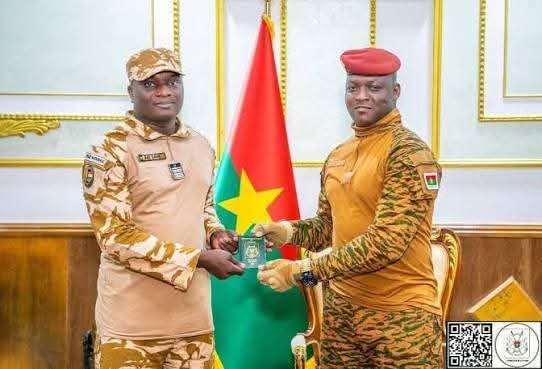
From the disappearance of the ECOWAS identity to a new passport for the Alliance of Sahel States, Burkina Faso is turning an ordinary travel document into a powerful symbol of political rupture, technological modernisation and regional realignment.
A passport is more than a booklet carried through airports. It is a declaration of identity, a certificate of belonging and, increasingly, a technological instrument through which states exercise sovereignty.
In Burkina Faso, that symbolism has taken on unusual political weight.
The country is now issuing a new biometric passport bearing the identity of the Confederation of the Alliance of Sahel States (AES), shared by Burkina Faso, Mali and Niger. The document represents one of the clearest physical manifestations of the Sahel bloc’s attempt to build institutions outside the framework of the Economic Community of West African States (ECOWAS).
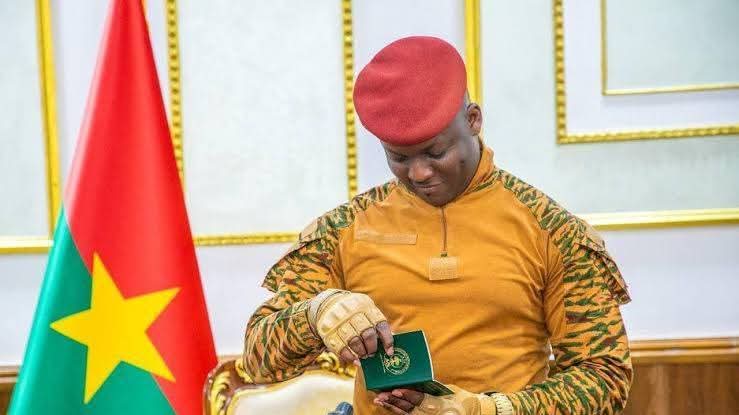
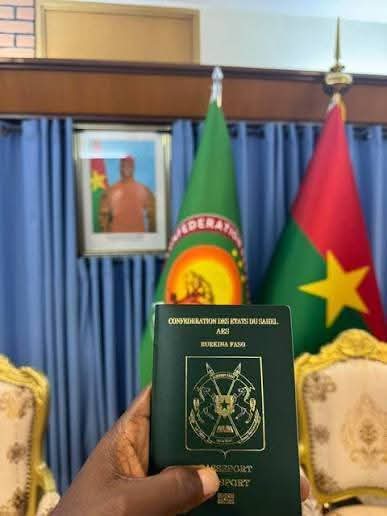
The new passport entered circulation in Burkina Faso on 29 January 2025, the same day the withdrawal of Burkina Faso, Mali and Niger from ECOWAS formally took effect. President Ibrahim Traoré was among the first to undergo biometric enrolment and receive the new AES passport.
But the significance of the document extends far beyond the removal of a regional logo.
It sits at the intersection of sovereignty, security, technology, African regional integration and the changing geopolitical orientation of the Sahel.
A passport without ECOWAS
Perhaps the most immediately striking feature is what the new document no longer carries.
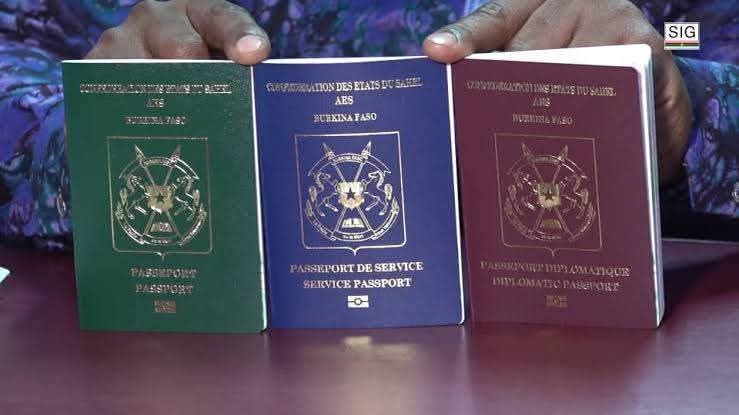
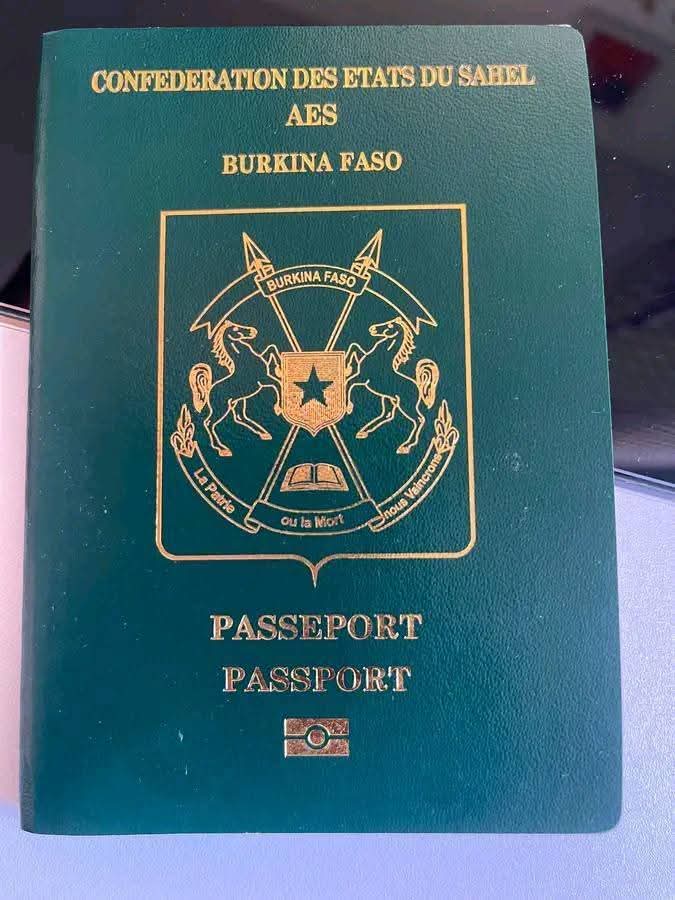
The ECOWAS name and logo have disappeared from the new passport, replaced by the identity of the AES. The cover identifies the Confédération de l’Alliance des États du Sahel, followed by the issuing country and its national coat of arms.
For Burkina Faso, the document therefore communicates two identities simultaneously: national sovereignty and confederal belonging.
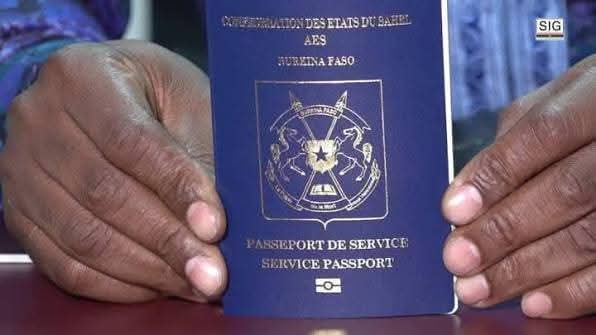
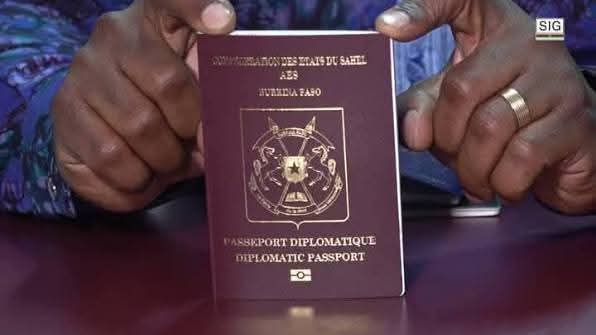
The AES passport is common to the three member states; Burkina Faso, Mali and Niger; while the issuing country remains clearly identified. Burkina Faso’s ordinary passport is green, while service and diplomatic versions are blue and red respectively. The passport contains 34 pages and has a five-year validity.
The change is particularly significant because the ECOWAS departure was not merely an administrative decision.
The three military-led governments had accused ECOWAS of becoming excessively political and of imposing punitive measures following the coups in the region. Their response was to develop the AES as an alternative framework for security, political cooperation and economic integration.
The passport now gives that political project a physical identity.
The technology behind the politics
Beneath the political symbolism is a sophisticated biometric infrastructure.
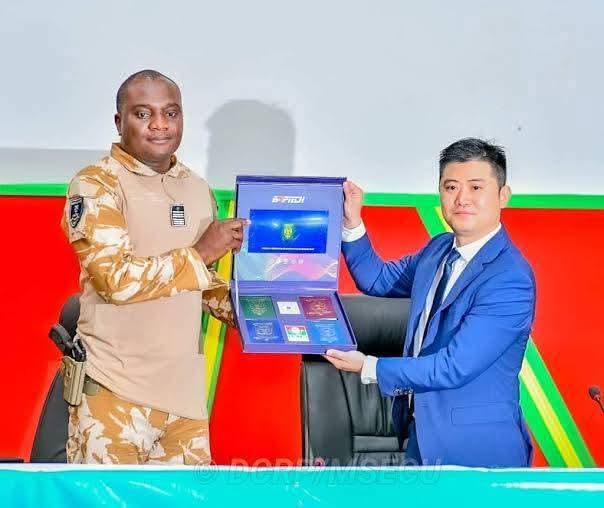
Burkina Faso launched its next-generation electronic passport system in September 2024 with technical support from Chinese identity-technology company EMPTECH. The government says the system incorporates advanced security technologies, biometric enrolment and safeguards designed to reduce passport forgery and identity fraud.
The passport uses a polycarbonate data page, an electronic chip and automated biometric technologies. EMPTECH says its enrolment system uses AI-enabled equipment designed to capture biometric information in accordance with International Civil Aviation Organization (ICAO) standards.
That technological architecture matters in a region where border management is closely linked to the fight against terrorism, trafficking, identity fraud and irregular migration.
The passport is therefore not simply a new cover design.
It is part of a broader effort to create a more integrated identity-management system across the AES space.
Burkinabè authorities have explicitly linked the new identity infrastructure to improved border controls and the fight against document fraud. The interoperability of identification systems among the three countries is also intended to improve the management of population movements and security threats.
China enters the identity architecture
There is another layer to the story that deserves attention.
The passport’s technological development reflects the growing role of Chinese companies in Burkina Faso’s digital and administrative infrastructure.
EMPTECH was awarded the project through a public-private partnership with the Burkinabè government. The company says its mandate includes the e-passport issuance system and associated services.
Burkina Faso’s Ministry of Security has described the cooperation with China as part of broader relations between Ouagadougou and Beijing.
This is significant because the AES’s pursuit of sovereignty is unfolding alongside a geopolitical diversification of its partnerships.
As the Sahel states distance themselves from traditional Western partners, particularly France, they are simultaneously deepening relations with countries such as Russia and China.
The passport is consequently both a document of sovereignty and an artefact of a changing international partnership structure.
What does the new passport actually offer travellers?
Political symbolism, however, does not automatically translate into greater international mobility.
According to the 2026 Passport Index, the Burkina Faso passport currently has a mobility score of 64, with 31 visa-free destinations, 31 destinations offering visa-on-arrival access and two accessible through an electronic travel authorisation. It ranks 78th on that index.
That means the Burkinabè passport remains a relatively modest global travel document, but its holders retain considerable access within Africa.
Visa-free destinations listed by Passport Index include Ghana, Côte d’Ivoire, Nigeria, Senegal, Togo, Benin, Guinea, Guinea-Bissau, Liberia, Sierra Leone, Gambia, Cape Verde, Chad, the Central African Republic, Mali and Niger, among others. Morocco and Tunisia are also listed as visa-free destinations.
Outside Africa, the passport provides visa-free access to places including Barbados, Dominica, Ecuador, Haiti, Bangladesh, Micronesia, the Philippines, Singapore and Saint Vincent and the Grenadines, although entry conditions and permitted durations vary by destination.
The numbers also demonstrate an important distinction: leaving ECOWAS has not automatically meant isolation for Burkinabè travellers.
ECOWAS exit did not close West Africa’s borders
This is perhaps one of the most misunderstood aspects of the AES experiment.
When Burkina Faso, Mali and Niger formally left ECOWAS on 29 January 2025, ECOWAS announced transitional measures designed to prevent disruption to ordinary citizens.
The regional bloc instructed member states to continue recognising existing ECOWAS-branded passports and identity cards held by citizens of the three countries until further notice. It also said citizens of the departing states should continue to enjoy visa-free movement, residence and establishment rights under ECOWAS protocols during the transition.
The implication is important.
The disappearance of the ECOWAS logo from the new passport did not immediately translate into the disappearance of regional mobility.
A Burkinabè citizen can still travel to Ghana, Nigeria, Côte d’Ivoire, Senegal and several other West African countries under applicable entry arrangements.
The passport may have changed its political identity, but the geography of West African human mobility has proved more complicated than the political rupture might suggest.
A passport as an instrument of AES integration
For the three Sahel governments, however, the deeper ambition is not merely to facilitate international travel.
It is to construct a functioning regional political space.
The passport provides a common administrative identity for the three AES countries. It complements the development of an AES biometric identity card and other mechanisms intended to facilitate the movement of people and goods.
The direction is clear: the AES is attempting to move from a military-security alliance into a broader institutional project.
A common passport is therefore an important test.
Can three states that have broken politically with ECOWAS build their own mechanisms for movement, identification, border management and regional integration without destroying the everyday mobility upon which millions of West Africans depend?
That question remains open.
The price of sovereignty
For ordinary Burkinabè citizens, the passport remains relatively affordable.
The official passport fee is 50,000 CFA francs, accompanied by a 200 CFA franc fiscal stamp. Burkina Faso’s National Police and diplomatic mission information confirm the 50,000 CFA fee and the required documentation, including proof of nationality, birth documentation, identification, photographs and professional-status documentation.
The AES passport is valid for five years.
The application process involves identity verification and biometric enrolment, including the capture of facial data and fingerprints. Burkina Faso’s new electronic passport infrastructure also introduced greater automation and tracking capabilities, with authorities indicating that citizens abroad can access enrolment services through diplomatic missions rather than necessarily travelling back to Burkina Faso.
For a government seeking to modernise state administration, these changes may be as important as the passport’s political symbolism.
A rupture, but not an abandonment of Africa
The AES passport should therefore not be interpreted simply as an anti-ECOWAS document.
Its more interesting meaning lies in the tension between separation and integration.
Burkina Faso, Mali and Niger have rejected the institutional framework of ECOWAS while simultaneously constructing another regional framework.
They have withdrawn from one West African bloc but created another.
They have removed ECOWAS branding but retained extensive regional mobility.
They have asserted political sovereignty while investing in internationally recognised biometric standards.
And they are reducing dependence on some traditional Western partners while building new technological and strategic relationships with China and Russia.
The passport captures all of these contradictions.
From a booklet to a geopolitical statement
For Captain Ibrahim Traoré’s Burkina Faso, the new passport is therefore unlikely to be remembered merely as another administrative reform.
Its green cover, electronic chip, biometric data and AES insignia embody a much larger political narrative.
It tells the Burkinabè traveller: your state has changed its institutional home.
It tells the AES neighbours: three countries are building a common administrative identity.
And it tells the wider world: the Sahel is attempting to define its own political and technological architecture.
Whether that experiment ultimately produces greater sovereignty, stronger security and meaningful economic integration—or creates new bureaucratic and diplomatic barriers—will depend on what happens beyond the passport itself.
For now, however, the document represents one of the most tangible symbols of the Sahel’s geopolitical transformation.
The passport has changed. The question is whether the world will change the way it sees the traveller carrying it.