
 By Ishmael Junourgh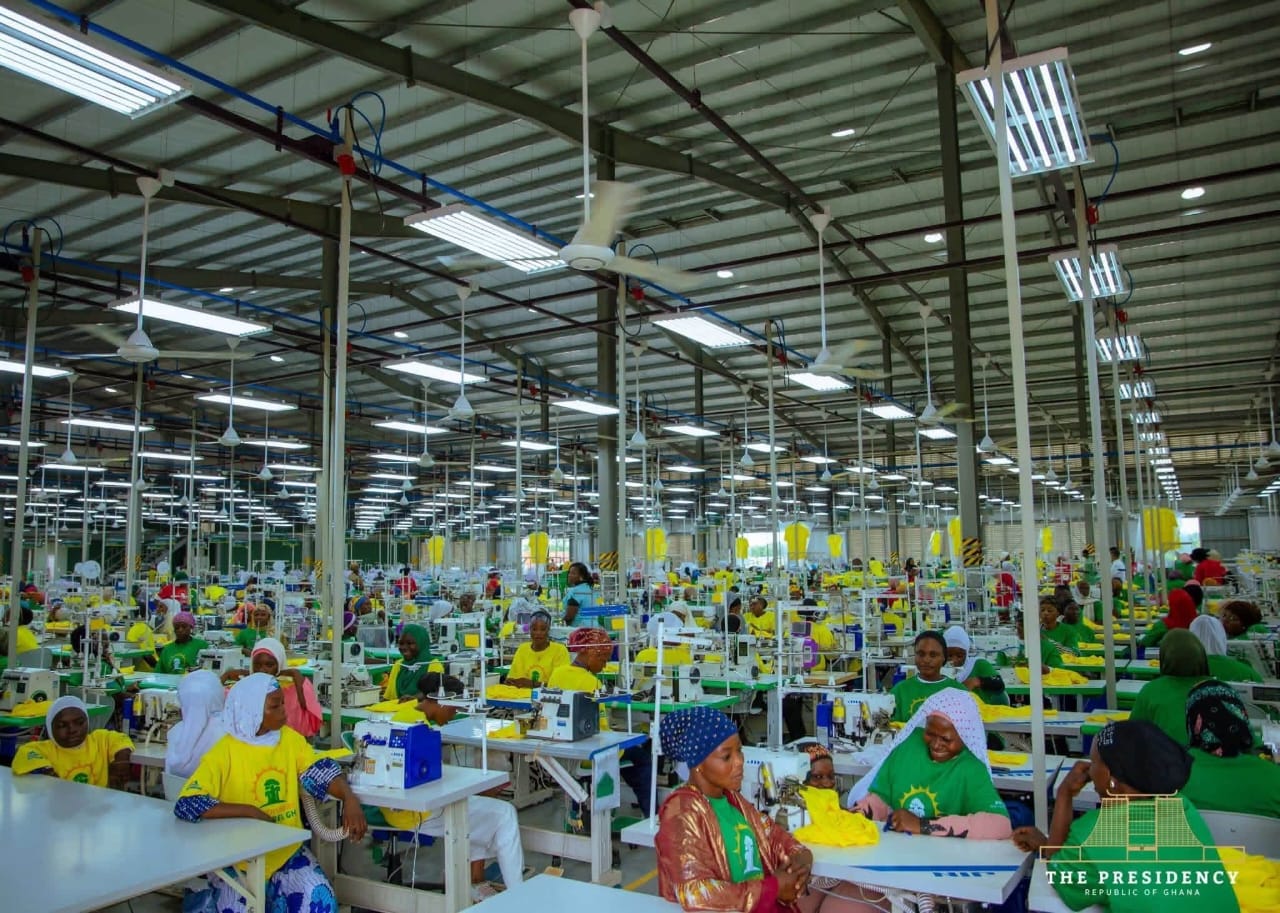
Savelugu factory raises hopes of jobs for northern women as Ghana seeks to revive a collapsed cotton-to-garment value chain
Every morning in the crowded commercial districts of Accra, young women from northern Ghana weave through traffic and marketplaces carrying heavy loads balanced on their heads.
They are known locally as kayayei — female head-porters who have migrated south in search of livelihoods that are often unavailable in their home communities.
Their journeys from the north to Ghana’s southern cities have become one of the most visible human faces of the country’s uneven economic geography.
But behind the pans, sacks and loads carried through the streets of Accra lies a larger development question: what happens when rural economies cannot generate enough productive employment for their young people?
It is a question that gives the emergence of the Northshore Apparel factory in Savelugu significance far beyond the walls of a garment plant.
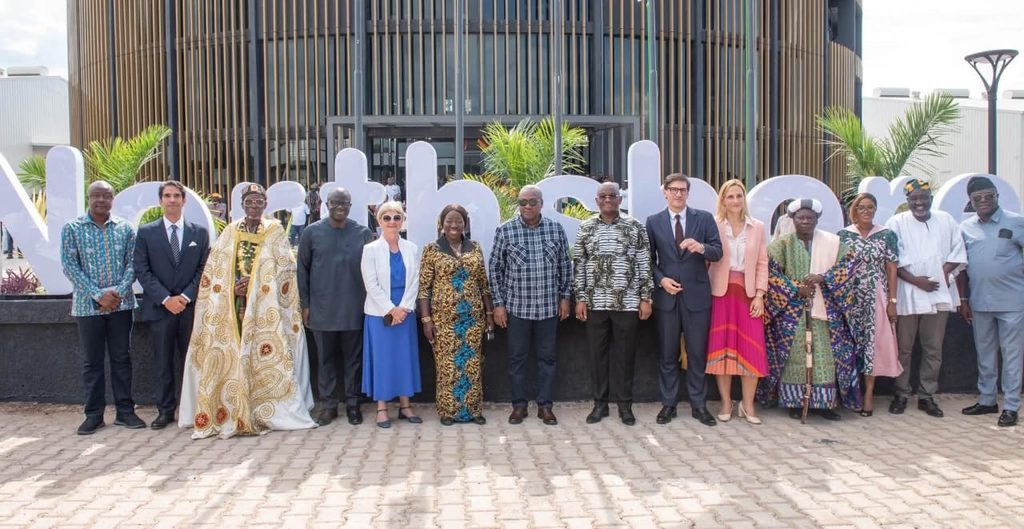
The factory is being positioned as part of an effort to create industrial employment in northern Ghana, particularly for women, while laying the foundations for a revival of the country’s cotton-to-garment value chain.
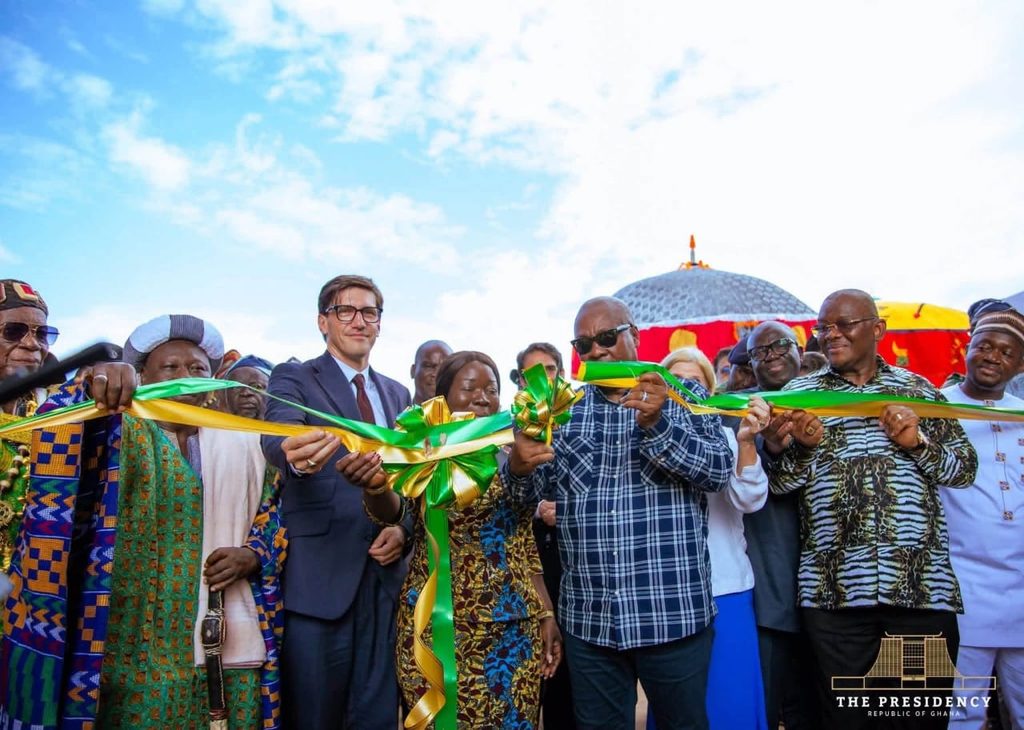
President John Dramani Mahama has said the company’s recruitment policy directly supports national efforts to tackle economic inequality and reduce the migration of young women from northern communities to southern Ghana as kayayei.
The ambition is striking: rather than waiting for young northern women to migrate thousands of kilometres south in search of informal work, create productive employment opportunities closer to where they live.
The journey from the north to Accra
The kayayei phenomenon is not simply a story of individual migration.
It is a symptom of deeper structural inequalities between Ghana’s north and south.
For decades, northern Ghana has experienced comparatively weaker industrialisation, fewer formal employment opportunities and limited economic diversification. Agriculture remains the principal livelihood for large sections of the population, but farming is increasingly exposed to climate variability, rising input costs, market uncertainty and inadequate value addition.
For many young women, particularly those with limited formal education and few employment alternatives, migration becomes an economic strategy.
Accra offers the possibility — however precarious — of earning cash.
The price can be high.
The young woman who arrives in Accra carrying a pan on her head is often participating in an informal economy characterised by long working hours, insecure accommodation, exposure to harassment and limited social protection.
Her presence on the streets is therefore not merely an urban phenomenon.
It is also evidence of what is missing in the rural economy from which she came.
Northshore’s proposition is, in part, to change that equation.
A factory against a continental industrial crisis
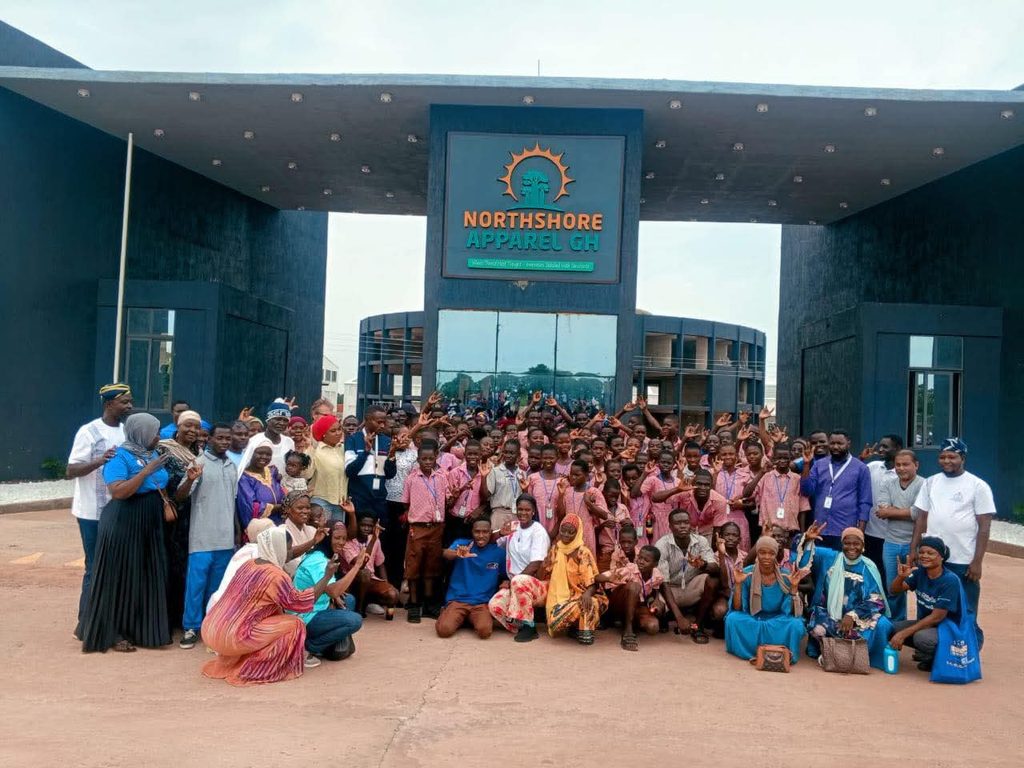
Northshore Apparel currently operates 51 production lines in its initial phase and employs more than 2,300 people, most of them women.
The company plans to expand its workforce to approximately 10,000 as subsequent phases come online.
For Savelugu and surrounding communities, those numbers could represent a significant expansion of formal employment.
But the wider significance lies in whether such factories can help Ghana reconstruct an industrial value chain that has weakened over decades.
Cotton once provided an important foundation for textile production across Africa. Yet much of the continent remains trapped at the commodity end of the global value chain, exporting raw or semi-processed agricultural products while importing higher-value manufactured goods.
The textile and garment industries that once provided industrial employment in countries across Africa have faced severe pressures from imported textiles, second-hand clothing, inadequate infrastructure, limited financing, energy constraints and weak domestic production systems.
Ghana has experienced its own painful contraction in textile manufacturing.
The challenge now is not simply to build factories.
It is to rebuild the ecosystem around them.
From the farmer to the factory
President Mahama has announced plans to integrate the Savelugu operation into a broader cotton revival initiative across the West African cotton belt.
The objective is to enable Ghana to grow, gin and process cotton domestically and ultimately transform it into finished garments for local and international markets.
If successful, the implications could reach deep into rural communities.
A functioning cotton-to-garment chain could create markets for farmers, stimulate ginning and textile processing, generate logistics and ancillary businesses, develop technical skills and create manufacturing employment.
Most importantly, it could begin to connect rural agricultural production with urban and international markets without requiring every economic opportunity to be concentrated in Accra.
That connection is critical to tackling rural-urban migration.
A young woman should not have to travel from Savelugu, Tamale or another northern community to Accra simply to find work carrying somebody else’s goods on her head if productive employment can be created within or closer to her community.
The northern girl at the centre of industrial policy
The most powerful measure of Northshore’s success may therefore not be its production capacity.
It may be what happens to the young northern woman.
Can she remain in her community, earn a dependable income, acquire a technical skill and build a future without having to migrate south?
That question places gender at the heart of Ghana’s industrialisation agenda.
Northshore’s predominantly female workforce offers an opportunity to transform women from participants in a vulnerable informal economy into skilled workers within a formal manufacturing system.
The company’s workplace design also reflects this ambition.
Chief Executive Officer Alhaji Nurudeen Mohammed said the factory includes facilities such as a clinic, crèche and canteen to improve employee welfare and productivity.
The provision of a crèche is particularly significant in a workforce dominated by women.
For women who might otherwise be forced to choose between childcare and paid employment, workplace support can determine whether formal employment is sustainable.
The factory is therefore attempting to address not only the question of whether women can find jobs, but whether they can remain in those jobs.
Beyond Accra’s streets
The image of the kayayei carrying pans through Accra has become so familiar that it risks being treated as a permanent feature of Ghanaian urban life.
It should not be.
Behind every pan is a migration story.
Behind many of those stories is a household confronting poverty, limited employment or inadequate economic opportunity.
And behind those economic pressures lies the unfinished business of balanced national development.
Industrialisation in northern Ghana could help change that trajectory — but only if it is linked to the agricultural economy and sustained beyond political cycles.
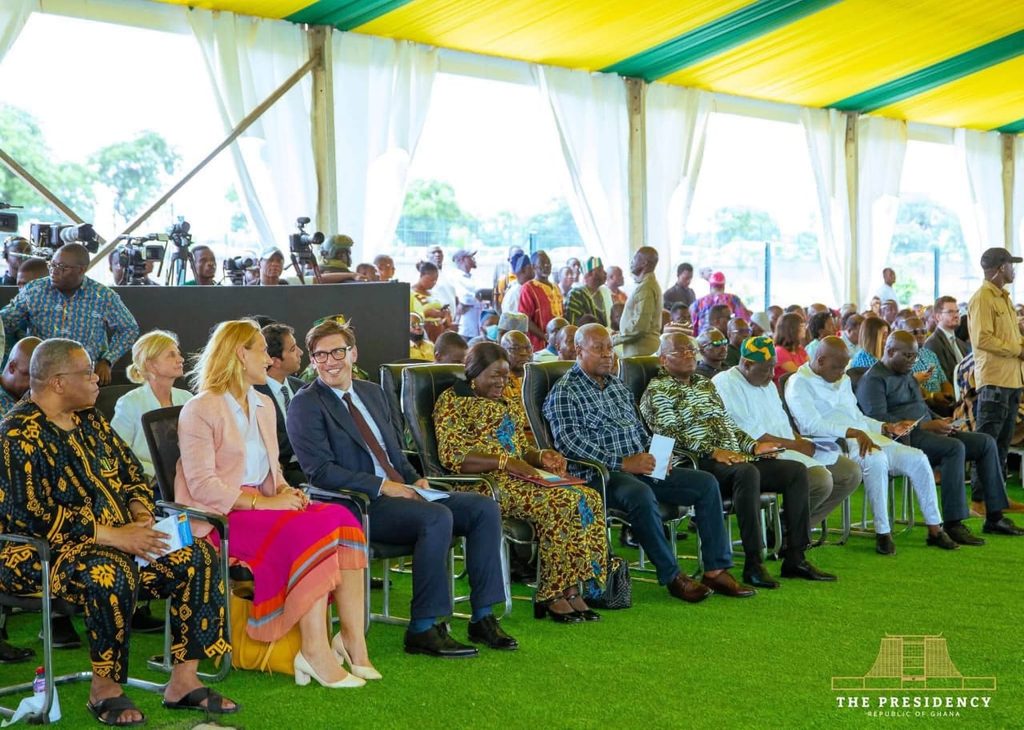
President Mahama has pledged continued government support through Ghana Free Zones incentives and announced plans to replicate industrial hubs in the Central, Bono East and Eastern Regions.
Such incentives could help expand export-oriented manufacturing.
But factories require more than political announcements.
They need reliable power and water, transport infrastructure, skilled labour, finance, raw materials and access to markets.
They also require policy consistency that survives changes in government.
The politics of permanence
Ghana’s industrial ambitions have repeatedly encountered the same structural challenge: political administrations change faster than industrial economies develop.
A factory commissioned under one government can face uncertainty under another if incentives change, financing dries up or policy priorities shift.
That makes the proposed cotton revival particularly important.
If Ghana is serious about rebuilding its textile industry, cotton policy cannot be treated as the project of a single administration.
It requires a long-term national strategy.
Farmers must be confident that there will be markets for their cotton. Processors must have access to adequate volumes. Manufacturers need predictable supplies and competitive production costs. Workers need skills and decent working conditions.
And communities need to see tangible benefits.
A different road from Savelugu to Accra
There is, ultimately, a human geography behind the Northshore project.
One road leads south.
It carries young women from northern communities towards Accra, where some become kayayei, carrying heavy pans through the city’s crowded markets in search of daily income.
Another road could lead in the opposite direction — towards factories, farms, processing plants and industrial towns in northern Ghana.
The success of Ghana’s industrial policy will partly be determined by which of these roads becomes more economically attractive.
Northshore Apparel cannot, by itself, end northern migration or reverse decades of industrial decline.
But if the factory becomes the nucleus of a broader cotton, textile and garment ecosystem, it could demonstrate what decentralised industrialisation can achieve.
The objective should not be to prevent northern young people from travelling.
Migration, when voluntary and economically empowered, is a normal part of development.
The deeper objective is to ensure that poverty does not make migration the only viable option.
That is why the future of the Savelugu factory matters.
Its success will not ultimately be measured only by the number of garments produced or workers employed.
It will be measured by whether a young woman from northern Ghana can look at the opportunities around her and decide that she can build a dignified livelihood at home.
And perhaps, years from now, when the streets of Accra become quieter and the familiar pans carried on women’s heads become less common, the story will be understood not as one of migration being stopped, but of opportunity finally reaching the communities from which the migration began.
From cotton fields to factories. From informal survival to skilled employment. From rural abandonment to productive local economies. That is the larger promise — and the harder test — of Northshore’s Savelugu experiment.