
 By Charles Prempeh PhD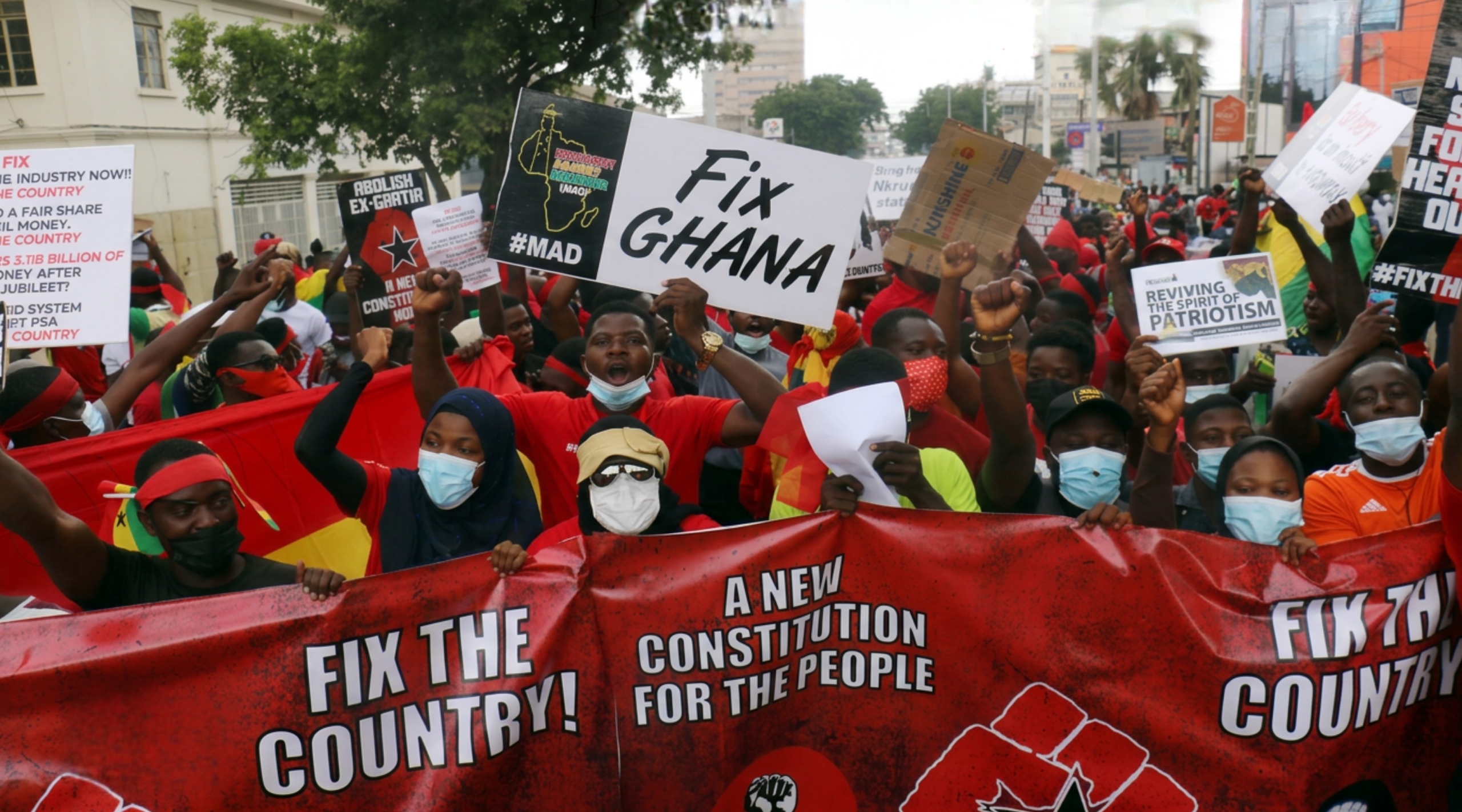
The rapid rise of Ghana’s #FixTheCountry Movement captured the frustrations of an entire generation. Emerging in the wake of the COVID-19 pandemic, it gave voice to young people grappling with unemployment, rising living costs, shrinking opportunities, and a deepening loss of confidence in the country’s political leadership. For a moment, it appeared that Ghana had witnessed the birth of a formidable youth-led movement capable of reshaping public debate and demanding accountability from those in power.
However, the movement’s momentum faded almost as quickly as it emerged. While many observers attribute its decline to state repression, weak democratic institutions, unemployment, and persistent economic hardship, these explanations tell only part of the story. The more fundamental question is why a movement that mobilised thousands online and on the streets struggled to sustain itself once the initial wave of public enthusiasm subsided. The answer, I argue, lies not simply in economics or politics but in the relationship between pleasure, ideology, and political commitment.
The post-COVID-19 condition did more than deepen material deprivation. It transformed the emotional landscape within which youth political activism developed. Economic uncertainty, social dislocation, and the collapse of future-oriented optimism created a generation increasingly focused on the present. Political activism became more than a vehicle for demanding structural change; it also became a source of emotional fulfilment. Public demonstrations, social media campaigns, and collective outrage offered recognition, belonging, and a sense of moral purpose in lives increasingly defined by uncertainty.
The appeal of the #FixTheCountry Movement rested partly in these experiences. Participating in protests, sharing messages online, and standing alongside fellow citizens created a powerful sense of solidarity. Even so, emotional mobilisation is not the same as political organisation. The exhilaration of protest can inspire people to act, but it rarely sustains them through prolonged political struggle. When immediate victories fail to materialise, enthusiasm often gives way to frustration, disappointment, and withdrawal.
This is where ideology matters. The word “ideology” has become deeply unpopular, particularly among younger generations who often associate it with authoritarianism, rigid party politics, or the failures of earlier political projects. Yet ideology does not have to mean dogma. Rather, it provides the moral framework that explains why sacrifice is worthwhile, why setbacks should be endured, and why long-term goals should take precedence over immediate gratification. It is ideology that transforms temporary outrage into enduring political commitment.
Ghana’s nationalist leaders understood this during the struggle for independence. Through schools, youth organisations, civic education, and powerful national symbols, they cultivated loyalty to an imagined national community. Citizens were encouraged to subordinate personal interests to the larger project of nation-building. Whether one agrees with every aspect of that political vision or not, its architects recognised that sustainable political movements require more than shared grievances. They require shared purpose.
Contemporary youth movements have largely rejected ideological formation. Their suspicion is understandable, given Africa’s history of authoritarian governments cloaking themselves in ideological language. But this rejection has also deprived many movements of the moral discipline necessary to survive prolonged political contestation. The result is activism that excels at expression but struggles with endurance.
The limits of this model became increasingly visible as Ghana’s economic crisis worsened. Policies such as the Electronic Transfer Levy (E-Levy), soaring inflation, and declining living standards intensified public frustration. Protesters expected swift political responses. When those responses failed to arrive, emotional energy gradually dissipated. Without a deeper ideological commitment capable of sustaining sacrifice and patience, many participants simply moved on.
The movement did not collapse solely because it encountered resistance from the state. It also struggled because it was organised around moments of mobilisation rather than long-term political formation.
Understanding this requires a more careful appreciation of the modern state itself. Since the seventeenth century, political philosophers have argued that the state emerged through a social contract in which citizens surrendered certain freedoms in exchange for order and security. Max Weber later described the modern state as the institution that successfully claims the monopoly over the legitimate use of force within a given territory. This gives governments enormous institutional advantages over protest movements.
In countries such as Ghana, these advantages are reinforced by neo-patrimonial politics, where authority often operates through networks of family, ethnicity, religion, and patronage rather than through purely bureaucratic institutions. Political power is therefore embedded within complex systems of loyalty that cannot be dismantled simply by public demonstrations or social media campaigns.
Indeed, loyalty itself is one of the central challenges confronting youth political movements. Citizens rarely owe allegiance to the state alone. Family obligations, religious commitments, ethnic identities, and traditional institutions frequently compete with national identity. During periods of economic hardship, these competing loyalties become even more influential. Faced with scarcity, individuals naturally prioritise survival and the welfare of those closest to them. Resources are directed toward families, communities, and trusted networks rather than abstract notions of national development.
This helps explain why corruption remains so persistent. It is not simply about the product of immoral individuals or weak institutions. It is also a consequence of competing systems of loyalty operating within conditions of chronic economic insecurity. In such circumstances, immediate self-preservation often proves more compelling than deferred promises of collective national progress.
These realities expose the limitations of many youth movements across Africa. Scholars have rightly identified gerontocracy, authoritarian governance, poverty, and weak democratic institutions as major obstacles to youth political participation. Others have highlighted the transformative potential of digital technology and social media. And yet despite unprecedented online mobilisation, many youth-led movements have struggled to achieve their publicly declared objectives.
The problem, therefore, is not simply technological. It is philosophical. Movements that rely primarily on technical solutions while neglecting the moral and ideological formation of their members often encounter internal fragmentation, leadership disputes, accusations of betrayal, and eventual exhaustion. Their organisational structures prove too fragile to withstand the inevitable disappointments of political struggle.
The Ghanaian philosopher Kwame Gyekye argued that corruption is fundamentally a moral problem rather than just a technical one. If this diagnosis is correct, then stronger institutions alone cannot transform political culture. What is required is a moral revolution capable of reshaping values, disciplining desire, and cultivating loyalty to the common good. The experience of #FixTheCountry suggests that the same insight applies to youth political activism. Economic hardship may ignite protest. Social media may amplify public outrage. But lasting political transformation demands more than emotional mobilisation. It requires an ideology capable of converting outrage into endurance, solidarity into disciplined organisation, and fleeting moments of collective enthusiasm into sustained political commitment. Without that foundation, even the most inspiring movements risk exhausting themselves long before the systems they seek to change.
 Zakaria Rafique Seinu
  Ishmael Junourgh