
 By Ishmael Junourgh
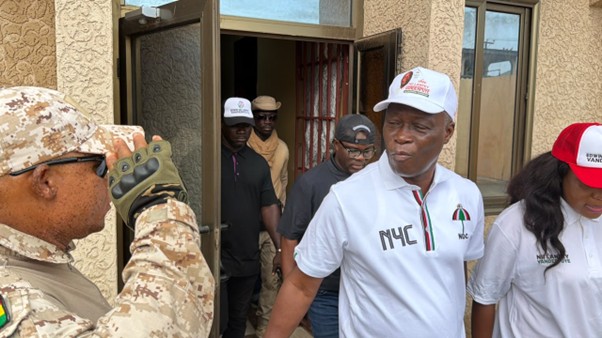
– Lawyer Kotia Nurideen Abubakar Bitis
Lawyer and NDC communicator Kotia Nurideen Abubakar Bitis believes the former Odododiodio MP’s decades of party service, parliamentary experience and ministerial record make him a strong choice for National Chairman as the party prepares for its December 19 national executive elections.
The contest for the National Chairmanship of the National Democratic Congress (NDC) is gathering momentum, with former Odododiodio Member of Parliament, Hon. Edwin Nii Lantey Vanderpuye, emerging as one of the experienced political figures seeking to lead the governing party into its next phase of organisational development.
For Lawyer Kotia Nurideen Abubakar Bitis, popularly known as Hajj Bitis, Vanderpuye’s candidature represents an opportunity for the NDC to draw on decades of political experience, institutional knowledge and commitment to party organisation.
Bitis, who has joined Vanderpuye’s national campaign communications directorate with responsibility for publicity and social media, believes the former minister possesses the political credentials and practical experience required to lead the party.
In his assessment, the question confronting NDC delegates is not simply who should occupy the National Chairmanship position, but who has acquired the experience, understanding and political maturity to manage the party’s structures, unite its membership and prepare it for future electoral contests.
He considers Vanderpuye particularly well positioned in this regard, pointing to a political career that has traversed grassroots organisation, local government, the Presidency, Parliament, ministerial administration and national public service.
A political journey rooted in the NDC
Vanderpuye’s political history is one of the central pillars of his chairmanship campaign. He has consistently described himself as a foundation member of the NDC, tracing his involvement to the party’s formative years in 1992, when he served as a ward secretary while working with the Ghana Broadcasting Corporation.
His subsequent political journey included parliamentary ambitions, campaign responsibilities and appointments within the government of the late President John Evans Atta Mills.
He served as a special aide and Director of Operations at the Presidency, positions that exposed him to the workings of the Executive and the political coordination required at the highest levels of government.
For Bitis, this history is important because the NDC requires a chairman who understands not only the party’s present organisational arrangements but also the circumstances and political struggles that shaped its development.
Vanderpuye’s association with the party across different political periods, he believes, gives him a valuable appreciation of its institutional history and internal dynamics.
Parliamentary experience and constituency politics
Vanderpuye’s parliamentary career provides another significant dimension to his candidature. He represented the Odododiodio Constituency in the Greater Accra Region for three consecutive parliamentary terms, from 2013 to 2025.
His victories in the 2012, 2016 and 2020 general elections reflected his sustained engagement with a politically competitive constituency.
Beyond electoral representation, he served on parliamentary committees, including the Local Government and Rural Development Committee, where he held a ranking position, as well as the Privileges and Appointments committees.
This experience, according to the assessment offered by Bitis, is particularly relevant to the responsibilities of a National Chairman.
The position requires an appreciation of constituency-level political realities, the interests of elected representatives and the relationship between the party’s grassroots and its national leadership.
Having served as a constituency representative for 12 years, Vanderpuye has experienced the demands of electoral politics and the importance of maintaining relationships with party members and constituents.
His parliamentary background also provides him with an understanding of legislative processes and the relationship between political organisation and governance.
Executive experience across different sectors
Another important consideration is Vanderpuye’s experience in government. He served as Deputy Minister for Trade and Industry before moving to the Ministry of Local Government and Rural Development, where he also served as Deputy Minister.
In 2015, he was appointed Minister for Youth and Sports under the John Dramani Mahama administration. These appointments exposed him to different aspects of public administration, including economic policy, local governance, youth development and sports administration.
His experience in these positions is an important part of the argument his supporters are advancing.
For Bitis, leadership of a major political party requires more than popularity or the ability to mobilise supporters. It requires an understanding of institutions, administrative systems, policy processes and the different interests that must be managed within a political organisation.
Vanderpuye’s experience in government, he argues, gives him an appreciation of these responsibilities.
His subsequent appointment as National Coordinator of the District Road Improvement Programme (DRIP) further extended his public-service experience.
In June 2026, Vanderpuye resigned from the position to pursue a national executive role within the NDC, explaining that he wished to continue serving the party and the country in a different capacity. The decision was widely reported as an indication of his intention to return to the party’s organisational leadership.
Why the NDC needs experience at this time
The NDC’s return to government places additional importance on the quality of its internal organisation. As the governing party, it must manage the relationship between government appointees, elected representatives, party executives and grassroots members while maintaining the structures necessary for effective political mobilisation.
The National Chairman occupies a central position in this process. The office requires someone capable of working with different party interests, managing internal disagreements, strengthening organisational structures and ensuring that the party does not lose touch with its membership.
Bitis believes Vanderpuye’s extensive political background provides a strong foundation for these responsibilities.
His argument is that the NDC should consider a candidate who has experienced the party from multiple levels rather than judging the contestants solely by their current political visibility.
Vanderpuye’s journey, from ward-level organisation to ministerial office and Parliament, offers what Bitis considers a comprehensive understanding of the party’s institutional and political environment.
A reset built on unity and institutional strengthening
Vanderpuye has made rebuilding, reforming and resetting the NDC central to his chairmanship ambition.
In declaring his intention to contest, he emphasised the need to restore trust, strengthen party structures and build a united, inclusive and caring organisation in which members at every level feel a sense of belonging. Bitis considers this an important direction for the party.
He believes that the NDC’s strength must be measured not only by its electoral victories but also by the quality of its internal relationships and the effectiveness of its organisational structures.
A party that expects to sustain electoral success must pay attention to its constituency executives, branch members, youth organisers, women organisers and other grassroots structures.
It must also provide an environment in which experienced party members and younger political actors can contribute meaningfully to its development.
In this regard, Vanderpuye’s experience across different generations of the party could be an asset.
His campaign’s emphasis on unity and institutional renewal therefore speaks to an important question facing the NDC: how to preserve its political identity while improving its internal organisation and preparing for the demands of future elections.
The 2028 consideration
With the next general election approaching in 2028, the choice of National Chairman carries implications beyond the immediate internal elections. The NDC will need effective coordination between its national, regional, constituency and branch structures.
It will also need leadership capable of maintaining party cohesion while ensuring that the organisation remains politically active and responsive to the concerns of its supporters.
For Bitis, Vanderpuye’s experience in electoral politics, government and party organisation makes him a credible candidate for that responsibility.
He believes the former MP’s understanding of constituency politics, combined with his experience at the national level, gives him a useful perspective on the challenges confronting the party.
The ability to unite different interests, strengthen communication and build confidence among party members will be particularly important. These are areas in which Vanderpuye’s campaign is seeking to make its case to delegates.
A campaign anchored in record and competence
As part of the campaign’s communications directorate, Bitis is helping to project Vanderpuye’s political record, engagements and vision to party members and the wider public.
His position is that the chairmanship contest should be determined by a serious assessment of the candidates’ experience, competence, commitment and capacity to lead.
He maintains that Vanderpuye’s record deserves careful consideration, particularly given the range of responsibilities he has undertaken within the party and government.
Rather than reducing the contest to personalities, the campaign’s argument is that delegates should examine what each candidate brings to the office and how that experience can translate into effective leadership. Vanderpuye’s supporters believe his political history provides a compelling answer.
His involvement in the NDC dates back to its formative years. He has served in the Presidency, represented his constituency in Parliament for three terms, occupied two deputy ministerial positions, headed the Ministry of Youth and Sports and subsequently coordinated a national infrastructure programme.
It is a record that spans party organisation, political representation, executive administration and public service.
The choice before delegates
The December 19 national executive elections will provide NDC delegates with an opportunity to determine the direction of the party’s leadership.
Vanderpuye is seeking their mandate on the strength of his experience and his stated commitment to rebuilding and strengthening the organisation.
For Bitis, his candidature presents an opportunity to place an experienced political figure at the centre of the party’s next phase of development.
He believes the NDC needs a chairman who understands its history, appreciates the importance of its grassroots and possesses the institutional experience to manage its organisational responsibilities. Vanderpuye, in his view, brings these qualities together.
Ultimately, the decision belongs to the delegates. But as the campaign gathers momentum, the former Odododiodio MP is making a case that his decades of service have prepared him for a greater responsibility within the party.
For a party seeking to consolidate its organisational strength and prepare for the 2028 electoral contest, the question of experience, unity and institutional leadership will remain central to the choice of its next National Chairman.
 Charles Prempeh PhD