
 By Ishmael Junourgh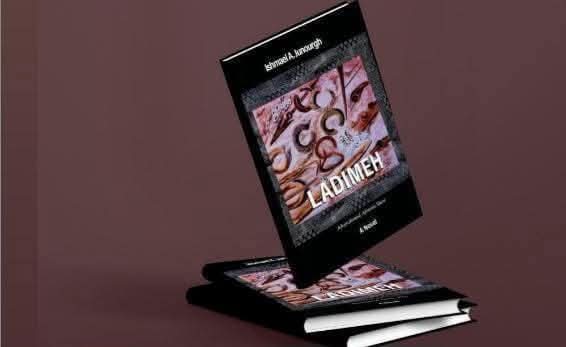
The word Ladimeh comes from Dagaare. It means struggle.
It is not just a name. It is a condition. It is the name given to the weight carried by those who have been pushed to the margins, those who rise each day to fight against poverty, rejection, and erasure.
In Ishmael A. Junuorgh’s narrative Ladimeh, Ladimeh himself becomes that struggle made flesh. He becomes a symbol of resilience in the face of dehumanisation. Mallam Musah, the trade merchant, becomes a symbol of greed that sees human beings as cargo.
When I say “we are the Ladimeh,” I am not speaking in the past tense. I am speaking of a people who still carry the weight of that history on their backs. Slavery wiped generations, eroded cultures, and left an unforgettable scar on the African continent.
Ironically, in modern times slavery has taken new shape through human trafficking, political machination, and human rights abuses both domestically, socially, and economically. If Africa must rise, we must first name these chains, and then we must choose to break them by showing love to one another.
To understand the present, we must sit with the past. Ladimeh tells the story of African communities torn apart by the slave trade. Families were separated overnight. Languages were silenced. Names were replaced. Traditions that took centuries to build were dismissed as worthless by those who came to trade in human flesh.
Mallam Musah represents that system. He was not just a merchant. He was the middle man who normalised the trade. He looked at a child, a father, a farmer, and saw profit. His role reminds us that slavery could not exist without Africans and non-Africans who chose to participate in it for gain. The cruelty was not only in the chains, but in the decision to place money above humanity.
The impact was generational. When you take men in their most productive years, you do not just lose their labour. You lose their knowledge, their fatherhood, their art, their medicine. You lose the future they would have built. That is why Junuorgh calls it a scar. Scars do not disappear. They tell a story every time we look at them.
For decades, the narrative of slavery was told only from the outside. Ladimeh returns the voice to us. It says: this happened to us, to our fathers, to our grandfathers. And because it happened to us, we have a responsibility to remember. Ladimeh himself stands at the centre of that memory. He is the son who was taken, the brother who never returned, the name that must not be forgotten.
It is tempting to believe that because the trans-Atlantic slave ships no longer dock on our shores, slavery is over. That belief is dangerous. Slavery has only changed its uniform.
Today, the Mallam Musahs of our time do not carry whips. They carry contracts, fake job offers, and political promises. Human trafficking moves young men and women across borders with the lie of “greener pastures.” Once they arrive, their passports are taken, their wages are withheld, and their freedom is gone.
Domestically, we see it in forced labour. We see it in boys made to work in mines and markets instead of classrooms. We see it in young men on construction sites working 16 hours with no pay.
We also see it in a growing and shameful trade in Northern Ghana, where Nigerian girls are lured across the border with promises of jobs, trading, and a better life, only for them to be exploited through prostitution. They arrive with hope and are trapped in networks that control them, abuse them, and strip them of dignity. This is modern slavery in its rawest form. It preys on poverty, on desperation, and on the silence of communities.
The core logic is the same as in Junuorgh’s book: reduce a human being to a tool. Extract value. Discard when used. The tools have changed from chains to poverty, from shackles to lies. But the wound feels the same. Ladimeh himself would recognise it immediately.
Nowhere is this more visible in Ghana than in the story of Kayaye, migrant labour, and trafficked girls. While many Kayaye are women from Northern Ghana, the same forces push young men too. They travel hundreds of kilometres to Accra, Kumasi, and Takoradi in search of livelihood. Some carry loads, some work as trotro mates, some on construction sites, some as watchmen.
They leave home because of the developmental gap between the South and the North of Ghana. The South has more markets, more schools, more hospitals. The North has been left behind for too long.
At the same time, the North has become a transit point for another cruelty. In Northern Ghana, Nigerian girls are lured by traffickers who promise them greener pastures in Accra, Kumasi, or even abroad. The promise is hairdressing, trading, or domestic work. The reality is brothels, debt bondage, and violence. These girls are isolated, their documents are seized, and they are told they owe money that can never be repaid. Their bodies become the commodity, just as Ladimeh’s body was once the commodity.
In the city, both the Kayaye and the trafficked girls sleep in unsafe places. They face exploitation, police harassment, and stigma. They are called names. They are blamed even as they are victims. A man who carries cement for 12 hours and a girl who is forced to sell her body both have one thing in common: their desperation is being sold for someone else’s profit.
This is what Junuorgh would call the new Mallam Musah system. It is not one man. It is a structure. It is the contractor who underpays, the trafficker who lies, the landlord who overcharges, the system that fails to create jobs up North so that people are forced to migrate or be deceived. Ladimeh himself lives again in every young man who leaves home with hope and returns with scars, and in every girl who left home for opportunity and found chains.
The developmental gap between the South and the North of Ghana is not an accident. It is a continuation of colonial and post-colonial policies that concentrated investment in the coastal areas and the mining areas.
Schools in the North lack teachers. Health centres lack drugs. Roads become impassable in the rainy season. Meanwhile, Accra expands with new malls and highways. When opportunity is geographically uneven, people must move to find it. Migration itself is not the problem. Forced migration due to neglect is.
This gap creates a cycle. Because the North is poor, its young people leave. Because its young people leave, there is no workforce to build it. Because there is no workforce, investors do not come. And the cycle continues.
Because the gap also creates desperation, it makes the North vulnerable to traffickers. That is why Nigerian girls are lured through Northern Ghana. Traffickers know that poverty and porous borders make it easier to deceive families.
Ladimeh himself is the human face of that cycle. Every bag he carries, and every girl who is deceived, is a question we refuse to answer: Why is there no work at home? Why must a son leave his village to carry another person’s load? Why must a daughter leave her home only to be sold? Until we answer that, we are still operating a system where some Africans are more human than others.
Part of healing this system is remembering who we are as one people. The Fulani are also Africans and must be respected. They are a part of us. They are a very essential race that has showcased Africa for centuries through their culture, trade, scholarship, and contributions across the Sahel and beyond. When we speak of unity and love, we cannot leave out our Fulani brothers and sisters. To dehumanise them is to repeat the same logic of Mallam Musah that divided us in the past. If the story ended in Ghana, it would be painful enough. But it does not. It spreads across the continent.
Xenophobia in South Africa reminds us of our collective failure as Africans to deal decisively with all forms of slavery against our fellow human beings. In 2008, in 2015, and in other waves, African migrants were attacked, their shops looted, and some were killed. The reason given was competition for jobs and resources. The truth underneath was fear and a lack of solidarity.
This is the ultimate tragedy. The descendants of people who were once shipped together in chains are now turning on each other for crumbs. We have internalised the logic of Mallam Musah. We have started to see our brother as competition instead of kin.
Xenophobia is not just South African. It exists in Ghana when we mock northern migrants. It exists when we stereotype the Fulani instead of embracing them as Africans. It exists in Nigeria when traffickers deceive our sisters. It exists in Libya when migrants are sold in markets. Every time we do this, we are repeating the scar. Ladimeh himself is being beaten again.
To say “we must show love to one another” is not soft talk. In the context of Ladimeh, love is policy. Love is infrastructure. Love is justice.
Love is investment in the North. It means building industries, irrigation projects, technical schools, and hospitals in Northern Ghana so that no young man has to leave home to survive, and no girl can be lured with false promises. Ladimeh should have the choice to stay and thrive.
Love is protection. It means enforcing laws against human trafficking. It means working with Nigeria and other neighbours to shut down trafficking rings that target girls. It means creating safe housing, shelters, and unions for migrant workers and Kayaye. It means giving them ID cards, health insurance, and respect. It means prosecuting those who exploit children and women.
Love is education. We must teach Ladimeh in our schools not just as literature, but as a warning. Children must know Mallam Musah so they can recognise him when he appears in a suit, on WhatsApp, or at a border promising “greener pastures.” They must also learn that being African includes the Fulani, the Akan, the Ewe, the Ga, the Hausa, and all our peoples.
Love is continental solidarity. African governments must sign and enforce agreements that protect migrants and trafficking victims. We must create a continental labour market where a Ghanaian can work in South Africa with dignity, a Nigerian girl can cross into Ghana without fear, and no African is sold by another African.
Finally, love is memory. We must stop sanitising our history. We must tell the story of Ladimeh himself, and the story of migrant workers, and the story of the girls lured into prostitution. Memory prevents us from repeating. Love is the decision to see the humanity in the man carrying the cement, in the girl trapped by traffickers, in the migrant sleeping in a park, and in the Fulani herder who is part of our African story.
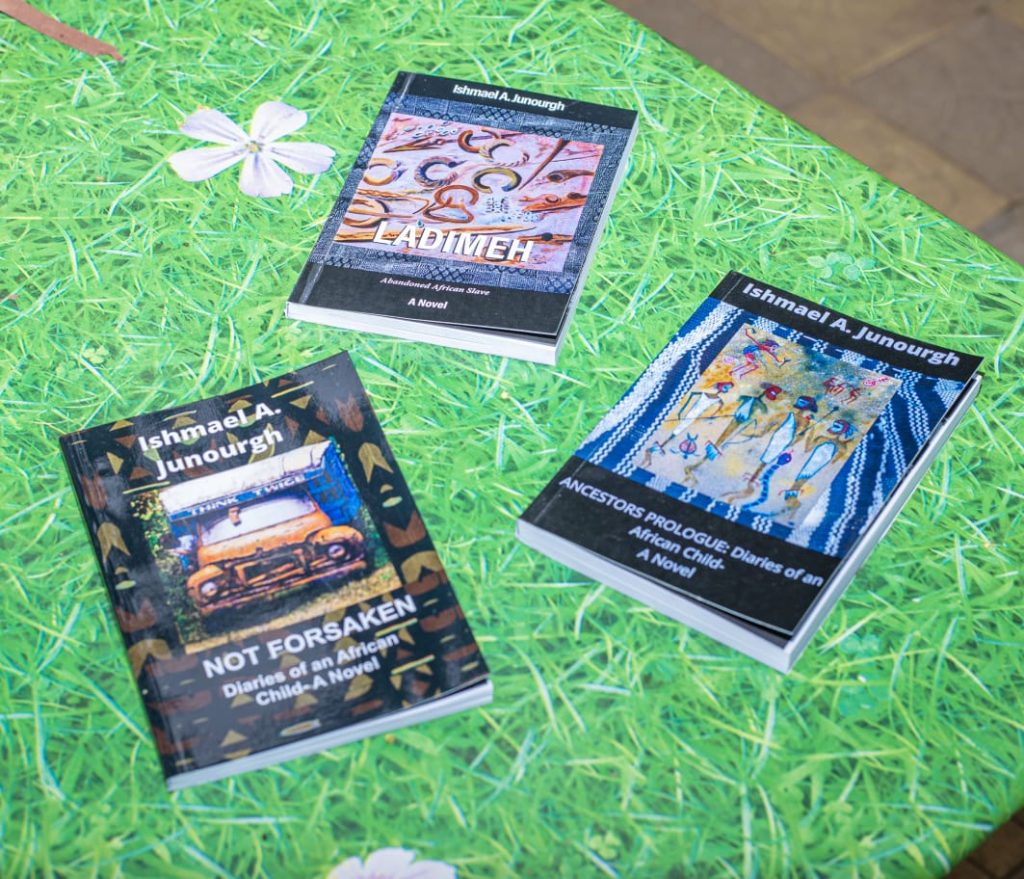
Ishmael A. Junuorgh gave us _Ladimeh_ so that we would not forget. The book is not just about one man. It is about a pattern.
Slavery wiped generations. It eroded cultures. It left a scar. And today, that scar is itching again through trafficking, through political exploitation, through migrant labour, through the exploitation of Nigerian girls in Northern Ghana, and through xenophobia.
We are the Ladimeh because we still walk with the weight. But we are also the generation that can decide to set the load down. Africa will not rise through speeches alone. It will rise when a boy in Bawku can find work in Bawku. It will rise when a girl in Kano is not lured into slavery in Accra. It will rise when a migrant worker in Accra is paid fairly and sleeps safely. It will rise when an African trader in Johannesburg is protected by law.
It will rise when we stop looking for a Mallam Musah to blame and start looking in the mirror. The chains are different now. But the key is the same: love, justice, and the courage to act.
If we fail to do this, then future writers will write about us the way Junuorgh wrote about Ladimeh himself. They will say: “They knew the wound, and they walked past it.“
For more insights into this powerful story and the lessons it holds for our generation, people should purchase Ishmael A. Junuorgh’s book, Ladimeh, and read it. Only by reading the full narrative can we truly grasp the depth of the pain, the resilience of our people, and the urgent call to ensure that Ladimeh’s suffering was not in vain. Let that not be our story. Let our story be: “They remembered Ladimeh, and they chose to be free.“
 Charles Prempeh PhD