
 By Ishmael Junourgh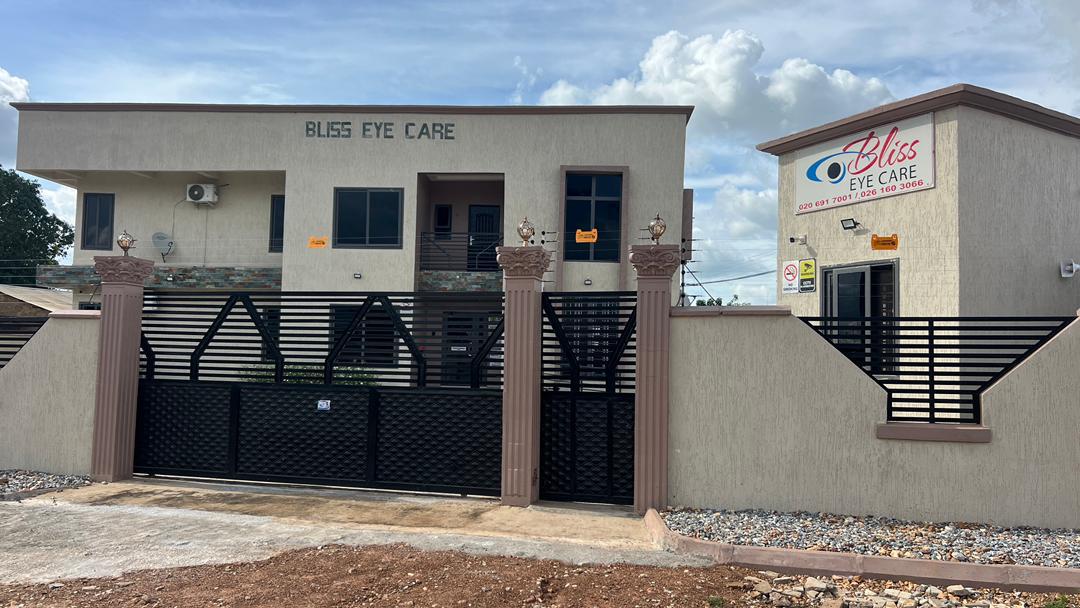
For many people in Ghana’s Upper West Region, losing their sight does not happen overnight. It begins quietly—with blurred vision dismissed as tiredness, persistent eye irritation treated with unapproved remedies, or a child struggling in school because no one realises the child simply cannot see clearly.
By the time many seek professional help, the damage may already be severe.
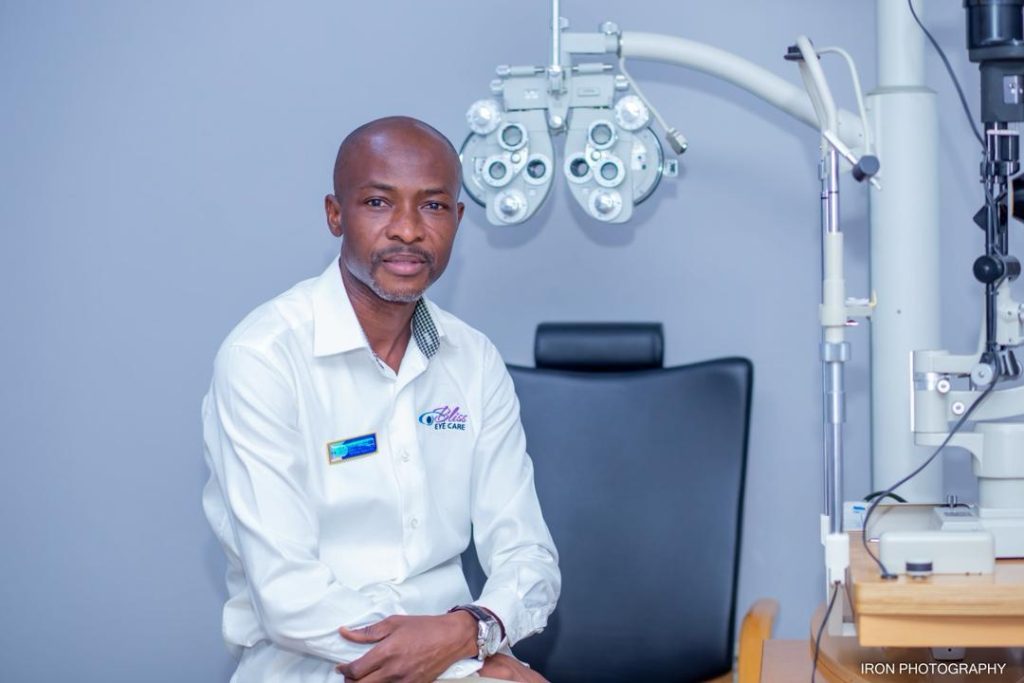
It is this reality that inspired Dr. Zakarea Alhassan Balure, Medical Director of Bliss Eye Care in Wa, to establish a facility that would bring quality eye care closer to the people of the Upper West Region.
Unlike many professionals who seek opportunities in Ghana’s larger cities, Dr. Balure chose to return home. For him, the decision was driven by a simple concern: people in Upper West should not have to travel long distances to access specialist eye care.
“We wanted to make eye care accessible to our own people,” Dr. Balure told Bridge News Online. “People from Upper West used to travel to Tamale, Bawku or even farther just to receive treatment. I thought that we should start something here and see how we can make eye care closer and accessible to our people.”
A Childhood Experience That Changed a Life
Dr. Balure never initially imagined becoming an eye care professional.
His first passion was art.
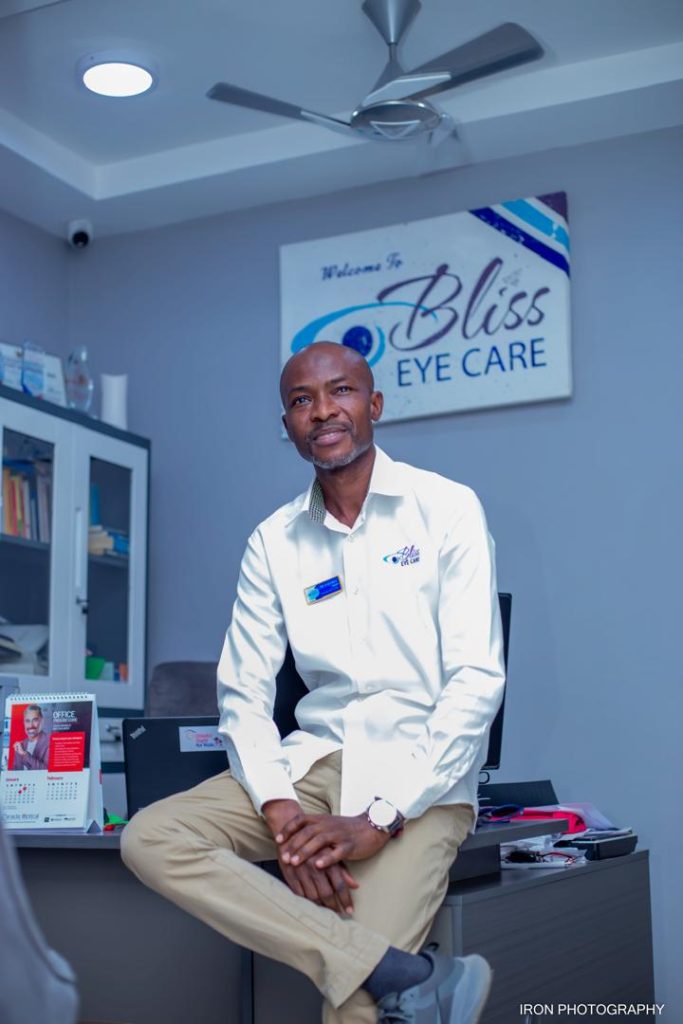
“I loved drawing,” he recalled. “That is why you see artwork around my office.”
But a life-changing experience after senior high school redirected his path.
After completing his education at Opoku Ware Senior High School, Dr. Balure returned home and spent time around his father’s licensed chemical shop, which was located opposite the School for the Blind.
Watching visually impaired students navigate their daily lives deeply affected him.
He particularly remembered an incident where a student was knocked down by a motorbike but survived.
“As a young person, I started asking myself questions about what could be done to prevent some of these situations,” he said.
That curiosity later led him to volunteer with the Ghana Red Cross at an optical centre, where he gained exposure to eye care.
“I worked there for almost two years, and that was when optometry as a profession became something I wanted to pursue.“
He later studied Optometry at the Kwame Nkrumah University of Science and Technology (KNUST), beginning a journey that would eventually take him back to Upper West.
Bringing Eye Care Home
For Dr. Balure, establishing Bliss Eye Care in Wa was not simply a business decision. It was a response to a healthcare gap.
He observed that while major cities already had several eye care facilities, many residents of Upper West had limited access to specialist services.
“Most of our people had to leave the region. If not Agogo or Bawku, the closest option was Tamale,” he explained.
“I thought, why don’t I try to start something back home and struggle through it so that our own people can benefit?“
That vision gave birth to Bliss Eye Care in 2015.
Ten years later, the facility has grown from a small practice into a modern eye care centre serving thousands of residents.
The Meaning Behind the Name Bliss
For Dr. Balure, the greatest reward is not only treating an eye condition; it is restoring hope.
He explained that the name Bliss Eye Care was inspired by the emotional transformation he wanted patients to experience.
“What motivates me every morning is seeing someone walk into my clinic distressed and then walk out smiling,” he said.
“We want people to come through our doors with their problems and, with the help of God and our professional care, leave happier.“
The Hidden Burden of Eye Diseases
In Upper West, Dr. Balure says several eye conditions continue to affect both adults and children.
Among the most common are cataracts, glaucoma, conjunctivitis (commonly known as Apollo), refractive errors requiring spectacles, and eye injuries associated with farming and occupational activities.
Farmers, welders, masons and other artisans are particularly vulnerable when they fail to use protective equipment.
“We have preventive measures, but many people do not use them,” he said.
“A welder should use protective glasses. A mason should protect their eyes from cement and dust. Prevention is important.“
He also highlighted refractive errors as a major challenge, especially among children and adults who need corrective lenses to see properly.

When Treatment Comes Too Late
According to Dr. Zakarea Alhassan Balure, one of the biggest challenges facing eye care in Upper West is not only the prevalence of eye conditions, but the delay in seeking professional help.
He explained that many conditions that could have been treated easily become complicated because patients wait too long or rely on unapproved remedies.
“Early response to healthcare is key. When you delay, you only compound the problem,” Dr. Balure said.
“Something that could have been treated within a day may end up taking weeks, and in some cases, the delay may mean we cannot fully recover the vision.“
He recalled treating patients who arrived at the clinic after unsuccessful attempts with local remedies, only for their conditions to have worsened.
“You try your best to help, and sometimes you are able to restore functional vision, but if the person had come earlier, the outcome could have been much better.“
For him, the message is simple: early detection and early treatment remain the best protection against avoidable blindness.
The Dangers of Self-Medication
Dr. Balure expressed concern about practices where people use substances that are not medically approved for the eye.
He mentioned the use of herbal seeds, homemade mixtures, dissolved medications and other substances as some of the practices that can cause serious harm.
“Some people even open capsules and mix them with water to use as eye drops. That is dangerous because the medication was not formulated for the eye,” he warned.
He also cautioned against putting unknown substances into the eyes or exposing the eyes to harmful fumes in an attempt to treat conditions.
According to him, such practices are often driven by two major factors: poverty and lack of information.
“We need more education because many of these problems come from ignorance.“

Poverty and Access to Eye Care
In a region where many households struggle economically, affordability remains an important issue in accessing healthcare.
However, Dr. Balure believes the conversation around poverty must also include how communities prioritise healthcare.
He explained that some households may have livestock or other assets but may not consider them resources that can be used to protect their health.
“Sometimes we say we are poor, but we have a goat, sheep, cattle or other things. We need to begin seeing these things as part of our resources for taking care of ourselves.“
He noted that families sometimes spend heavily on funeral arrangements after losing loved ones, when early healthcare intervention could have prevented serious outcomes.
“We need to change our thinking and understand that health is an investment.“
Loving Your Eyes Before Losing Them
Dr. Balure believes eye care must move from a reactive approach to prevention.
He said many people only seek medical attention when their condition becomes unbearable.
“We are often solution seekers instead of prevention seekers,” he observed.
He encouraged residents to make routine eye examinations part of their healthcare habits.
“The message globally is ‘love your eyes’. When you lose your sight, others may suffer with you, but you suffer the most. So you must personally take responsibility for protecting your eyes.“
He advised residents not to wait for symptoms before visiting an eye specialist.
Protecting the Vision of Children
For Dr. Balure, children’s eye health is one of the most important areas requiring attention.
He explained that undetected vision problems can affect a child’s education, confidence and future opportunities.
“Without sight, how can a child fully understand what is happening in the classroom?” he asked.
He warned that some children are wrongly labelled as slow learners or less intelligent when the real problem is poor vision.
A child who cannot clearly see letters on the board may struggle academically despite having the ability to learn.
He encouraged parents, teachers and guardians to pay attention to warning signs.
These include:
- Sitting unusually close to the television
- Holding books too close or too far away
- Avoiding games with other children
- Tilting the head when trying to see
- Difficulty copying from the classroom board
- “Sometimes the child is not refusing to learn. The child simply cannot see.“
Restoring Hope Through Early Intervention
Among the many patients Dr. Balure has treated, one story remains particularly memorable.
He recalled the case of a young student whose vision problem threatened his education.
The boy had severe short-sightedness and required specialised glasses. His mother, a petty trader, struggled to afford the treatment.
Through support and continued care, the child’s vision improved significantly.
Today, that same student is pursuing a medical programme.
“This is one story I always pride myself on because it shows what early intervention can do,” Dr. Balure said.
The experience inspired the establishment of Bliss Foresight for Kids, an outreach programme focused on providing eye screening, free spectacles and medication to children in deprived communities.
A Decade of Service and Thousands of Restored Hopes
Since its establishment in 2015, Bliss Eye Care has become an important centre for eye health services in the Upper West Region.
From a small beginning, the facility has expanded into a modern eye care centre, officially opened at its current location in November 2025.
Over the years, the clinic has attended to more than 20,000 clients, according to Dr. Zakarea Alhassan Balure.
“For us, it is not only about numbers. Every patient represents a story, a family and a future,” he said.
The growth of Bliss Eye Care reflects Dr. Balure’s commitment to ensuring that residents of Upper West do not have to travel outside the region for basic and specialised eye services.
Expanding Towards a Full Eye Hospital
Although Bliss Eye Care currently operates as an optometric clinic, Dr. Balure says the long-term vision is to establish a fully fledged eye hospital that will provide comprehensive services under one roof.
A major part of this vision is the establishment of an eye theatre to enable surgical procedures, including cataract operations.
“We really want to get the theatre on board and reduce the suffering of people with cataracts,” he said.
“That is how we can transform this into a one-stop modern eye hospital.“
He explained that plans for the theatre are already underway, with architectural designs completed and efforts ongoing to secure the necessary funding.
Once completed, the facility will reduce the need for patients to travel to other regions for specialised eye treatment.
Bringing Advanced Eye Technology Closer
Dr. Balure explained that Bliss Eye Care already provides a wide range of eye services, but the facility continues to invest in advanced diagnostic technology.
One of the key pieces of equipment the clinic is working towards acquiring is the Optical Coherence Tomography (OCT) machine, a specialised device used in diagnosing conditions such as glaucoma.
Such technology, he said, will strengthen the clinic’s ability to provide advanced eye examinations locally.
“We want to make sure that services which people currently have to travel elsewhere for can be accessed here in Upper West.“
The Cost of Poor Vision on Productivity
Beyond healthcare, Dr. Balure believes good eyesight is essential for education, employment and economic productivity.
He explained that poor vision affects people in every profession, from students to professionals.
“If someone cannot see properly, productivity reduces and mistakes increase,” he said.
He cited professionals such as nurses, doctors, accountants and others whose work requires accuracy and attention to detail.
“Without good vision, it becomes difficult to perform effectively.“
A Message to Upper West Residents
As the interview concluded, Dr. Balure appealed to residents to take greater responsibility for their eye health.
“The eyes are the window through which we experience the world,” he said.
“The good Lord gave us two eyes, and we should not joke with them.“
He urged people not to wait until they lose their sight before seeking care.
“Eyes are not something you can buy from a supermarket when they are gone. You have to protect them.“
He encouraged residents to make regular eye examinations part of their routine healthcare.
“Some eye conditions do not show signs and symptoms early. We, the eye professionals, can detect them. So come for regular checks.“
A Vision Beyond One Clinic
Looking ahead, Dr. Balure hopes Bliss Eye Care will become more than a health facility.
His dream is to expand outreach services to deprived communities, ensuring that people in remote areas also benefit from quality eye care.
“If government support comes today, the first thing I would do is expand our services to more deprived communities and make eye care accessible to everyone,” he said.
He also hopes to bring more specialised services under one roof so patients can receive complete care without travelling far.
A Legacy of Sight and Opportunity
For Dr. Balure, the greatest legacy of Bliss Eye Care will not only be the number of patients treated, but the number of dreams protected.
“We want a future where eye conditions that could have prevented people from achieving their dreams are identified early and treated.“
In a region where access to specialist healthcare remains a challenge, Bliss Eye Care represents a growing effort to bring essential services closer to the people.
The journey, however, continues.
“What keeps me awake at night,” Dr. Balure reflected, “is asking myself one question: What next can I do to add to what we are already doing?“
For thousands of residents whose lives depend on the gift of sight, that question carries a powerful promise: the vision to save sight is still alive. The initiative targets children who might otherwise have their dreams limited by preventable vision problems.