
 By Ishmael Junourgh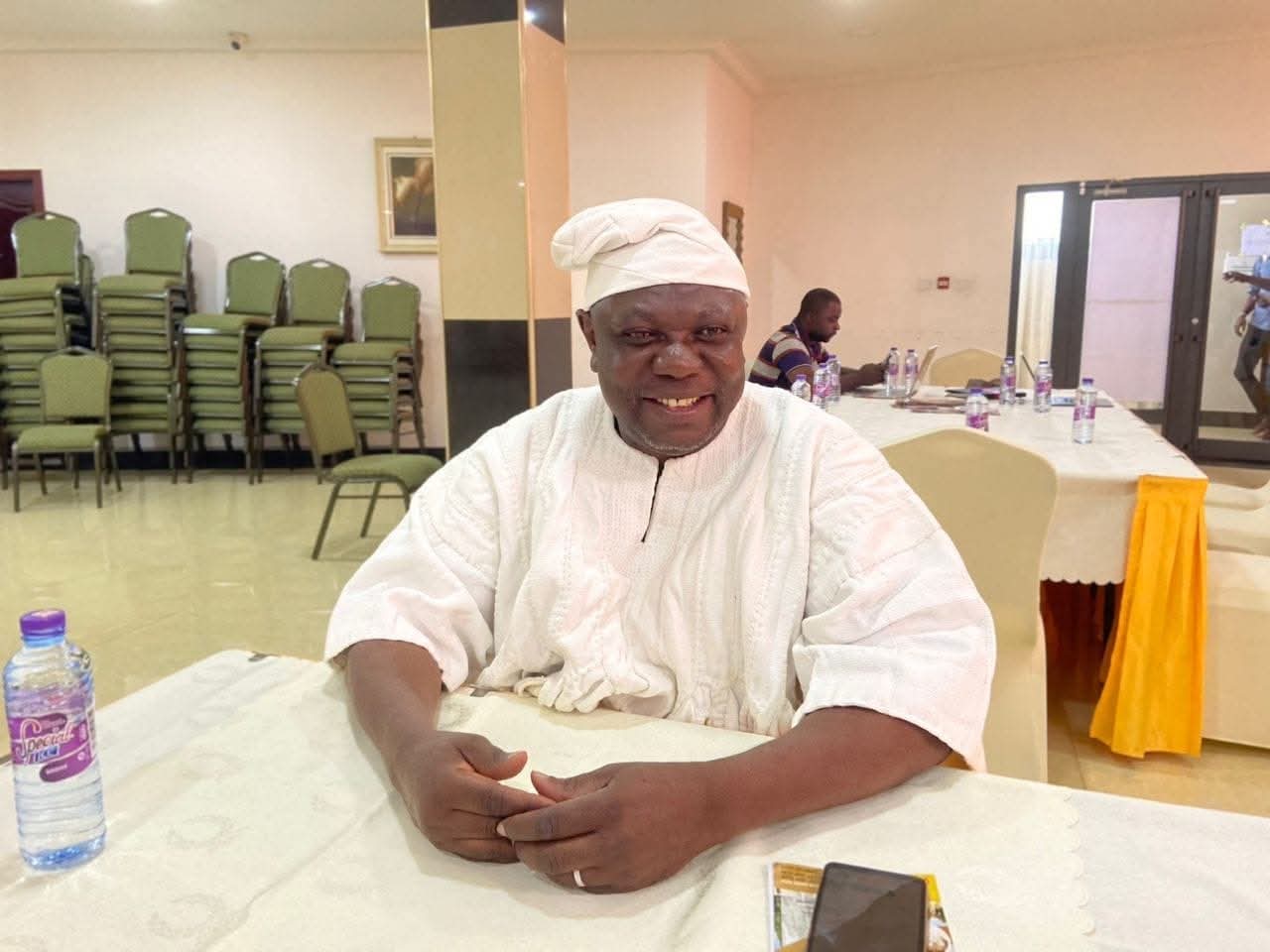
From a childhood of migration, farming, hunger and interrupted schooling to academia, public service and a lifelong mission for Sissala identity
Before he became a linguist, development practitioner, university lecturer, District Chief Executive and one of the leading voices behind the formal development of Sissale, Moses Luri was simply a village boy trying to find his way.
His childhood was not defined by comfort. It was shaped by movement, farming, family responsibilities, interrupted schooling and, at times, hunger. Yet beneath these difficulties was an unusual determination to keep learning.
Today, Luri’s life offers a remarkable portrait of how difficult beginnings can shape a person’s understanding of education and eventually become the foundation for a lifelong commitment to community development and cultural identity.
There was a time, however, when simply getting into a classroom was itself a struggle.
A CHILD OF MIGRATION
When Luri was born, there was no school in his immediate village. His family moved between communities as his father pursued farming, hunting and charcoal burning.
His grandfather, he recalls, was associated with the founding of Sibini, where he settled and established a farming and hunting community that later attracted other Sissala and Dagaaba families. His father also moved from place to place in search of livelihood.
Eventually, the young Luri found himself in Accra with his mother. It was there that he experienced one of the most frightening moments of his childhood.
One day, after escorting a Sissala neighbour, he became lost while trying to find his way home. As he attempted to cross a major road, he was hit by a vehicle and taken to the Odorkor Police Station.
The authorities broadcast his name, his parents’ names, his tribe and other details over the radio. His family eventually found him.
For a child, the incident was traumatic. But it also changed the direction of his life. Concerned about what might happen to his son in the city, his father decided that Luri should return to the village, where he could attend school.
Returning home, however, did not immediately solve the problem.
THREE YEARS WAITING FOR SCHOOL
Luri’s uncle initially wanted him to work on the farm before beginning his education. Children who entered school in 1977 moved ahead of him. Another group started in 1978.
Luri waited.
It was not until 1979 that he finally entered school, already older than many of his classmates.
Then, just as education appeared to be gaining some stability, another interruption came.
In 1986, amid severe food shortages, Luri was withdrawn from school to care for his grandparents while other members of the family travelled in search of food and income.
He was about 15 or 16 years old. For a young person who was already behind his peers, the interruption could easily have marked the end of his formal education.
It did not.
One day, while carrying out an errand in the community, Luri encountered his headmaster, who asked why he was no longer attending school. Luri explained the circumstances.
The headmaster did not simply listen. He went to Luri’s grandfather and insisted that the boy return to school.
Eventually, the family agreed.
Luri returned to the classroom just as the Junior Secondary School system was being introduced, making him part of a pioneering generation of JHS students.
A second chance had opened, and he took it.
FARMING TO PAY HIS WAY
For Luri, returning to school did not mean abandoning work.
He continued farming and learned to cultivate crops, raise animals and engage in local crafts. He established small farms, raised pigs and goats and sold them to generate income for school materials and other necessities.
His childhood therefore became a constant movement between the classroom and the farm.
The experience gave him an intimate understanding of rural life and of the difficult choices families sometimes have to make when education competes with survival. Years later, that understanding would become important in his work as a development practitioner.
But education was beginning to take him somewhere beyond the village.
THE PIONEER OF TUMU SEC-TECH
Luri later entered Tumu Secondary Technical School as part of its pioneering group. His intellectual abilities became increasingly evident, particularly in languages.
He developed an unusual relationship with Dagaare. Although it was not his mother tongue, he learned the language well enough to perform strongly in examinations.
But the experience also sharpened another concern.
If he could learn and succeed in a language that was not his own, what happened to children whose own language was not represented in formal education?
For Luri, language gradually became more than a school subject. He began to see it as part of the process through which children encounter education, understand themselves and participate in society.
That realisation would eventually become central to his life’s work.
THE QUESTION THAT CHANGED HIS LIFE
After secondary school, Luri entered literacy work and was trained as a literacy facilitator under Ghana’s National Functional Literacy Programme.
He later proceeded to Tumu Teacher Training College. It was there that an education teacher introduced him to an idea that would remain with him: education should solve problems in society.
The lesson forced Luri to look at his own education differently.
He began asking himself a simple but profound question: What problem has my education prepared me to solve?
His answer was Sissale.
He had encountered a language and a people whose linguistic identity, in his view, was not adequately represented in formal education. Rather than simply accepting that reality, he decided that he could contribute to changing it.
The idea would follow him through employment, higher education, public service and community development.
THE COST OF PURSUING A DREAM
Luri’s own pursuit of higher education was far from straightforward.
At one point, he gained admission to continue his education but could not obtain study leave from his employer. He was faced with a difficult choice: remain in employment or leave and pursue the education he believed would prepare him for a larger mission.
He chose education.
Before leaving his job, he and his wife carefully considered what life without a regular salary would mean. They calculated expected expenses for food, rent, transportation, healthcare, electricity, the children’s needs, emergencies and even social obligations.
He deposited money into an account for his wife.
He also bought her a motorbike because the motorcycle he had been using belonged to his employer and would have to be returned.
Then he resigned.
It was a leap of faith.
WHEN SUPPORT DISAPPEARED
His education was initially supported by several people, including political figures from the Sissala area. But the assistance was not always consistent.
There were times when he called people who had promised to help and received no response. Food, transportation and other basic expenses became difficult to meet.
Eventually, after completing his coursework, he withdrew from the programme.
It was another major setback.
But, as had happened several times before, the interruption did not bring his journey to an end. Instead, it redirected him.
BUILDING FROM TUMU
Back in Tumu, Luri founded the Sissala Literacy and Development Programme, known as SILDEP.
The organisation became a platform through which he could bring together literacy, community development and his continuing interest in language.
In 2009, SILDEP secured significant support from SIL Switzerland for development activities, including the establishment of a guest house intended to generate resources for literacy work.
Plan Ghana also supported a Village Savings and Loans Association project. The initiative was piloted in Tumu and later expanded across the Upper West Region and beyond, attracting interest from organisations including CARE International.
The man who had once struggled to finance his own education was now helping create systems through which communities could strengthen their own livelihoods.
Yet his own academic journey was still unfinished.
EDUCATION, AGAIN
Luri pursued an MPhil in Linguistics at the University of Ghana but later withdrew from the programme. He subsequently enrolled at the University of Education, Winneba, to study Ghanaian Language in Dagaare.
Eventually, he obtained an MA in Linguistics from the University of Ghana and an MPhil in Ghanaian Language from Winneba.
While studying, he also began teaching at the university as a graduate teaching assistant. The path towards academia was opening.
But the language mission that had begun much earlier remained at the centre of his thinking.
THE DCE WHO WANTED TO CHANGE THE SYSTEM
In 2012, Luri became District Chief Executive.
He regarded the position not only as an administrative responsibility but also as an opportunity to advance the language agenda.
His thinking was straightforward. If Sissale was to be developed and eventually occupy a meaningful place in education, there had to be people with the academic and technical capacity to develop it.
He therefore wanted young people from the Sissala area to be trained in language-related disciplines so that a pool of qualified people could contribute to the development of Sissale.
He worked with academics to prepare proposals, mobilised district leaders and engaged traditional authorities and community organisations. A budget was prepared and plans were developed.
Then, unexpectedly, his tenure ended on December 4.
The initiative lost momentum.
But Luri did not abandon the idea.
BACK TO THE LANGUAGE
Outside political office, he continued the campaign.
He worked with academics, helped sponsor Sissala students and participated in the development of the Sissala Orthography Committee, eventually becoming its chairman.
He mobilised resources and engaged community members as he helped push the process towards the formal recognition and development of Sissale.
For Luri, the end of public office did not mean the end of public service.
The office had ended. The mission had not.
A CHILD OF TRADITION, A MAN OF FAITH
There is another dimension to Luri’s story that reveals the complexity of his intellectual journey.
His grandfather was a chief and Earth priest. As a child, Luri participated in traditional practices and assisted with libation and other ritual activities.
Later, while at secondary school, he became a Christian.
An agriculture teacher who was also a pastor introduced him to Christian programmes and Scripture Union, and Luri became deeply involved in Christian activities.
At one stage, he says, his commitment was so strong that he rejected traditional religious practices and even destroyed some of the traditional objects he had inherited.
Adulthood brought another intellectual turning point.
His studies in African literature and culture forced him to revisit some of the assumptions he had developed earlier. He began to appreciate the cultural value of traditions he had once rejected.
He describes the process as unlearning.
Today, although a Christian, he says he still participates in libation. His spiritual journey mirrors his broader intellectual journey: from inherited ideas, through rejection, questioning and reflection, towards a more nuanced understanding of African culture.
SIX CHILDREN AND A CONTINUING MISSION
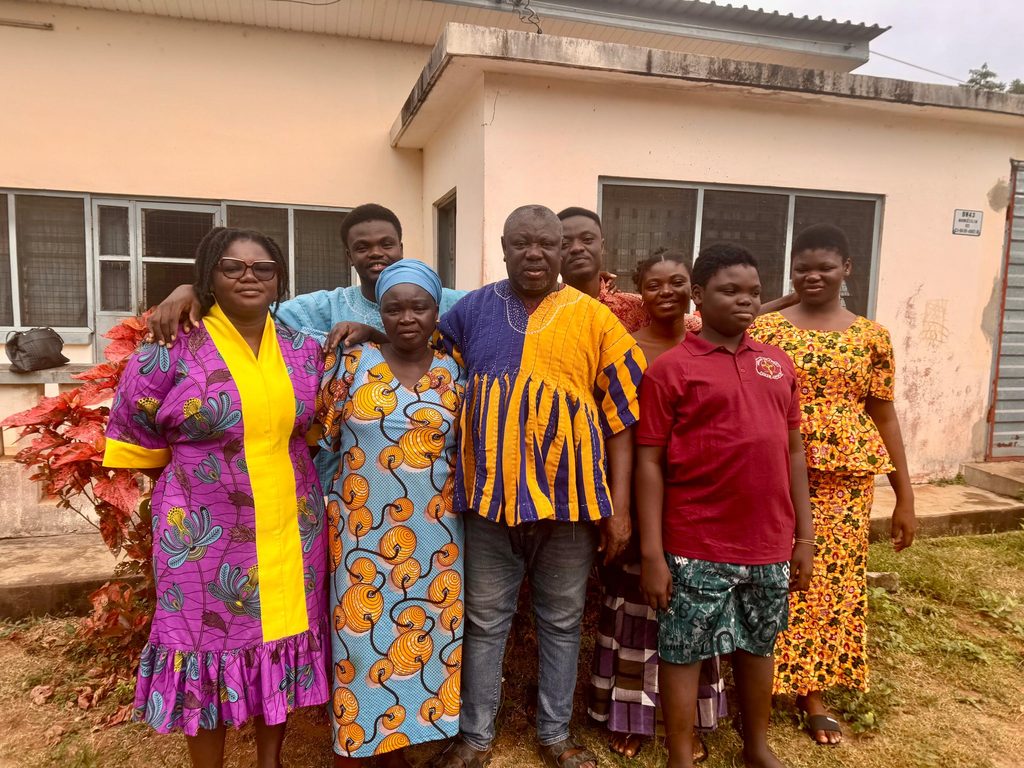
Luri is married to Faustina, and they have six children, three boys and three girls.
Behind the public story of language development is therefore a family story.
There is a wife who accepted an uncertain financial future when her husband left employment to pursue education. There are children who grew up while their father moved between academia, development work and public service.
There is also a family that experienced both sacrifice and opportunity as Luri pursued an idea that was often larger than his immediate circumstances.
For him, the journey was never simply about acquiring certificates or occupying positions.
It was about what education could eventually make possible.
A LIFE THAT CAME FULL CIRCLE
Perhaps the most striking feature of Luri’s biography is the way his life repeatedly returns to education.
As a child, he struggled to enter school. As a teenager, hunger interrupted his education. As a young man, financial difficulties threatened his academic ambitions. Later, employment constraints forced him to make another difficult choice.
Yet each interruption produced another beginning.
He left one programme and started another. He worked and studied. He founded an organisation. He taught. He entered public service. He returned to academia.
And through all of it, one question continued to follow him:
What can education help me do for my people?
His answer has been Sissale.
The boy who once struggled simply to remain in school eventually became one of the people working to ensure that future Sissala children encounter their own language within the educational system.
That is why Luri’s story is more than the biography of an academic, development practitioner or former District Chief Executive.
It is the story of a man whose personal struggle with education became a lifelong commitment to making education more responsive to the identity and aspirations of his people.
He was once the child trying to find his place in the school system.
Today, he is helping create a place for his language within it.
And perhaps that is the most fitting way to understand the journey of the boy who refused to let circumstance write his story.
 Charles Prempeh PhD