 By Ishmael Junourgh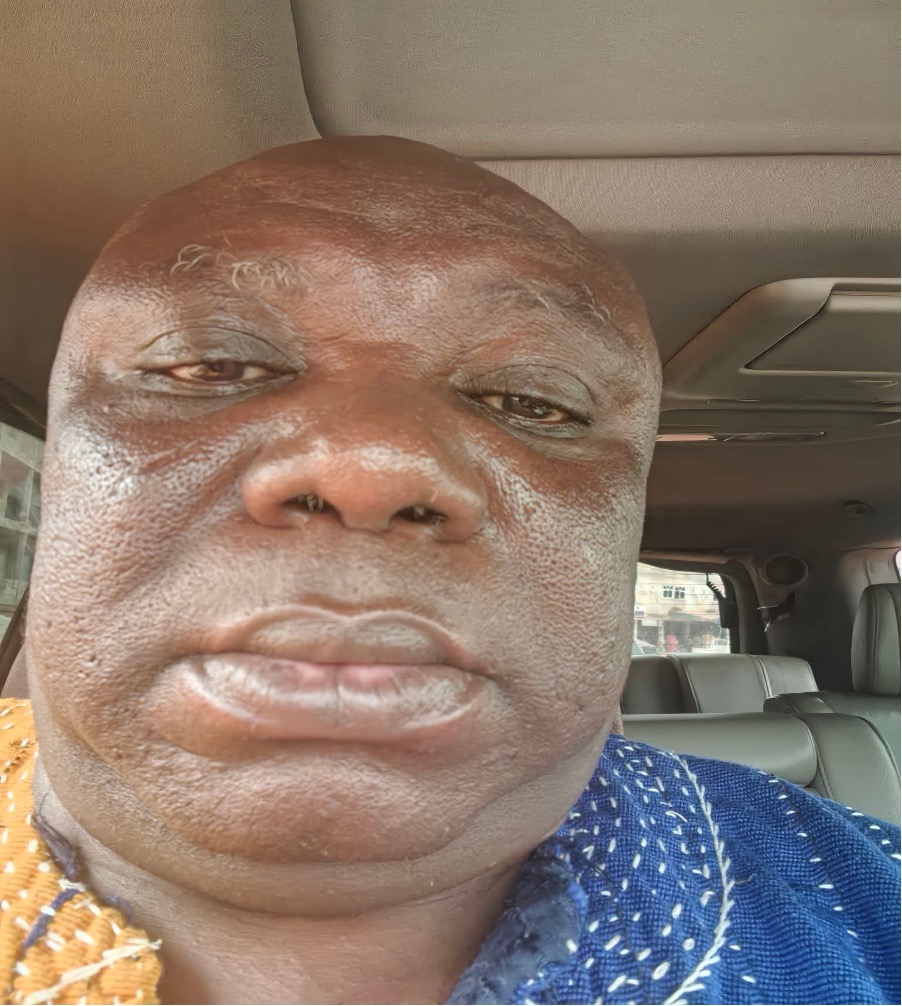
In picture is Moses Luri, (PhD Candidate)
For generations, Sissala children entered Ghana’s formal education system speaking one language at home but learning through another. Today, Sissale has crossed an important threshold with the development and standardisation of its written form. Behind that long journey is Moses Luri, whose childhood experience of linguistic exclusion became a lifelong campaign to give his mother tongue a place in Ghana’s educational system.
There is a popular idea that when education has served its purpose, the educated person should return to society with the knowledge to solve a problem. For Moses Luri, the question became deeply personal.
“When education has educated you, what problem have you found in your society that you can solve?” For him, the answer was language.
Today, Sissale has taken an important step into Ghana’s formal linguistic and educational space following the development and standardisation of its orthography. The milestone places Sissale among Ghanaian languages being developed for written, educational and institutional use.
But for Luri, the significance of the development cannot be measured simply by the existence of an approved writing system.
The real test, he believes, is whether a Sissala child will eventually be able to walk into a classroom and find his or her mother tongue represented in the curriculum, in textbooks and in the teaching and learning process.
A LANGUAGE LEFT OUTSIDE THE CLASSROOM
Luri’s campaign has its roots in the history of education among the Sissala people. He traces part of that history to 1945, when a school was established at Tumu after local leaders pushed for educational opportunities for their children within their own cultural and linguistic environment.
Before then, he recalls, some Sissala children had attended school in Lawra, where Dagaare was used as the Ghanaian language of instruction, even though Sissala-speaking teachers were available.
For Luri, that history illustrates a wider problem that confronted generations of Sissala children: their mother tongue was spoken in their homes and communities but had limited space within formal education.
The establishment of the school at Tumu, therefore, represented more than the opening of another school. It was also a demand for educational recognition within a Sissala cultural environment.
Luri says Sissale was initially used in the early school established at Tumu, but the language subsequently lost its position within formal education.
Decades later, he would experience the consequences himself. As a student, Luri became part of a generation required to study and write Dagaare as the Ghanaian language subject, although Sissale was his mother tongue.
He eventually performed well in Dagaare. But, as he recalls, there was a difference between being able to reproduce what he had read and studied and actually speaking the language naturally.
More importantly, he saw fellow Sissala students struggle with a system in which they had to learn Dagaare alongside English, Mathematics and other subjects.
Some, he says, found the linguistic demands difficult enough to affect their academic progress. That experience planted a question that would remain with him for decades:
Why should a child have to leave his or her mother tongue at the classroom door in order to receive an education?
FROM PERSONAL EXPERIENCE TO LANGUAGE ADVOCACY
After completing senior high school in December 1993, Luri was recruited as a literacy facilitator and trained in Wa under the then National Functional Literacy Programme.
The experience changed his understanding of language. Literacy, he came to appreciate, was not simply about the ability to read and write. It was connected to participation, development, identity and the ability of communities to produce and transmit knowledge.
He later attended Tumu Teacher Training College, where he pursued teacher education and undertook research related to non-formal education in the Sissala area.
His personal concern gradually became a professional and community project. He pursued further studies in Linguistics and Ghanaian Language, eventually obtaining an MA in Linguistics from the University of Ghana and an MPhil in Ghanaian Language in Dagaare from the University of Education, Winneba.
But his academic journey was not an escape from the language problem he had encountered as a child. It gave him tools with which to confront it.
THE LONG ROAD TO A WRITTEN SISSALE
A major phase of Luri’s campaign involved efforts to develop a standardised Sissale orthography. The task required more than deciding how words should be written.
It involved questions of linguistic structure, spelling conventions, sounds, symbols, teaching, teacher preparation and the development of materials that could eventually support formal education.
Luri became chairman of the Sissala Orthography Committee and helped mobilise academics, Sissala organisations, traditional authorities, government institutions and other stakeholders around the process.
At one stage, he says, he identified Sissala students pursuing programmes connected with Linguistics and supported some of them to develop their academic capacity. The objective was broader than producing an orthography.
He wanted a generation capable of taking the language forward academically and institutionally. The campaign also required resources.
Through the Sissala Development Network, popularly known as SisaNet, Luri says efforts were made to mobilise funds to support aspects of the work after government institutions had developed budgets and work plans but faced financial limitations.
The process eventually formed part of the wider national effort to standardise additional Ghanaian languages.
The significance of the development became particularly clear in 2026, when Sisaali was among the Ghanaian languages whose standardised orthography was formally launched.
For Sissala communities, it represented a major departure from the historical situation in which the language was widely spoken but had a much weaker institutional presence in formal education.
FROM RECOGNITION TO THE CLASSROOM
Yet the achievement also creates a new question. What happens after standardisation? For Luri, the answer is straightforward: the curriculum.
“The next step is the curriculum,” he says.
He says he has engaged the Director-General of the National Council for Curriculum and Assessment (NaCCA) on the need to develop and approve a formal Sissale curriculum, with further discussions expected. That next stage is crucial.
A standardised writing system creates the foundation for education in a language, but it does not automatically put that language into classrooms.
For Sissale to become an established language of education, the process will require curriculum development, appropriate teaching and learning materials, trained teachers, assessment mechanisms and sustained institutional support. That is why the current moment represents both an achievement and a new beginning. The question is no longer simply whether Sissale can be written.
It is whether the written language can become part of the everyday educational experience of Sissala children.
A LANGUAGE IS MORE THAN WORDS
For Luri, this distinction matters because language is not merely a communication tool.
It carries identity, preserves history, transmits cultural knowledge. And it gives communities a means of expressing their understanding of the world in their own intellectual vocabulary.
When a language is excluded from formal education, he argues, the consequences can extend beyond the classroom. A generation may become increasingly literate in another language while becoming less confident in reading and writing its own.
The danger, therefore, is not necessarily that people will stop speaking Sissale immediately.
It is that the language could remain predominantly oral while other languages dominate the spaces in which formal knowledge is produced, recorded and transmitted. That is the gap Luri has spent years trying to close.
FROM PUBLIC OFFICE BACK TO THE LANGUAGE
His advocacy has continued through different stages of his career. He became a teacher, university teacher, development practitioner and District Chief Executive. He also founded the Sissala Literacy and Development Programme (SILDEP).
Even while serving as DCE, he says he attempted to mobilise district-level support for Sissale development and worked with academics on proposals and work plans.
Political circumstances interrupted some of those efforts. The language campaign, however, did not end when public office ended. He continued the work through community and professional networks.
That persistence illustrates an important reality about language development: it rarely belongs to one person or one institution. It requires linguists and educators, government agencies and universities, traditional authorities and community organisations, teachers and students, writers and readers.
Luri may be one of the prominent faces of the Sissale campaign, but the development of the language has ultimately been a collective undertaking.
THE NEXT GENERATION
The story of Sissale is therefore entering a different phase. For generations, Sissala children experienced the contradiction of speaking one language at home while encountering another Ghanaian language in formal education.
Today, the language has a standardised written form and a growing academic foundation. But the ultimate measure of success will be found beyond official ceremonies and documents.
It will be found in the classroom. It will be seen when a child in Tumu, Gwollu, Fielmuo, Lambussie or another Sissala-speaking community opens a textbook written in Sissale. It will be heard when a trained teacher uses the language to explain a lesson. It will be demonstrated when children can read and write their mother tongue confidently and when that language becomes part of the formal production of knowledge. For Luri, that is what the decades of advocacy have been about.
The journey from the child who experienced linguistic exclusion to the educator and advocate helping to push Sissale towards formal recognition has come full circle.
But it has not ended. The orthography may have opened the door. The next task is to get Sissale through the classroom door. And for Luri, the larger principle remains unchanged: a people should not have to lose their language in order to gain an education.
 Charles Prempeh PhD