
 By Charles Prempeh PhD
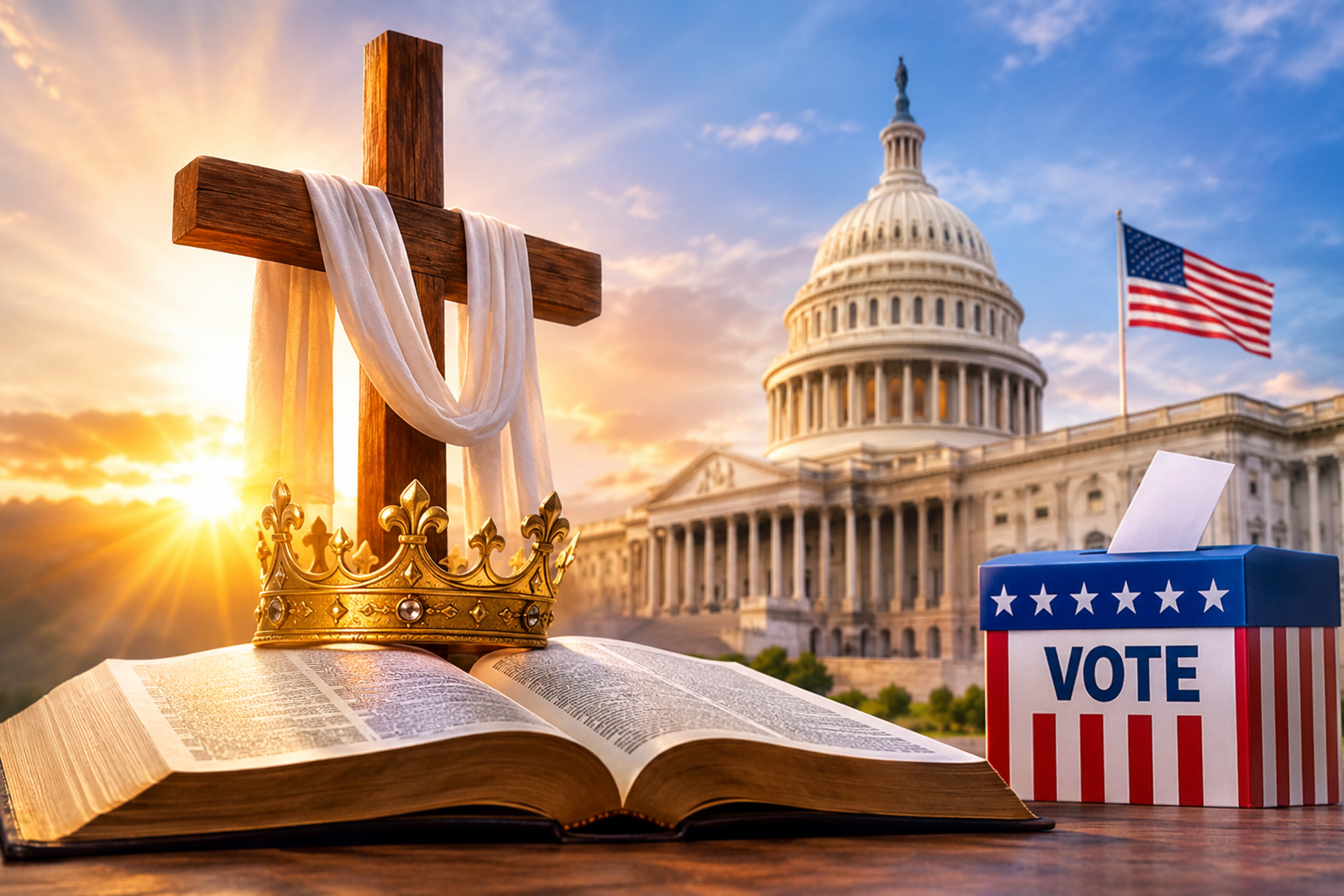
The United States midterm elections, held on Tuesday, 3 November 2026, have produced a significant electoral victory for the Democrats over the Republicans. The Democrats secured control of both chambers of Congress, making substantial gains in the Senate and the House of Representatives. They flipped at least seven Senate seats and 42 House seats, although some electoral contests were still awaiting final resolution. These results have given some people on the ideological left hope for a return to some form of moral liberalism. There are analysts passionately engaging in discussions about the rise of leftist Christianity. Certainly, a few are raising questions about whether the election has delivered a verdict on evangelical Christianity. At the heart of the waves of electoral gains registered by the Democrats, particularly among certain Christian clerical figures, is a reevaluation of Christian compassion in an attempt to synchronise it with the expanding shades of inclusivity.
What is missing from these discussions, however, is the sui generis nature of the Christian God. Unlike the deities of other religious traditions, who are understood either as transcendent but not immanent, or immanent but not transcendent, the Christian God is both transcendent and immanent. He is the majestic Sovereign Ruler of the world, who alone determines the course of events and the exceptions to the established order. Nothing happens without His permission.
In fact, the worst thing that ever happened in human history was not an electoral outcome but deicide. Deicide is the theological term used in discussions of the crucifixion of Jesus Christ by human beings, ultimately inspired by Satan. Yet, this convergence of human and satanic schemes to subvert the created order became the very instrument through which salvation was brought to God’s elect. It was the Father’s plan that the Son should endure excruciating suffering, die, and rise again to redeem God’s elect, whose salvation would subsequently be sealed by the Holy Spirit. No wonder Scripture indicates that if the Devil had known that the crucifixion of Jesus Christ would bring salvation and bring an end to his dominion over God’s elect, he would not have inspired it.
Now, relating all this to elections and politics, Christians, like everyone else, have a civic duty to participate in the election of their leaders. They also have a responsibility to ensure that the right leaders are elected into office and that those leaders govern in accordance with established principles of fairness and justice in managing pluralities within public governance. Christians pay taxes, obey laws, and perform all constitutionally recognised civic duties to promote human flourishing.
Two fundamental considerations underpin Christian civic responsibilities. First, Christians carry a mandate as God’s co-creators and stewards to hold the fortress of the created order together. They are expected, and indeed ought, to occupy until Christ returns. Second, as established in Romans 13, political authorities are instituted by God to foster law and order.
All of this rests on the fact that, unlike Judaism as a come-and-see religion, Christianity is a go-and-tell religion. Christians may be demographically different, but ontologically, they find their common identity in the Lordship of Jesus Christ. They may be superficially different, but they are fundamentally united in Jesus Christ, who alone saves them.
This also means that, regardless of who occupies political office, Christians everywhere have Jesus Christ as their Sovereign Ruler. It therefore does not fundamentally matter who wins or loses an election. Jesus is my King. Jesus is the King of Christians.
As Christians, we therefore respect political authority to the extent that it preserves the created order, which we have a divine-cultural mandate to uphold. We stand for what Jesus stands for. We collaborate with political leaders who govern within the framework of the social contract while ensuring that the boundaries between public governance and pre-political institutions, particularly the family and faith, are properly respected. Anything beyond these limits would require Christians to obey Jesus Christ rather than men.
Certainly, this should not be difficult to understand.
In Ghana, for instance, whether John Dramani Mahama builds the National Cathedral or not, Jesus is King. Whether he signs the law against all forms of sexual perversion or not, Jesus is King. Whether any politician professes to be a Christian or not, Jesus is King.
One more thing: Christians have never believed that any individual or institution can overcome the Church. The Church belongs to Jesus, who established it. Consequently, no gate of hell shall prevail against it. The expression “the gates of hell” means precisely what it says: anything that stands in opposition to Christ will ultimately fail against His Church.
As an academic, I have witnessed the feeble and miserable attempts of some reactionary scholars to use the fickleness of their pens to subvert Christianity. They deploy banal terms such as “Christian nationalism” to profile Christians for standing against oppositional behaviours that seek to undermine the foundations of any civilised society, particularly faith and family. In the name of a highly nebulous concept called “decolonisation”, any amateur PhD holder presumes to have arrived at the epistemic tower by making Christ and the Church their convenient whipping boys.
Interestingly, the Church remains the only hope of the world. I am yet to encounter any instance in which a tradition or philosophy outside Judeo-Christianity has provided enduring legacies capable of sustaining the moral and institutional foundations of human civilisation.
Therefore, as far as Christians are concerned, we will exercise compassion over condemnation to ensure that human ontological dignity, including the dignity of migrants, is duly protected. However, no one should be allowed to instrumentalise Christian compassion in ways that undermine the vitality and fecundity of pre-constitutional institutions, particularly those that safeguard civility and civilisation.
Ultimately, elections come and go, political leaders rise and fall, and ideological movements emerge and disappear. But the sovereignty of God remains unchanged. Our political circumstances may change, but our allegiance does not, for Jesus remains the same in both ontology and function as the Sovereign Ruler.
Jesus Christ is King.
Satyagraha
 Ishmael Junourgh