
 By Ishmael Junourgh
Politics has a peculiar way of making money look like development. A convoy arrives, music blares, crowds gather, cash changes hands and promises fill the air. For a moment, political ambition can look like a development project. But when the music stops and the dust settles, one question remains: What has actually been built?
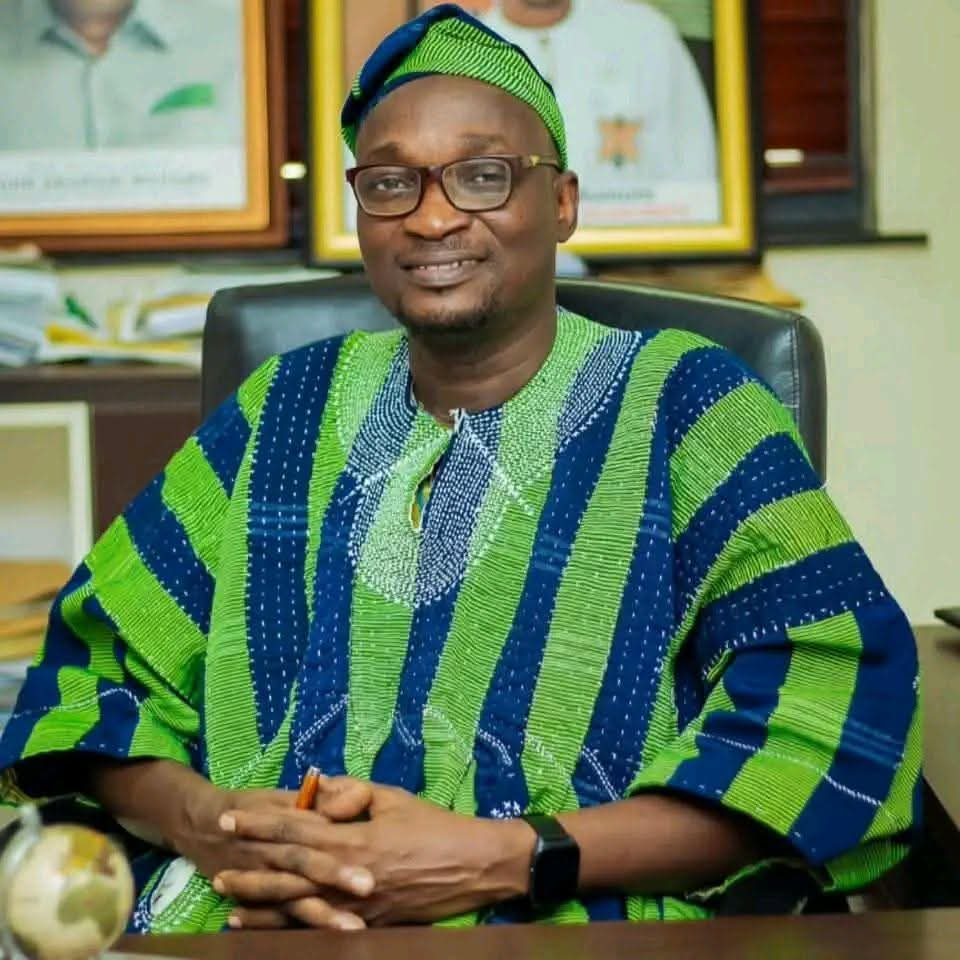
That is the question confronting Salaga North as Hon. Alhassan Mumuni, the sitting Member of Parliament, faces the prospect of a political challenge from Malik Basintale, the former NDC youth communicator and current Chief Executive Officer of the Youth Employment Agency (YEA).
Basintale is undoubtedly a prominent political figure. His rise through the NDC’s youth and communications structures has been remarkable, and his current position gives him access to a national platform for youth employment initiatives. The YEA under his leadership has also unveiled programmes projected to create thousands of jobs nationally.
But national prominence is not the same as constituency development. Neither is access to money proof of leadership capacity.
For Salaga North, therefore, the question should not simply be who has more money, greater political visibility or a louder campaign machinery. It should be who has demonstrated a stronger capacity to translate political office into tangible development.
And on that question, Mumuni has a record that deserves serious consideration.
THE MAN WHO HAS ALREADY BEEN TESTED
Alhassan Mumuni is no political newcomer. He is the sitting Member of Parliament for Salaga North and has previously served in the Sixth and Seventh Parliaments. Before entering Parliament, he also served as a District Chief Executive and worked in the Ghana Education Service.
His political journey has included administration, legislation, electoral defeat and political comeback. That experience matters because leadership is not measured only by the ability to attract attention when an election approaches. It is also about what a politician does with public office and how consistently he engages the people he represents.
Mumuni has had opportunities to serve, and his interventions provide voters with a basis for assessing his performance.
EDUCATION: AN INVESTMENT BEYOND ELECTIONS
One of the notable interventions associated with Mumuni’s earlier parliamentary tenure was his collaboration with another MP to establish the KM Model Girls’ Junior High School.
The school reportedly started with just seven girls but has since grown to more than 100 students. Mumuni also provided bicycles for students travelling from distant communities and has expressed interest in expanding the institution into a senior high school.
These may not be the kinds of interventions that generate the excitement of political rallies, but their long-term value is considerable. A school creates opportunities beyond the immediate political season. A girl who receives an education today may become a teacher, nurse, entrepreneur or public servant tomorrow.
His support for education has also included financial assistance. In 2019, 40 needy but brilliant students in Salaga North reportedly received GH¢20,000 in educational support from his share of the MPs’ Common Fund. He had earlier initiated plans for an educational endowment fund to support hardworking but financially disadvantaged students.
These interventions do not suggest that Salaga North has overcome its educational challenges. Far from it. However, they demonstrate an established commitment to education as a constituency development priority.
SUPPORTING FARMERS AND WOMEN
Mumuni’s constituency interventions have also extended to agriculture, an important source of livelihood for many households in Salaga North.
More than 120 women farmers in Nyeshila, Gbateni, Dingooni and Yenkazi reportedly benefited from financial assistance and farm inputs valued at more than GH¢24,000.
The support included funds for land preparation, fertiliser and agrochemicals, alongside the distribution of 240 bags of fertiliser.
For farming households, timely support at the beginning of an agricultural season can make a significant difference. It can determine whether a farmer cultivates an additional plot, improves productivity or struggles to finance basic inputs.
While such interventions cannot independently transform the constituency’s agricultural economy, they represent practical efforts to connect political representation with livelihoods.
WHEN COMMUNITIES RECEIVE ELECTRICITY
In April 2026, Kpanshegu and Kpaliguni communities were connected to the national electricity grid under the Rural Electrification Project.
Mumuni inaugurated the project and indicated that the intervention fulfilled a campaign promise made during the 2024 elections.
Electricity is more than a political achievement. It creates opportunities for businesses, improves the conditions for studying, supports communication and contributes to the delivery of essential services.
For communities that have lived without reliable electricity, the arrival of power represents a meaningful improvement in everyday life.
It is one thing to promise development during a campaign. It is another to stand in a community and commission infrastructure that residents can use long after the election is over.
REPRESENTATION BEYOND CAMPAIGN PROMISES
A Member of Parliament does not personally construct every road, school or hospital. One of the most important responsibilities of parliamentary representation is the ability to engage government institutions, identify local challenges and push for solutions.
In April 2026, Mumuni visited the Agriculture Department, Health Directorate, Ghana Education Service and National Commission for Civic Education in the North East Gonja District to discuss their operational challenges.
His office subsequently provided chairs and financial support for fuel to facilitate official field activities.
He has also toured stalled development projects, including the Community Day SHS E-Block and the Agenda 111 hospital project. In addition, he donated a printer, laptop and motorbike to NADMO.
These interventions may not all carry the weight of major infrastructure projects, but they speak to an aspect of representation that is often overlooked: maintaining engagement with public institutions and following up on local development needs.
The constituency needs an MP who does not merely announce projects but also keeps asking why important projects remain unfinished.
THE SENIOR HIGH SCHOOL QUESTION
Perhaps one of the most pressing development challenges in Salaga North is the need for adequate second-cycle educational infrastructure.
Mumuni has publicly advocated the establishment of a senior high school, drawing attention to the abandoned E-Block project and the difficulties students face in accessing second-cycle education outside their immediate communities.
This is an important issue that should feature prominently in any political conversation about the constituency’s future.
It also presents Malik Basintale with an opportunity to explain what his national experience and influence can contribute to addressing the problem.
After all, youth development does not begin with distributing money to unemployed young people. It begins with access to quality education, skills acquisition and opportunities that enable them to build sustainable livelihoods.
BASINTALE’S NATIONAL PLATFORM: AN OPPORTUNITY TO PROVE HIMSELF
Malik Basintale enters this political conversation with an advantage Mumuni cannot claim in the same way: access to a national youth-employment platform.
As Chief Executive Officer of the Youth Employment Agency, he occupies an office directly connected to one of Ghana’s most pressing challenges—youth unemployment.
That is a significant responsibility and an opportunity to demonstrate leadership. But it also raises legitimate questions about what his national position has translated into for his home constituency.
How many young people from Salaga North have benefited from YEA initiatives under his leadership? What specific employment opportunities has he helped create for them? What programmes has he facilitated for the constituency? And how does he intend to translate his national experience into sustainable local development?
These are not hostile questions. They are reasonable expectations of anyone seeking a parliamentary mandate.
If Basintale has access to national programmes, institutional influence and policy networks, Salaga North deserves to know how those advantages can improve the lives of its people.
His political ambition should therefore be accompanied by a clear account of what he has done, what he intends to do and how his proposed approach differs from the existing representation.
THE DANGER OF REDUCING POLITICS TO MONEY
There is nothing inherently wrong with politicians using personal resources to support communities. Constituents have genuine needs, and acts of generosity can provide immediate relief.
The problem arises when financial capacity becomes the principal argument for political leadership.
Money can purchase visibility, organise convoys, fund publicity and distribute temporary assistance. But it cannot automatically establish a record of public service.
It cannot replace the value of a school that has educated generations of children, the opportunities created by electricity or the institutional engagement required to pursue stalled development projects.
More importantly, money distributed during a campaign cannot substitute for the consistent work of representation between elections.
A politician may use personal wealth to introduce himself to a constituency, but earning the trust and confidence of its people requires something deeper.
MUMUNI’S NEXT TEST: TURNING PROMISES INTO SUSTAINABLE LIVELIHOODS
Mumuni, however, should not be spared scrutiny simply because he has a record of interventions.
His recently announced environmental and livelihood proposal offers another opportunity to demonstrate what his representation can achieve.
He has indicated plans to engage between 500 and 600 young people across the constituency’s electoral areas from 2027 in tree planting, economic-tree cultivation and related activities. The initiative is also intended to promote alternative livelihoods and reduce dependence on charcoal and firewood.
Other proposals include improved seedlings, tractor services, start-up capital and support for women farmers.
These are potentially significant interventions, particularly in a constituency where agriculture, environmental degradation and unemployment intersect.
But the proposal must be subjected to serious scrutiny. Where will the funding come from? How will beneficiaries be selected? What safeguards will ensure fairness? How many trees will survive? Will the jobs be sustainable beyond the initial programme period? And what mechanisms will ensure that beneficiaries develop lasting economic opportunities?
These questions are necessary because development should not be judged by the number of people recruited or the amount of money distributed alone. Its real value lies in the lasting improvements it creates.
Nevertheless, the proposal demonstrates the kind of constituency-level thinking that should define the political conversation in Salaga North.
RECORD AGAINST PROMISE
If Malik Basintale eventually presents himself to the people of Salaga North as a parliamentary candidate, he should be given a fair opportunity to make his case.
He should bring his youth-development vision, explain what his national experience has taught him and demonstrate how he intends to address the constituency’s challenges.
But his proposals must be measured against the record of the sitting MP.
The comparison should not be about personalities, campaign rumours or financial muscle. It should be about performance.
Who has supported students? Who has pursued educational infrastructure? Who has helped connect communities to electricity? Who has supported farmers and women? Who has engaged public institutions? Who has followed up on stalled projects? Who has demonstrated a sustained commitment to constituency development?
These are the questions voters should ask.
And the answers should be based on verifiable evidence, not political propaganda.
SALAGA NORTH IS NOT AN ATM
Salaga North should resist the temptation to turn its parliamentary contest into an auction in which the candidate with the deepest pockets is presumed to deserve the mandate.
The people of the constituency are not without political intelligence. They understand the difference between a gift and a development project, between a campaign crowd and sustained constituency engagement, and between temporary financial assistance and investments that create lasting opportunities.
They have children who need schools, farmers who need support, women who need economic opportunities, communities that need infrastructure and young people who need sustainable employment.
Their needs cannot be addressed through campaign spending alone.
The constituency requires a representative who can connect local priorities to national opportunities, mobilise resources, pursue development projects and remain accountable to the people.
LET BASINTALE COME
Malik Basintale should come and make his case. He should campaign, present his vision and challenge Mumuni if that is his political ambition. A competitive democratic process is healthy.
But being younger is not enough. Being nationally recognised is not enough. Having access to money is not enough.
He must demonstrate what he can offer beyond these advantages.
Similarly, Mumuni must understand that an existing record does not automatically guarantee another mandate. His interventions must be sustained, his promises fulfilled and his unfinished projects pursued.
Ultimately, Salaga North deserves a contest of ideas, competence, measurable achievements and credible vision.
For Mumuni, there is an existing record against which his performance can be assessed. For Basintale, there is an opportunity to demonstrate that his national political rise and access to a youth-employment platform can translate into meaningful constituency development.
That is the contest the people deserve: not money against money, but record against promise; not political popularity against political popularity, but demonstrated performance against proposed alternatives.
Because a constituency is not a political marketplace where the highest bidder automatically becomes king. It is a community whose future depends on the quality of its leadership.
And when the dust finally settles, the people of Salaga North—not the deepest pocket—must decide who deserves their mandate.
 Zakaria Rafique Seinu
 Prof. Damasus Tuurosong