
 By Ishmael Junourgh
The Talensi District in Ghana’s Upper East Region is positioning itself for a major transformation, with the District Assembly highlighting its growing economic contribution, mineral resources, tourism potential and ongoing investments in infrastructure as reasons the area could qualify for an upgrade to municipal status.
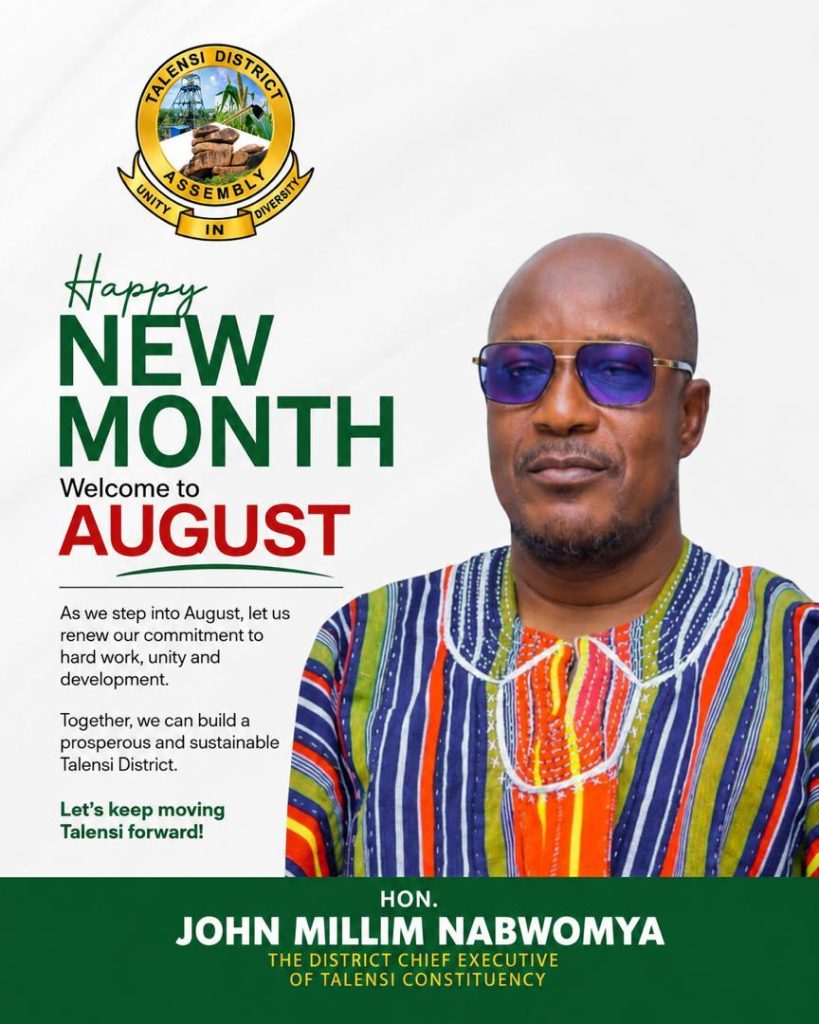
District Chief Executive (DCE) for Talensi, Hon. John Millim Nabwomya, says the district’s population, land size and economic contribution—particularly from large-scale mining operations—make a strong case for its consideration for municipal status.
Speaking in an interview with The Bridge News Online, Hon. Nabwomya said Talensi’s economic importance extends beyond mining, with quarrying, agriculture and tourism also offering opportunities to accelerate local development.
“By way of the population size, the land size and the economic contributions to the national basket, I’m sure if all these things are put into perspective, we might be getting closer to becoming a municipality,” he said.
Mining Economy and Local Revenue
Talensi hosts major mining operations, including Earl Mining Company and the Cardinal Namdini/ Shandong-related mining operations, while quarrying activities in parts of the district also contribute to the local economy.
According to the DCE, the Assembly generates more than GH¢2 million annually in Internally Generated Funds (IGF), with mining-related operating permits accounting for a significant portion of the revenue.
He said the revenue provides the Assembly with some capacity to undertake development interventions, although the financial demands of the district remain considerably higher than available resources.
The DCE said the Assembly is using available resources to improve infrastructure and basic services, including education, healthcare, water, sanitation and energy.
Roads Remain a Major Development Challenge
Despite Talensi’s economic importance, Hon. Nabwomya acknowledged that inadequate road infrastructure remains one of the district’s biggest development constraints.
He said only about eight to nine kilometres of roads connecting the Bolgatanga-Tamale trunk road to the district capital, Tongo, are currently tarred, leaving several communities dependent on difficult feeder roads.
“Some of the feeder roads are not even motorable. As I sit down here, I’m having a headache because I have to scramble for resources to make sure that I repair some of the difficult-to-pass places whenever it rains,” he said.
The DCE, however, disclosed that a major road project had been awarded to Araco Construction to extend the road network from Tongo towards the eastern part of the district and link up with Nabdam.
He described the project as strategically important because of its potential to improve regional connectivity and facilitate movement between communities and neighbouring areas.
According to him, the completed route could serve as an important link within what he described as the “ring road” of the Upper East Region.
The DCE said materials had already been moved to the contractor’s camp, with further mobilisation expected to pave the way for construction works.
Education and Healthcare Among Top Priorities
Hon. Nabwomya identified roads, energy and education as the Assembly’s three immediate development priorities, with healthcare also receiving significant attention.
He said the Assembly was working to reduce the deficit in Community-based Health Planning and Services (CHPS) compounds across the district.
“By the fourth year, we should be able to clear this deficit by getting all these places that deserve a CHPS compound,” he said.
The Assembly has undertaken or initiated CHPS-related projects in communities including Teng-Zug, Kpalga and Pusu-Namongo.
The DCE also disclosed that the district recently benefited from the services of three medical doctors, but accommodation challenges had initially threatened their deployment.
He said the Assembly used its internally generated resources to renovate accommodation facilities for medical personnel.
According to him, attracting and retaining health professionals remains critical to improving access to healthcare, particularly in rural communities.
Water Access Receives Attention
Access to potable water remains another major development concern, but the Assembly says it is investing in borehole infrastructure to bridge the gap.
Hon. Nabwomya said the Assembly had commissioned about 25 mechanised and hand-pump boreholes across the district.
He added that approximately 10 additional facilities were at various stages of completion, including the installation of hand pumps and mechanisation for institutions and communities.
The projects, he said, are intended to improve access to safe drinking water and reduce the burden on communities that continue to rely on inadequate or unsafe sources.
Agriculture and Fertiliser Support
Agriculture remains the backbone of the local economy, although the DCE acknowledged that most farmers in Talensi operate at subsistence level.
He said the Assembly, in collaboration with the Member of Parliament, had distributed fertiliser to farmers across the district.
According to him, every community had received fertiliser, with some communities receiving significantly larger quantities depending on their needs and size.
He said the intervention was intended to improve agricultural productivity and support food security.
However, the DCE noted that Talensi had yet to fully develop commercial agriculture on a scale that could significantly expand employment, processing and export opportunities.
The situation, he suggested, presents an opportunity for investors and development partners to support the transition from subsistence farming to commercially oriented agriculture.
Sanitation and Environmental Responsibility
The Assembly has also prioritised sanitation through regular community clean-up exercises and public education.
Hon. Nabwomya said the Assembly had consistently participated in the National Sanitation Day initiative and used the exercises as an opportunity to educate residents on responsible waste disposal and environmental cleanliness.
He said sanitation activities were not limited to sweeping but also involved educating residents about maintaining clean communities and preventing environmental pollution.
The Assembly’s environmental agenda, he added, would also require increased tree planting and efforts to maintain a healthier environment.
Security and Peace
On traditional security, the DCE said the district had experienced incidents of armed robbery and other criminal activities earlier in the year.
He credited the presence of the Police Intelligence Department (PID) with helping to restore calm and improve security in the district.
According to him, the enhanced security situation is important for both residents and investors, particularly as Talensi seeks to expand its economic and tourism potential.
Teng-Zug Tourism Potential
Beyond mining, Talensi possesses significant cultural and tourism assets which the Assembly believes could become another major source of local economic growth.
The DCE specifically mentioned the Teng-Zug Hills, Whistling Rocks and caves as attractions with the potential to draw visitors from Ghana and beyond.
He said proper development and coordination of the tourism sector could generate income for communities, create employment and contribute to the district’s internally generated revenue.
“If it is well-coordinated, it can be a centre of attraction for people who want to see the other part of the world, as well as generating income for the district and the country as a whole,” he said.
The tourism potential of Teng-Zug also presents an opportunity for stronger collaboration between the Assembly, traditional authorities, local communities, tourism institutions and private investors.
Investment Opportunities
Hon. Nabwomya believes Talensi has considerable potential for investors, particularly in mining, tourism and related economic activities.
He said the district’s mineral resources and tourism assets provide a foundation upon which new businesses and employment opportunities could be developed.
For the Assembly, the objective is not only to attract investment but also to ensure that economic activities translate into tangible improvements in the lives of residents.
Tackling Youth Unemployment
Youth unemployment remains a challenge, and the DCE said the Assembly was looking at skills development and entrepreneurship as part of its response.
He argued that young people should be equipped with practical skills that would enable them to establish businesses rather than depend entirely on formal employment.
“Skills training is something of essence to the Talensi District, where the youth can develop their own skills and operate their own businesses,” he said.
The Assembly is also supporting small businesses, women entrepreneurs and cooperatives by creating an environment that allows them to grow.
According to the DCE, the Assembly sometimes reduces the tax burden on small businesses and avoids measures that could undermine their growth.
Limited Resources Constrain Development
Despite the progress made, Nabwomya said inadequate resources remain the Assembly’s biggest challenge.
He said the district still faces significant deficits in educational infrastructure, healthcare facilities, potable water, sanitation and environmental management.
“What we want to achieve, we do not actually have enough resources to meet that particular demand,” he said.
He therefore called for continued collaboration among central government, the Assembly, mining companies, development partners, investors and local communities to address the district’s development needs.
A Vision for a Transformed Talensi
Looking ahead to the next four years, the DCE said his vision was to see a Talensi where residents enjoy improved living standards, peace, safety and a healthier environment.
He envisaged a district where development would go beyond physical infrastructure to include environmental sustainability and improved quality of life.
His vision, he said, was for Talensi to become a safer and more prosperous district with a healthy environment capable of supporting future generations.
Call for Unity
Hon. Nabwomya urged residents to make unity and peaceful coexistence the foundation for the district’s development.
He said development could not be achieved in an atmosphere of suspicion and division.
“My message to the residents of Talensi is that unity is what can actually take us very far. We should have peace among ourselves; we should live together in unity,” he said.
He encouraged residents to share knowledge, support one another and work collectively towards the development of the district.
For Talensi, the challenge ahead is therefore not simply to benefit from its mineral wealth, but to convert its economic, agricultural, cultural and tourism assets into sustainable opportunities that improve livelihoods. With improved roads, stronger basic services, skills development, responsible investment and effective management of its natural and cultural resources, the district has the potential to move from being an economically important mining area to a more diversified and inclusive development hub in the Upper East Region.