
 By Ishmael Junourgh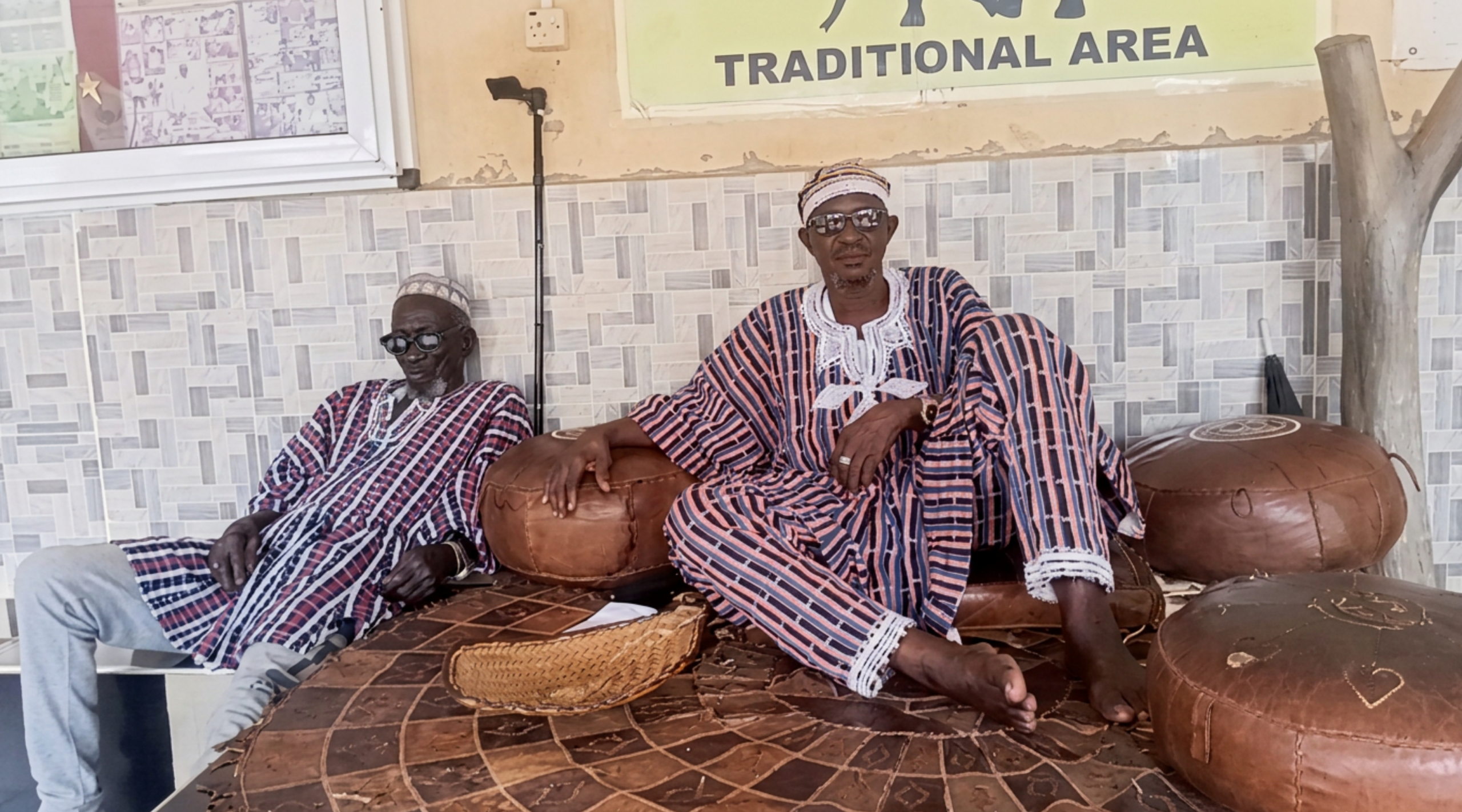
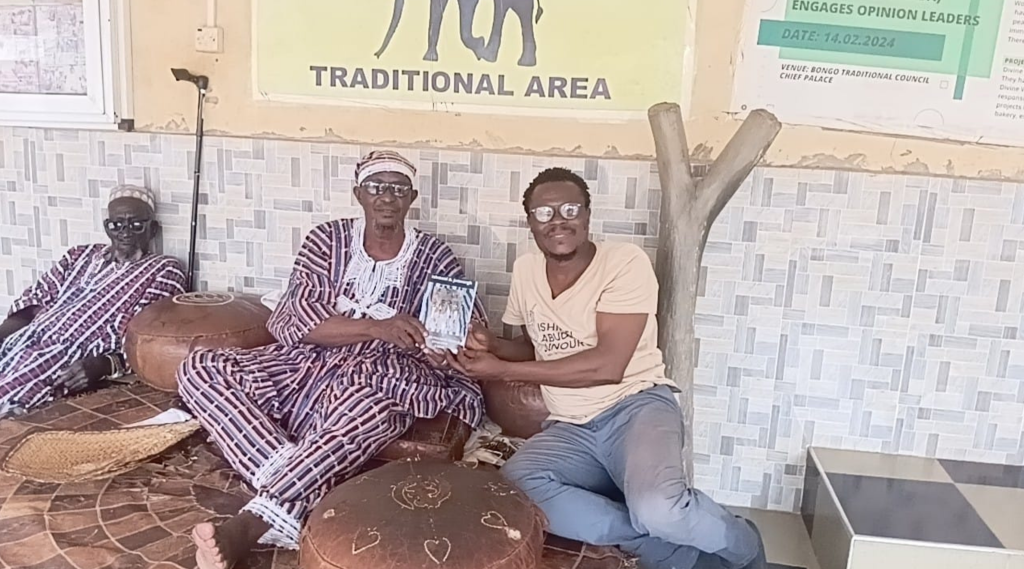
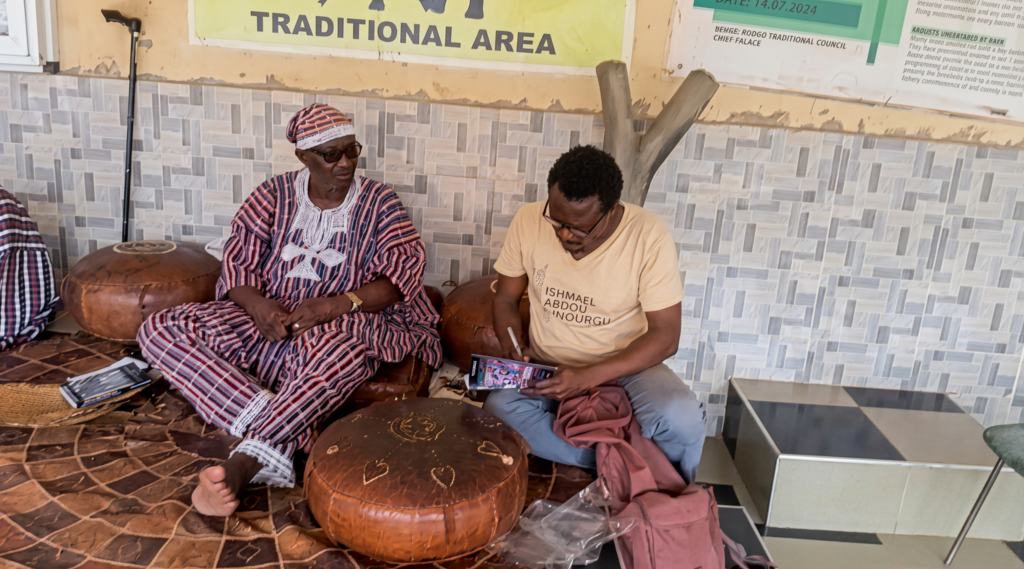
In a wide-ranging dialogue on local governance, heritage, and regional development, His Royal Highness, the Paramount Chief of Bongo, Bonaaba Baba Salifu reflected on the history of the Bongo District and outlined the pressing opportunities and challenges facing his traditional area.
From its origins as part of the former Frafra District Council to its status today as an emerging educational hub, the Paramount Chief described a community that has “traveled faster than light” since achieving district status in 1988; a milestone he personally helped spearhead as a young zonal coordinator for the Committee for the Defence of the Revolution (CDR).
A Legacy Rooted in History and Sacred Traditions
Addressing the deep cultural roots of the area, the Paramount Chief highlighted the unique spiritual and administrative structures that define Bongo, where sacred sites are widely accessible to the public, Bongo’s sacred heritage centers on the twin shrines of Abosarga (female) and Aso’or (male).
Sacrifices at Abosarga are strictly regulated and performed solely by the Tindana (earth priest) on behalf of the Chief to protect the community from district-wide calamities, seasonal droughts, and agricultural disruption.
The Chief also clarified the historical narrative of the land, detailing how Mamprusi ancestral settlement shaped Bongo in the 16th century and led to the evolution of the distinct local dialect, Booni, which retains phonetic ties to Mampruli alongside Gurene influences.
Educational Successes vs. Health Infrastructure Gaps
Bongo’s structural transformation over the past three decades has seen remarkable gains in access to education. The district now boasts six senior high schools, including Bongo Senior High, Gowrie Senior High, Namoo Senior High, Beo Senior High, Zorko Senior High, and the Balungu Technical Institute.
To build on this momentum, the Traditional Council is actively advocating for a tertiary nursing or teacher training college to further anchor regional youth development.
However, health infrastructure remains a critical bottleneck. While Community-Based Health Planning and Services (CHPS) compounds cover basic primary care across almost
every village, the absence of a fully equipped district hospital forces residents to rely on referrals to the Regional Hospital in Bolgatanga for major medical procedures.
”We need a standard hospital for the district most cases are referred to the Regional Hospital which, in actual fact, could have been handled here if we had a proper facility.“
Climate Vulnerability and Environmental Advocacy
As an agrarian economy dominated by peasant farming, Bongo faces growing threats from environmental degradation and shifting weather patterns.
Irregular rainfall, driven by deforestation and tree-cutting for fuel and short-term livelihoods, has severely impacted crop yields and agricultural predictability.
In response, traditional leadership continues to enforce seasonal agricultural customs, such as temporary bans on loud music and noise-making during crop pollination in September to reduce storm risks, while championing modern conservation efforts.
The Paramount Chief called for urgent, community-wide action on two major fronts:
- Aggressive Tree Planting: Reversing localised deforestation to restore stable rainfall cycles.
- Sanitation & Waste Management: Eliminating open defecation and curbing plastic waste pollution across villages.
Balancing Tradition with Modernity
Reflecting on the relationship between customary practices and state development, the Paramount Chief emphasised that traditional governance systems remain the bedrock of social stability, land administration through Customary Land Secretariats, and peacebuilding in the Upper East Region.
“Traditional norms and customs must be upheld. They are the legacy of our life,” the Chief noted. “We can still modernise alongside tradition, but to do away with tradition completely, we’ll be doomed.“