
 By Ishmael Junourgh
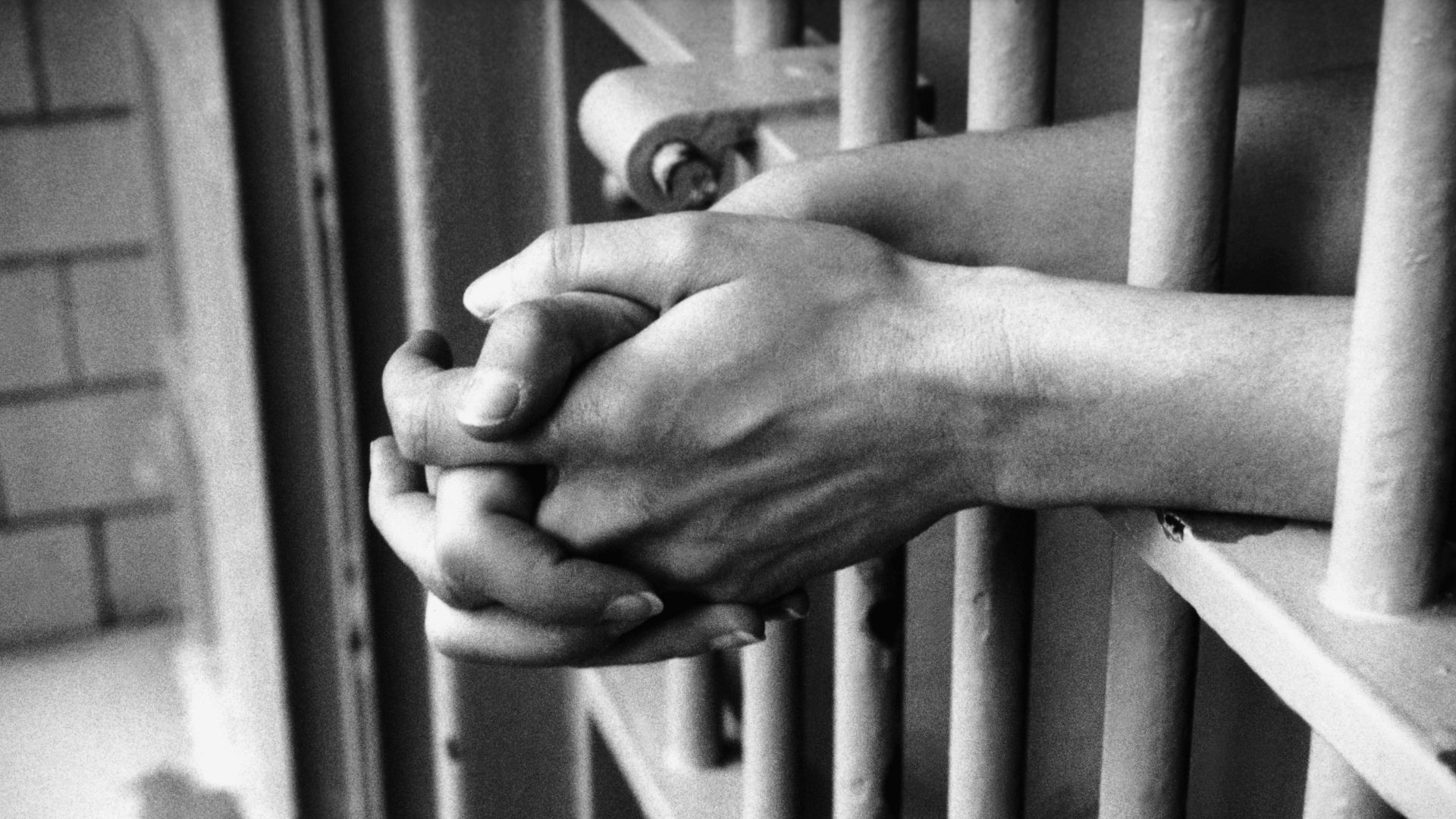
In the yard of the Nsawam Medium Security Prison, there is a quiet revolution taking place. It does not make headlines. It does not attract campaign rallies. But it is, perhaps, one of the most significant
developments in Ghana’s correctional history. Sixty -three men and women behind these walls graduated on the 27th March, 2025 from the University of Cape Coast Distance Education Programme with
degrees in Education, Commerce and Accounting. Three of them achieved First Class Honours. The overall best graduating student earned a CGPA of 3.8, proving that intellect does not disappear when a judge hands down a sentence.
Yet, as I write this, a troubling question lingers: what happens next? When these graduates complete their sentences, will Ghana welcome them as the educated, reformed citizens they have become? Or will the state, through policy and prejudice, condemn them to the margins, ensuring that the millions of cedis invested in their education, nearly ₵2.5 million in waived tuition alone by the
University of Cape Coast yield no return for the nation ?
This is the paradox of the Ghanaian prison. We call them “reformation centres,” but we treat them as warehouses for the discarded. We celebrate the idea of rehabilitation, but we refuse to harvest its fruits. If Ghana is serious about development, it cannot afford to waste the brains behind bars.
The Evidence of Transformation
The University of Cape Coast’s Distance Education programme at Nsawam is not a charitable gesture; it is a strategic investment in
national human capital. Chief Superintendent Paul Nuobepuor, who oversees education at the prison, has noted that the discipline required for academic study filters down into the behaviour of the inmates. Men who once had nothing to occupy their minds now spend their days reading notes and preparing for examinations. The prison authorities themselves acknowledge that inmate leaders in the yard are often products of this educational programme.
This is what reformation looks like in practice. It is not merely the absence of crime; it is the presence of purpose.
The Global Precedent: Redemption Is Real
Ghana does not need to invent a new paradigm. The world is full of examples of individuals who were written off by society, only to return and contribute meaningfully. In the United States, the artist Jelly Roll spent a decade in and out of jail for robbery and drug
offences. He wrote hundreds of songs while incarcerated. Today, he is a Grammy-nominated country music star who has testified before the
U.S. Senate about the dangers of fentanyl, using his platform to advocate for recovery and second chances . His story is not merely one of personal redemption; it is a reminder that the talents that could serve society are often buried beneath the worst decisions a person has made.
Closer to home, the political trajectory of President John Dramani Mahama offers a powerful metaphor for what second chances can achieve. After losing the 2016 election, Mahama could have faded into retirement. Instead, he remained engaged, reflected and returned to the presidency in 2024 with a renewed mandate. As of late 2026, his personal approval rating stood at 65 percent.A figure that any African leader would envy. Whether one agrees with his politics or not, the lesson is undeniable: a nation that allows its people to rise again after a setback is a nation that benefits from experience, resilience and
maturity.
If Ghana can give a former president a second chance to lead, why can it not give a graduated inmate a second chance to teach?
The Structural Failure of the “Reformation” Model
The problem is not that Ghana lacks the rhetoric of rehabilitation. The problem is that the architecture of the system contradicts it. A recent study on Ghanaian prisons concluded that despite the official rehabilitative mandate, systemic challenges such as overcrowding,
insufficient resources and societal stigma mean that prisons often function as environments that perpetuate reoffending rather than reform. The study recommended strengthening post-release support and reducing stigma through community sensitisation. These are not radical ideas; they are necessities.
Furthermore, the law itself creates barriers. The Director of Human Resources at the Ghana Prisons Service has acknowledged that Ghanaian law does not permit ex-convicts to be employed in the public sector. This means that a man who has earned a Bachelor of Education from the University of Cape Coast, who has been trained to teach the youth of this nation, is legally barred from standing in a
classroom simply because of a past mistake. The Plan Volta Foundation has explicitly appealed to the government to grant automatic employment as teachers to graduating inmates who have completed their sentences and hold education degrees. This is not charity; it is common sense.
The Economic Argument
Ghana’s prisons are overcrowded by roughly 40 percent. The feeding rate recently increased to GH₵5.00 per inmate per day was described on the floor of Parliament as “a blot on our conscience“. The state
spends money to keep people alive in conditions that are barely humane. If, instead, the state invested in education and then utilised the skills gained upon release, the prison system would shift from
being a drain on the economy to a contributor.
Every graduate of the UCC programme who returns to society and finds meaningful employment is a taxpayer. Every one who becomes a teacher, an accountant, or a business owner is a role model for
young Ghanaians who might otherwise see crime as the only path.
Every one who is rejected and denied a livelihood, however, is a potential recidivist, a cost to the state and a danger to the community.
A Call to Action
The government of Ghana, the Ministry of the Interior, the Ghana Prisons Service, and the Ministry of Education must move beyond symbolism and enact tangible reforms.
First, the government should review and amend legislation that bans ex-convicts from public sector employment, particularly in fields where they have demonstrated competence through accredited
qualifications. A degree from the University of Cape Coast should be a testament to capability, not a mockery of the rehabilitation process.
Second, the Ghana Education Service should establish a pathway for
graduating inmates with education degrees to serve as teachers, perhaps in underserved rural areas, upon their release. The Plan
Volta Foundation’s recommendation of automatic employment is a starting point for dialogue.
Third, the government should expand the UCC partnership to other prisons across the country. The Nsawam programme has proven that
inmates can excel academically when given the opportunity. The ₵2.5 million invested by UCC is a model of institutional partnership, but it should not be an isolated experiment.
Fourth, the National Identification Authority should expedite the provision of Ghana Cards to graduating inmates so that they can
seamlessly transition into national service and formal employment upon release.
Conclusion;
The brains behind bars are not a problem to be managed. They are a resource to be harnessed. The men and women studying by lamplight in Nsawam are not asking for pity. They are asking for the chance to prove that they are more than their worst moment. President Mahama’s return to power is celebrated as a testament to Ghana’s
democratic maturity. Let us extend that same maturity to those who have no political capital, no powerful friends and no platform except the education they have earned and the hope that Ghana will not waste it.
A nation that reforms its offenders and then rejects them is a nation that punishes twice for the same crime. Ghana can do better. It must do better.
 Zakaria Rafique Seinu
 Charles Prempeh PhD