
 By Zakaria Rafique Seinu
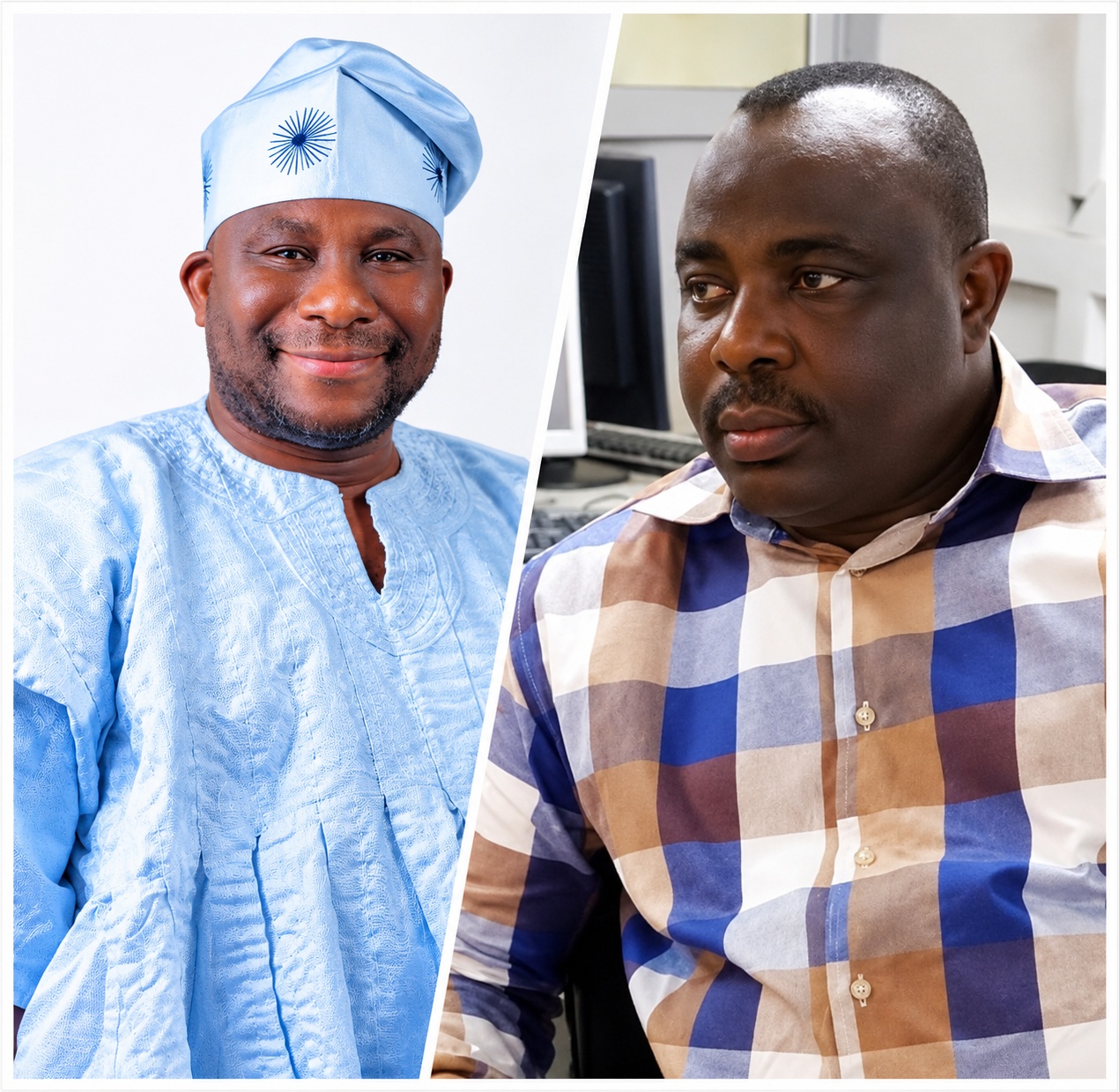
Yesterday in the Upper West Region, a name that was very popular among the NDC fraternity was struck by thunder.
At the Wa Technical Institute, where 392 delegates had gathered for the NDC Regional Delegates Conference on Saturday, November 14, 2026, the Electoral Commission announced a result that will be discussed in every constituency in the region for months: Alhaji Alhassan Adam, popularly known as Chairman Randy, had defeated the incumbent, Chairman Abdul Nasir Saani Bunas.
The figures were close, and that closeness matters. Randy polled 196 votes. Bunas polled 164 votes. Sombawiere Samba Sankara, the immediate past Nadowli-Kaleo Constituency Chairman, polled 28 votes. Out of 388 valid votes cast, the margin was just 32 votes.
It was a comeback four years in the making. In 2022, Randy lost to Bunas. In 2026, he returned to win it. Of the 63 aspirants who contested various regional positions, four incumbent executives lost their seats, including the Regional Organiser and the Women’s Organiser. Abu Balifema was elected First Vice Chairman. Boniface Tienaa was elected Second Vice Chairman.
In his acceptance speech, Randy promised unity. He pledged to strengthen the party structures to retain all eleven parliamentary seats in the region in the 2028 general election. He acknowledged Bunas and the other aspirants, saying they had a key role to play.
That was the right speech for the podium. The office is different. The office will test him.
This is not just a story about one man replacing another. It is a story about an era ending and another beginning. To understand what Randy faces, we must honestly assess the era that has just ended — the Bunas era — with its gains, its failures, and its unfinished business.
The Bunas Era: What Was Achieved
Let us give Chairman Bunas his due. History must be fair to him, even when politics is not.
Under Bunas, the NDC in the Upper West Region achieved a feat that no regional chairman before him had fully achieved: the party won all 11 parliamentary seats. Wa Central, Wa East, Wa West, Lawra, Jirapa, Nadowli-Kaleo, Daffiama-Bussie-Issa, Sissala East, Sissala West, Lambussie, and Nandom — all went to the NDC.
That was not an accident. It was the product of organisation. Bunas built a regional machine that could mobilise from the polling station to the constituency to the region. He kept the MPs close. He kept the constituency chairmen in regular contact. He understood the politics of the Upper West, where personal relationships matter as much as party manifestos.
Under his leadership, the NDC became the dominant political identity of the region. To be NDC in the Upper West was no longer to be in opposition in your own home. It was to be part of the mainstream. For many young people, Bunas made the party look strong, organised, and winnable.
He also led the party through the difficult period of being in opposition nationally. When the NDC was out of power, when resources were scarce, when morale was low, Bunas kept the structures alive. That is not a small achievement. Many regional parties collapse in opposition. The Upper West NDC did not collapse. It grew.
That is his legacy. Any honest assessment must start there.
The Bunas Era: Where It Failed
But legacy is not only about votes. It is also about people. And it is here that the Bunas era began to crack.
The first failure was the failure of recognition. Across the region, a quiet complaint grew louder after every election: “We worked, but we were not seen.“
Constituency executives who had walked from village to village in 2024 said they were never thanked. Youth organisers who had mobilised the youth said they were used and dumped. Women who had cooked, organised, and campaigned said their work was invisible. Old party faithfuls who had carried the party since the Rawlings era said appointments and opportunities went to a small circle around the leadership.
Were all these complaints fair? Not all. In politics, not everyone can be appointed. Not everyone can be rewarded. But perception is a political fact. When enough people feel unrecognised, they stop defending you. They may not openly fight you, but they will quietly vote against you when they get the chance. The 32-vote margin suggests that many did.
The second failure was the failure of inclusion. The Bunas era was accused, rightly or wrongly, of becoming a closed shop. Decisions, people said, were taken by a few. Information flowed from the top down, but rarely from the bottom up. Constituency chairmen who disagreed were seen as disloyal. Aspirants who wanted to contest were seen as rebels.
A party that cannot tolerate internal dissent cannot renew itself. The fact that four incumbent regional executives lost their seats in this election is evidence of that bottled-up frustration. Delegates were not just voting for Randy. They were voting against a style of leadership that had become too centralised, too personal, and too distant from the base.
The third failure was the failure to manage expectations after victory. When the NDC won power nationally and won all 11 seats regionally, expectations exploded. Foot soldiers expected jobs. Graduates expected appointments. Contractors expected contracts. Communities expected roads, water, and schools immediately.
The regional leadership could not meet all those expectations, because regional leadership does not control national appointments. But it could have managed them — by explaining, by communicating, by being transparent about what was possible and what was not. Instead, many felt there was silence. And silence in politics is always filled by rumour.
The fourth failure was the failure to prepare for succession and unity. A good leader does not only win elections. He builds a team that can survive without him. The Bunas era produced electoral victory, but it did not produce a sense of collective ownership. When Bunas lost, many of his closest allies also lost. That tells us that the structure was built around a man, not around an institution.
These are not attacks on Bunas. They are lessons for Randy. If Randy repeats these failures, he will face the same fate in 2030, even if he survives 2028.
What the New Chairman Faces Going Forward
Chairman Randy does not inherit a broken party. He inherits a victorious party with hidden fractures. That is more dangerous than inheriting a broken party, because the fractures are easy to ignore until they break open.
First, he faces the problem of reconciliation. He won by 32 votes. That means 164 delegates voted for Bunas. Those 164 delegates represent constituencies, polling stations, and networks that cannot be ignored. If Randy governs as if only his 196 supporters matter, he will create two NDCs in the Upper West: Randy’s NDC and Bunas’s NDC. A party with two camps cannot face the NPP.
Reconciliation cannot be a speech. It must be a structure. Will Bunas be invited to key meetings? Will his loyalists be given roles in the new executive’s work? Will Randy visit the constituencies that voted heavily for Bunas and listen, not lecture? These are the tests.
Second, he faces the problem of expectation management. As a businessman and procurement consultant, Randy is known for his ability to negotiate and deliver. That reputation helped him win. It will now hurt him if people expect him to personally provide jobs and contracts. He must quickly draw a line between what the Regional Chairman can do and what the government must do. He must tell his people the truth, even when the truth is unpopular: the Chairman does not appoint ministers. The Chairman does not award contracts. The Chairman organises, mobilises, and advocates.
Third, he faces the problem of the 11 MPs. In the Upper West, the MPs are powerful. They have their own bases, their own resources, and their own ambitions. A Regional Chairman who tries to control them will fail. A Regional Chairman who ignores them will also fail. Randy must build a partnership with the MPs — a regular forum where regional strategy is agreed, not imposed. The 2024 victory was a collective victory. The 2028 victory must also be collective.
Fourth, he faces the problem of the youth and the foot soldiers. The NDC’s strength in the Upper West is its youth. But youth who are mobilised and then abandoned become a liability. They become the people who will tell the NPP, “The NDC used us.” Randy must create a system of continuous engagement: skills training, party education, community work, and honest communication about opportunities. Not promises. Systems.
Fifth, he faces the problem of the NPP. The NPP currently has no parliamentary seat in the region. That is a weakness for the NPP, but also a freedom. A party with nothing to lose can be aggressive. The NPP will study the 32-vote margin. It will study the four incumbents who lost. It will tell voters: “The NDC is divided. The NDC is tired. Give us a chance.” Randy must deny them that story by showing a united front.
The Possible Fates of the NDC in 2028
There are three possible fates for the NDC in the Upper West in 2028. None is guaranteed. All depend on what happens between now and December 2028.
Fate One: Consolidation — The NDC Retains All 11 Seats
This is the best-case scenario, and it is possible.
If Randy succeeds in uniting the party, if the national government delivers visible development in the region — roads in Sissala, water in Daffiama-Bussie-Issa, schools in Lambussie, health facilities in Nandom, jobs for the youth in Wa — and if the NPP remains disorganised, the NDC can retain all 11 seats.
Consolidation will require discipline. It will require the MPs to work as a team. It will require the regional executive to be present in every constituency, not only during campaigns. It will require the party to treat 2028 as if it is starting from zero, not as if victory is already assured.
Complacency is the enemy of consolidation. The moment the NDC in the Upper West believes that 11-0 is permanent, it will begin to lose.
Fate Two: Erosion — The NDC Loses Two to Three Seats
This is the most likely fate if the party does not heal its wounds.
Erosion does not happen suddenly. It happens quietly. One constituency becomes dissatisfied because its MP is seen as arrogant. Another becomes dissatisfied because a road was not fixed. Another becomes dissatisfied because a popular local aspirant was sidelined in the primaries.
In this scenario, the NPP does not need to be strong everywhere. It needs to be strong in two or three constituencies — perhaps Lawra, where elections have historically been competitive, or Nandom, or Sissala East — and it can break the NDC’s monopoly.
Losing two or three seats would not make the NDC lose the region, but it would change the narrative. It would signal that the NDC’s dominance is not irreversible. It would embolden the NPP for 2032. And it would be blamed, rightly or wrongly, on Randy.
Erosion is the fate of parties that win elections but lose people.
Fate Three: Collapse — A Shock Defeat
This is the worst-case scenario, and it is unlikely, but it is not impossible.
Collapse happens when three things coincide: a divided party, a non-performing government, and a united opposition. If Randy fails to reconcile with Bunas, if the government fails to deliver, and if the NPP fields strong, credible, local candidates who speak the language of the people, the NDC could suffer a shock.
We have seen this in Ghanaian politics before. Regions that were thought to be safe have swung. The Upper West is not immune. The voter in Jirapa does not vote for a party because the party won last time. He votes because he believes his life will be better. If that belief is lost, loyalty is lost.
Collapse would be catastrophic for Randy. It would end his chairmanship. It would also damage the NDC nationally, because the Upper West is one of the party’s strongholds. The party cannot afford to lose its stronghold.
Which fate will happen? Time will tell. But time does not tell on its own. Time reveals what leaders do with it.
Chairman Randy has won the election. That was the easy part. Now he must win the peace. He must learn from the Bunas era — keep its strength in organisation, avoid its weakness in inclusion. He must heal the wounds, manage expectations, unite the MPs, engage the youth, and prepare for 2028 as if he is the underdog.
The post-Bunas era has begun. The question is no longer: Can Randy win? He has won. The question now is: Can Randy lead?
The Upper West Region is watching.
 Ishmael Junourgh