 By Ishmael Junourgh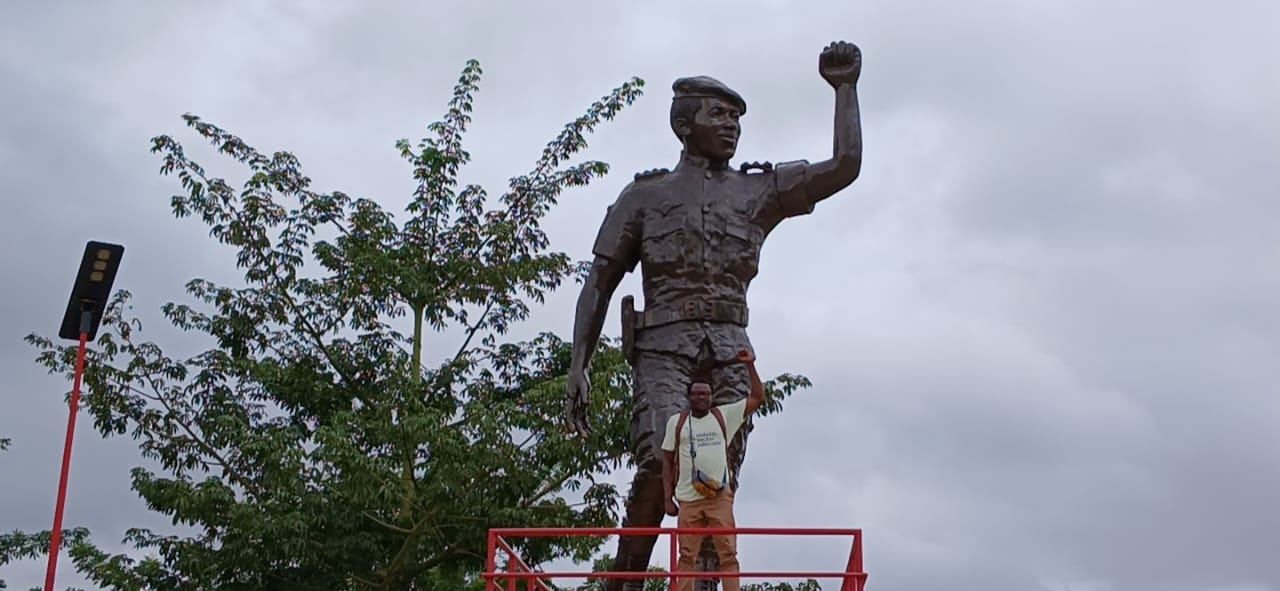
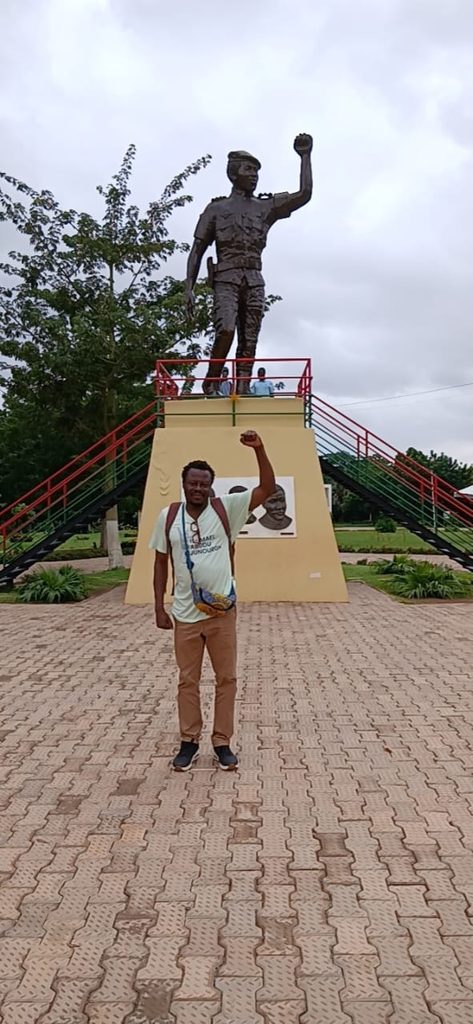
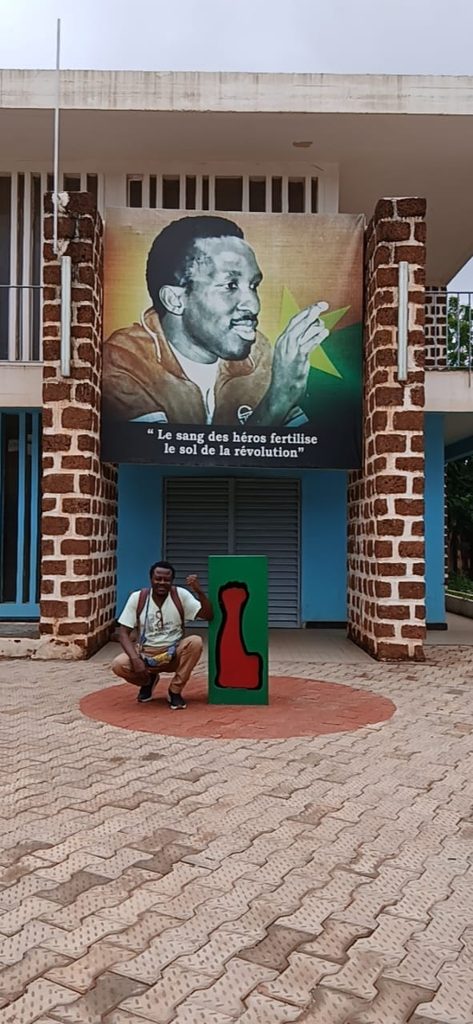
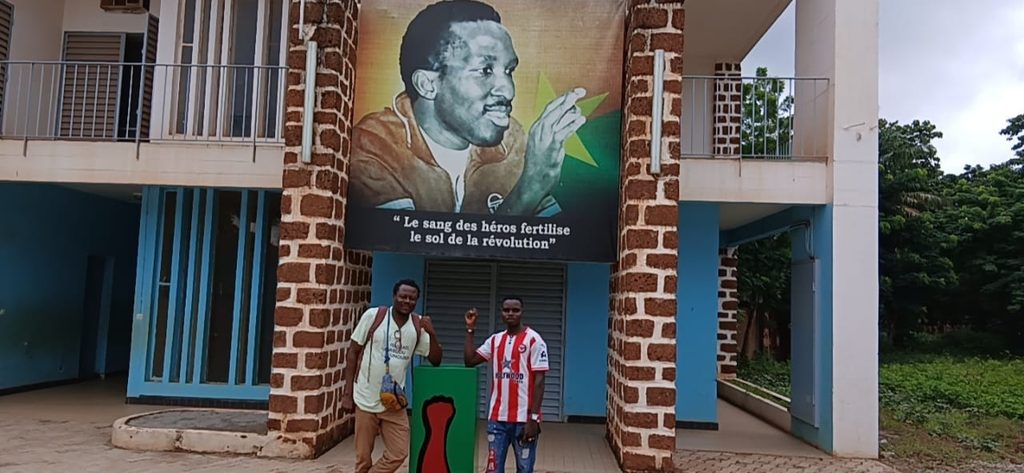
Standing within the Captain Thomas Sankara Memorial in Ouagadougou is to stand in a place where Burkina Faso’s revolutionary history remains deeply present. The memorial preserves not only the memory of Captain Thomas Sankara and those who died alongside him, but also the physical spaces associated with the revolutionary government and the events of 15 October 1987.
According to Tapsoba Ouedraogo, a student of public law and volunteer guide at the memorial, Captain Thomas Sankara was born on 21 December 1949 and came to power in 1983. Four years later, on 15 October 1987, Sankara was killed at the site together with twelve of his companions.
One of the most significant buildings within the memorial is the former meeting place where Sankara had been engaged in discussions with members of his special cabinet on the day of his assassination. Ouedraogo recounts that when the attackers arrived, those inside were ordered to come outside. Sankara’s companions reportedly sought cover beneath tables and chairs, while Sankara himself remained composed.
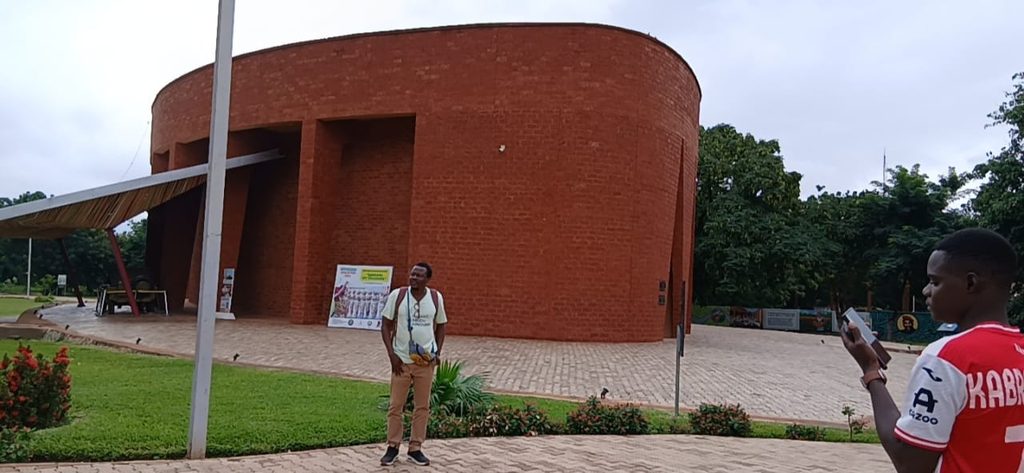
According to this account, Sankara took a deep breath, placed his firearm on the table and raised his hands in a gesture of surrender. He then walked outside. It was near the red building that he was shot. Ouedraogo states that, according to the findings of Burkina Faso’s justice system, Hyacinthe Kafando, a Burkinabè, was identified as the person who shot Sankara.
The manner of Sankara’s final moments has since become an important part of the historical memory surrounding his death: a revolutionary leader confronting violence at the very centre of the political project he had sought to build.
From Upper Volta to Burkina Faso
The memorial also provides a window into a much longer history; one that reaches back beyond Sankara’s revolution to the colonial construction of political power in West Africa.
Ouedraogo explains that the building where Sankara held his meeting predated Burkina Faso’s independence. According to his account, it was constructed in 1959 during the final period of French colonial rule and was associated with the Conseil de l’Entente, a regional political arrangement involving Upper Volta, Niger, Dahomey—present-day Benin—Côte d’Ivoire and Togo.
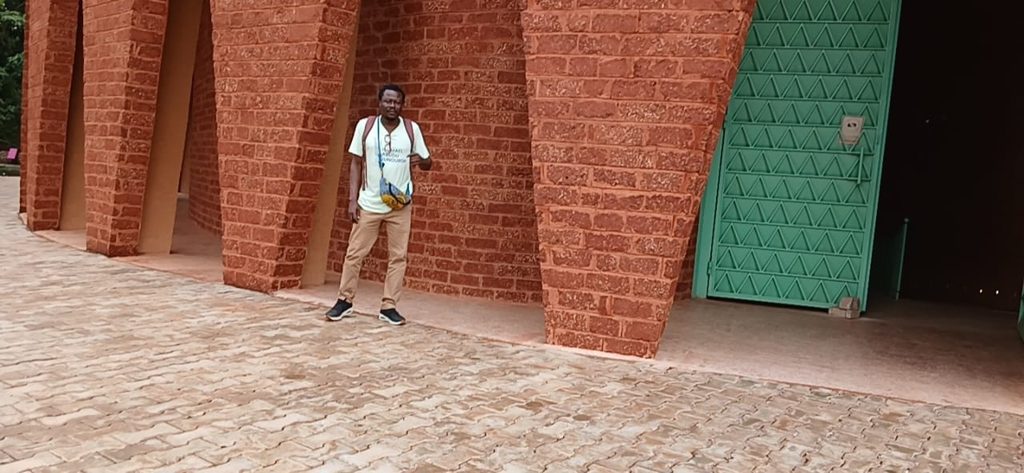
The guide connects the history of the building to the earlier Pan-African vision of Mali’s first president, Modibo Keïta. In the late 1950s, Keïta advocated greater political unity among the territories of West Africa. In Ouedraogo’s interpretation, France opposed this wider project of federation and instead supported political arrangements that maintained the separation of the territories.
This interpretation places the memorial within a broader history of colonialism, decolonisation and the struggle over the political future of West Africa. The building therefore represents more than a physical structure: it embodies successive periods of colonial administration, postcolonial government and revolutionary transformation.
Sankara and the Colonial Presidency
When Thomas Sankara came to power in 1983, he encountered institutions and buildings whose origins were deeply connected to the colonial administration.
According to Ouedraogo, the presidential residence used at the time remained subject to a rental arrangement dating from the colonial period. Sankara reportedly rejected the idea that the government of an independent country should continue paying rent for a building inherited from the colonial administration.
His response was both practical and symbolic. Rather than continuing to operate from the traditional colonial-style presidency, Sankara moved the centre of revolutionary government to the building now preserved within the memorial.
The significance of the decision extended beyond the physical relocation of government. Sankara is remembered as having deliberately described the place not as a conventional presidential palace but as the headquarters of the revolution.
The distinction reflected his political philosophy. A presidential palace could create distance between political leaders and ordinary citizens. A headquarters of the revolution, by contrast, was intended to represent a government that remained connected to the people and to the revolutionary transformation of society.
From 1983 onward, according to the memorial’s account, important matters concerning the country were discussed and addressed within these premises.
The Men Who Died With Sankara
The memorial also remembers the individuals who accompanied Sankara and whose lives ended with his.
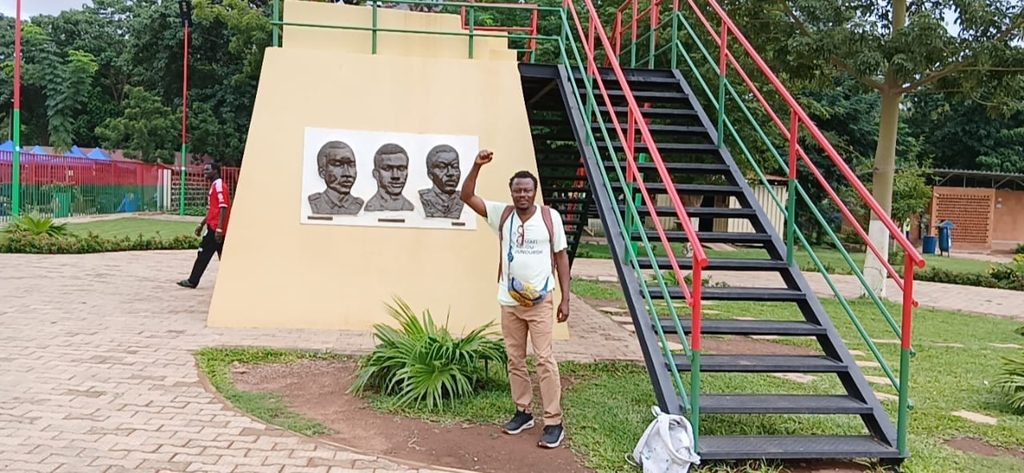
Among the photographs displayed are images of several of Sankara’s companions, each of whom had played a different role in the revolutionary period.
One of them was Patrice Zagré, described by Ouedraogo as a professor of philosophy at the University of Ouagadougou who also served as director of the Georges Namoano Military Academy. His presence among Sankara’s companions reflects the intellectual and institutional dimensions of the revolution, which brought together military officers, academics, administrators and political activists.
Another was Abdoulaye Gouem, identified as one of Sankara’s drivers. On the day of the assassination, however, he was reportedly not on duty.
Ouedraogo recounts that Thursdays during the revolutionary period were associated with mass sporting activities. Gouem had reportedly come to wait for Sankara so that they could participate in the exercise session together. Instead, he became one of those killed during the attack.
The memorial also identifies Christophe Sawadogo, described as a permanent secretary, among Sankara’s companions.
Their photographs transform the history of 15 October 1987 from the story of the death of one revolutionary leader into a broader history of a group of people whose lives were caught up in the violent rupture of Burkina Faso’s revolutionary era.
A Memorial Beyond a Monument
The Captain Thomas Sankara Memorial is therefore more than a monument dedicated to a single historical figure. It is a site where different layers of Burkina Faso’s history converge: the colonial past, the struggle for independence, Pan-African aspirations, the revolutionary government of the 1980s, the assassination of Sankara and his companions, and the continuing effort to remember and interpret that history.
The buildings preserved at the site give physical form to events that might otherwise exist only in books, archives and oral accounts. The photographs give faces to those who participated in the revolution. The testimony of guides such as Tapsoba Ouedraogo adds another layer of historical memory, connecting the present generation to the events that transformed Burkina Faso in the 1980s.
At the centre of this memory stands Thomas Sankara—a military officer who became a revolutionary leader, a president who sought to redefine the meaning of political leadership, and a historical figure whose assassination on 15 October 1987 became one of the defining moments in Burkina Faso’s post-independence history.
For visitors, the memorial offers an opportunity not simply to see where Sankara lived, worked and died, but to confront the larger questions that shaped his era: Who should control the destiny of an African nation? What should independence mean beyond the transfer of political authority? And how should a people remember those who sought to redefine their country’s place in the world?
In this sense, the memorial is both a place of remembrance and a historical archive in physical form. Its walls, photographs and surviving structures preserve the memory of a revolution whose influence continues to be discussed across Burkina Faso and beyond.