
 By Johannes Jafo Akunatu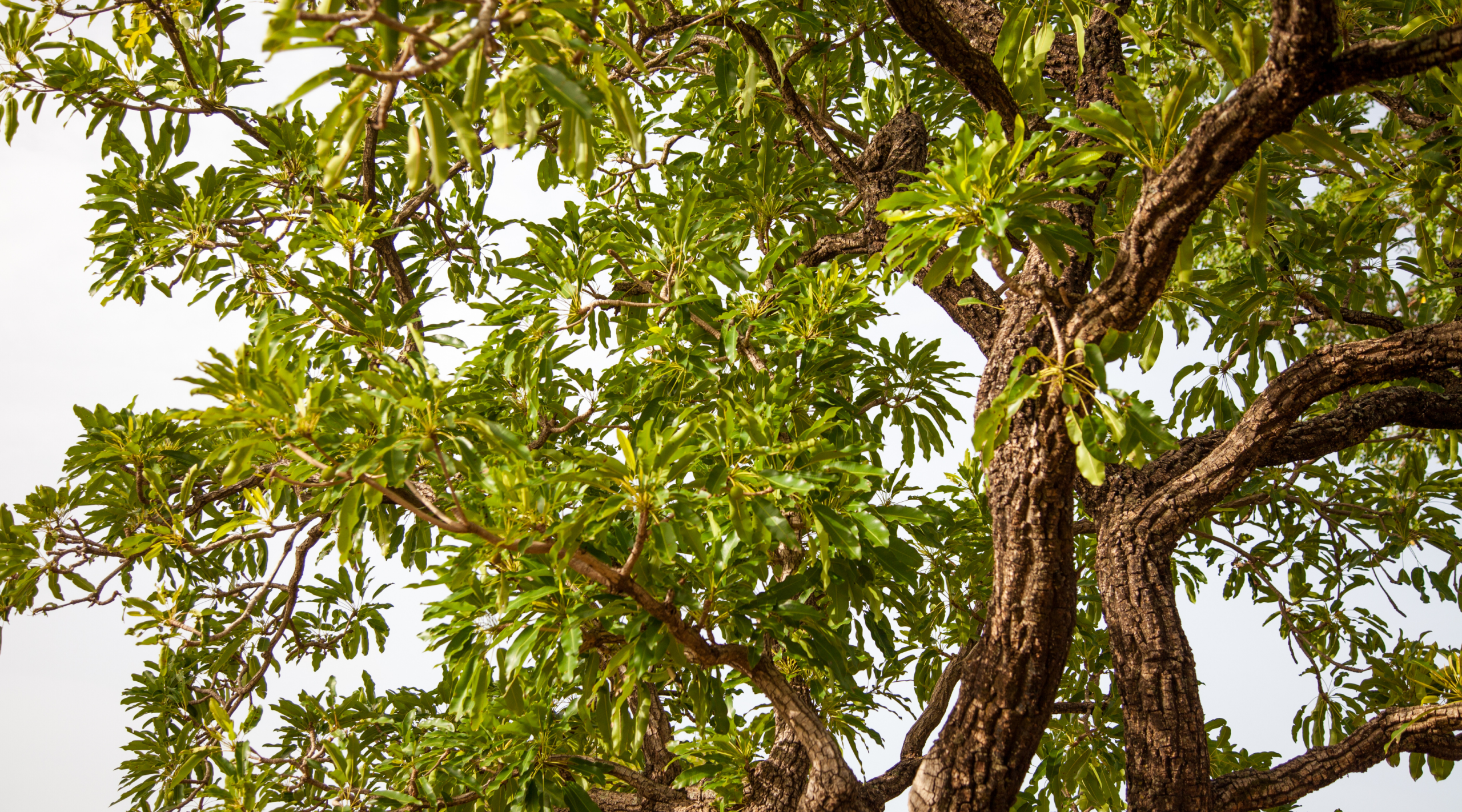
A slow and deliberate killing is taking place on the savannah of northern Ghana. It does not call to itself with gunfire and conflict. It stealthily glides through the heat of the dry season, accompanied by the orange light of earthen kilns and the acrid odor of burning wood. Shea tree, Vitellaria paradoxa, is vanishing from the tree canopy that has held the land together for centuries. And away goes something more valuable than wood.
The shea tree isn’t just a plant. It is a civilization in Savannah, Northern, Upper East and Upper West and North-East regions in Ghana. Income, medicine, food, ritual and ecological memory in one organism. It is known to the farmers of the north as the “tree of life. Development economists refers to it as the “northern cocoa”. To the traditional priests and earth custodians, it’s an entity that can’t be felled without repercussions. All of them are correct answers. These are all being observed with growing concern as charcoal burning, illegal logging and further inaction by the state all work to wipe out this tree from northern Ghana’s heritage.
Tree cover in Ghana dropped by 24 percent (or an estimated 1.64 million hectares) from 2000 to 2023, with agriculture, logging, charcoal burning, and firewood collection accounting for most of the loss. The Earth Journalism Network estimates that over half of the trees for shea tree in the savannah ecological zone in Ghana have already been lost due to charcoal production. Not declining. Not threatened. Just gone.
According to Global Forest Watch, Ghana now has just 7.2 million hectares of natural forest, which represents 30 percent of its land area, in 2020. In the year 2022, a total of 18,000 hectares of primary forest was lost, which is an increase of 7,300 hectares from the previous year. The situation is not getting better. It is worsening. At the heart of that crisis in the north is the charcoal trade.
The Savannah Region (comprising West Gonja, East Gonja, North-East Gonja, North Gonja, Sawla-Tuna-Kalba, Bole and Central Gonja districts) has been cited on many occasions as an area of high charcoal production. This was realized by the Savannah Regional House of Chiefs in May 2021 when they officially declared that illegal logging, commercial charcoal making and fuel-wood harvesting were to be prohibited in the Region. They imposed a penalty of GHS 5.00 for charcoal bags and GHS 5,000 on containers of logs. Old-fashioned task forces were established. The prohibition was of the genuine sort. Implementing it has been an institutional fiasco. An economic desperation exists around the shea tree and one must understand this desperation to comprehend the killing rate. The northern regions are the most deprived regions in Ghana. Much of the population is impoverished, starving during the season, unemployed and lack of infrastructure; the things they can do with a chainsaw and a kiln are among the few things they can do which are available to them. On the domestic market a truckload of firewood is valued at about GHS 300, and thousands of bags are manufactured and exported each year with a price of about GHS 20 per bag of charcoal. The shea tree produces high-quality charcoal, and is favoured for this reason.
Bolewura Safo Kutuge Feso I, the paramount chief of Bole Traditional Area in the Savannah Region, has reiterated on the public platform that he personally invited Forestry Commission officers to his area to enforce existing bans only to witness illegal activities going on due to collusion and lack of supervision. His testimony is a condemnatory one. The law exists. There is willpower among some of the traditional leaders. Where there is no enforcement, it is also un-funded and un-accountable.
Investigators from GH Environment discovered illegal rosewood logging in the capital of the Savannah Region of Ghana, Damongo, in April 2023. According to a chainsaw operator, the logging operation isn’t stopping in the face of the ban – “the money is big” he said to investigators. It is estimated that in recent years, over six million rosewood trees have been illegally logged in Ghana, mainly in the Savannah and northern parts of the country.
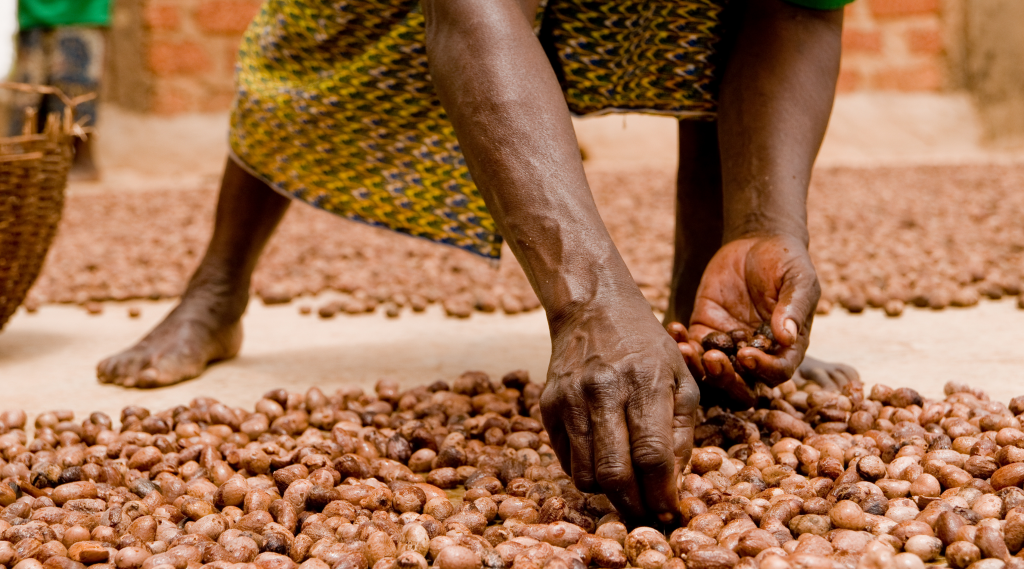
The name shea tree as the “northern cocoa” is no fig leaf. It is a truth that is cheap. Estimates of the world shea butter market in recent years were around USD 2.27 to USD 2.43 billion, and projected to increase significantly in the next decade. Ghana is the fourth largest producer of shea kernel in the world. The shea industry has a direct impact on about 470,000 women farmers in the north, and engages about 500,000 households in the shea value chain.
In Ghana’s shea sector, roughly 85-87 % of the active participants are women, women who gather nuts, women who process butter and women who have their families’ health insurance renewed, drive to school for their children and provide food for their households during lean seasons. In Northern Ghana, 90 percent of women involved in shea production consider shea as their major source of livelihood. Ghana exported on average 76,687 MT of shea kernels at USD 22.6 million per annum between 2008 and 2016, while 32,410 MT of shea butter with a value of USD 27.8 million per annum was exported annually over the period.
The crisis is worsening. Shea production was 45 percent below the expected amount in 2024. The shea nut prices rose by 140 percent between 2023 and the first half of 2024, leading major buyers to cancel contracts with shea producers in Ghana. Organic Trade and Investments and other firms had to reduce monthly output by over 60 per cent from normal. During this time, Ghana is estimated to have lost more than 40 percent of its shea butter revenue, according to industry figures. The price for shea nuts in 2023 was GHS 12 per 2kg, and by mid-2024, the price had increased to GHS 60 per 2kg, partly due to the limited supply, but also because of middlemen manipulating the market. The women involved in collecting and processing the nuts are paid a small fraction of the nuts’ market value. Ghana Cocoa Board (Ghana’s market stabilization arm for the cocoa industry) has been little and no help in this regard having done little to stabilize the market or protect the trees on which the industry is built since its assumption of responsibility for the Shea industry in the Shea Development Strategy for the period 2015-2030.

In northern Ghana, people and trees have never had a one-sided affair. It has been spiritual, cosmological and ancestral. When you declare that the death of shea trees and sacred groves is a problem for the environment, you do not have a handle on the loss.
The shea tree is considered to be spiritually significant throughout the savannah belt in West Africa and it has a long history of use in this region. Research work on sacred trees from the region indicates that shea trees, like other trees, such as African mahogany, West African ebony, baobab and silk cotton, are sacred due to the belief that they store ancestral spirits and become protective spirits in their communities. The cultural legacy of these trees as spirit-inhabited is deeply entrenched even within Muslim groups in the northern part of Ghana where possession and worship of the tree is not accepted. Trees are not felled for certain purposes. This is not to be done because it is not allowed by law, but because it was forbidden by the ancestors.
According to the traditional belief of the Sissala people in the Upper West Region, the first diviner escended from God to earth using the baobab tree as his ladder. In this context the baobab is not just a tree. It is a celestial pole. In the traditional language of the Dagombas, the baobab is known as “Tua”, in that of the Mamprusis as “Lana” and in the Gonja language as “Yoli”. All these names are revered.
In local folklore, the old baobab trees are used as centres for community gatherings, sacred shrines and a location for elders and chiefs to convene to make decisions, resolve conflicts and carry out ceremonies of the ancestors. To chop down a baobab without permission from the spirit is a serious crime as it is regarded as an offence against the cosmos rather than the state, in many communities.
What charcoal burning is doing is not just an economic harm, anyway. It is blasphemous. Each tree removed from a kiln, each silk cotton tree removed for firewood, each sacred tree that is removed for farmland is a violation of the covenant between communities and their ancestors. These trees take away the living memory that accompanies them – the stories, the rituals, the restrictions, the ecological knowledge that was shared by the grandfather and grandchild under their shade, trees that no longer exist. This is the erasure of culture in smoke and ash.
Shea trees don’t just live in the savannah. They are its creators. They have deeply rooted roots that prevent soil erosion, provide a shade canopy that buffers extremes of temperature and weather, their leaf litter replenishes soil nutrients and their presence attracts the insect pollinators essential to the whole parkland ecosystem. Once they are removed, land dries quicker, becomes hotter, and becomes degraded more quickly.
The Savannah Region is already experiencing these effects. Rain patterns have become erratic and short-lived. The 2024 drought that struck the north caused shea nuts, maize, and groundnuts to fall far below projected yields. Food inflation spiked as the north, Ghana’s food basket for staples like yam, groundnuts, and soya delivered less. Communities living near Mole National Park report that women are being forced to travel significantly further to find shea nuts as nearby parklands thin out.
The Sahel-Sudanian-Savannah parklands of West Africa cover 300 to 350 million hectares, and produce 10 to 25 per cent of the income of production villages. The carbon sequestration rate for the approximately one billion shea trees in west Africa is approximately 1.5 million tonnes of carbon dioxide per year. In addition to being a lost nut source, each tree that is cut for charcoal is a lost tree. It is a place of biodiversity habitat lost, a place of carbon sink lost and a place of local water cycle lost.
In 2020, the Green Climate Fund approved a project to restore Ghana’s northern savannah that is expected to sequester more than 6 million tonnes of CO₂ equivalent within its first seven years and about 25.24 million tonnes over 20 years. Ghana has since strengthened its carbon market infrastructure, authorizing the transfer of 1 million carbon credits under Article 6 of the Paris Agreement and mobilizing about USD 10 million in carbon revenue. The country now has 20 carbon market projects under development and expects to generate millions of additional carbon credits through forest conservation and landscape restoration. Every hectare of woodland converted into commercial charcoal production reduces this long-term carbon asset and weakens Ghana’s ability to earn greater revenue from conserving its forests. (Green Climate Fund)
Ghana has a legal framework for protecting forests and tree resources through the Timber Resources Management Act, the Environmental Protection Act, the Forest and Wildlife Policy 2012, and regulations and directives issued by the Forestry Commission. The principal challenge is weak and inconsistent enforcement. Illegal harvesting, charcoal production, and encroachment continue despite these legal protections, pointing to gaps in monitoring, compliance, and institutional capacity
The Forestry Commission country profile itself admitted that political interference, personal interests and intimidation are responsible for the demoralization of institutions in the forestry sector of Ghana. Management decisions and enforcement, it says, often are made more on the basis of private interests than on a basis of sound, legal, and technical principles. It’s an acknowledgment of internal corruption in the organization charged with preventing it.
Parliament should treat the destruction of Ghana’s northern savannah woodlands as a national revenue issue. The Parliamentary Select Committee on Lands and Forestry should conduct an in-depth inquiry into enforcement failures across the Savannah, Northern, Upper East and Upper West Regions. The Local Governance Act assigns Metropolitan, Municipal and District Assemblies important responsibilities for environmental management and enforcement of local by-laws. How effectively are districts carrying out these responsibilities? Where are the local enforcement teams? How much do districts lose in ecosystem services, carbon revenue, biodiversity and rural livelihoods each time woodland is destroyed?
The Ghana Cocoa Board, which plays an important role in implementing Ghana’s Shea Development Strategy, must confront a basic reality. A development strategy cannot succeed if its primary resource, the living shea tree, continues to disappear. COCOBOD has mobilized substantial institutional and financial resources to protect cocoa trees through research, extension, disease control and farmer support. The shea tree deserves a comparable level of commitment. The persistent gap in public investment between the cocoa and shea sectors has left northern Ghana’s most valuable tree resource without equivalent protection. The government should deploy well-equipped Forestry Commission teams across the northern savannah and assign them to independently monitor the operations of the IGRU, with measurable performance targets, routine public reporting and strong anti-corruption safeguards. Parliament should require annual reports on the implementation of the Green Climate Fund’s USD 54.5 million Northern Savannah Landscape Restoration Project. Its targets of restoring 200,000 hectares of off-reserve savannah, 300,000 hectares of shea parklands and 25,500 hectares of forest plantations should become national performance commitments rather than targets associated only with donor funding.

The state has to tackle the issue of poverty which compels people to rely on charcoal kiln at the same time. Fund and institutionalize the alternative livelihoods. Beekeeping, which is bolstered by shea parklands, improved shea processing programmes; drought-resistant food crops programmes and youth employment through parkland restoration at the district levels. The GCF project alone estimated that with the correct restoration of the shea parklands, the gross income per shea woman collector could rise by USD 167 per year, and a global shea value chain could be created for USD 594 million. Preservation costs are much lower than destruction costs.
The institution of chieftaincy in the northern part of Ghana has a moral authority which cannot be recreated by any Act of parliament. When a chief places a ban; communities listens, not out of fear of the law, but because they fear the ancestors, and the repercussions of failing to honor those who have given them ancestral covenants. This power can not be replaced. It’s not being used to its full extent.
In 2021, the Savannah Regional House of Chiefs showed leadership in this matter. However, a ban that lacks a robust enforcement system, viable alternative community livelihoods and accountability is a statement that dissipates when the wind of the dry season blows away. Beyond periodic statements by the Jakpa Palace and Gonja Traditional Council and all the paramount Chiefs in the region need to formalize their commitment. They are required to be permanent environmental custodian bodies in each traditional area and that specific individuals within the body would be responsible for the reporting of breaches of the environment. They have to make it from government regulation to ancestral obligation to protect trees.
Northern Ghana stands at a threshold. On one side lies a future in which the shea parklands are restored, women earn fair income from a thriving green economy, sacred groves reclaim their spiritual function, and the savannah continues to breathe. On the other lies a scorched, cracked landscape, stripped of its trees, its moisture, its ancestral memory and its economic dignity.
This crisis is not the creation of the people of the north. Its co-architects are poverty, state neglect, commercial greed and policy failure. However, the people, institutions and leaders of the north now have the opportunity to lead the turnaround in their own region. The Yagbonwura and every paramount chief in the five northern regions must talk with loud voices.Parliament needs to pass the laws that bite. The Forestry Commission has to be stringent and rigorous in its enforcement with resources and integrity. All trees removed within the MMDAs jurisdiction should be accounted for by the MMDAs. All actors, for good or ill, be they institutional or individual, must be documented, named and held accountable by civil society
The shea tree has always been in the northern part of Ghana, before anyone can remember. It fed our grandmothers! It provided cover for our ceremonies. It contained soil under our farms. It was the place where our ancestors communicated with the spirits. It collects school fees now for women without any income. It’s now burning. Tree by tree and grove by grove, and those institutions that were supposed to stop it look elsewhere. The silence of the powerful is the loudest sound in the burning savannah. It is time that silence ended.
 Ishmael Junourgh