
 By Charles Prempeh PhD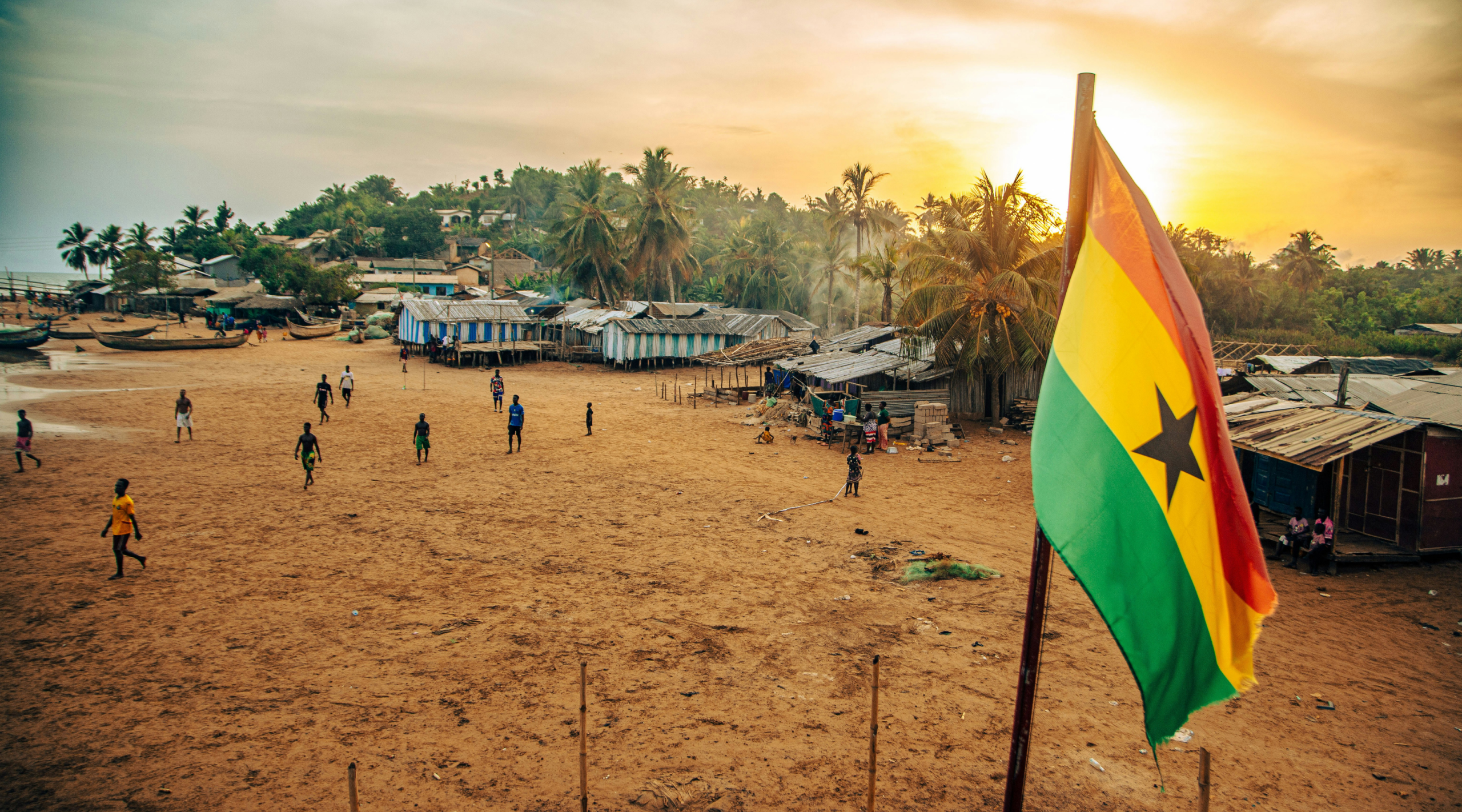
From 8 to 10 July, at its Convention Centre in Gomoa Fetteh in Ghana’s Central Region, the Church of Pentecost (CoP), Ghana’s largest Pentecostal denomination, organised the third edition of its annual conference dubbed “Moral Vision and National Development.”
The first and second conferences were held in 2023 and 2024, respectively. The central goal of the conference is to foreground Ghana’s search for human flourishing within properly constituted ethical and ontological boundaries.
Recognising the collaborative role that the Church (ecclesia) of Jesus Christ shares with the political class in holding the fort against life’s negating forces, the CoP (extended) extends invitations to the major stakeholders in the nation’s development.
These have included traditional and religious leaders from Ghana and abroad, the heads of the three arms of government— the Executive, Legislature, and Judiciary — members of the security services, the media, and leaders of academic and civil society organisations.
The Church has pursued moral renewal as the indispensable basis for Ghana’s, and by extension Africa’s, progress because the continent’s search for the human flourishing increasingly resembles running on a treadmill.
Decades after African countries gained independence from colonial rule, many Africans remain hemmed in by deprivation resulting from both the colonial legacy of underdevelopment and Africa’s own self-inflicted challenges.
Since the rise of African-centered thought in the 1960s, postcolonial scholars have highlighted and dramatised the enduring impact of the twin evils of slavery and colonialism upon the continent.
The much-vaunted lingering consequences of Africa’s interaction with Europe often thrive on a simplistic Marxist binary that elevates the oppressor-oppressed relationship into a metanarrative.
The issue is not that slavery and colonialism did not significantly unsettle Africa. Rather, by excessively flogging the horse of the past, Africans have become trapped in an unfortunate culture of blame (blame culture) that ultimately produces its own nemesis. By blaming nearly everyone except Africans themselves, the continent’s problems have acquired two major complications.
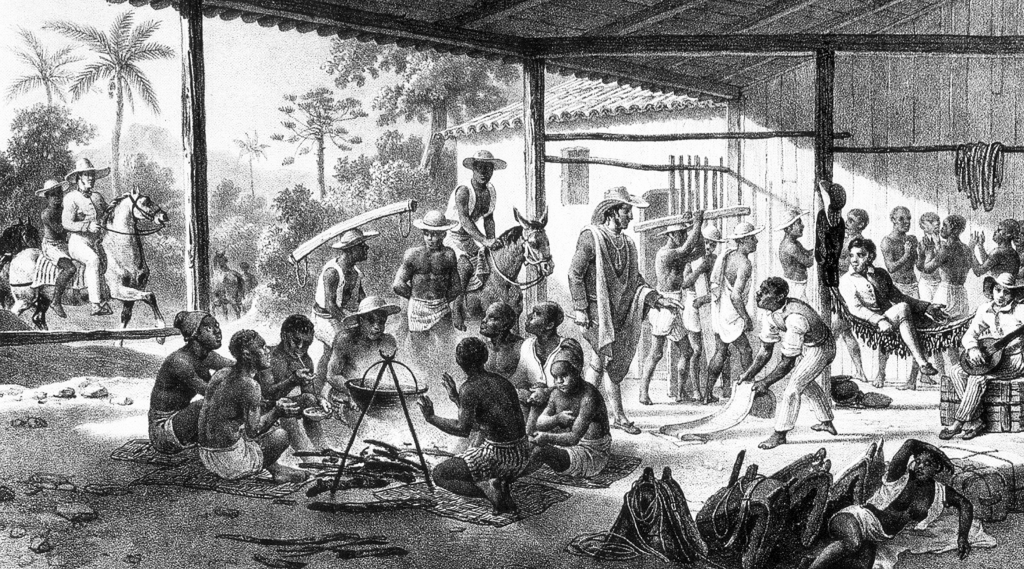
First, this tendency encourages simplistic calls for reparations. Imagine Africans simultaneously valorising and loudly proclaiming that the transatlantic slave trade constitutes the worst crime in human history.
Certainly, no reasonable person denies that the slave trade was a crime, nor do I deny that it was a devastating source of injustice against Africans.
The question, however, is what such a totalising claim contributes to global conviviality in addressing Africa’s contemporary challenges. What does it mean for the legitimacy of other peoples who may also seek reparations for historical injustices they have suffered?
Second, through an overextended appropriation of subverted Marxist philosophy, Africa’s blame culture has inverted a culture of penitence (penitentiary culture). Consequently, many African scholars have become reactionary intellectuals who deliberately overlook the crimes and atrocities committed by Arabs during the Trans-Saharan slave trade.
This pernicious system of enslavement both fostered the social death of Africans and institutionalised their biological death throughout much of the Arab world.
Although Arabs played a significant role in advancing modern forms of slavery in Africa, the Arab world today has one of the lowest demographic representations of people of African descent. This resulted partly from the widespread castration of enslaved African men to guard harems and to secure the undivided loyalty of enslaved populations.
By intentionally overlooking these historical realities, many allow the Arab world’s abuses of Africans to continue with little intellectual scrutiny. Similarly, the historiography of Arabs frequently encourages the erasure of Africans. Thus, while Bilal ibn Rabah, himself a former slave in Arabia, is celebrated as the first muezzin who called believers to prayer, arousing them from the cog in the wheel of Jahiliyyah-worship of the triumvirate daughters of Allah, al-alat, al-manat, and al-uzzat to Allah hinself, his broader African identity receives comparatively limited attention within much contemporary Islamic scholarship.
More importantly, by refusing to acknowledge multiple layers of responsibility, Africa risks remaining a continent continually haunted by tragedy. The continent increasingly suffers from ideological globalism that seeks to impose what many regard as a culture of death under the guise of expanding the frontiers of democracy. Nor does Africa lack fifth columnists who, under the banner of academic freedom, become conduits for masquerading ideologies that suffocate the continent’s intellectual fecundity. From the dismantling of Family Studies a properly constituted academic discipline to the replacement of such programmes with forms of radical Gender Studies (appropriately radical feminism), reactionary African scholars have regrettably become instruments through which the family as the basic institution (principle of subsidiarity) that protects the frontiers of life and individuals from oppositional deviance and social death is weakened.
Consequently, since the late 1980s, many of the challenges that have held the continent in despondency have intensified. Political and economic morasses portray a continent that may be growing statistically yet is scarcely developing in ways that genuinely promote human flourishing.
Needless to say, aided by those who have made themselves omnipresent in the media domain as public intellectuals, Africa is increasingly fracturing along religious, political, and ideological lines.
Although ideological fragmentation is now evident across nearly every continent, Africa appears especially vulnerable. Retribalisation, hyper-partisan politics, and religious extremism have together created fertile ground for corruption in its many forms to fester.
Meanwhile, rather than offering rigorous philosophical analyses of the continent’s crises, some intellectuals have instead sought to portray Christianity itself as Africa’s principal problem. They accuse Christianity of promoting Christian nationalism, which they interpret as an attempt by the Church to capture the institutions of public governance.
Expectedly, such narrowcasting analyses fail to reckon with the moral decadence promoted by sections of the contemporary Left, a decadence that increasingly compels the Church to recover its divinely-ordered vocation as the moral conscience of society.
Against this backdrop, in his opening address at the conference on Moral Vision and National Development on 9 July 2026, the Chairman of the Church of Pentecost, Apostle Dr. Kwabena Eric Nyamekye, deconstructed the simplistic understanding of Christian nationalism.
Following the emotionally-charged singing of all four stanzas of Ghana’s National Anthem, Apostle Nyamekye challenged Christians and all Ghanaians to love Ghana more than their narrower partisan affiliations. He also stated with clarity that members of CoP must love the flag of Ghana more than that of the CoP. He therefore argued emphatically that Ghana’s prosperity depends fundamentally upon the patriotism of its citizens.
Indeed, when Apostle Nyamekye declared that members of the Church should love the flag of Ghana more than even the flag and paraphernalia of the CoP, he underscored the sublime relationship between patriotism and national development.
If Apostle Nyamekye’s words and the Church of Pentecost’s sustained commitment to Ghana’s infrastructural and social development do not represent the kind of civic virtue Africa requires to flourish, then philosophers of society must be called upon to explain the very purpose of the discipline.
Christian nationalism, properly understood as a political philosophy, ought therefore to be evaluated according to the fidelity with which the political class honours the social contract that legitimises both governmental authority and national sovereignty in Africa.
As I argued during the conference, Christians’ loyalty to postcolonial African states is necessarily secondary to their loyalty to the Triune God. Thus, when Christians sing, “Only Christ alone is worthy,” they affirm the location of their ultimate allegiance. Their highest citizenship is heavenly.
Likewise, Christians’ refusal to outsource to the state the family as a divine-ontological institution, together with Islam’s understanding of marriage as ibadah (an act of worship), should remind political leaders to exercise wisdom and act in diologue in making decisions that strengthen rather than fracture patriotism.
During the conference, Ghana’s Speaker of Parliament, Rt. Hon. Alban Sumana Kingsford Bagbin, and the Chief Justice, His Lordship Justice Paul Baffoe-Bonnie, both acknowledged the enduring contribution of Christians to Ghana’s national development.
Speaking on behalf of the Vice President, Dr. Samuel Ofosu Ampofo likewise reiterated the state’s indebtedness to the Church of Pentecost.
As I also argued in my presentation, patriotism is cherished but never simply given. The political class must earn it because Ghana exists fundamentally as a social construct sustained by trust and shared commitment.
Patriotism always comes at a cost to the patriot. It also comes as a consequence of negotiating multiple loyalties.
Resultantly, to assist Christians in navigating the antinomies of patriotism, they must imitate Moses. They must pursue patriotism as justice in honour of the Triune God while resisting every form of destructive polarity. This, in context, captures the essence of Apostle Nyamekye’s call for the Church to become patriotic
Indeed, when we love those who hate us, and when we willingly lay down our lives for those who persecute us, then, because of the resurrection of Jesus Christ, we shall ultimately say to death:
“Where is thy sting?” Christian patriotism, loving even the stranger within the public sphere, is ultimately conditioned by the person and work of Christ, who is simultaneously God and Saviour.
 Ishmael Junourgh