
 By Zakaria Rafique Seinu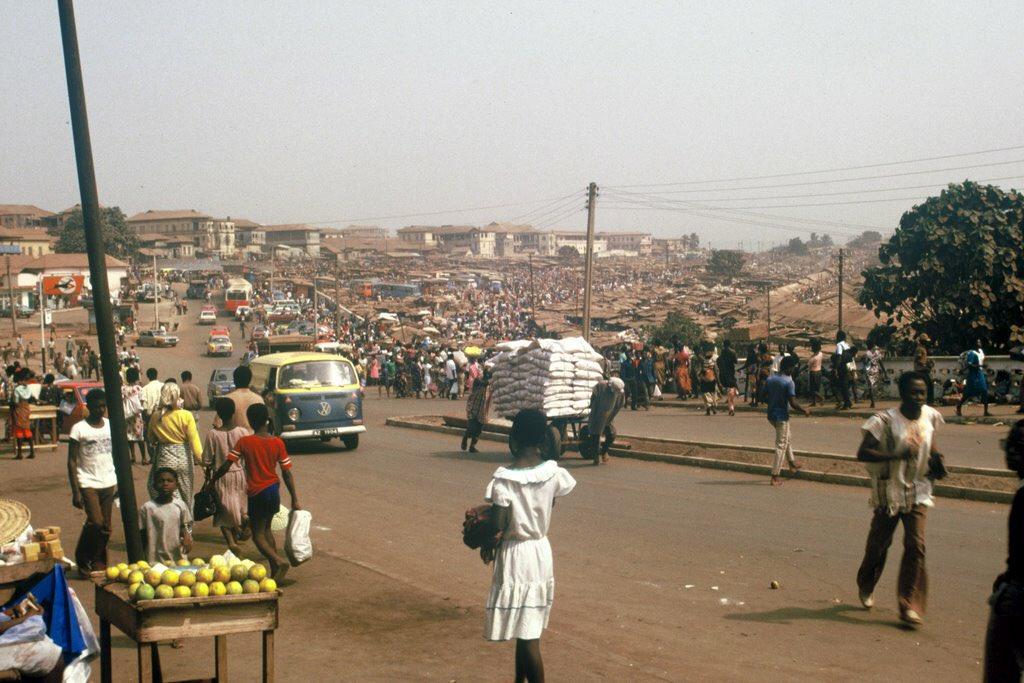
The Anloga Boys of Kumasi
I grew up in Anloga, in Kumasi. Not Anloga in the Volta Region, but Anloga Junction. If you know Kumasi, you will know precisely what I mean.
In the 1980s, Anloga was not as it is today. There were no traffic lights, no shopping arcades, no neat gutters. There was red dust that settled on everything, loudspeakers blaring highlife from kiosks, and the railway line that cut our world cleanly in two. On one side were the school, the church, and the sort of people who would readily call the police on a child. On the other side was us. It was Zongo life.
I was not a bad boy. You may ask Kofi Kyire or Kobina Baah and they will tell you the same. We were simply trying to survive.
Our boss was Papa Yaw. He was not our biological father. He was our senior man. He must have been about seventeen at the time, but to us small boys he seemed an old man. One eye was slightly closed and one leg dragged a little from childhood polio, but his mind was sharper than any of ours. Papa Yaw taught us resilience. He would say, “Listen, if you are soft in this world, you will perish. Survival is necessary.“
Papa Yaw had rules. Rule one: never eat alone. Rule two: if you find food, bring it home. Rule three: if a fight comes, we face it together.
On Saturdays we ate wild cocoyam. Not the decent variety from the central market, but the stubborn one that grew wild behind the railway line, near the big gutter. Our mothers warned that it would scratch your throat if you did not cook it properly. But we knew how. Kofi Kyire’s mother had taught us the method. You boiled it three times, threw the water away each time, added salt and a little palm oil, and ate it with your bare hands. We called it our Saturday Special. It was hard, ɛyɛ den, but we ate it all the same and were grateful.
Pounding fufu was like playing football. That was our official duty in the house. In every household in Anloga, if you were a boy and you could not pound fufu, you were considered useless. The women would shout, “Wɔbɔ! Wɔbɔ! Pound it!” And we would take the pestle, which was almost as tall as we were, and make a game of it. Kofi would be stationed at the mortar, I would be the one pounding, and Kobina would be the brave one turning the fufu with his hand in between the strokes. It was a dangerous game. One mistimed strike and you would pound a boy’s hand. But we were experts. The sound, tim, tim, tim, was our music. When the fufu was ready, sometimes the women would give us the small remainder, the ɛmɔmɔ, with a ladle of light soup. On those days, we felt like kings.
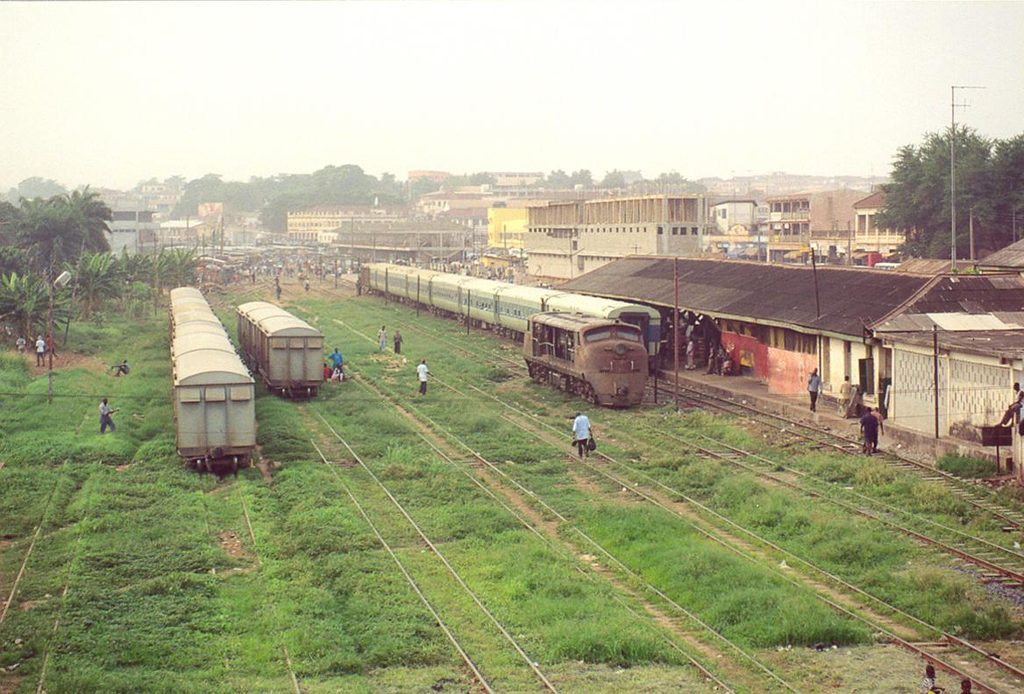
Our true expedition was the walk along the railway. From Anloga to Abuabo Dagomba Line. We placed our feet carefully on the iron rails, balancing like acrobats. Kiosks to the left, open drains to the right. We went in search of koko or rice.
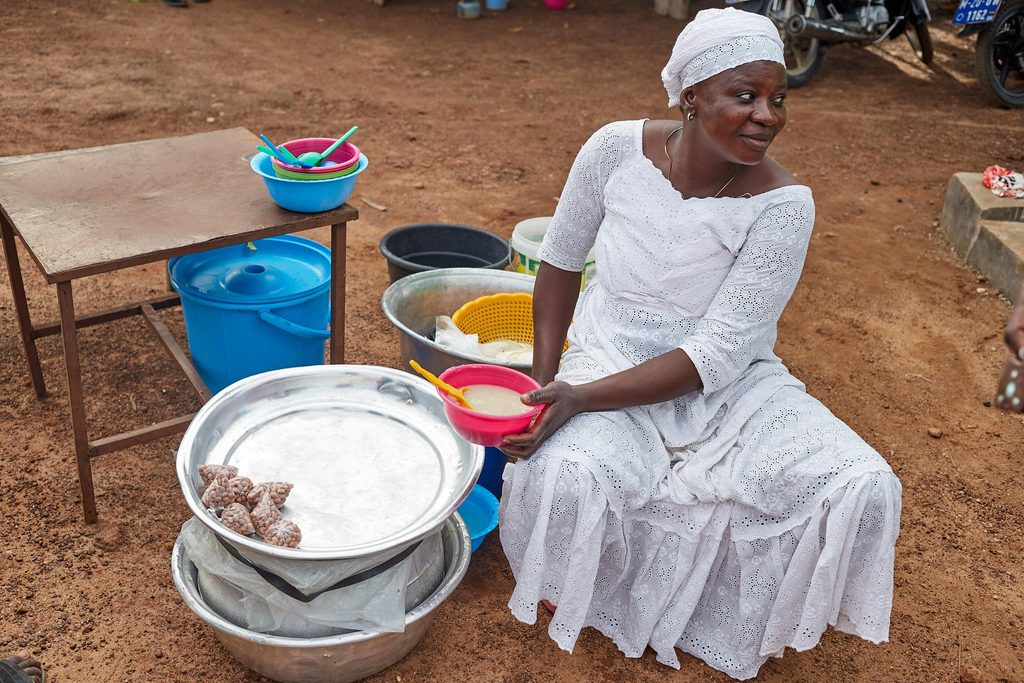
At Abuabo Dagomba Line, life was altogether different. Early in the morning, everything was Hausa. The steam rising from great pots of koko, the scent of fried kose. There, the queen was Maajeema. We called her Majeema. She was the undisputed mistress of Tuo Zaafi. She was a large woman with large, capable hands. She would call out, “Yara ku zo! Ku zo!” Children, come.
We would arrive with small metal bowls. Sometimes we had twenty pesewas. Often we had nothing at all. We would simply stand and look, and Majeema knew us.
“Kai! Anloga yara sun zo,” she would say. The Anloga boys have come.
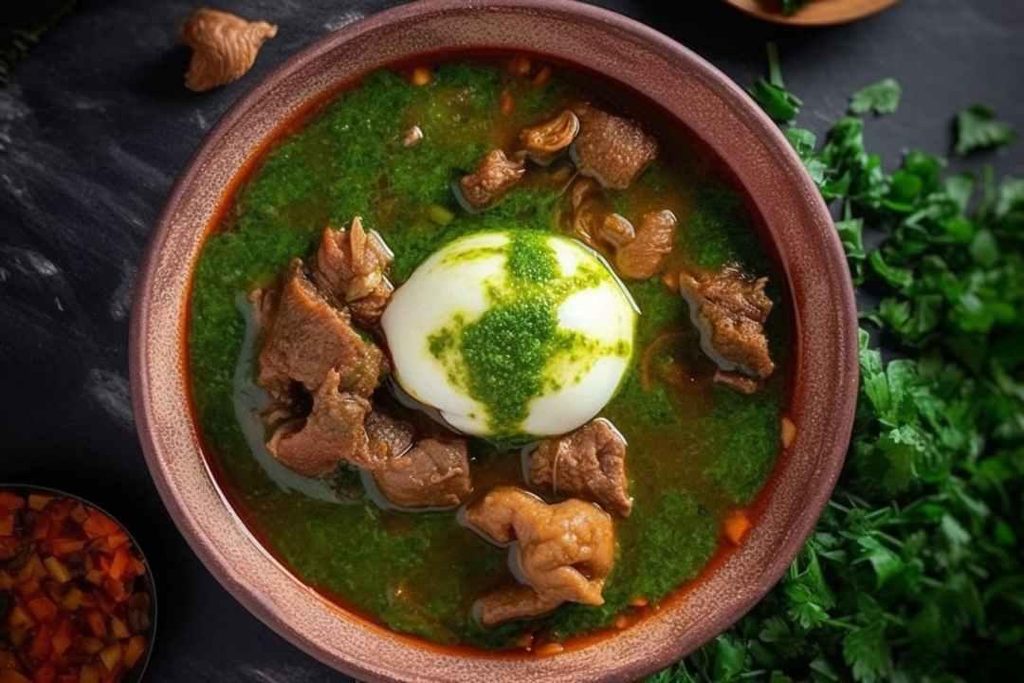
She would give us something regardless. Sometimes koko with a little boodo inside. Sometimes leftover TZ with dried okro soup, miyan kuka. It was sour and slightly slimy, but it filled the belly. We would sit on a low bench alongside the mallams and the lorry drivers and eat together. In the Zongo, nobody asked where you came from before feeding you. They simply fed you. Aboki, come chop.
But peer influence was a powerful thing. In those days, if you lived in the Zongo and you were not tough, people would take advantage of you. Kofi Kyire was the tough one. He could fight any boy from Asafo. Kobina Baah was the clever one. He could slip into a mango tree and take three mangoes without a soul noticing. I was the small one who could run faster than anyone on the railway sleepers.
We had our troubles, as all children in the eighties did. Rawlings was in power, soldiers were on the streets, and the country was in that strange, hard period they called kalabule. There were days we did not go to school because our uniforms were not dry, or because there was no chop money, or because our exercise books were torn beyond use. The teachers beat us for truancy. At home, we were beaten for failing. So we learned to stay outside more than inside. Outside was free, even if it was hard.
And then there was Papa D.
Papa D. would not let us be. And we were always prepared for him. He would throw, we would dodge and throw back.
We called him Boni Boni, because he was wicked towards children.
Papa D. was not an old man. He was perhaps in his forties, but his face was always flushed red from drink and temper. He owned the small provision shop near the railway crossing. In his eyes, all Zongo boys were thieves. Perhaps we were, occasionally. Perhaps we took a biscuit when he was not looking. But he hated us entirely. If he saw you near his shop, he would pick up a stone without a word.
“Kai! Dan iska! Barawo! Kuje!” he would shout. Rascals! Thieves! Get away!
So we also prepared ourselves. We kept small, smooth stones in the pockets of our shorts. Not large ones, just small enough to throw. We would walk past his shop with our hands in our pockets, ready. He would throw, we would dodge, shouting “Faashee!” and then throw a little one back before running for our lives.
“Me, I no be barawo!” Kofi would shout, mixing Twi and Hausa and English as we all did. “Yɛnyɛ bɔnefoɔ! We no be bad boys, but we dey hungry!“
The defining day came in the dry season of 1986. There had been no water for two weeks. The main pipe at Anloga had burst. Everyone was forced to fetch water from the big rusty tank by the railway station. We had not eaten since morning. Kobina’s mother had travelled to Ejura. My own mother said there was no money in the house. Kofi’s father told him to go and find his own food if he was hungry.
Papa Yaw gathered us under the neem tree. His face was serious.
“Today,” he said, “we must survive properly.“
He led us to the small plot behind Papa D.’s shop. There, Papa D. had planted plantain and, in the damp corner, a patch of wild cocoyam. Papa Yaw said, “We are not stealing. We are surviving. God understands. Allah ya fahimta.”
We were terrified. Everyone knew Boni Boni was wicked. But hunger is more wicked than any man.
Kobina went first. He cut two cocoyams with a small kitchen knife. I cut one. Kofi kept watch, his eyes on the shop. Just as we were about to leave, we heard the voice.
“Waye! Barawo!”
Papa D. had seen us. And on that day he was not holding a stone. He was holding a long, thick stick.
He ran towards us. We ran too, towards the railway line. My heart was beating like a talking drum. Kofi’s foot suddenly slipped and got caught between two railway sleepers. He fell hard. Papa D. was closing in. I thought that day he would kill us.
Then Papa Yaw appeared, as if from nowhere. He pulled Kofi up with all his strength, his weak leg shaking, and stood in front of Papa D., between us and the stick.
“Papa D., fa kyɛ yɛn,” Papa Yaw said, panting. “These are just children. Yara ne kawai. They are kɔlaa. Koyar da su, kada ka buge su.” Forgive us. Teach them, don’t beat them.
Papa D. was breathing heavily, the stick raised.
“If you want cocoyam, why you no ask? Why you dey steal like mugu?” he barked.
Papa Yaw looked him in the eye. “Because if we ask, you will say no.“
There was a long silence. The Harmattan wind blew dust around our feet.
Papa D. lowered his stick slowly. He looked at us, three small boys with muddy hands, holding raw cocoyam, trembling.
“Take one more,” he said quietly. “But tomorrow you come and help me pack my shop. You hear? No more stealing. Aiki ne, ba sata ba. Work, not stealing.“
That evening we ate like never before. We cooked the cocoyam properly and Majeema, having heard the story, added some TZ and ayoyo soup on top of it. We ate together, as per Papa Yaw’s first rule.
We did go the next morning to help Papa D. pack his shop. He still shouted at us from time to time, and he still threw a stone now and then, but less often. And when he saw us walking the railway line towards Dagomba Line, he would sometimes call out, “Ina zuwa? Ku dawo da wuri!” Where are you going? Return early!
That is how Anloga taught us. In the eighties, nobody gave you anything on a plate. But in the Zongo, what little we had, we shared. Twi, Hausa and English all mixed in one mouth. “Aboki, how for do?” “Yaa dace, we dey manage small.” “In sha Allah, gobe za ta fi kyau.” Tomorrow will be better.
I have left Anloga now. I live in Accra. But whenever I pound fufu in my small kitchen, I still hear that tim, tim, tim like a football match. I still taste that wild cocoyam from Saturday. And I still hear Papa Yaw’s voice.
“Survival is necessary,” he said. “But resilience is the style.” You can ask Kofi Kyire. You can ask Kobina Baah. They will tell you the same story, word for word.
 Charles Prempeh PhD
  Ishmael Junourgh