
 By Ishmael Junourgh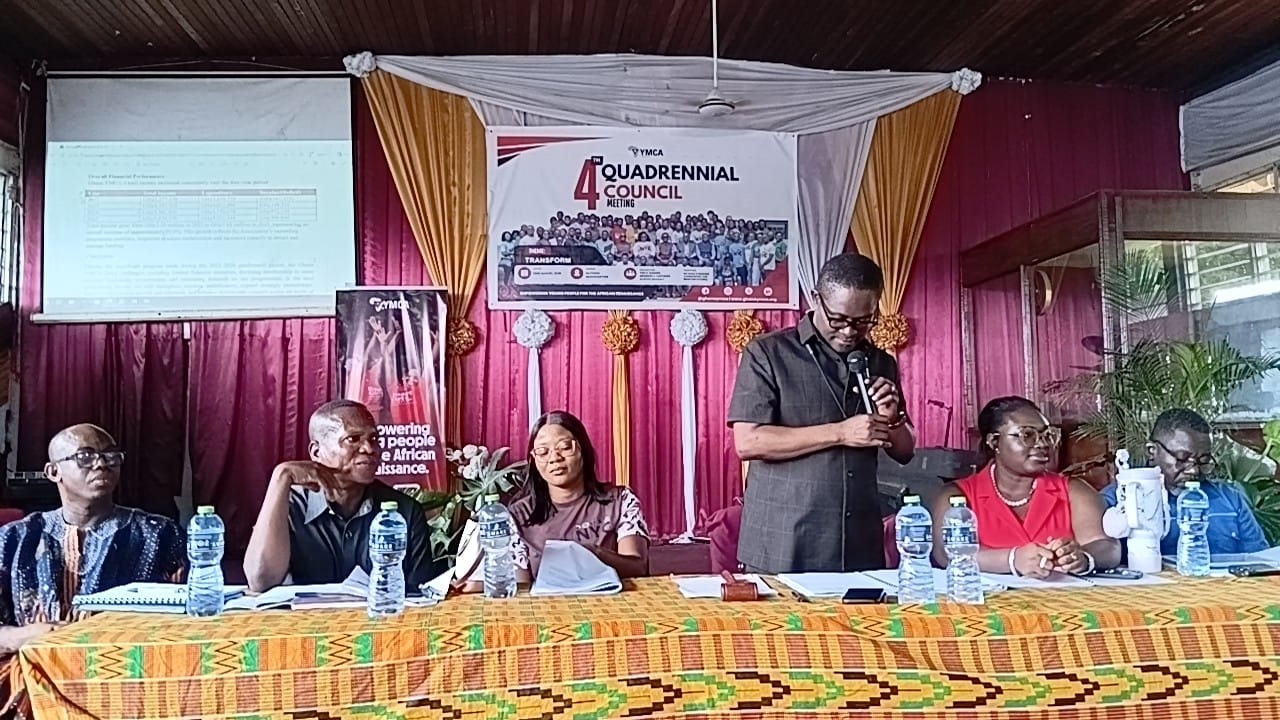
The Ghana Young Men’s Christian Association (YMCA) has intensified its focus on youth development, skills training, climate action and social enterprise, reaching at least 5,000 young people with practical skills over the past four years, President Charles Habiah has disclosed.
According to Mr Habiah, the achievement forms part of the organisation’s broader strategic agenda to equip young people with the skills, opportunities and support needed to become productive citizens and contribute meaningfully to national development.
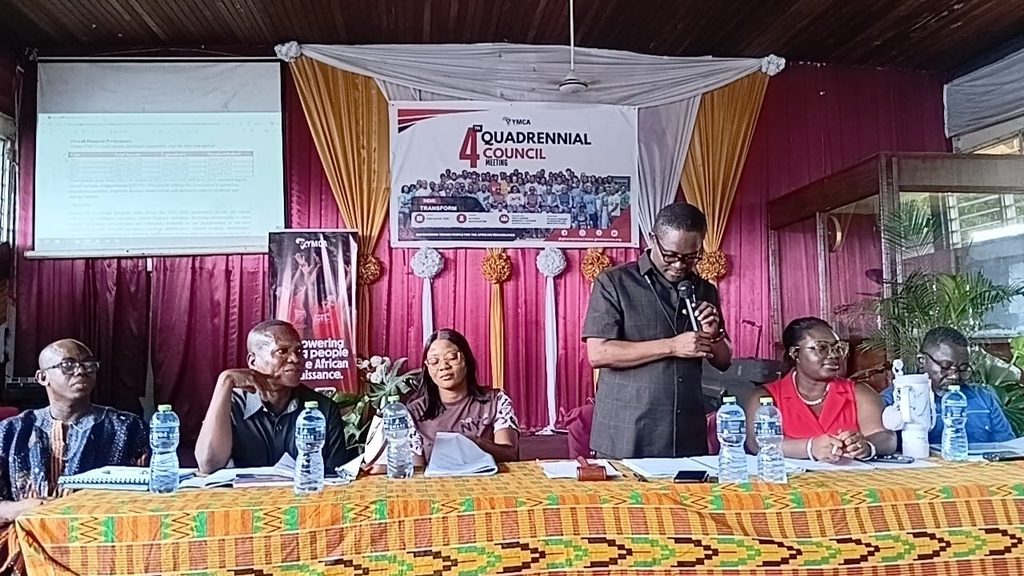
Speaking on the sidelines of the YMCA’s 4th Quadrennial Council Meeting, Mr Habiah said the organisation’s four-year strategic plan was anchored on four major pillars: youth development, organisational development, social enterprise and meaningful work, and resource mobilisation.
He said the YMCA had deliberately positioned youth development at the centre of its interventions, particularly by creating pathways for young people who might otherwise struggle to access further education or sustainable employment.
Skills training as an alternative to unemployment
Mr Habiah said the YMCA had provided training in areas including filmmaking, scriptwriting, video production, social enterprise and other creative and technical fields.
He explained that the organisation often targets young people who have completed senior high school but face difficulties progressing into further education or finding decent employment.
Rather than allowing such young people to remain economically inactive, the YMCA, he said, identifies them and provides intensive practical training that can enable them to earn a livelihood.
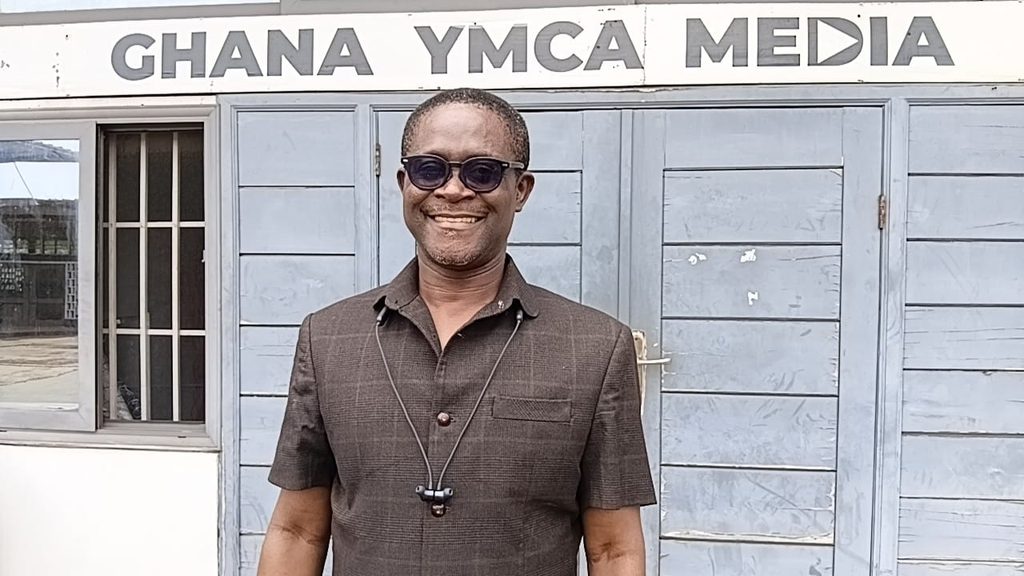
The Ghana YMCA Media Hub has been central to this intervention, with beneficiaries trained in filmmaking, short and feature scriptwriting, video production and emerging technologies, including artificial intelligence.
Mr Habiah said the initiative had demonstrated how skills development could transform young people from job seekers into creators of economic and social value.
YMCA turns plastic waste into opportunity
Beyond employment and creative skills, the YMCA has also integrated climate action into its youth development programmes.
Mr Habiah highlighted the organisation’s Green Project, through which young people collect plastic waste from communities and transform the materials into useful products, including bags and other items.
He said the programme was designed not only to address the growing problem of plastic pollution but also to demonstrate that environmental challenges could become opportunities for youth enterprise.
“We believe that by that way, we are impacting the climate positively,” he said, stressing the importance of involving young people directly in solving environmental problems.
The initiative reflects the YMCA’s broader effort to link environmental sustainability with livelihoods, particularly by encouraging young people to develop practical solutions to challenges within their communities.
Youth justice and rehabilitation
Another major area of the YMCA’s work has been its intervention in the juvenile justice system.
Mr Habiah said the organisation had worked with young people who had come into conflict with the law, seeking to rehabilitate them and equip them with skills that would facilitate their reintegration into society.
He disclosed that at least 80 juveniles had benefited from the programme, receiving training in areas including sewing and other vocational skills.
According to him, the intervention is based on the belief that incarceration without rehabilitation can undermine the future prospects of young people.
The YMCA’s youth justice programme subsequently received recognition at the African and international levels, with the Ghana YMCA winning an award for its work in youth justice.
Tackling migration through local opportunities
Mr Habiah also identified migration, particularly rural-urban migration and the movement of young women into informal work, as an emerging area of concern for the YMCA.
He said the organisation was developing programmes aimed at addressing the factors that compel young people to migrate to urban centres in search of opportunities that may not exist.
He cited the Northern Region and North Volta as areas where the YMCA was exploring interventions to provide youth-attractive skills that could create viable alternatives to migration.
“The question is, what youth-attractive skill training can we provide that would ensure that they are not attracted to come to the city centres where non-existing jobs are?” he asked.
He acknowledged that limited funding had constrained an earlier intervention but expressed confidence that migration would receive greater attention in the YMCA’s next four-year strategic cycle.
Building partnerships for a Film Academy
The YMCA is also seeking to deepen collaboration with public institutions and academic organisations to expand opportunities in the creative economy.
Mr Habiah said the organisation had engaged the National Youth Authority and was collaborating with the African University College of Communications Studies, formerly the Ghana Institute of Journalism, with the objective of establishing a Film Academy.
He said the proposed academy could provide another avenue for young people to acquire professional skills in a sector that continues to attract significant youth interest.
He added that stronger partnerships and increased financial support would be required to scale up the initiative.
Funding remains a major challenge
Despite the progress recorded, Mr Habiah identified funding and institutional capacity as major challenges confronting the YMCA.
He explained that trained beneficiaries often become employable and leave the organisation, creating a constant need to build new training capacity.
However, he said the movement should view the departure of trained beneficiaries positively because the ultimate objective is to ensure that young people are equipped to succeed wherever they find themselves.
For him, the YMCA’s impact should therefore not be measured only by the number of people who remain within the organisation, but also by the contribution former beneficiaries make to their communities and the wider economy.
A record to defend
The 4th Quadrennial Council Meeting provided an opportunity for the YMCA to account for its activities over the past four years, review its strategic direction and elect new leaders.
Four principal positions—President, Vice President, Gender representative and Treasurer—were scheduled for election, while the youth leadership election was to be held separately.
Mr Habiah, who is seeking a second term as President, said he was relying on his record in office to secure another mandate.
“I hope that I’ve done well. My work will speak for me,” he said.
His record, as presented to the Council, is built around a development agenda that places young people at the centre of skills acquisition, creative enterprise, environmental action, rehabilitation and social transformation. For the Ghana YMCA, the next phase will be about turning these interventions into larger, better-funded programmes capable of reaching more young people and providing practical alternatives to unemployment, migration and social exclusion.