
 By Ishmael Junourgh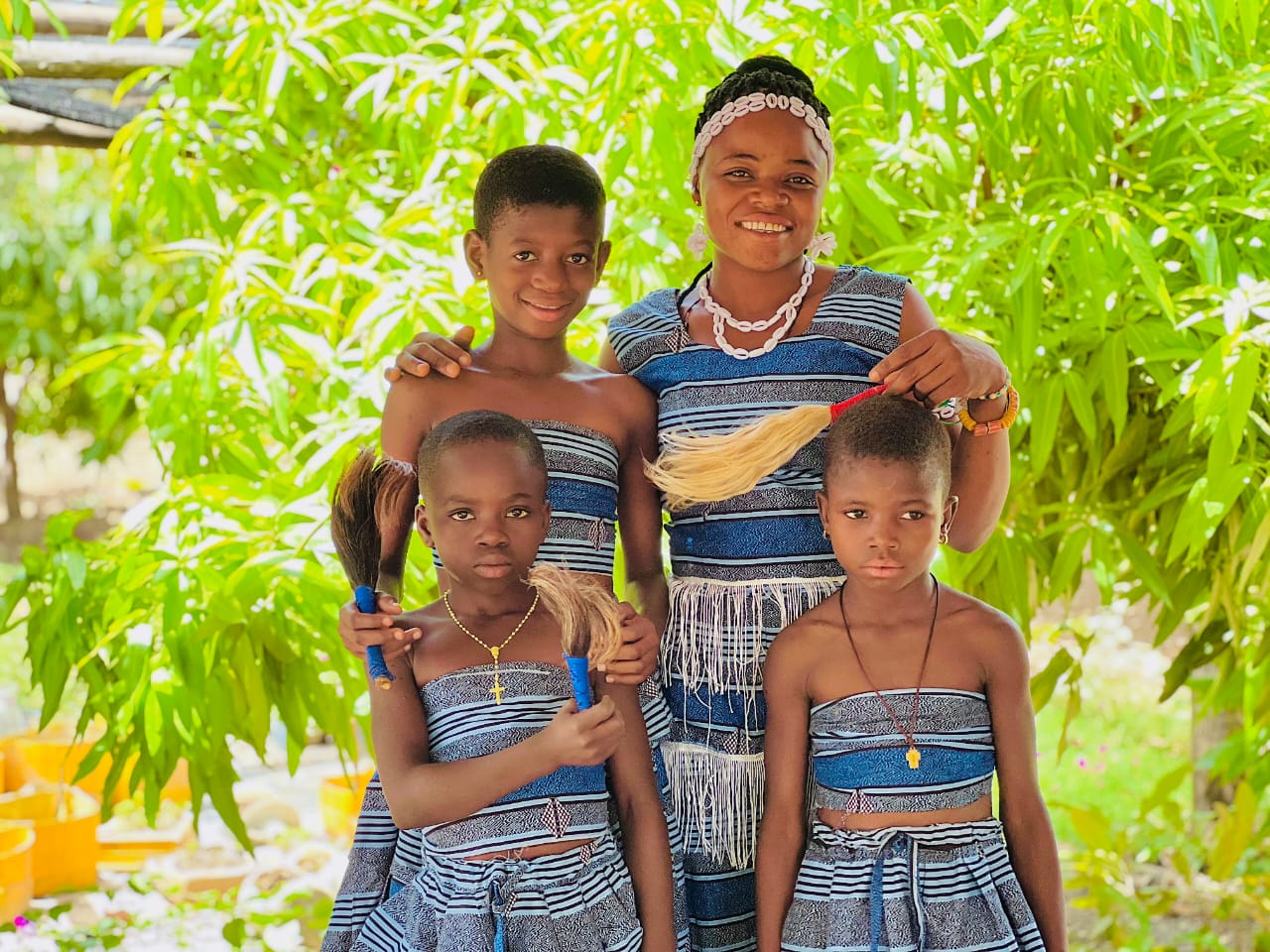
How a young Dagaaba performer and her manager are turning indigenous music and dance into a cultural bridge between Ghana and the world
In an entertainment industry increasingly dominated by polished contemporary sounds, digital trends and globally familiar rhythms, Gifty is taking a different route to the world.
She is taking the world home.
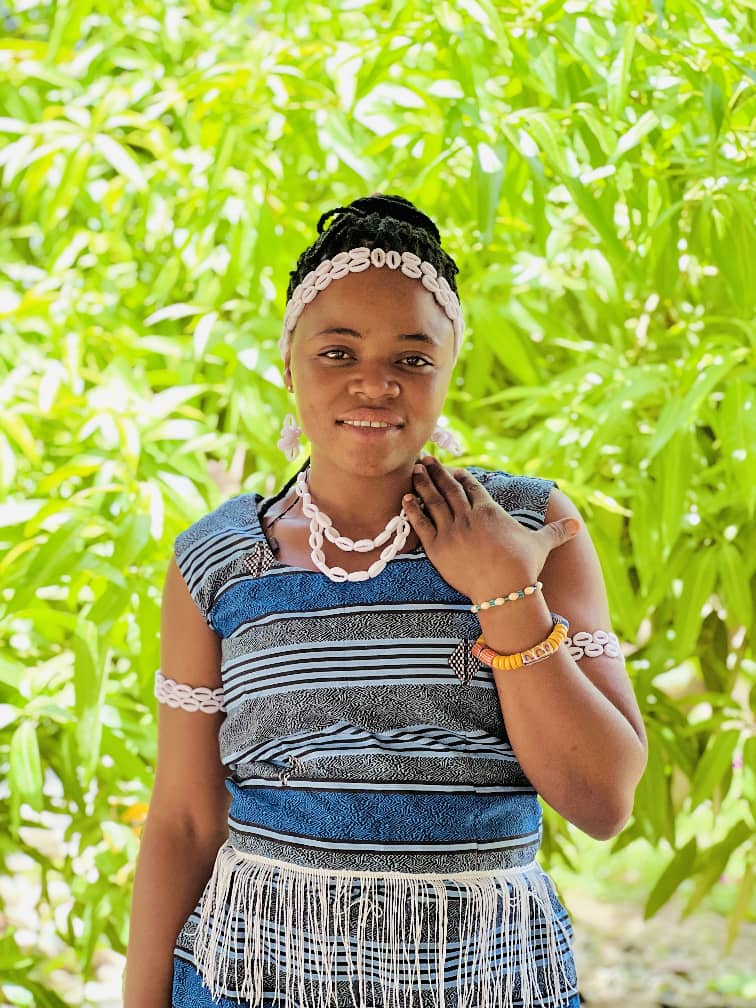
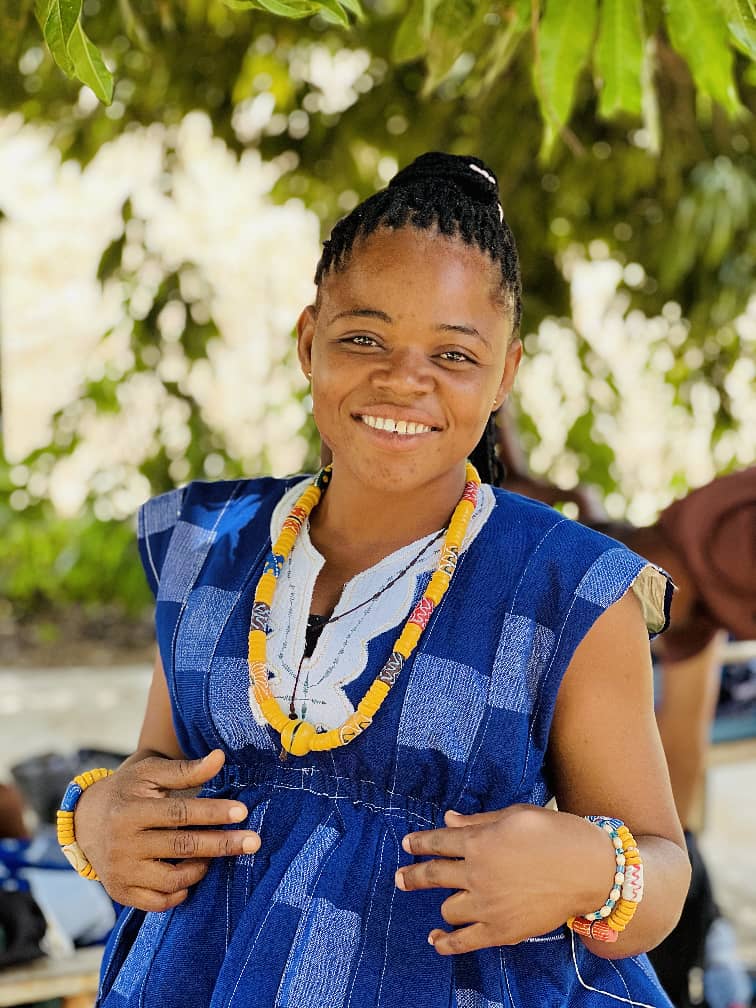
From Domangye in the Nandom area of Ghana’s Upper West Region, Gifty is emerging as a distinctive voice and dancer in Dagaaba indigenous music; a performer whose artistry combines singing, traditional dance and cultural expression in a way her manager believes can command audiences far beyond Ghana.
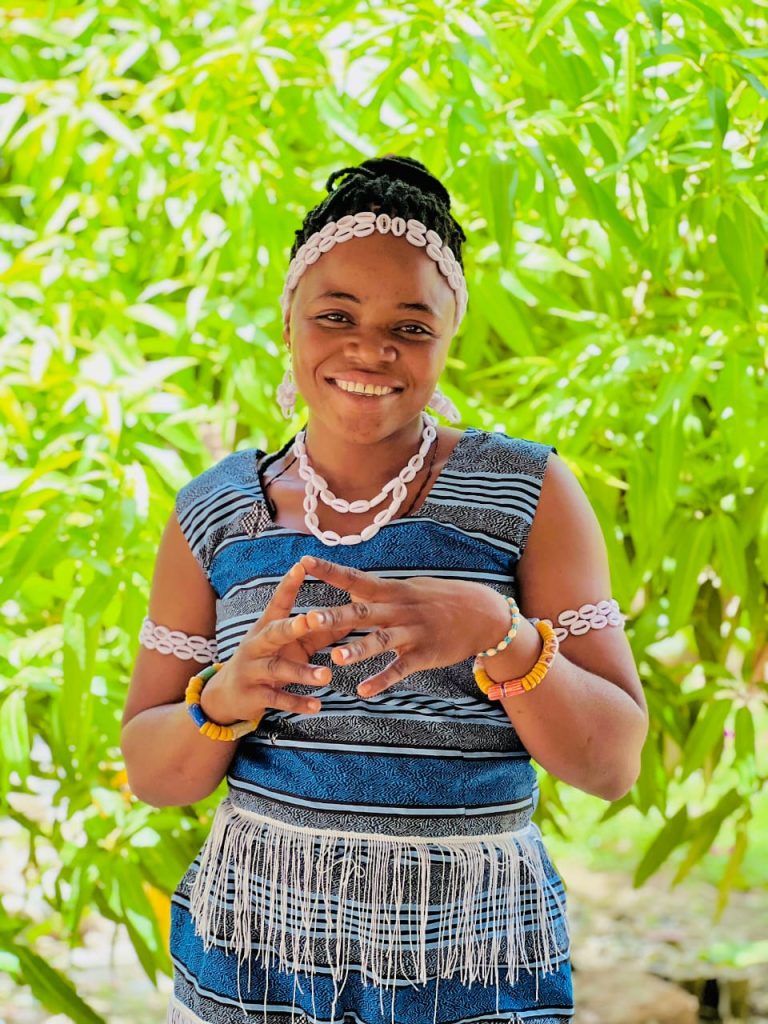
At the heart of her performance is Bewaa, an energetic Dagaaba entertainment dance, but her repertoire extends to Binee, associated with funeral traditions, and Bagr-Binee, a traditional religious dance performed within specific ceremonial contexts.
She also sings indigenous Dagaaba songs.
For her manager, who operates under the music brand Da-Roo J Music, Gifty represents something bigger than an individual artistic career.
She represents a cultural possibility.
“I want the world to also hear the Dagaaba people,” he says.
That ambition has become the philosophy behind their work.
A talent discovered almost by accident
Gifty’s journey into traditional performance was not born into a famous musical family.
Neither of her parents was a musician. She does not trace her artistic identity to a family lineage of performers, storytellers or traditional craftsmen.
Instead, she discovered her inclination almost instinctively.
While living in the Greater Accra Region, she found herself constantly singing. When she eventually returned to the Upper West Region in 2017, the habit followed her.
She would sing in class. A friend noticed and asked why she was always singing.
Gifty’s answer was simple: she did not really know. She simply felt like singing.
But she knew she wanted an environment where she could develop the talent.
That opportunity came through a church-based Catholic Renewal group.
When she first arrived at the group’s rehearsal, she immediately joined the singing as though she had rehearsed with them before.
Then came the moment that changed the trajectory of her artistic life.
During preparations for a Catholic festival, Gifty noticed that a group of children had Bewaa costumes but lacked someone to train and lead them.
She volunteered.
Her paymaster agreed to support the idea and registered the group for the festival.
Gifty trained the children.
When they eventually appeared at the festival grounds, the performance surprised many people.
Here was a lady who had spent time in Accra, had returned to Nandom, and was suddenly leading children in a traditional dance with remarkable confidence and fluency.
Her manager was watching.
“I saw her perform marvellously and said, ‘Wow, this is a talent. We need to grab her,’” he recalls.
That year, the Bewaa troupe was selected as the best dance troupe at the festival.
For Gifty, it was more than a prize.
It was confirmation.
Seven years of artistic partnership
Gifty has now spent almost nine years working under Daaro J music.
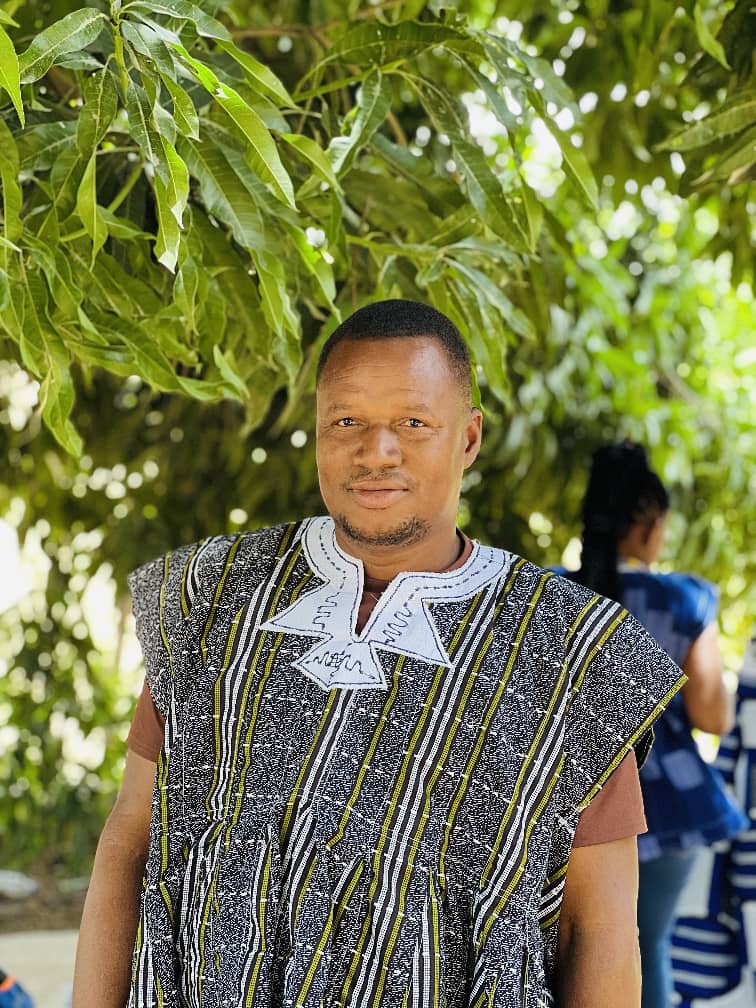
Her manager initially encountered her through the Catholic Renewal group, but it was her dancing that convinced him that there was something exceptional to nurture.
She eventually began recording music under the label, while continuing to develop her dancing.
Today, the partnership has evolved beyond music production.
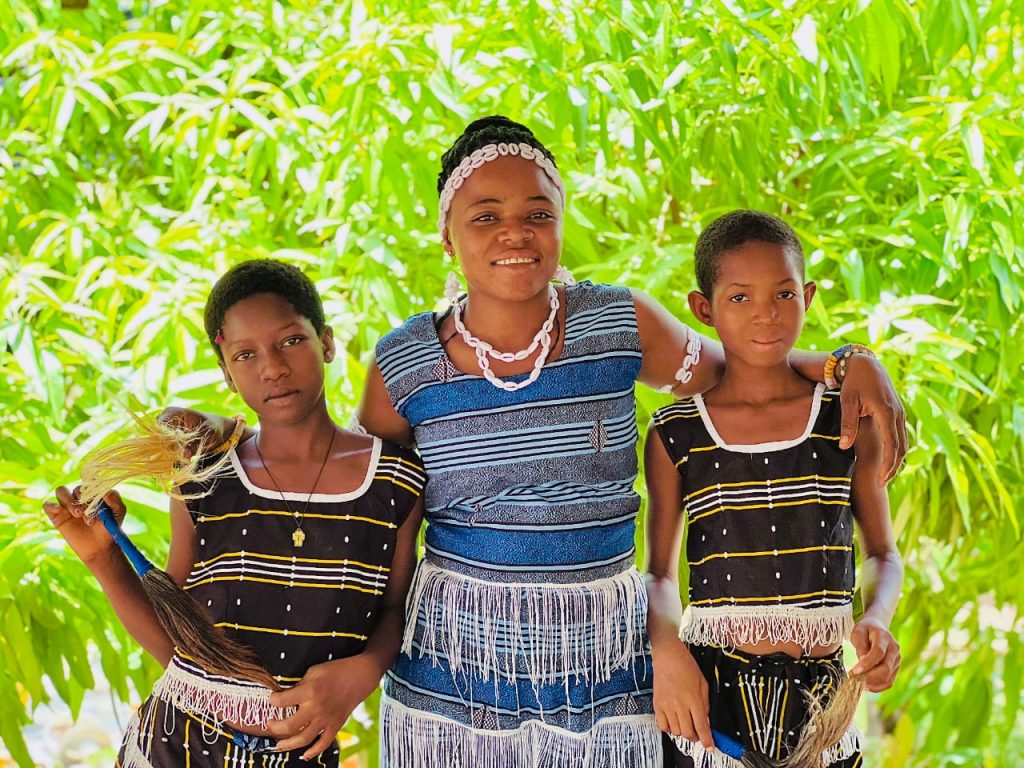
Gifty has begun training younger children in traditional dance—passing the knowledge to another generation.
Her manager believes that this teaching dimension is part of what keeps her moving.
“She has trained some small children dancers who can wow any crowd at any time,” he says.
It is an important detail in Gifty’s story.
She is not simply performing tradition.
She is transmitting it.
The smile behind the energy
Bewaa is not an easy dance.
It requires physical energy, endurance and coordination.
Yet Gifty’s manager believes her greatest advantage is not simply her technical ability.
It is her joy.
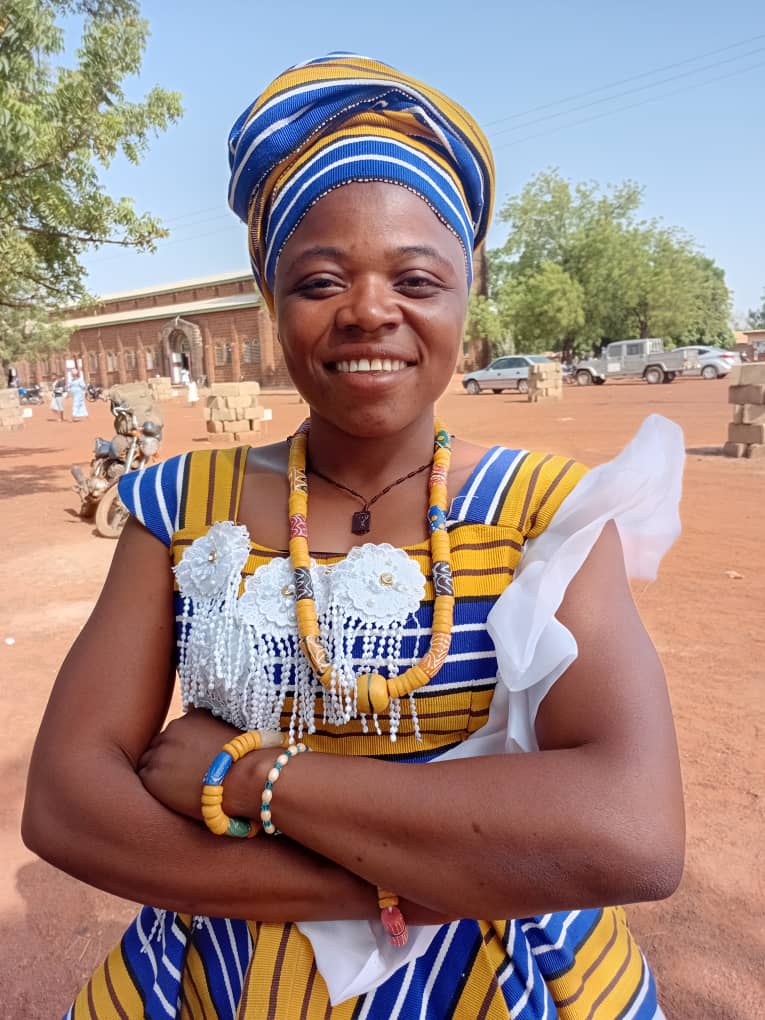
He describes watching her perform as watching someone combine intense physical movement with an unmistakable smile.
“She does the dance with passion,” he explains. “Even when she’s performing, you can admire her smiling face.”
That smile, he believes, is part of her artistic signature.
The performer appears to be enjoying the tradition rather than merely reproducing it.
And that distinction matters.
For international audiences encountering Dagaaba performance for the first time, Gifty’s ability to communicate emotion through movement could become as important as the dance itself.
Why Gifty believes she belongs in indigenous music
Gifty could have pursued contemporary music.
Instead, she chose the indigenous path.
Her explanation is strikingly uncomplicated.
“This is my line,” she says. “When I’m doing any of them, I don’t feel like I’m forcing myself. I just do it by my passion.”
That sense of natural belonging is central to her identity.
She does not describe Dagaaba music as a career strategy.
She describes it as something that feels like hers.
And that is why she says she is proud to be a Dagaaba musician.
She recalls that when she began, she had not seen another woman performing in quite the same way.
That absence became part of her motivation.
More than music: a language of instruments
To understand Gifty’s art, however, is to look beyond the performer.
Her manager argues that Dagaaba music possesses a sophisticated musical language that is not always immediately understood by outsiders.
At the centre of that tradition is the xylophone.
According to him, the Dagaaba xylophone is not simply an instrument for producing melody.
It can communicate.
A skilled listener may hear a xylophonist playing and interpret the musical phrases as particular words or messages.
The music therefore becomes a form of language.
Alongside the xylophone is the Dalara, an instrument resembling a calabash and covered with animal skin, whose rhythmic patterns help identify particular forms of performance.
There is also the traditional instrument made from a prepared clay pot, known in the interview as Dagara, which can produce distinct rhythmic patterns carrying their own meanings.
For Gifty and her manager, these instruments demonstrate that Dagaaba music is not merely entertainment.
It is a knowledge system.
It contains language, memory, history, spirituality and social meaning.
When the xylophone speaks
Perhaps the most fascinating element of the tradition is the relationship between sound and meaning.
Her manager describes the xylophone as a “language instrument”.
A musician can create a musical phrase, while another person with the necessary cultural knowledge can interpret what is being communicated through the tune.
It is a musical conversation.
This is one of the aspects that could make Gifty’s work particularly compelling to international cultural institutions, festivals and world-music audiences.
The attraction is not simply that the music sounds different.
It is that the music carries a cultural grammar.
A rhythm can identify a dance.
A dance can identify a social occasion.
An instrument can communicate a message.
And a song can preserve a story.
Songs that carry stories
Gifty’s own music draws on themes that are immediately human while remaining rooted in her cultural setting.
Her first recorded song dealt with love.
Another dimension of her music is prayer.
She speaks about moments when people encounter hardship, urging listeners not to lose courage but to maintain faith and continue praying.
The broader Dagaaba musical tradition, however, carries an even wider archive of stories.
According to her manager, songs can preserve hunting stories, love stories, sorrow, genealogies and dirges.
The dirges are particularly significant.
They are not merely songs of mourning.
They can encode information about the deceased, including aspects of the person’s life, family background, moral character and social identity.
For those with the cultural knowledge to interpret them, the music becomes a historical record.
This is where Gifty’s artistic world intersects with something much larger: the preservation of indigenous knowledge.
Where spirituality meets performance
Dagaaba traditional music does not always separate art, religion, history and social life into neat categories.
Some performances are deeply connected to spirituality.
The Bagr-Binee, for example, is associated with traditional religious contexts and is not performed casually. It is connected to initiation and specific ceremonial occasions.
The Binee, meanwhile, is associated with funerals.
And Bewaa functions principally as an entertainment dance intended to bring joy and energy to audiences.
Each dance therefore has its own context, meaning and movement vocabulary.
According to Gifty’s manager, dancers from different parts of the Dagaaba cultural area can sometimes come together and recognise the same movement patterns even without rehearsing together.
That consistency speaks to the depth of cultural transmission.
The body itself becomes an archive.
A woman carrying an indigenous tradition forward
Gifty’s story is therefore not simply about becoming an entertainer.
It is about becoming a cultural carrier.
She is a singer.
She is a dancer.
She is a trainer of young dancers.
And, through her performances, she is helping move an indigenous artistic tradition into contemporary spaces.
Her manager sees a gap that Gifty can help fill.
He believes there are several female performers working within the broader traditional music space, but argues that Gifty’s combination of vocals and traditional dance gives her a distinctive identity.
He also points to the interest her performances have generated among Dagaaba communities in Burkina Faso.
There, he says, people have invited her not necessarily to perform immediately, but sometimes simply to watch her perform and celebrate the cultural expression.
That cross-border interest matters.
The Dagaaba cultural world extends beyond Ghana’s borders, particularly into Burkina Faso, and Gifty’s work offers an opportunity for cultural connections that transcend the boundaries of the modern nation-state.
From Upper West to European stages
The question now is not whether Gifty can remain relevant only within her immediate community.
The bigger question is whether the international creative industry is ready to encounter her.
Europe has increasingly become a major space for world music, cultural festivals, heritage programming, diaspora events, intercultural exchanges and artistic collaborations.
Gifty fits naturally into that conversation.
She brings something that cannot simply be downloaded, manufactured or copied from a global music template.
She brings a living tradition.
Her performance offers European audiences an opportunity to encounter Dagaaba culture through movement, rhythm, language, costume and storytelling.
For cultural institutions, festivals and creative programmers, she could occupy several spaces at once: traditional music, dance, indigenous heritage, women’s artistic expression, cultural education and intercultural performance.
Her manager’s message to the world is therefore straightforward.
Invite her.
Give her a stage.
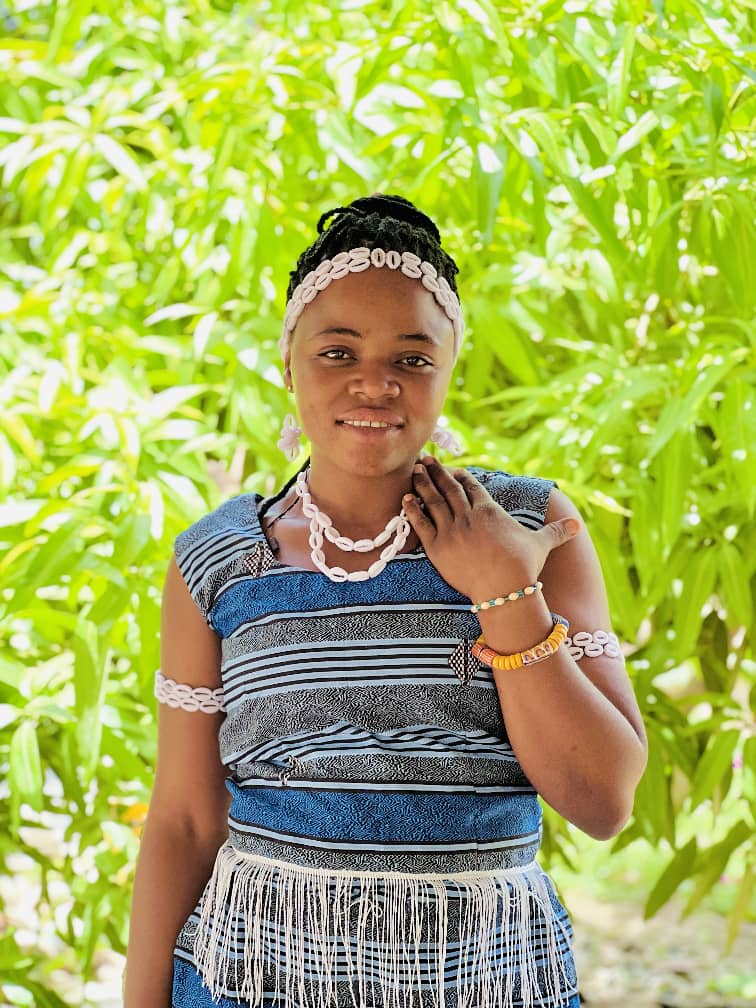
Let audiences see what happens when an indigenous Dagaaba performer carries a tradition rooted in Nandom into an international cultural space.
The world does not have to come to Ghana first
There is a larger argument embedded in Gifty’s journey.
African artists do not always need to abandon indigenous forms to become internationally relevant.
Sometimes the opposite may be true.
The more deeply an artist understands and embodies a cultural tradition, the more distinctive that artist can become in a crowded global creative market.
Gifty’s strength lies precisely in what makes her different.
Her language.
Her dance.
Her music.
Her cultural memory.
Her ability to smile while performing a physically demanding dance.
Her relationship with children she is training.
And the partnership with a manager who chose to invest in indigenous music at a time when he says people were encouraging him to record more English or Twi songs.
His response was simple:
“I want the world to also hear the Dagaaba people.”
Gifty may now be one of the voices capable of making that happen.
A cultural invitation
From Domanje in Nandom to audiences beyond Ghana, Gifty’s journey is still unfolding.
She is not presented as a finished international star.
She is something perhaps more interesting: an emerging cultural ambassador whose artistry remains closely connected to the community from which it came.
Her story is about what happens when talent meets cultural confidence—and when a manager decides that indigenous identity is not a limitation but an artistic asset.
For Europe and the wider international creative community, Gifty offers an invitation to encounter Ghana beyond the familiar.
Beyond Afrobeats.
Beyond contemporary pop.
Beyond the sounds that already dominate global playlists.
Here is another Ghana.
A Ghana of xylophones that speak.
Of drums and clay-pot rhythms that carry meanings.
Of dances that distinguish celebration from mourning and ritual.
Of songs that preserve love, sorrow, prayer, genealogy and history.
And at the centre of this cultural conversation stands a young Dagaaba woman from Nandom; singing, dancing, teaching and smiling.
Her name is Gifty. And her stage may only be getting bigger.
 Charles Prempeh PhD