
 By Ishmael Junourgh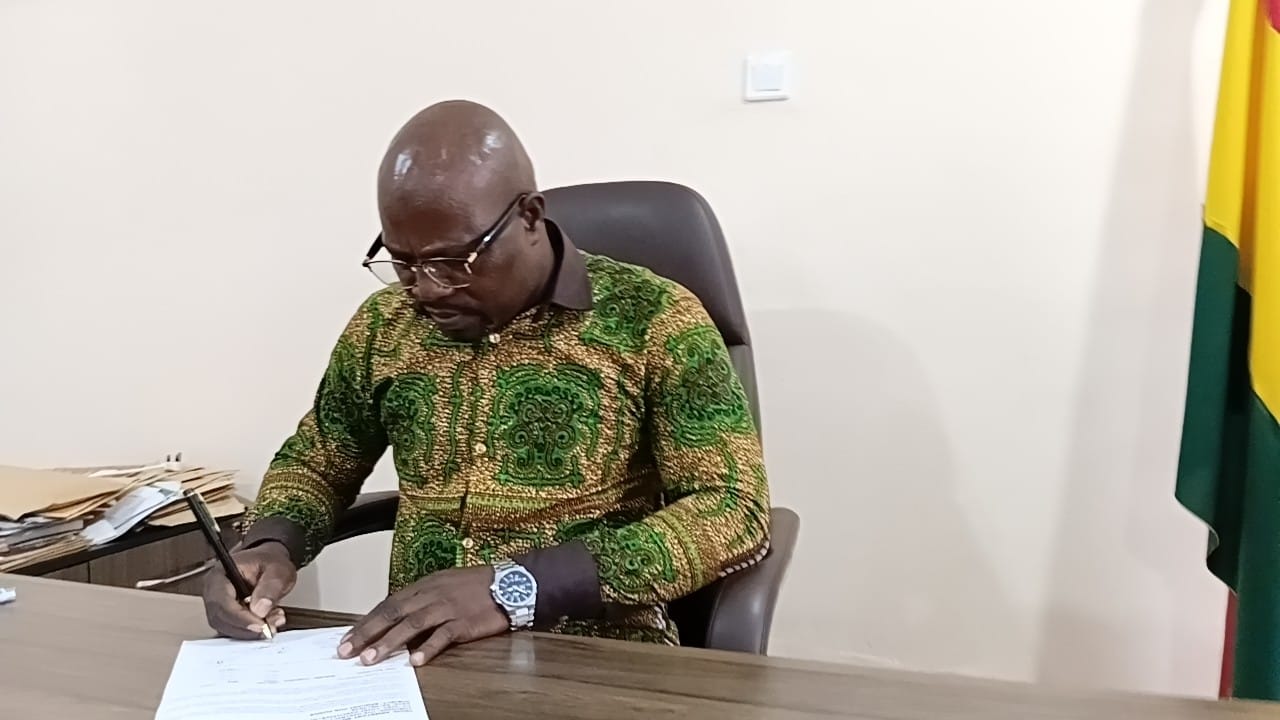
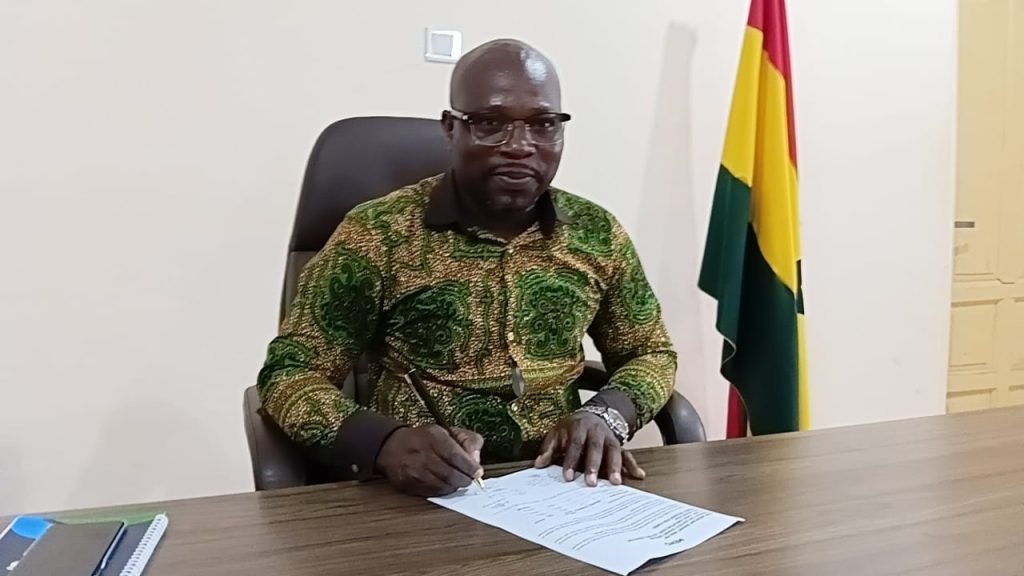
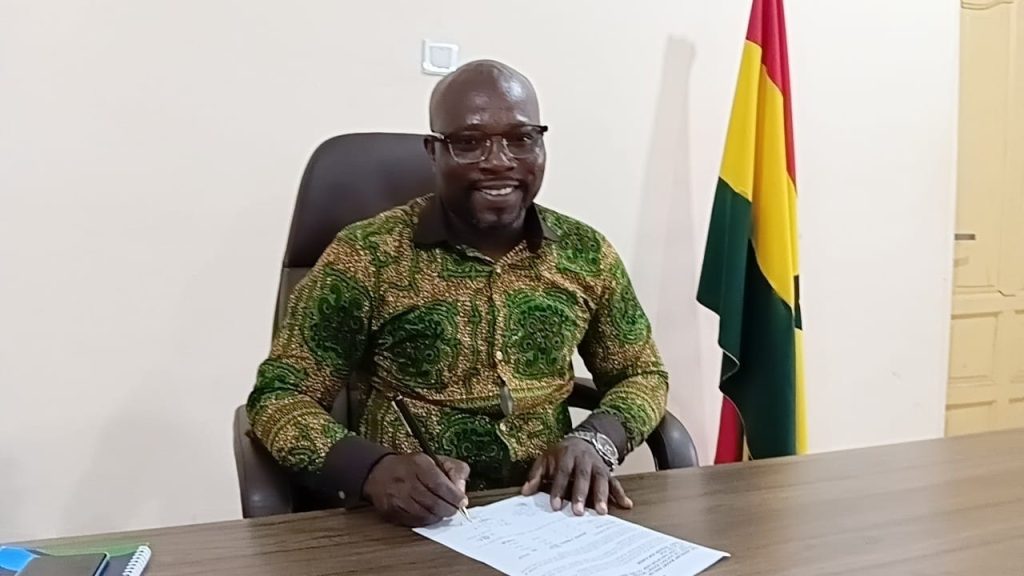
The District Chief Executive (DCE) for Bawku West, Hon. James Ayamwego, has outlined a four-pronged development agenda focused on improving healthcare, education, rural electrification and road infrastructure as the district works to overcome persistent development challenges.
According to Mr Ayamweogo, Bawku West, one of the largest districts in the Upper East Region, has a population of about 152,000, occupies approximately 12 per cent of the region’s land area and contributes significantly to the region’s food production.
He said the district’s strategic importance, growing population and agricultural potential required a corresponding expansion in social and economic infrastructure.
“We need to improve on health, education, rural electrification and then the road network,” Mr Ayamweogo said.
Health and education top development priorities
Mr Ayamweogo identified healthcare as the district’s immediate priority, stressing the need to expand health infrastructure and increase the number of health professionals available to serve the growing population.
He said education was another critical area requiring urgent attention, particularly the provision of adequate classroom infrastructure and other facilities to support quality teaching and learning.
The DCE disclosed that since assuming office, the Assembly had constructed three-unit classroom blocks at Sapzoga, Adonsi and Timonde to help address infrastructure gaps in schools.
He also disclosed that construction of the Sapeliga Senior High School, a Community Day School, was more than 90 per cent complete.
According to him, the project was expected to be completed in time to enable the school to admit students within the current academic year.
Rural electrification remains a major gap
Mr Ayamweogo said rural electrification remained one of the district’s most pressing development deficits.
He noted that for about eight years, no new community in the district had been connected to the national electricity grid.
With nearly 80 communities still without national grid connectivity, he said the Assembly was engaging with relevant authorities to bridge the gap.
“If you have close to about 80 communities not connected to the national grid, you certainly cannot call that district a district that is well-endowed with a lot of resources,” he said.
He argued that electricity was essential not only for household development but also for education, local businesses and broader economic activity.
Poor roads undermine economic potential
Road infrastructure, according to the DCE, is another major obstacle to the district’s development.
He said apart from the major highway linking the district to Bolgatanga, Bawku West had virtually no tarred roads connecting its major communities.
He cited the Binaba and Sapeliga roads as particularly problematic.
The distance between Zebilla and Binaba, he said, was about 18 kilometres, with a significant proportion of the district’s population residing within that corridor.
Yet, the poor state of the road makes movement particularly difficult during the rainy season.
“From here to Binaba, very terrible. On a rainy day, you hardly could ply on that road,” Mr Ayamweogo said.
The Assembly is currently using equipment under the District Road Improvement Programme (DRIP) to rehabilitate some deteriorating roads.
However, Mr Ayamweogo said the cost of fuel and other operational requirements continued to constrain the Assembly’s ability to undertake road works on a wider scale.
Maternal health crisis triggers targeted intervention
One of the major interventions highlighted by the DCE is the construction of a maternity block at Gbantongo following a worrying incidence of maternal deaths.
Mr Ayamweogo said the district recorded about five maternal deaths in June of the previous year, prompting the Assembly to reassess access to emergency maternal healthcare.
He explained that many of the affected women came from the Binaba corridor, where residents had to travel approximately 18 kilometres to access the district hospital at Zebilla.
The combination of distance and poor road conditions, he said, could become particularly dangerous for women experiencing complications during labour.
The completed maternity block at Gbantongo, located between Zebilla and the Binaba area, is therefore expected to serve as a mini-referral facility for pregnant women in surrounding communities.
The Assembly has also completed an outpatient department at Gogu and constructed a CHPS compound at Tonde, which was awaiting commissioning at the time of the interview.
Health workforce remains inadequate
Despite the infrastructure investments, Mr Ayamweogo acknowledged that the shortage of health personnel remained a significant challenge.
He disclosed that the district had only four doctors, while the hospital had approximately 38 midwives.
For a district with a population of about 152,000, he described the number of health professionals as inadequate.
“That is very, very too low,” he said, emphasising the difficulties health workers face in serving residents across widely dispersed communities.
He said the Assembly was working to attract more midwives to remote areas to strengthen antenatal, postnatal and maternal healthcare services.
The district was also intensifying public education to encourage pregnant women to attend routine antenatal care rather than waiting until complications developed.
Girl-child education records progress
Mr Ayamweogo said the district had also made progress in promoting girl-child education.
According to him, girls now constitute approximately 70 per cent of the student population in the district, with many girls staying in school and completing their education.
He therefore suggested that the development conversation should increasingly pay attention to the boy-child, particularly where boys may be falling behind in school participation and completion.
He said the district would continue supporting interventions that promote school attendance and completion among children.
Agriculture remains the backbone of the local economy
Agriculture remains the mainstay of the Bawku West economy, with Mr Ayamweogo estimating that more than 70 per cent of residents depend on farming.
He said the Assembly was working to help farmers increase production and treat agriculture as a viable economic enterprise.
He cited the government’s “Feed Ghana” programme as one of the interventions supporting farmers through the provision of agricultural inputs.
The district had received about 1,450 bags of fertiliser around April and another 1,500 recently, he said.
The fertiliser was distributed to farmers at no cost.
However, Mr Ayamweogo acknowledged that the quantity was insufficient considering the large number of farmers in the district.
He said the distribution was done through existing farmer groups as a way of reaching beneficiaries.
Guinea fowl processing offers economic opportunity for women
Beyond crop farming, the DCE identified guinea fowl production and processing as an important economic activity with potential to create jobs and improve household incomes.
He said Bawku West was a hub for guinea fowl production, with many women, particularly around Zebilla, engaged in processing.
The Assembly, he said, was exploring ways to improve the guinea fowl market and create better economic opportunities for women involved in the value chain.
He believes strengthening the sector could help turn an existing local economic activity into a more sustainable source of livelihoods.
Flooding threatens livelihoods
The district’s agricultural economy, however, continues to face a major threat from perennial flooding associated with spillage from the Bagre Dam.
Mr Ayamweogo said several communities, particularly those located along the White Volta, were vulnerable to flooding.
He explained that farmers could invest heavily in their farms only to lose crops and livelihoods when floodwaters entered their communities.
He said the district had already received notices of possible spillage this year and was therefore concerned about the potential impact on farming and other economic activities.
Water infrastructure expands access
Mr Ayamweogo also disclosed that the Assembly had completed and handed over 30 boreholes to communities across the district.
He said the projects were targeted at communities with significant water needs and formed part of broader efforts to improve access to basic social services.
According to him, the Assembly’s development interventions are being supported partly through the District Assemblies Common Fund, which he said was helping the district address infrastructure deficits in health, education, water, sanitation and other sectors.
From deprivation to opportunity
While acknowledging the significant challenges facing Bawku West, Mr Ayamweogo believes the district possesses the human and economic resources needed to transform its fortunes.
With a large youthful population, a strong agricultural base, cross-border commercial activity with Burkina Faso and considerable land resources, he said the challenge was to create the infrastructure and economic opportunities necessary to unlock the district’s potential.
For Bawku West, the development agenda therefore goes beyond constructing isolated projects. It involves connecting communities, expanding healthcare, keeping children in school, improving agricultural productivity, powering rural settlements and creating economic opportunities for a population that is already demonstrating resilience and enterprise. As the district pursues its ambition of becoming a municipality, the DCE said sustained investment in basic infrastructure and human development would be critical to translating its demographic and economic potential into improved living conditions for residents.
 The Bridge News