
 By Zakaria Rafique Seinu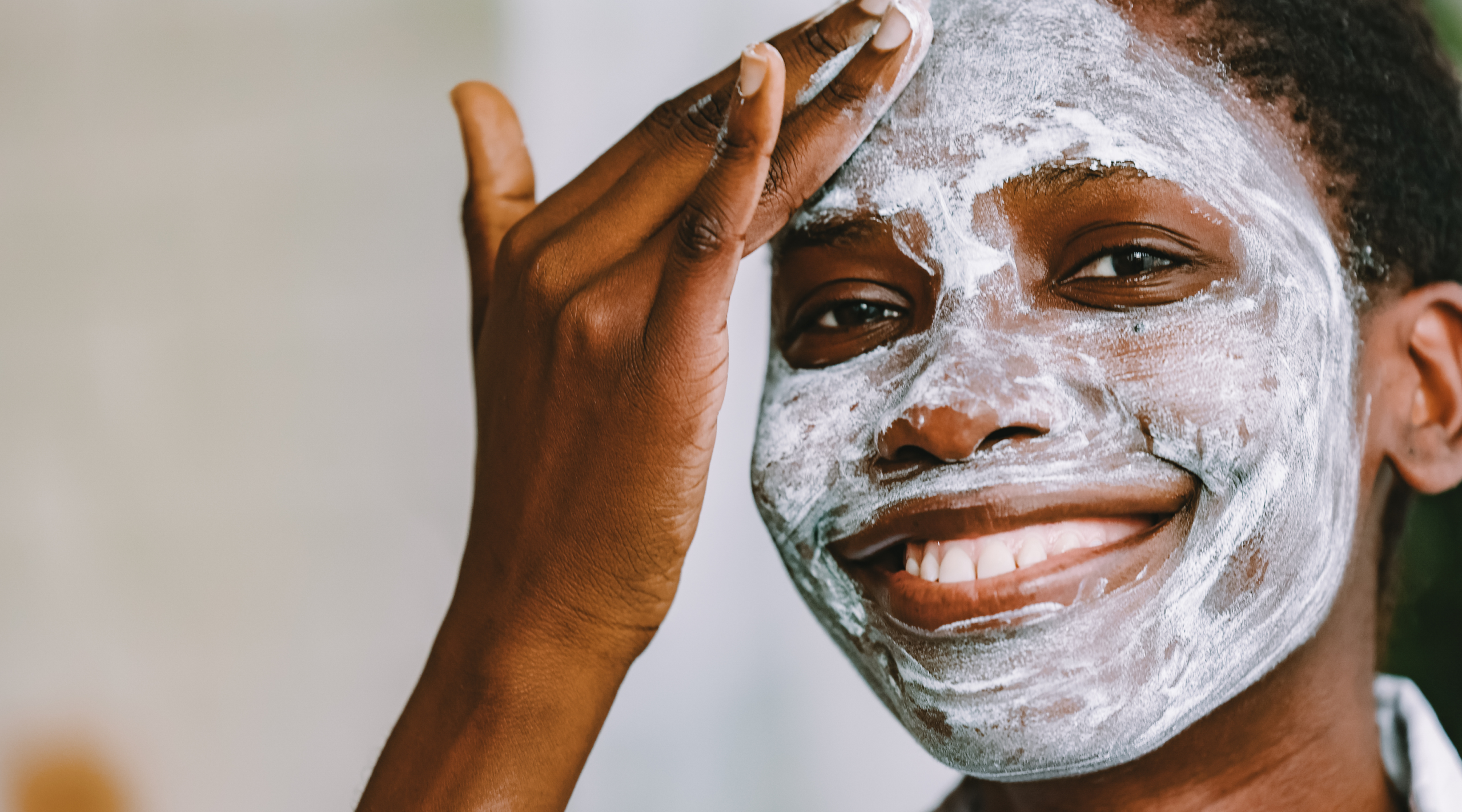
Across Senior High Schools in Tamale, Bolgatanga, Wa, and everywhere the harmattan blows chalk dust into your white uniform, a new curriculum has emerged. It is not in the syllabus. It is not taught by WAEC. It is taught at 10pm in dormitory bathrooms by torchlight, and the subject is: How To Become A Ripened Banana Peel.
Naa Professor Edmund Delle, dermatologist and founder of Rabito Clinic, is very worried about this trend. Naa Professor Delle has said it plainly on many platforms in the north. Most of these creams are not cosmetics. They are drugs. Hydroquinone, mercury, strong steroids. Put together in a tin and sold to 16-year-olds who just want to survive dining hall and prep.
Oh, the tragedy of bleaching. What starts as “just a small glow” becomes a war your skin never agreed to. First the skin thins until veins show through like blue ink under paper. Then the dark knuckles arrive, stubborn, announcing you to the world. White patches spread like harmattan dust on black cloth. Stretch marks carve maps across thighs and arms. Acne refuses to graduate. And in the worst cases the skin is so raw, so broken, that it cannot even protect itself. Girls walk around with burning faces, itching at night, hiding in long sleeves in the heat. This is not beauty. This is grief, bottled in a tin.
“You are trading your health for a shade.” But students are busy. They have mocks. They have TikTok. They have aunties who greet them with “Ei, you have darkened o” as if melanin is a debt.
So why are so many girls enrolling in this underground course? Being in SHS is already an extreme sport. You have 5am prep, you have beans on Wednesday, you have that one teacher who asks questions from a chapter you did not read. The last thing you need is your own skin.
Social media has made it worse. Open TikTok in the dorm and the algorithm has decided that only “yellowbone” deserves 2000 likes. Dark skin gets “you’re pretty for a dark girl.” Thank you for the qualifier. Very helpful. Very necessary. Then there is home. Vacation comes and you are told to “use this soap, it will brighten you.” She means well. She also means brighten literally, like a streetlight. And then there is economics. In northern Ghana, some girls have heard that lighter skin helps with modelling, with hair adverts, with getting noticed. Because apparently talent, WAEC grades, and hard work are all stored in the melanin.
The science is clear, and it is brutal. Dermatologists around the world have been warning about this for decades.
Dr. Pearl E. Grimes, a world-renowned dermatologist in the U.S. and past president of the Women’s Dermatologic Society, put it plainly: *”Skin bleaching is not a cosmetic issue. It is a medical issue with long-term consequences.”*
Dr. Adebola Dele-Michael, dermatologist and founder of Radiant Skin Dermatology in New York, has said: *”When you bleach your skin, you are essentially removing your body’s natural sunscreen. You become more prone to skin cancer, infections, and irreversible damage.”* Melanin is not vanity. It is protection.
And Dr. Susan C. Taylor, Professor of Dermatology at the University of Pennsylvania, who has done extensive work on skin of colour, warned: “The ingredients in many of these products — mercury, high-potency steroids, hydroquinone used improperly — can cause kidney damage, neurological problems, and skin that will never recover.“
These are not opinions. These are hospital charts.
Let us be fair to the products. They do deliver. Week one, glow. Week four, your face and body are in a long-distance relationship. Week eight, dark knuckles and a neck with a ring like you are wearing an invisible necklace for decoration. Week twelve, your calves have achieved the exact colour and texture of ripened banana peels. Nutritional and dermatological. It is sad to approach a young girl you used to know and be disappointed because the pigment on her legs has given up.
The damage is not just on the surface. Steroids absorbed through the skin can affect hormones. Mercury can build up in the kidneys and brain. Hydroquinone, when used without supervision, can cause exogenous ochronosis — a blue-black discolouration that no cream can reverse. Dr. Grimes calls this “the point of no return.” Once it sets in, even dermatologists cannot give you your old skin back.
Who says black is not beautiful? The same people selling you the tin, that’s who. And have they not heard it said, “He who is not proud of his or her colour is not fit to live.” The tin did not come with that quote. It came with “use morning and night” and a picture of someone who probably used Photoshop.
The pressure is not new, but the access is. In our mothers’ time, you needed to go to a market woman and beg. Now you can order three tins on WhatsApp and have them delivered to the school gate before evening prep. The packaging is slick. “Organic.” “Natural.” “No side effects.” “3 days white.” The label lies in four languages.
And the comments are louder. A girl posts a picture in her uniform. 20 likes. She posts the same picture two months later, two shades lighter. 400 likes and “you’re glowing sis.” The algorithm rewards erasure. So the girl learns: to be seen, you must disappear.
But disappearing comes at a cost. Ask any dermatologist who runs a clinic in Accra, Kumasi, or Tamale. The waiting rooms are full of girls between 14 and 19 with faces on fire. They come with towels over their heads because the sun now feels like acid. They come with hands folded to hide knuckles. They come with stories: “My aunty gave it to me.” “My friend said it works.” “I just wanted to look nice for Speech and Prize Giving.”
Dr. Taylor reminds us: “Colourism tells young people that their natural skin is a problem to be solved. Medicine tells us it is a body to be protected.“
Since the bathroom is now a chemistry lab, maybe we should just formalise the whole thing. Replace RME with Bleach-Ed. Teach what hydroquinone and mercury actually do. Spoiler, it is not just “brighten.” Teach the biology of melanin. Teach that it protects you from UV, that it is part of your immune system, that it is why our ancestors could farm under the sun for hours.
Make SRC week about “Melanin is Heritage.” Come to school in your natural shade. Give prizes for the glosiest shea-butter skin. Do vendor inspections. If a cream does not have FDA approval, it should not be within five kilometres of campus. The same way we check for phones in boxes, we can check for tins under mattresses.
Bring Naa Professor Delle and Rabito Clinic to talk. Not to shout. To show. Nothing kills a “3 days white” dream faster than seeing “3 months to heal” on a hospital card. Show the before-and-after that no one posts online. The after with scars. The after with patchy skin. The after with a girl who now spends her pocket money on hydrocortisone instead of food.
Schools already have the structures. Patrons, counsellors, health clubs, morning devotion, queen mothers who visit. Use them. Invite dermatologists to PTA meetings. Let parents hear from doctors, not just from Instagram influencers. Let boys hear it too, because they are part of the audience that claps or does not clap.
Northern Ghana already has the blueprint for beauty and we did not need to import it. Look at durbar grounds. Deep skin against white smocks and beads. Look at market women whose skin shines because of shea butter, the same shea that has been protecting us through harmattan for centuries. That is not an accident. That is design. Beauty here was never about erasing yourself. It was about radiance. About drinking water. About sleeping. About walking to class like you own the place, because you do.
Dr. Dele-Michael says it best: “Your skin is not a trend. It is an organ. Treat it with the same respect you give your heart or your lungs.” You would not pour bleach in your lungs to breathe better. Do not pour it on your skin to live better.
To the girl in SHS right now hiding a tin under her mattress, I get it. The pressure is loud. It comes from comments, from likes, from “you will look better if.” But that tin is selling you a version of yourself that does not exist. And it is charging you your skin to get it. If you stop today, your skin can still recover. Drink water. Use sunscreen. Use shea butter. Go to the school clinic. Talk to a nurse. Talk to Rabito. There is no shame in healing.
To the rest of us, parents, teachers, brothers, friends, let us stop pretending this is just a “girls’ problem.” When we joke about “too dark,” when we double-tap only one kind of face online, when we stay silent at the market while someone is being sold mercury, we are all in the classroom. When we say “she’s pretty, but…” we are writing the syllabus for that 10pm bathroom class.
Bleaching will not disappear because we wrote an article. The creams are cheap. The pressure is expensive. But we can make self-hate less fashionable. We can make “proud of my colour” the new trend in the dining hall. We can make girls walk to assembly without a scarf covering a burning face.
As Naa Professor Edmund Delle keeps reminding us through his work, your skin is your largest organ. It is not a cloth you can bleach and dye. Treat it like it. If you are already using these products and your skin is angry, stop. Go to the school clinic. Go to Rabito. Go anywhere but back to the tin.
Beauty is a gift from God. It came in your shade. It came unregistered, unbleached, and FDA approved by nature. The flies can find other comrades. And to borrow one last word from the experts: “There is no such thing as safe bleaching,” Dr. Grimes has said. “There is only skin that has not been damaged yet.” Let us make sure more girls stay in that category.
 Ishmael Junourgh