
 By Ishmael Junourgh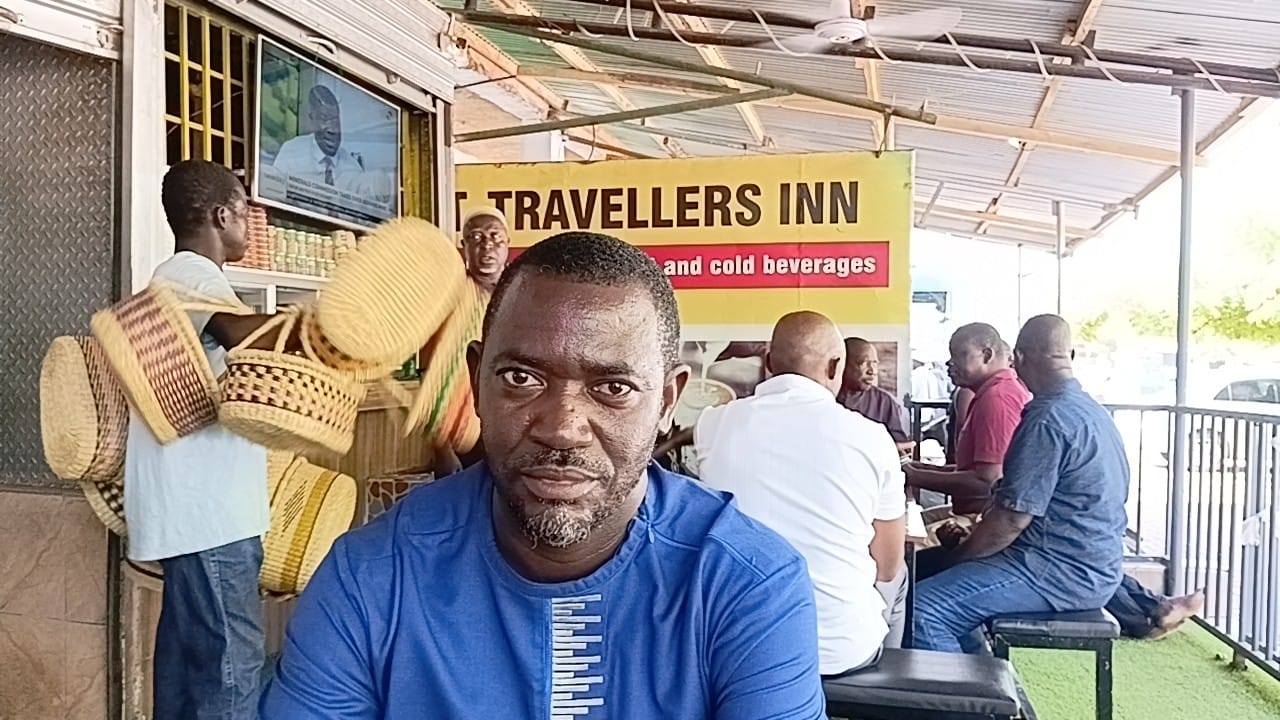
In a country where political differences can sometimes divide families, communities and friendships, a modest establishment in the heart of Bolgatanga offers a strikingly different picture.
Here, over steaming cups of tea, coffee, Milo, fried eggs and warm bread, politicians from opposing parties sit across the same tables, traders exchange business ideas, researchers hold conversations with local contacts, professionals debate public policy and ordinary residents simply catch up with one another.
This is International Traveler’s Inn; a breakfast spot that has quietly evolved into one of Bolgatanga’s most enduring community institutions.
For nearly four decades, the establishment has been more than a place to eat. It has become a meeting point, an informal networking centre and, in the words of many patrons, the “unofficial parliament” of Bolgatanga.
From a modest provisions shop to a regional landmark
The story of Traveler’s Inn dates back to the 1980s, when its founder, Madam Christiana Anaamah Atubiga, began building what would become a remarkable local enterprise.
A Gurunsi woman from Bolga Central who married into the Mirigu Chieftaincy, Madam Christiana Anaamah Atubiga operated during a period when basic commodities were not always readily available in the Upper East Region.
She would travel to the Yelwongo market to obtain essential supplies such as sugar, milk and chicory coffee to keep the business running.
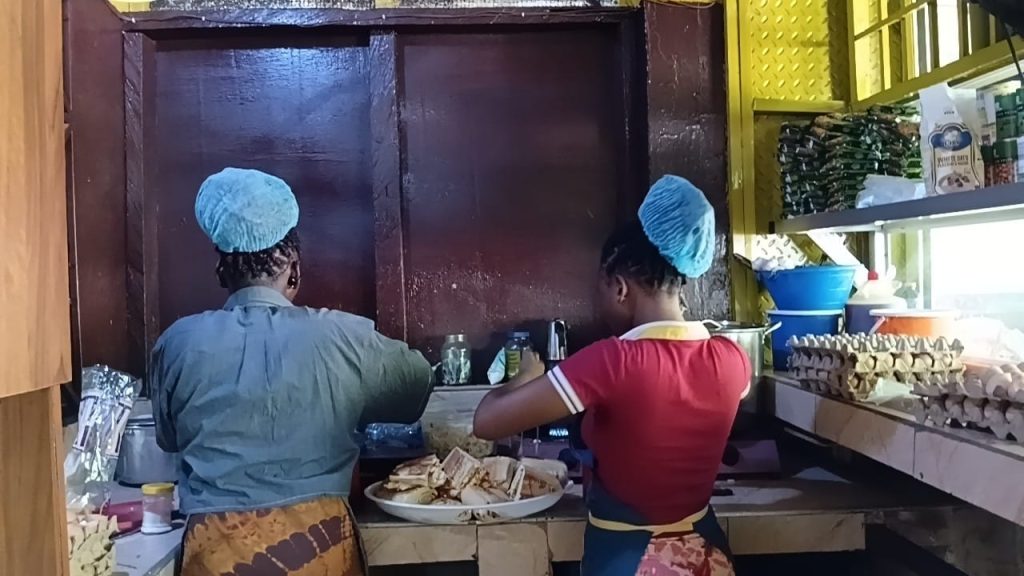
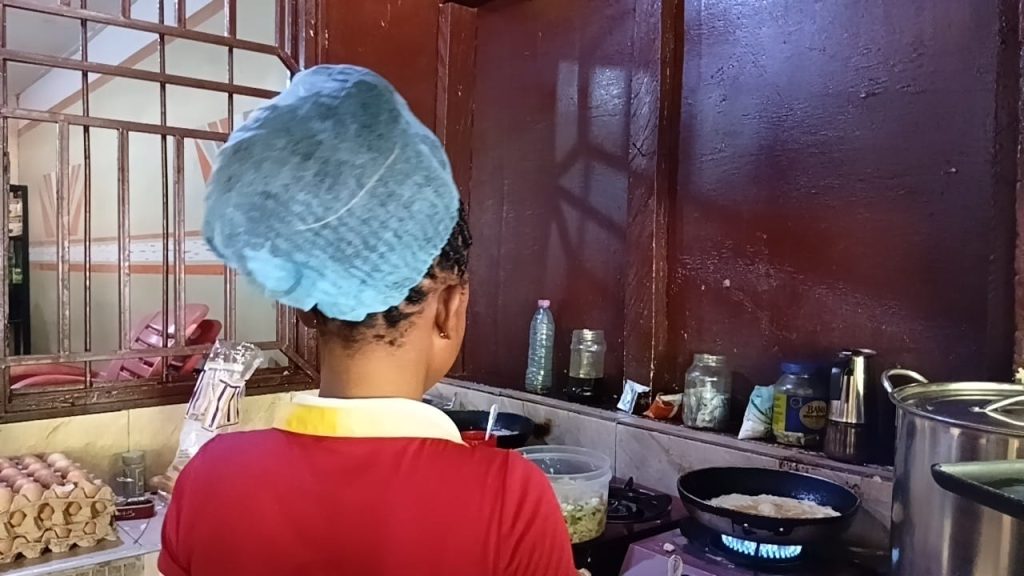
What began as a modest provisions shop gradually developed into a popular breakfast destination, serving tea, coffee, Milo, local soft drinks and light meals.
The growth of the establishment coincided with a period when formal hotel and hospitality infrastructure in the region was limited.
That gap created an unexpected opportunity.
International visitors passing through Bolgatanga began making Traveler’s Inn a regular stop.
American Peace Corps volunteers reportedly used the establishment as an informal communication point, leaving letters and messages on a notice board for colleagues working across Northern Ghana.

European overland tourists also became familiar faces.
Double-decker tour buses carrying international travellers would pull into the establishment, sometimes delivering dozens of customers at once.
For a small local business, the encounters brought something more valuable than sales: exposure to the wider world.
A family business built from the ground up
The business has also become a story of intergenerational entrepreneurship.
Madam Christiana Anaamah Atubiga’s son grew up within the establishment and learned the business from childhood.
At just 13, Cabral began assisting at the shop. As a teenager, he reportedly took on security responsibilities and slept at the premises.
Those early experiences eventually prepared him to assume responsibility for the enterprise, which he now manages together with his wife.
His story illustrates an often-overlooked dimension of local enterprise development: businesses are not always built through large injections of capital or formal corporate structures.
Sometimes, they grow through family commitment, perseverance, customer relationships and decades of accumulated trust.
Traveler’s Inn is a case in point.
Where NDC meets NPP over breakfast
Perhaps the establishment’s most remarkable transformation has been social rather than commercial.
Over the years, Traveler’s Inn has developed into a kind of civic square where political identities do not necessarily determine who sits with whom.
On a typical morning, supporters and executives of the National Democratic Congress and the New Patriotic Party may occupy neighbouring tables, debating national economic policy, local development, elections, international affairs and even football.
The political arguments can be passionate.
But they rarely become personal.
That atmosphere of tolerance, according to management, reflects a broader cultural characteristic of the Upper East Region, where extended family relationships, traditional ties and religious coexistence often provide bridges across political differences.
There is even a local reminder for patrons when political discussions become too heated: political disagreement should not destroy social relationships.
It is a philosophy that has arguably become part of the establishment’s identity.
More than breakfast: a social and economic network
The importance of Traveler’s Inn cannot be measured only by the number of plates of eggs served or cups of tea sold.
For decades, the establishment has functioned as an informal networking space.
People have met there to discuss business opportunities, exchange contacts, seek employment, introduce friends and establish partnerships.
Some patrons have reportedly formed friendships that have lasted for years. Others have found professional opportunities through conversations that began casually over breakfast.
For young people, professionals and entrepreneurs, such informal spaces can be particularly important because they provide opportunities for social capital; the relationships and networks that can open doors to information, employment and collaboration.
In this sense, Traveler’s Inn represents a small but significant part of Bolgatanga’s informal economic infrastructure.
It creates direct employment, supports suppliers and food vendors, attracts visitors and provides a platform where relationships that eventually translate into economic activity can be formed.

When suspicion became an unlikely advertisement
The establishment’s popularity among international visitors also once generated suspicion.
During the mid-1990s, the constant presence of foreign travellers and prominent personalities reportedly fuelled rumours that the establishment could be connected to illicit activities, including drug trafficking.
The allegations attracted the attention of Customs and National Security officials, who investigated the establishment.
But the scrutiny produced no evidence to substantiate the suspicions.
There was, however, an unexpected consequence.
Some of the officials who came to investigate eventually became patrons themselves, reportedly drawn by the hospitality, food and atmosphere they encountered.
What began as suspicion ultimately became another chapter in the inn’s reputation.
A place where people feel at home
The strongest advertisement for Traveler’s Inn may not be its signboard, menu or location.
It may simply be the people who keep returning.
For some, it is the place to begin the day with tea and bread.
For others, it is where an old friend can always be found.
For a politician, it can be a convenient place to meet constituents and colleagues.
For a researcher or visitor, it offers an opportunity to observe and engage with everyday life in Bolgatanga.
For an entrepreneur, it can become an informal boardroom.
And for someone experiencing a difficult day, it can simply provide company.
That social function is increasingly important in rapidly changing urban communities, where traditional spaces for spontaneous interaction are gradually disappearing.
Traveler’s Inn has retained that role.

An asset for Bolgatanga’s hospitality economy
As Bolgatanga grows and the Upper East Region continues to position itself as a destination for tourism, business, research and cultural exchange, establishments with long-standing local identities can become important assets.
Traveler’s Inn offers something that modern hospitality businesses can struggle to manufacture: authenticity.
Its story is intertwined with the history of Bolgatanga itself; from the scarcity of basic commodities in the 1980s, through the arrival of international travellers and development workers, to today’s politically vibrant and increasingly urban municipality.
Its longevity demonstrates that hospitality is not only about accommodation and food.
It is also about creating spaces where people feel welcome.
For visitors seeking a taste of everyday Bolgatanga, professionals looking for an informal meeting point, travellers wanting a familiar breakfast stop, or residents searching for a place where conversation flows freely, Traveler’s Inn continues to offer a distinctly local experience.

Four decades, one enduring institution
In an era of rapidly changing businesses and short-lived commercial ventures, the survival of International Traveler’s Inn for nearly 40 years is itself a story of resilience.
It has survived changing governments, political transitions, economic difficulties and evolving consumer tastes.
More importantly, it has remained relevant because it has consistently provided something its customers value: a place to belong.
From a small provisions shop sourcing sugar and coffee from Yelwongo to a bustling meeting point known across Bolgatanga as its “unofficial parliament,” Traveler’s Inn has grown alongside the community it serves.
Its greatest achievement may therefore not be the meals it has served.
It is the conversations it has hosted, the relationships it has nurtured, the businesses it has helped connect and the political differences it has quietly taught people to set aside—at least until after breakfast. International Traveler’s Inn: where breakfast becomes conversation, conversation becomes connection, and connection becomes community.
 Charles Prempeh PhD