
 By Ishmael Junourgh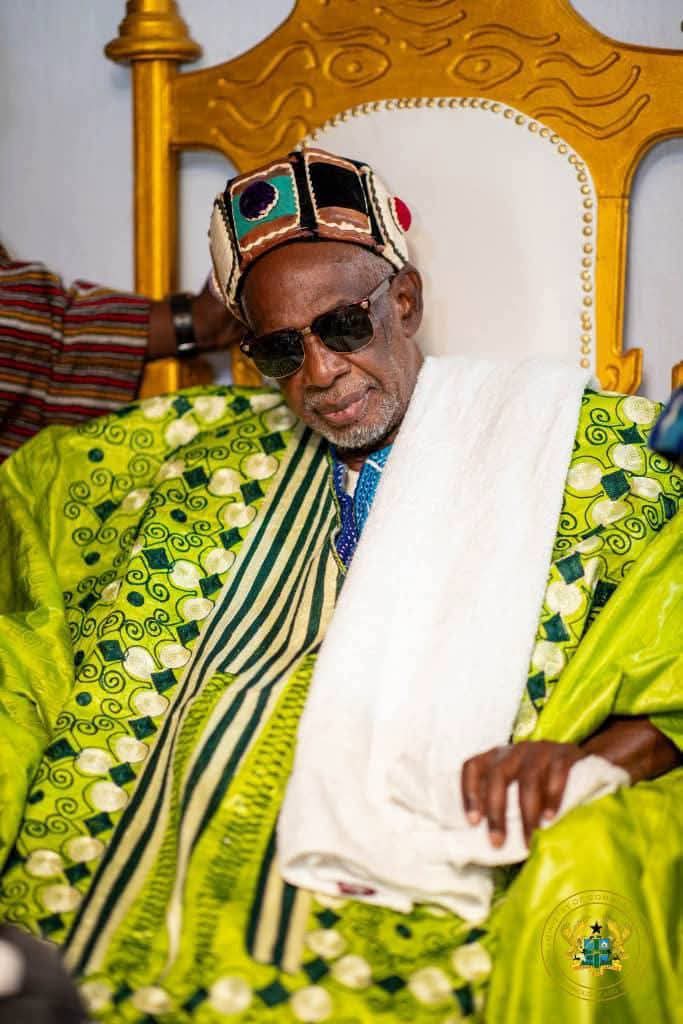
How the disappearance of a Wa Naa shaped succession, the Pelpuo institution and the four royal divisions of the Waala Kingdom
When the kingmakers of Wa are enskinning a Wa Naa—the Overlord of the Waala Kingdom—one of the most familiar lines in the oath of allegiance to the throne invokes a remarkable episode in Waala history:
“Ka Naa Gurah daaŋ wa lɛowa kaŋ lɛohi a naaŋ kuu.”
“When Chief Gurah returns, I will return the throne/skin to him.”
But why does the oath make reference to a Chief who disappeared centuries ago?
The answer takes us deep into the traditional architecture of Naaluŋ, the Waali concept of chieftaincy and traditional administration, and into one of the most intriguing succession stories in the history of the Waala Kingdom.
WHAT IS NAALUŊ?
Naaluŋ, in Waali, refers broadly to the traditional system of chieftaincy and administration among the Waala.
The origins of the Nabiihi, the royal institution of Wa, are the subject of different historical and oral traditions. Some accounts associate the royal ancestry with Sorliya (Soalia), while other detailed traditions place Adam Tɔɔ and Mamprugu at the centre of the story.
According to one such tradition, Adam Tɔɔ left Nalerigu with Haruna, his customary father rather than his biological father, following chieftaincy-related difficulties. They travelled in search of a peaceful place in which to settle.
Their journey reportedly took them through Jeyiri, Manwe and Busa, before they eventually settled at Gbetore and Degu, two deserted settlements located about 15 kilometres east of present-day Wa.
Adam Tɔɔ later left Haruna at Gbetore and embarked on a hunting expedition.
It was during this expedition that he encountered a Balum settlement known as Widaanayiri, headed by Widaana Suuri.
Adam Tɔɔ fell in love with Nantambo, the daughter of Widaana Suuri, and the two eventually married.
Their union produced three sons:
1. Soalia
2. Gurah
3. Suuri
The birth of the three sons reportedly brought great joy to Widaana Suuri, who subsequently relinquished his authority to Adam Tɔɔ to rule over the Balum people.
News of the development was communicated to Haruna and his siblings, who remained at Gbetore and Degu.
After spending some time with their in-laws, Adam Tɔɔ and his family decided to establish a settlement of their own.
They moved about 200 metres from Widaanayiri, also known as Suuriyiri, and established Fongu.
Adam Tɔɔ subsequently placed his sons on lands granted to him by Widaana Suuri:
– Soalia settled at Duori.
– Gurah settled at Guli.
– Suuri, also known as Kpaaha, settled at Konjiahe.
Their brothers remained at Busa.
When Adam Tɔɔ died, Soalia succeeded him and moved from Duori to Fongu. He subsequently placed his five sons at Guli, Duori, Konjiahi, Nyagli and Kpongu.
THE SUCCESSION OF THE WA NAA
Traditional accounts estimate Soalia’s reign at 1625–1656. He was succeeded by:
– Suuri/Kpaaha — 1656–1675
– Gurah — 1675–1681
– Haruna — 1681–1696
Haruna was the customary father of Adam Tɔɔ. His brothers lived at Busa and became associated with the Yijiihi royal family.
It was during the reign of Naa Gurah, however, that one of the most enduring episodes in Waala history unfolded.
THE MYSTERY OF NAA GURAH
The reign of Naa Gurah is remembered as a turbulent period during which marauders frequently attacked communities within the Waala territory.
According to oral tradition, consultations were made with the gods to determine how the invaders could be defeated.
The revelation was reportedly that victory could only be achieved if the Chief personally led the warriors into battle.
Naa Gurah therefore took command of the Waala fighters and proceeded towards the direction where the invaders were believed to have established their camp.
When Gurah and his contingent reached Mangu, a settlement west of Wa, the Chief entered a thick bush to consult his oracles.
Some versions of the tradition say that he had gone into the bush to answer nature’s call.
Whatever the reason, Naa Gurah never emerged.
His warriors returned and reported the disappearance to the elders of Balum and Fongu.
A broader meeting involving the various clan heads was subsequently convened.
For several days, the elders deliberated over the mysterious disappearance of the Chief.
But there was a problem.
Under the traditional system of the Waala Kingdom, a sitting Chief could only be replaced under recognised circumstances, including death, disability or deskinment. In the case of death, the successor was also expected to perform the funeral rites of the deceased Chief.
None of these conditions applied to Naa Gurah.
He had disappeared.
There was no confirmation of his death.
And therefore, according to the traditional logic of succession, the skin could not simply be declared vacant.
THE RISE OF PELPUO I
It was during these deliberations that Haruna, Gurah’s customary father, who lived at Busa, stepped forward.
He knelt before the elders of the land and made a declaration in Waali:
“Yɛ pɛli puo kyɛ de a naaŋ kumo, Ka o (Gurah) naŋ walɛowa, ka eŋ lɛohi a naaŋ kuu.”
In essence, he proposed:
If the elders were satisfied, they should entrust the chiefship to him to rule temporarily; and if Gurah returned, he would return the chiefship to him.
The elders reportedly accepted the proposal.
Haruna was consequently endorsed as Chief of Wa.
In public and official life, he subsequently became known as Pelpuo I, a name derived from the expression Pɛli-puo.
The institution created by his accession would have consequences extending far beyond his own reign.
His descendants became deeply involved in the affairs of the Wa chieftaincy and were recognised as senior princes and princesses under the title Pelpuo.
Pelpuo I subsequently moved his family from Busa and Degu to what is today known as Nayiri, where the Palace of the Overlord is situated.
THE FOUR DIVISIONS OF THE WAALA KINGDOM
Under the reign of Pelpuo I, the administration of the four major divisions of the Waala Kingdom was centred around four principal areas:
– Busa — East
– Sing — South
– Kperisi — North
– Guli — North-East
These divisions became important components of the traditional administrative architecture of the Waala Kingdom and are closely connected to the four recognised royal gates.
THE KPERISI SKIN — NAAJERI
The Naajeri has its paramountcy at Kperisi.
Communities associated with the Kperisi skin include:
Kperisi (Seat), Yaru, Chegi, Kpongu, Jɔŋa (Jonga), Polee, Kampaha, Tabiahi, Dinanso, Degu, Yibile, Mojon, Kpankole, Piihi (Bosoyiri), Samanbo near Jonga, among others.
THE BUSA SKIN — YIJIHI
The Busa-Naa is the Paramount Chief of the Yijiihi Gate.
Communities associated with the Busa skin include:
Busa (Seat), Nakore, Tampaala, Kpaglahi, Kpalinye, Biihee, Jenpenhi, Dabilipuo, Tiihaa, Tuaha, Sogla, Duucie, Katua, Gbantala, Holimuni and Yanyuobe, among others.
THE SING SKIN — JONYUOHI
The Sing-Naa is the Paramount Chief of the Jonyuohi Royal Gate.
Communities within the Jonyuohi Gate include:
Sing (Seat), Boli, Chansa, Loggu, Jeyiri, Chassia, Kolkpong, Kunfaabiala, Sagu, Baaleyiri, Dapuoha, Loggupora, Kandige, Seiyiri, Doolisa and Bulee, among others.
THE GULI SKIN — NAAKPAaha
The Naakpaaha has its paramount seat at Guli, with several communities under its traditional authority.
These include:
Guli (Seat), Konjiehi, Nyagli, Kpongu, Dandafuro, Duori and Tafali/Kataa, among others.
Together, these four divisions form an important part of the traditional administrative architecture of the Waala Kingdom.
THE WA NAMINE: CHIEFS OF THE WAALA KINGDOM
The following list presents the traditionally recorded or estimated reign periods of the Wa Namine. The dates should be understood as part of the historical and oral traditions surrounding the Waala chieftaincy, particularly because some earlier reign periods remain uncertain.
It is noteworthy that the reign of Mahama Fua (1880–1888) is considered accurately established in surviving historical records.
Wa Naa| Royal Gate| Estimated Reign
Saliya (Soalia)| —| 1625–1656
Suuri/Kpaaha| Kpaaha| 1656–1675
Gura| Yijiihi/Kpaaha| 1675–1681
Pelpuo I| Yijiihi| 1681–1696
Kpaaha| Kpaaha| 1696–1706
Yijisi| Yijiihi| 1706–1717
Jarri| Jarri| 1717–1736
Jonyuohi| Jonyuohi| 1736–1743
Saaka| Yijiihi| 1743–1755
Kunjokun| Jarri| 1755–1761
Danduni| Jarri| —
Fijolina| Yijiihi| 1761–1780
Buntigsu| Yijiihi| 1780–1788
Sadjia| Yijiihi| 1788–1795
Pelpuo II| Yijiihi| 1795–1808
Jinsun| Yijiihi| 1808–1823
Sobuun| Yijiihi| —
Bondiri| Jonyuohi| 1823–1840
Gangume| Yijiihi| 1840–1845
Bachigme| Jarri| 1845–1870
Dibayiyenge| Yijiihi| —
Balannaya| Jarri| 1870
Saliya| Yijiihi| —
Balannoya| Jonyuohi| —
Mahama Fua| Yijiihi| 1880–1888
Saidu Takora I| Jarri| 1888–1897
Momori Tangile| Yijiihi| 1897–1908
Dangana| Jonyuohi| 1908–1920
Pelpuo III| Yijiihi| 1919–1935
Hamidu Bomi| Jarri| 1936–1943
Sumaila| Yijiihi| 1943–1949
Mumuni Koray| Jonyuohi| 1949–1953
Seidu II| Yijiihi| 1953–1961
Sidiki Bomi| Jarri| 1961–1978
Bondiri Momori II| Jonyuohi| 1985–1998
Yakubu Soalia II| Kpaaha| 2002–2006
Seidu Fuseini Pelpuo IV| Yijiihi| 2007–Present
WHY THE OATH OF NAA GURAH STILL MATTERS
Centuries after Naa Gurah disappeared, his name remains embedded in the oath associated with the installation of a Wa Naa:
“Ka Naa Gurah daaŋ wa lɛowa kaŋ lɛohi a naaŋ kuu.”
“When Chief Gurah returns, I will return the throne/skin to him.”
The oath is more than a ceremonial expression.
It is a reminder of a foundational episode in the traditional understanding of Waala succession.
The disappearance of Naa Gurah created a constitutional dilemma for the traditional authorities of the time. The Chief was neither confirmed dead nor formally deskined. The solution was to entrust the skin to Haruna, who became Pelpuo I, on the understanding that the skin would be returned if Gurah resurfaced.
Whether read as history, oral tradition or institutional memory, the story offers a powerful explanation for the enduring place of the Pelpuo institution and the complex architecture of succession within the Waala Kingdom.
It also demonstrates how traditional institutions often preserve historical events not only through written records, but through oaths, titles, royal genealogies, rituals and political institutions.
The story of Naa Gurah and Pelpuo I therefore provides an important lens through which to examine Naaluŋ, royal authority and succession in the Waala Kingdom.
The oath survives because the memory survives.
And as long as the oath is spoken at the installation of a Wa Naa, the mysterious disappearance of Naa Gurah—and the promise that his skin would one day be returned—remains woven into the historical consciousness of the Waala.
EDITOR’S NOTE
This article is based on traditional accounts, oral histories and historical narratives concerning the origins and succession architecture of the Waala Kingdom. Some genealogies, names, spellings and early reign dates may vary across sources and traditions and would benefit from further archival and scholarly verification. All misreporting, errors and inaccuracies are mine and not those of the Waala State.
 Charles Prempeh PhD