
 By Ishmael Junourgh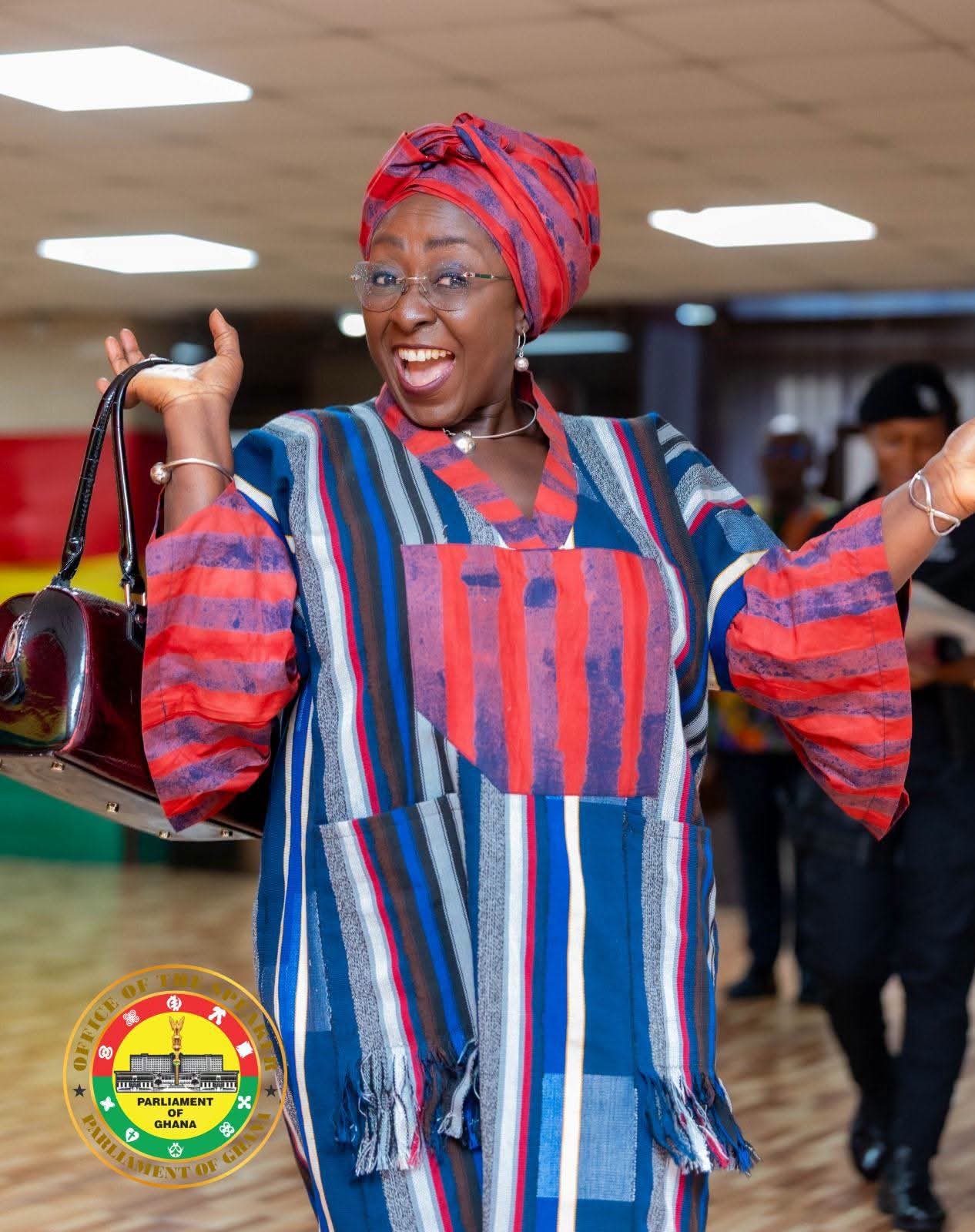
Minister for Tourism, Culture and Creative Arts, Abla Dzifa Gomashie, has recounted the remarkable story behind the expansion of the popular children’s television programme By the Fireside beyond Accra, highlighting the determination and community support that helped bring stories from different parts of Ghana to national television.
In a Saturday reflection, Ms Gomashie, who was then the Production Manager/Producer of By the Fireside, recalled that the programme was initially produced entirely in Accra, with recordings taking place at locations including the Community Youth Cultural Centre (CYCC) at Kawokudi, the former GFIC/GAMA studios, now TV3, the Achimota Forest and the Du Bois Centre.
She said the opportunity to take the programme to communities outside the capital emerged after she was contacted by the late Rear Admiral Owusu-Ansah, then Chief of Naval Staff of the Ghana Armed Forces.
According to Ms Gomashie, Rear Admiral Owusu-Ansah invited her for a discussion about her work and its potential impact on children across the country.
“I ran to the then Chief Director of the National Commission on Culture, Nana Brefo Boateng of Asante Gyamasi, and asked for advice. He encouraged me and suggested I meet the CNS,” she recalled.
Ms Gomashie said she subsequently met the Chief of Naval Staff at her then “small office” at the National Commission on Culture, where he emphasised the importance of By the Fireside in shaping the mindset of Ghanaian children.
She disclosed that Rear Admiral Owusu-Ansah, together with other prominent personalities from communities in the Ashanti Region, wanted the programme to feature schools in their hometowns.
Among the schools identified were those in Adawomase, Bonwire and Antoa, with the initiative intended to give children in those communities an opportunity to see themselves and their stories represented on national television.
However, the planned trip to the Ashanti Region suffered an early setback when Ms Gomashie and the team were involved in a road accident while travelling for a reconnaissance visit.
She said the accident occurred on a rainy day after the vehicle they were travelling in ran into a stationary broken-down vehicle that had no warning indicators for approaching motorists.
Although she and the other occupants survived, Ms Gomashie said the Chief of Naval Staff’s bodyguard later died from injuries sustained in the accident.
The survivors were assisted by good Samaritans and taken to the 37 Military Hospital in Accra for treatment.
Despite the tragedy and setback, Ms Gomashie said she remained determined to ensure that children outside Accra had the opportunity to see themselves represented on Ghana’s only television station at the time, GTV.
She therefore advised Rear Admiral Owusu-Ansah and the community leaders to mobilise resources to cover accommodation, feeding and fuel for the production crew.
The four community leaders subsequently contributed the necessary resources, enabling Ms Gomashie and her team to proceed with the production.
With By the Fireside host Maame Dokono and Dr Rokoto unable to join the trip, Ms Gomashie assembled another team, including narrator Gameli Tordzro, cameraman Mr Alhassani and other crew members.
The team travelled to the Ashanti Region and recorded four stories for the programme.
The production later expanded to other parts of the country.
Ms Gomashie recalled that the team recorded stories in Daboase in the Western Region, including one focusing on a rubber and paper tree plantation. The Eastern Region also featured in the programme through a story recorded at Akosombo.
In the Volta Region, she said, an episode was recorded at Amazing Love School in Aflao, which was the only school from the region to participate at the time.
She noted that whenever production took her outside Accra, she worked with Gameli Tordzro as the narrator.
Looking back at the journey, Ms Gomashie said the experience had given her a deeper appreciation of the importance of documenting Ghanaian communities, their stories and their children.
Her recollection also underscores the role of television and storytelling in giving children across the country a sense of visibility, identity and belonging. “I need to write a book!” she concluded, suggesting that the experiences behind the programme contain a much larger story waiting to be told.