
 By Zakaria Rafique Seinu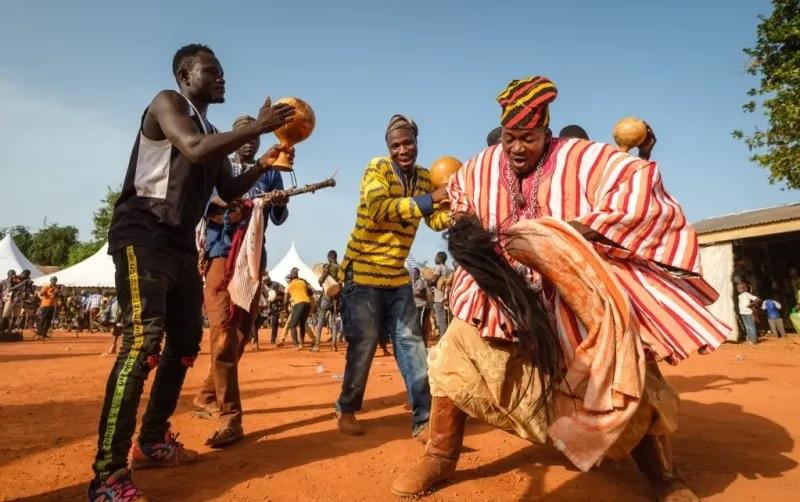
When the harmattan softens and the shea trees around Wa put out new leaves, a special drum talks in the night. The old people say the Gbama drum does not beat, it speaks. What it says in late August is simple: prepare, Dumba is near.
And so it is in Wa in August 2026. The mood is electric. Market women argue about which gate will have the finest horses. Young men save money for new smocks.
Elders sit under the baobab and say, when Dumba calls, even the dead sit up to listen. This year the talk is louder. After a hard farming season and worries about galamsey and drug abuse among the youth, the people are hungry for joy.
The whisper for 2026 is peace, unity and the future of the youth. Dumba is the annual festival of the chiefs and people of Wa of the Wala Paramountcy in the Upper West Region. It is celebrated in September or October.
For the Waala, it is not just a festival. It is the New Year. It is the day the kingdom accounts for itself.
Its history has two roots. The first is Islam. Mande traders from old Mali came to Wa centuries ago with the Holy Qur’an. They celebrated the birth of Prophet Mohammed. That celebration was called Dumba.
The second root is kingship. Those same Mande people brought the system of chiefs sitting on skins. The Waala joined the two together.
As the elders say, the Waala has two eyes, one looks to Mecca and one looks to the palace, but both see the same person.
That is why our kingdom remembers its kings by name at Dumba. When the royal drum recites genealogy, it does not speak in general. It calls them by name.
It calls Naa Jaga who founded the state, and Naa Yeri Dangana who consolidated it. It calls the great warriors like Wa Naa Seidu Takora who fought the slave raiders, and Wa Naa Sidaah who expanded the walls.
It calls Wa Naa Momori Bondiri II who ruled with wisdom in the colonial era, and Wa Naa Seidu Pelpuo II, the father of the present overlord. It calls Wa Naa Yakubu Seidu, Wa Naa Sualih and Wa Naa Issah Mohammed Gori II who all held the skin with honour before passing on.
As the proverb says, a king does not die, his name moves into the drum.
But there was someone in Wa before any Wa Naa. That is the Tendaana. The Tendaana is the earth priest. He is the first son of the land.
Before Wa became a kingdom of horsemen, it was a collection of farms owned by the earth. The Waala say, the chief owns the people, but the Tendaana owns the earth.
No Wa Naa can enskin without the Tendaana’s blessing. No grave can be dug, no new house foundation laid, without the Tendaana pouring libation.
During Dumba, the role of the Tendaana becomes very clear. While the Liman prays with the Qur’an, the Tendaana prays with water and flour and cowries. He goes to the sacred groves at dawn and calls Tengane, the earth god.
He begs the earth to hold the people firm. At the durbar, you will see him seated close to the Wa Naa. He wears a simple smock but his presence is heavy.
He carries a small calabash of earth. When he pours, the crowd is silent. As the elders say, if the Tendaana does not bless the gathering, the gathering has no shadow.
And there is another group whose hands must touch the king before the people can see him. They are the Foroko. The Foroko are the royal dressers. They are therefore very important.
No one else can dress the Wa Naa. On the morning of Dumba, it is the Foroko who enter the inner chamber. They bring the layers of heavy smocks, the ancient amulets, the red cap, the turban and the staff.
They bathe the skin with incense and dress him thread by thread. As the Waala say, it is the Foroko who make a man a Naa.
If the Foroko have not dressed him, he has not yet become a king for the day. Their role is sacred because they guard the mystery of the skin.
They hold intimate knowledge of the regalia, discerning which time-honoured amulet belongs to which era of kingship and which woven cloth reflects the preference of a bygone overlord. They know how to tie the turban so that it sits with majesty.
At the durbar, the Foroko stand right behind the Wa Naa, adjusting his cloth and holding his fly whisk. When you see the Wa Naa shining, you are seeing the work of the Foroko.
That is why Dumba still starts with prayer, not drumming. Days before the durbar, the Wa Liman and his clerics gather in the palace. They bring out ancient handwritten Qur’ans.
They recite and fast. As we say, you wash the calabash before you put new porridge inside. The prayers wash the town clean. And on another side of town, the Tendaana also washes the land.
Then tradition puts on its finest cloth. This is where Dumba becomes a school without walls. As the saying goes, if you have not been to Dumba, you have not seen Wa.
From every suburb and every gate they come, because Wa is not one compound. Wa is many compounds tied by one skin.
From Kpaguri they come, the people who live by the river and farm rice. From Mangu they come, with strong young men who guard the eastern entry.
From Sokpariyiri, whose name remembers the Sohipari gate, they come with old war songs. From Goli near the dam, they come with fishermen’s chants.
From Sing, the home of brave hunters, they come with animal skins. From Kunjiehi they come, dancing slowly like elders.
From Boli with its open savannah, they come riding donkeys and horses. From Jonga they come with the dignity of old families.
From Suuriyiri, the heart of the old town near the palace, they come as custodians of custom, because they live closest to the skin.
Each suburb walks to the palace to pay homage. Their smocks are heavy with embroidery. Their red caps shine like fire. As the proverb says, the broom is tied together at Dumba.
If Kpaguri does not come, Wa is not complete. If Suuriyiri does not sing, the palace does not hear. Dumba proves that Wa is a city of many villages.
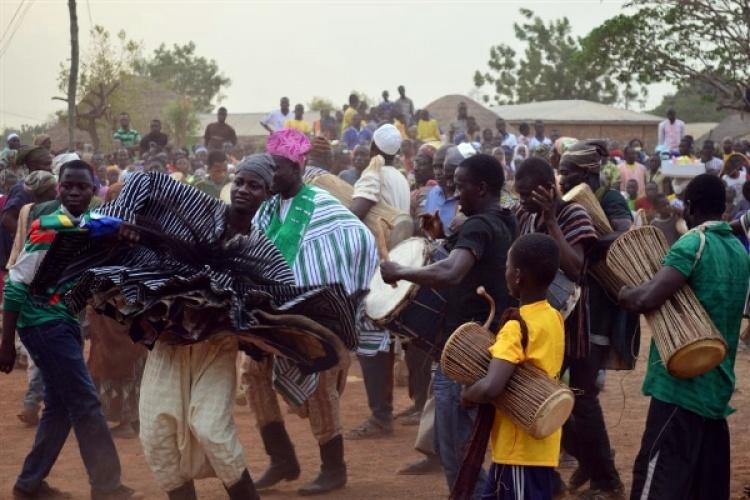
From those suburbs also come the horses, covered in leather and cowries. To see a Waala prince ride is to see history ride. The horse does not forget the way home.
Warriors carry old Dane guns that defended Wa from slave raiders. When they fire, the sky fills with white smoke.
And the music that makes everyone stand comes from the royal drums. Chief among them are the Lonhi, which in the southern part of Ghana are known as Dono.
Two Lonhi are tied together with leather strings. When you squeeze and strike them, they speak. They mimic the human voice.
One Lonhi says “Wa Naa is coming.” Another answers “We have seen him.” At Dumba, the Lonhi do not just beat time, they praise.
They call the names of Naa Momori, Naa Sualih, Wa Naa Seidu and all the royals, one by one. Alongside them are the gungon and the gyil.
It is in that dance that a prince is judged. Dumba has its own dance, the slow, royal Dumba dance. Every prince must dance.
He must bend low, stretch his arms, and move with grace like a vulture circling. He must not rush. The elders watch his feet.
The prince who dances so well in the Dumba dance is admired and respected by all. People point and say, “That is a true son of the skin.“
Women sing his praise. Elders nod. His good dance shows that he has humility, patience and royalty in his blood. As we say, the dance reveals the man, as smoke reveals the fire.
The Kantosi and Fulani add special beauty to this. The Kantosi, also known as Yarsi or Saamunee, are the keepers of rhythm. Their dance is low to the ground.
Knees bend like reeds. Feet shuffle in the dust as if speaking to the earth. They dance in a circle with rattles and small drums.
The Fulani, the Fulbe, are the cattle people. The young men are tall and leap high with their herding sticks. The women dance with small steps, shoulders shaking.
Their songs praise cattle, God and beauty. As the elders say, the man who owns the cow brings milk for all. You find them in Goli, Boli and Jonga where they tend their herds.
Dumba is also grand because important chiefs attend. When the big tree calls, all birds come to rest.
From Upper West come the Wechiau Naa, Dorimon Naa, Busa Naa, Lawra Naa and Nandom Naa. From beyond the region come representatives of the Ya Naa of Dagbon, Mamprugu and Gonja.
Dumba becomes a parliament of royalty. Among the dignitaries, one person is always expected. That is the Wa Central MP.
The current MP, Dr Rashid Hassan Pelpuo, who is also Minister for Labour, Jobs and Employment, is a royal from the Pelpuo gate. He shares blood with the Wa Naa himself.
When he comes, he does not come as a visitor. He comes home. Blood does not forget its house. He must pay homage and link the palace to government.
In the middle of all this colour are the relics that make Waala Dumba special. The sacred white cow is tethered and calm.
The Wa Naa’s staff of authority and his fly whisk made from horse tail are there to chase evil. The royal Gbama drums and the talking Lonhi drums are there.
Each relic is a book of five hundred years. The suburbs know these relics well.
Suuriyiri keeps the drum. Mangu keeps the horses. Sing keeps the guns. The Foroko keep the cloth. The Tendaana keeps the earth.
The Waala say, the pot needs three stones to stand.
But for all the beauty, for all the singing and drumming and musketry and horse riding, the whole festival walks on one leg until the final moment.
As we say, all rivers run to the belly of the big river. All of Dumba runs to the cow.
A hush falls in the palace forecourt. So deep you can hear lizards on the wall. The drumming stops. Horses stand still. Young men pull the cow’s rope tight.
Then Wa Naa Fuseini Seidu Pelpuo IV rises, dressed by the Foroko in splendour. He is old now, but the beard does not tell the age of the heart.
The crowd holds its breath. Paramount chiefs lean forward. The MP stands with his kinsmen. The Tendaana watches with his calabash of earth.
People from Kpaguri, Mangu, Sokpariyiri, Goli, Sing, Kunjiehi, Boli, Jonga and Suuriyiri all stand on tiptoe. This is the proverb come true, the skin is heavy, only the brave can carry it.
Every child knows the meaning. The festival tests the fitness of the chief. If he jumps over the cow without his body or clothes touching it, his life is prolonged.
It shows he has the spiritual and physical strength to rule. Before the jump, the mood is near grief. The people fear losing their overlord.
Then he leaps. One second in the air. One second when the whole history of Wa is in the air with him.
When he lands cleanly, Wa explodes. When the king is well, the town is well. Guns fire.
Lonhi drums talk faster, shouting “Wa Naa has jumped!“. Kantosi drums beat. Chiefs rise to praise him. Women ululate. Young men chant Dumba.
The Tendaana nods, because the earth has accepted the skin again.
And so let it be proclaimed from the high walls of Suuriyiri to the far fields of Boli. From the sacred groves where the Tendaana pours his libation to the inner room where the Foroko tie the royal cloth.
From the deep voice of the Lonhi talking drum to the leap of a dancing prince admired by all. Dumba is heard in all these places.
Dumba is not a mere festival. It is a covenant renewed. It is a kingdom reborn. It is a people refined in the furnace of dust and drum and devotion.
When the Wa Naa soars over the sacred white cow like an eagle clearing the clouds, he carries with him the soul of every suburb and the honour of every ancestor.
In the end, this is the essence of Dumba. The Tendaana brings the earth, the Liman brings the prayer, the Foroko bring the majesty, the Lonhi bring the voice, the prince brings the dance, the Yarsi and Fulani bring the rhythm, and the suburbs bring the people. When the cow is jumped, Wa remembers who she is. One skin, one people, one destiny, still standing, still dancing, still united under the Gbama drum until it speaks again.
 Ishmael Junourgh