
 By Ishmael Junourgh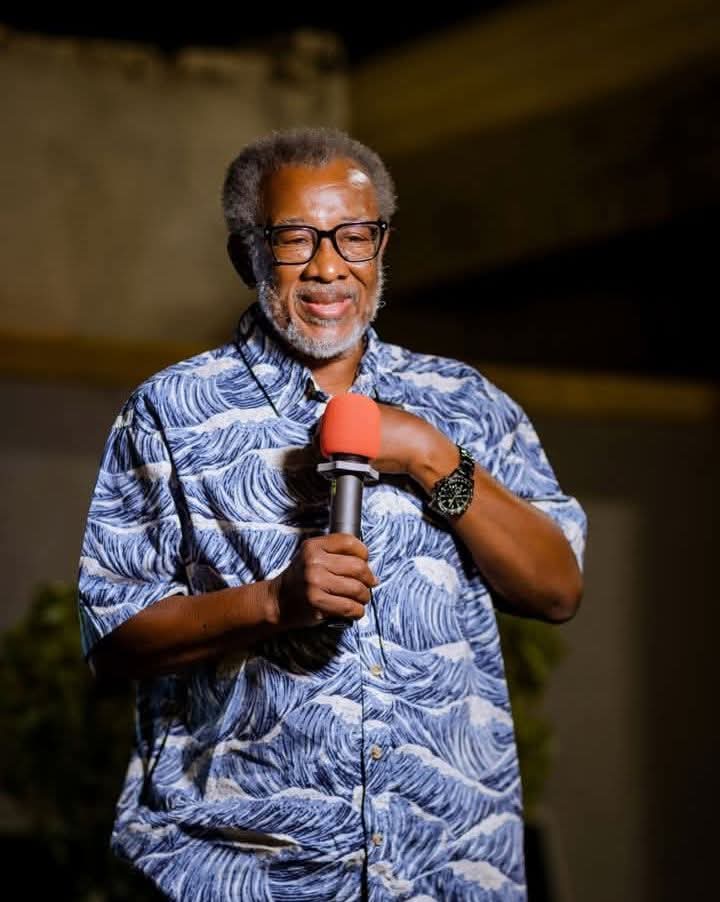
For generations, culture in Africa has often been presented through its most visible expressions: the rhythm of drums, the colours of traditional clothing, the taste of local food, the language spoken at home, festivals, ceremonies and dances.
But what if culture is much more than what can be seen, heard or performed?
What if it is also a science; a body of knowledge capable of explaining how communities govern themselves, manage natural resources, respond to climate change, resolve conflicts and define what constitutes a good life?
That is the intellectual proposition at the heart of Millar Open University, where scholars are challenging conventional approaches to higher education by placing culture at the centre of knowledge production and development.
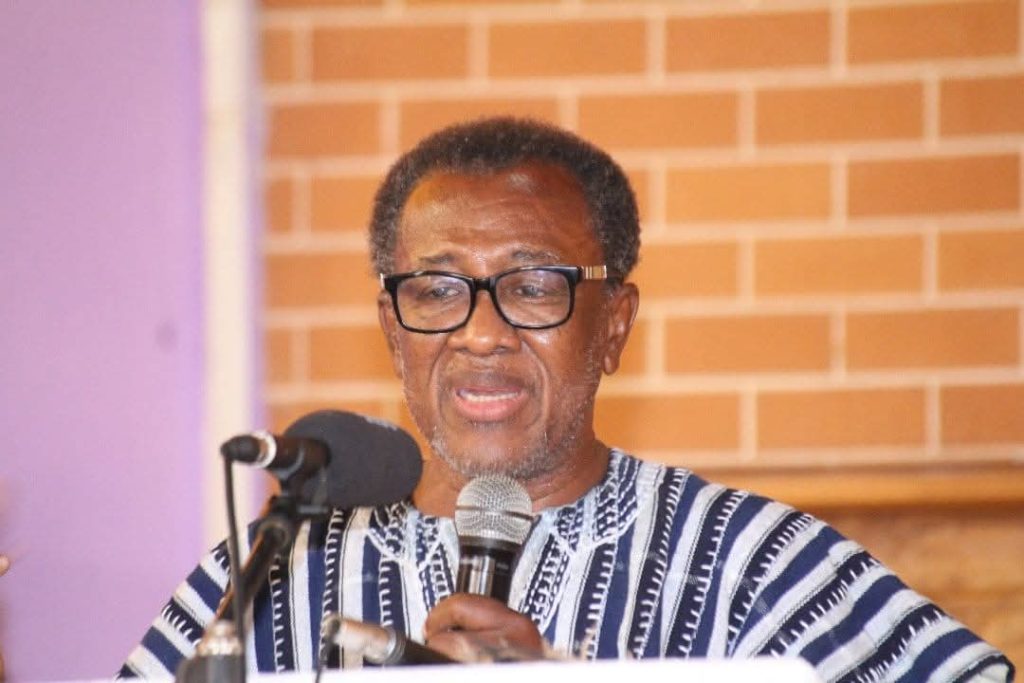
Professor David Millar, one of the university’s leading voices, argues that reducing culture to art and entertainment leaves out one of its most important functions: its ability to organise society and shape how people respond to the challenges around them.
“Our niche was now to contribute to the debate that culture, besides being an art, is even more of a science,” he explained.
For Professor Millar, development itself cannot be separated from culture.
Every intervention; from climate adaptation and healthcare to financial management, governance and environmental protection; takes place within a cultural setting.
The implication is profound: development cannot simply be imported as a package and imposed on communities. It must be understood through the knowledge systems, values and institutions of the people expected to live with it.
When Development Meets Culture
Professor Millar’s argument challenges a familiar hierarchy in global knowledge production, where Western science is frequently treated as universal while indigenous knowledge is classified as tradition, folklore or belief.
Millar Open University’s approach asks a different question: What happens when science itself is examined through culture?
The answer, Professor Millar suggests, is the possibility of a genuinely multicultural conception of science; one in which European, Asian and African societies can contribute their own intellectual traditions to understanding the world.
“Take the English science or the Western science, and unpack it from the cultural perspective,” he said. “Then it makes a justification for us to have sciences; which means multicultural science.”
It is an approach that has increasingly intersected with debates around decolonisation, slavery, reparations and African knowledge systems.
The university sees these issues not as peripheral subjects but as central questions about how knowledge is produced, whose knowledge is considered legitimate and how societies understand their own histories.
Professor Millar believes African universities have an important role to play in that conversation.
He points specifically to African Studies centres at institutions such as the University of Ghana, saying their work is important but often insufficiently visible to the wider Ghanaian public.
For Millar Open University, the ambition is to push such conversations further into mainstream academic and public discourse.
A University Built Around Flexibility
The university’s open model is another part of that experiment.
But unlike the conventional understanding of open universities, where the primary objective is often to enrol very large numbers of students through distance learning, Millar says flexibility is the central philosophy.
Students do not disappear entirely into an online classroom.
Instead, they maintain regular contact with the university.
The final week of every month is reserved for face-to-face engagement, while the remaining weeks involve individual contact, research supervision, assignments and other academic interactions supported heavily by information and communication technology.
The arrangement is particularly significant for people who have jobs, families and other responsibilities that make conventional full-time university education difficult.
On the final week of the month, Professor Millar said, the university changes character.
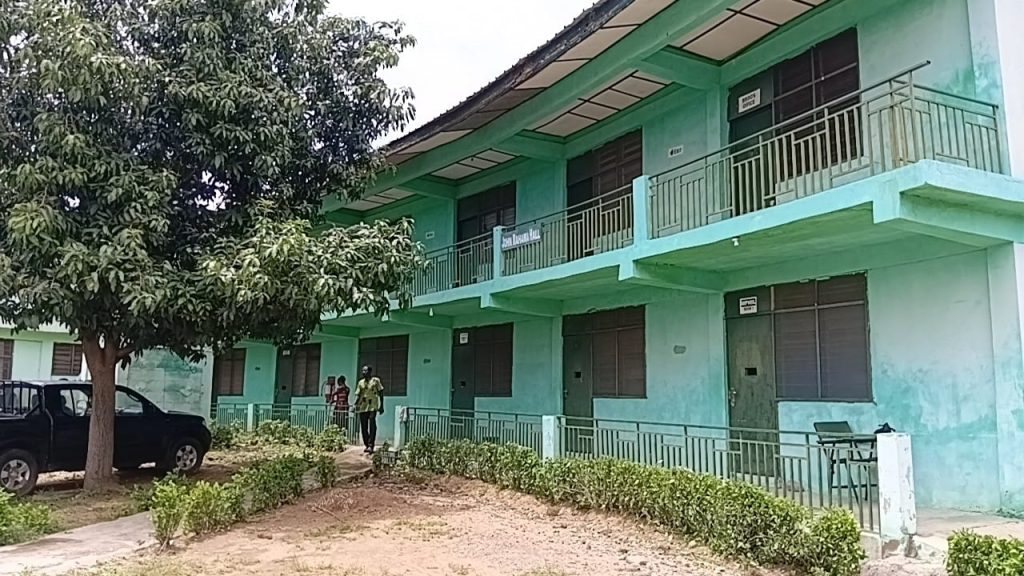
The quiet campus fills with students and vehicles.
That rhythm reflects the university’s target population: people already engaged in professional life who want to return to education without abandoning their work.
About 98 per cent of its PhD students, he said, are already employed before enrolling, while approximately 70 per cent of master’s students are also in employment.
This makes the institution less a gateway for young people entering the labour market and more a platform for professionals seeking to rethink the knowledge they already possess.
Unlearning and Relearning
Perhaps the most distinctive feature of the university’s model is that it does not necessarily see education as the simple acquisition of new technical skills.
Instead, it seeks to change how people think.
Professor Millar describes the process as “unlearning and relearning”.
An accountant, for example, can examine financial management from an indigenous perspective. A medical doctor can investigate non-communicable diseases through a different conceptual framework.
The objective is not to reject conventional knowledge, but to question its assumed universality and create room for other ways of knowing.
That approach gives the university’s postgraduate programmes an unusual character.
Its students are not necessarily people searching for their first professional qualification. Many are already practitioners, managers, academics, public officials and professionals.
Their education becomes a process of intellectual expansion.
And that, Professor Millar argues, can eventually influence institutions far beyond the university.
Millar Open University currently has about 50 PhD students, with graduates and students occupying positions across academia, public administration, politics and other sectors.
The expectation is that these people will carry alternative ways of understanding development into the institutions where decisions are made.
Education Beyond Accra
The university’s physical location also reflects its philosophy.
Situated in Ghana’s eastern corridor, the institution deliberately seeks to maintain a rural orientation, even as it attracts students from urban areas.
Professor Millar says this does not mean excluding people from cities. Rather, it creates an opportunity for people to experience education outside the conventional urban university environment.
That matters in a country where educational opportunities and professional networks remain heavily concentrated around major urban centres.
The open model provides another route.
Students do not have to abandon employment or relocate permanently to pursue postgraduate education.
For those facing financial constraints, the university also operates a flexible payment arrangement.
Students are not required to pay their entire fees upfront, although outstanding fees must be settled before graduation.
The university also provides a limited number of scholarships each semester for needy but academically strong students.
Professor Millar says the institution operates without government support or donor partnerships, making its sustainability dependent largely on tuition.
The Rural Community as a Classroom
The university’s philosophy becomes particularly interesting when it turns towards indigenous communities.
Professor Millar challenges the assumption that development should always be measured through material accumulation.
He questions what it means to describe the economic needs of Northern Ghana, for instance, when communities may measure wellbeing through social relationships, happiness, satisfaction and communal belonging rather than cars, houses or bank balances.
In some communities, he observes, people may live modestly while still considering themselves fulfilled.
That does not mean poverty should be romanticised or development abandoned.
Rather, it raises a deeper question: Whose definition of development are we using?
If development is measured exclusively through property ownership and income, indigenous concepts of wellbeing can easily be dismissed.
But if development includes social cohesion, cultural continuity, environmental stewardship, dignity and happiness, then traditional knowledge suddenly becomes much more relevant to contemporary development debates.
This is where the university’s cultural approach intersects with climate change.
Climate Change Through Indigenous Eyes
One of the strongest examples of the university’s philosophy is the treatment of traditional institutions and sacred landscapes as potential sources of environmental knowledge.
Professor Millar points to the management of shrines and traditional protected areas as examples of how cultural systems can contribute to climate adaptation and environmental management.
For communities that have protected forests, sacred groves, water bodies or particular species through customary rules for generations, environmental conservation is not necessarily a separate “project”.
It can be embedded in culture itself.
This is a critical shift in perspective.
Instead of asking only how modern science can teach communities to adapt to climate change, the question becomes: What can modern science learn from communities that have been adapting to environmental change for generations?
That question resonates far beyond the university.
Across Africa, researchers and policymakers are increasingly confronted with the limits of development models that separate people from the ecosystems on which they depend.
Traditional institutions may offer insights into resource governance, social discipline, conflict prevention and ecological stewardship that formal development programmes sometimes overlook.
Lessons from an Old Film
Interestingly, Professor Millar uses a decades-old film to explain the philosophy.
His favourite teaching material is The Gods Must Be Crazy, particularly its opening sequence involving the Ju/’hoansi people.
A discarded Coca-Cola bottle falls from an aircraft into the community and is initially interpreted as a mysterious gift.
The object becomes useful for multiple purposes, but eventually creates tension within the community.
For Professor Millar, the story is not primarily about comedy.
It is about governance.
It illustrates how a community’s existing system of resource management can be disrupted by an external technology or object; even when that technology appears useful.
The lesson is strikingly relevant to contemporary development.
A new technology is not automatically beneficial simply because it is technologically sophisticated.
Its impact depends on the cultural system into which it is introduced.
That same principle can be applied to development projects, climate interventions and technological innovations across Africa.
A solution that works in one society may produce unintended consequences in another.
Technology Without Losing Human Contact
Millar Open University therefore occupies an interesting space between technology and tradition.
ICT is essential to its teaching model, particularly for research supervision, assignments and communication with students.
Yet the university deliberately avoids becoming entirely virtual.
The monthly face-to-face contact remains central.
This reflects a belief that education is not simply the transfer of information.
It is also about relationships, dialogue, observation and shared experience.
For a university whose central intellectual argument is that culture matters, that distinction is significant.
Culture is lived.
It cannot always be understood through a computer screen.
Accreditation and Academic Networks
The university says it has operated for about 14 years and meets the requirements of Ghana’s national higher education regulatory system.
Its affiliation with the University for Development Studies provides another layer of academic oversight, according to Professor Millar.
The institution has also developed research collaborations with universities and research institutions in Africa and Europe, including partners in Zimbabwe, South Africa and the Netherlands.
These relationships reflect an ambition to place its cultural approach within a wider international intellectual conversation rather than treating it as an isolated Ghanaian experiment.
A Different Measure of Impact
The ultimate test for Millar Open University, however, may not be the number of degrees it awards.
Professor Millar is clear that many of its students are already employed.
The university’s contribution, therefore, is expected to be less about simply creating jobs and more about transforming the way professionals understand their existing responsibilities.
An administrator may approach public policy differently.
A health professional may reconsider the relationship between biomedical knowledge and indigenous understandings of health.
An accountant may rethink financial systems through a cultural lens.
A researcher may begin to see a shrine not simply as a religious site but as an institution with implications for environmental governance.
The ripple effects may be difficult to measure immediately, but they could influence institutions over time.
The Bigger Question
At the heart of Millar Open University’s experiment is a deceptively simple proposition: culture is not merely what people do; it is also knowledge about how people live.
That proposition challenges the tendency to place African culture in museums, festivals and ceremonial spaces while treating development, science and policy as separate domains.
But across Africa, the boundaries have never been so clear.
The farmer’s knowledge of rainfall patterns is cultural.
The community’s rules governing a sacred forest are cultural.
The traditional authority system that mediates disputes over land is cultural.
The collective values that determine how resources are shared are cultural.
And the community’s definition of wellbeing is cultural.
These are not merely colourful traditions sitting outside the modern economy.
They are systems of knowledge.
For Ghana and Africa, the significance of Millar Open University’s philosophy may therefore lie less in its physical campus or its flexible teaching model than in the intellectual question it is asking.
Can Africa build a future in which development does not require Africans to abandon the knowledge systems that helped their communities survive in the first place?
Professor Millar believes the answer begins by taking culture seriously; not merely as art, but as science.
And if that idea gains wider ground, the classroom itself may have to expand.
It may include the university lecture hall, the research laboratory, the farmer’s field, the sacred grove, the shrine, the village meeting place and the accumulated memory of generations.
That would make education not simply a pathway to employment, but a conversation between different ways of knowing. And perhaps that is the most radical lesson of all: development does not always begin by teaching communities something new. Sometimes, it begins by listening carefully to what they already know.