
 By Zakaria Rafique Seinu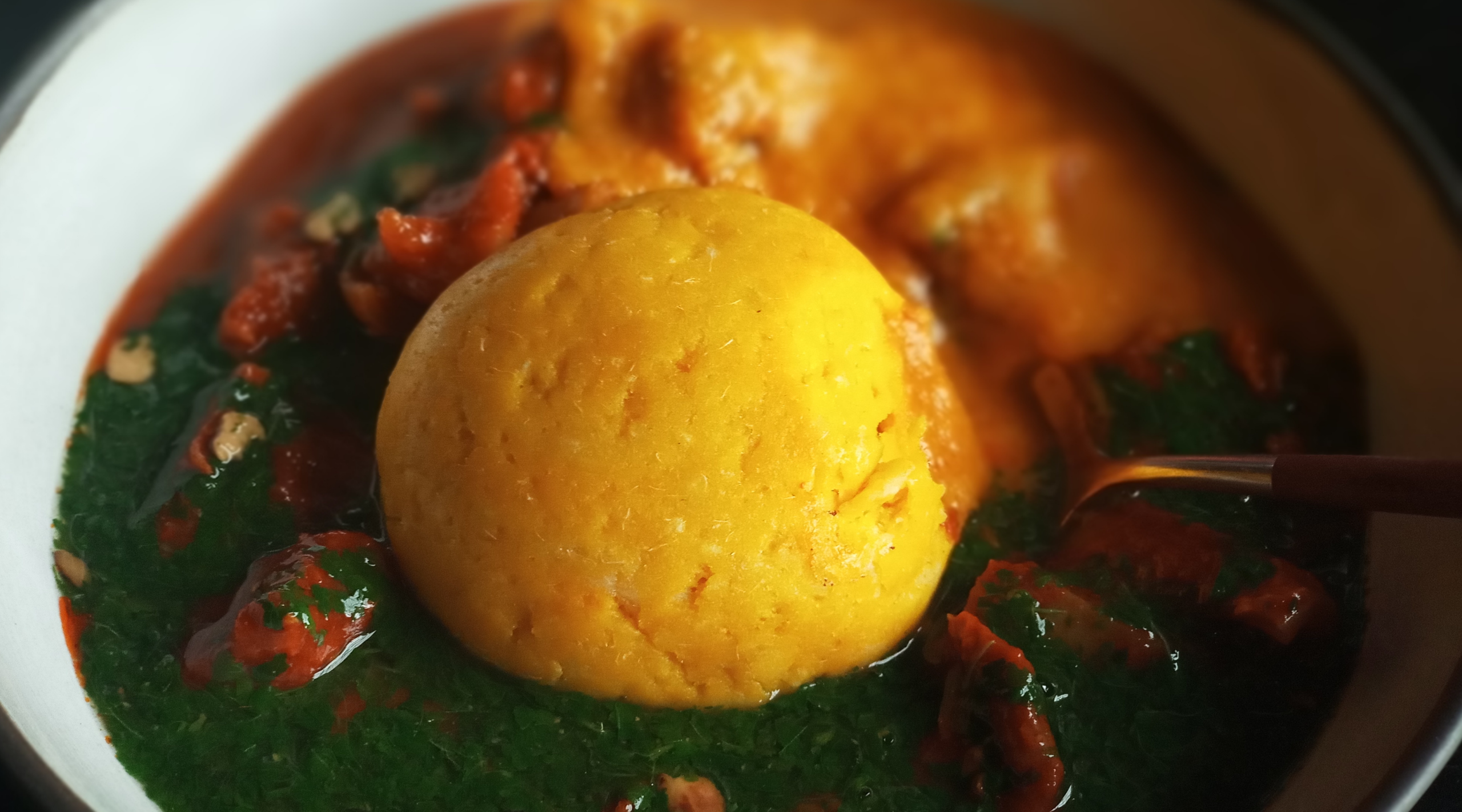
In the dusty kitchens of the Upper West Region, where millet farms stretch to the horizon and mornings start before the sun, one pot sits on almost every hearth: Jorjor. To outsiders it looks like just greens and peanuts, but to the Dagaaba it is food, medicine, history, and community all stirred together. Jorjor is a traditional Dagaaba delicacy made from a mixture of green leafy vegetables cooked in a thick paste of pounded groundnuts. There are no tomatoes and no heavy oils, just vegetables, groundnuts, pepper, onions, dawadawa, and seasoning simmered until the whole thing becomes a rich, dark, nutty stew. Its beauty lies in its simplicity because it was born from the land, made from whatever greens the rains gave and whatever groundnuts the harvest stored.
Dagaaba cooks are flexible, so Jorjor changes with the season, and the greens used tell you what time of year it is without looking at a calendar. The most common leaves are Amaranthus viridis, known locally as alefu or kpakpei, which are soft and quick-cooking with a mild taste and grow easily in home gardens around Wa and Nandom. Then there is Corchorus olitorius, or ayoyo, loved for the slight draw it gives the stew so it clings perfectly to tuo zaafi. Young Hibiscus sabdariffa leaves, called bissap or sobolo leaves, are sometimes added for a little tartness that cuts through the peanuts, while Solanum macrocarpon, the garden egg leaves, bring a bitter-sweet depth in some homes. When times are lean, even young Manihot esculenta leaves, cassava leaves, are pounded and tossed in. The rule in Dagaaba kitchens is simple: if it is green and edible, it can go into Jorjor, and this variety keeps the dish interesting while giving different vitamins with each season.
The cooking starts with the groundnut paste, which is the soul of the dish. Raw groundnuts are lightly roasted, de-skinned, and then pounded in a mortar until smooth. Water is added and the paste is cooked down first until it thickens and the oil begins to separate. While that simmers, the vegetables are washed, chopped, and boiled with a pinch of kanwa, salt petre, to keep them green and tender. Onions and fresh pepper go in for aroma and heat, salt is added to taste, and then comes dawadawa, Parkia biglobosa, called nɛrɛ by the Dagaaba. Dawadawa is not optional if you want real Jorjor. It is a fermented locust bean ball that dissolves into the pot and gives the stew a deep, savory, almost meaty flavor because it is naturally high in glutamates. In years when meat or fish was scarce, dawadawa made the pot taste rich and complete. Beyond flavor, the fermentation creates probiotics and enzymes that elders say settle the stomach and prevent the bloating that can come from eating a lot of greens and heavy tuo zaafi together. It also adds extra plant protein, iron, calcium, and B-vitamins, and its antimicrobial properties help the stew stay good longer in the heat. Once the dawadawa has melted in, the drained greens are added,
everything simmers together until the flavors marry, and the pot is finished with a drizzle of groundnut oil before being served hot.
Nutritionally, Jorjor is a powerhouse disguised as humble food. The groundnuts provide about 25g of protein per 100g, along with healthy monounsaturated fats, vitamin E, folate, magnesium, and phosphorus, which give farmers the energy to last through a day of work. The green vegetables contribute iron and vitamin C, and because pepper is in the pot the vitamin C helps the body absorb that iron, which is important for fighting anemia. You also get vitamin A, vitamin K, folate, fiber for digestion, and antioxidants that fight inflammation. Together the peanuts and greens give protein, fiber, vitamins, and fat in one bowl, and because there is no refined sugar and no gluten, many nutritionists now call dishes like this traditional superfoods.
Culturally, Jorjor is far more than a recipe for the Dagaaba. It is the food of the farm, light but sustaining, eaten at dawn with tuo zaafi because it sits well in the stomach and gives energy without making you sleepy. It is also the food of togetherness, cooked in big pots and shared from a common bowl in the compound, which reinforces kinship and the value of feeding everyone. Because it relies on foraged greens and stored groundnuts, it allowed families to eat well even when money or meat was scarce, and its softness makes it the go-to meal for the sick, nursing mothers, and elders. In every way it teaches Dagaaba values: use what the land gives, waste nothing, and take care of each other.
That is why Dagaabas love it so much. The nutty, earthy flavor is the taste of childhood, and even those living in Accra or abroad will crave it when they think of home. It is filling and honest, not trying to be fancy, and it adapts to whatever you have on hand, which Dagaabas respect as practicality. In a world of jollof and fried rice, a pot of Jorjor says we are Dagaaba and this is ours.
Traditionally Jorjor can be vegetarian, but adding *smoked fish* changes everything. Dagaabas often use herrings, tilapia, or catfish that have been smoked over firewood. The fish is deboned, broken into pieces, and added in the last ten minutes so it flavors the pot without falling apart. The smoke gives an earthy, umami depth that cuts through the richness of the peanuts, while the fish itself adds high-quality animal protein, omega-3 fatty acids, iodine, and vitamin D, which balance the plant protein and support brain and bone health. Before refrigerators, smoked fish was how protein was preserved, so stirring it into Jorjor meant a pot could last two days without spoiling.
Economically it also makes sense, because a small piece can flavor a whole pot for a large family and stretch limited resources. When the lid comes off and that smoky aroma rises, people know the Jorjor is ready. So Jorjor is more than ingredients in a pot. It is a story of resilience. The Dagaaba took three things the land always provided, greens from the farm, groundnuts from the harvest, and nɛrɛ from the shea parklands, and turned them into a dish that feeds the body, connects the community, and carries culture across generations. In a single bowl you taste the rainy season, the rhythm of the mortar and pestle, the smoke from the fish rack, and the sharp, savory scent of dawadawa simmering in the corner. And when the smoked fish goes in, Jorjor stops being just food and becomes a celebration of who the Dagaaba are.
 Ishmael Junourgh