
 By Zakaria Rafique Seinu
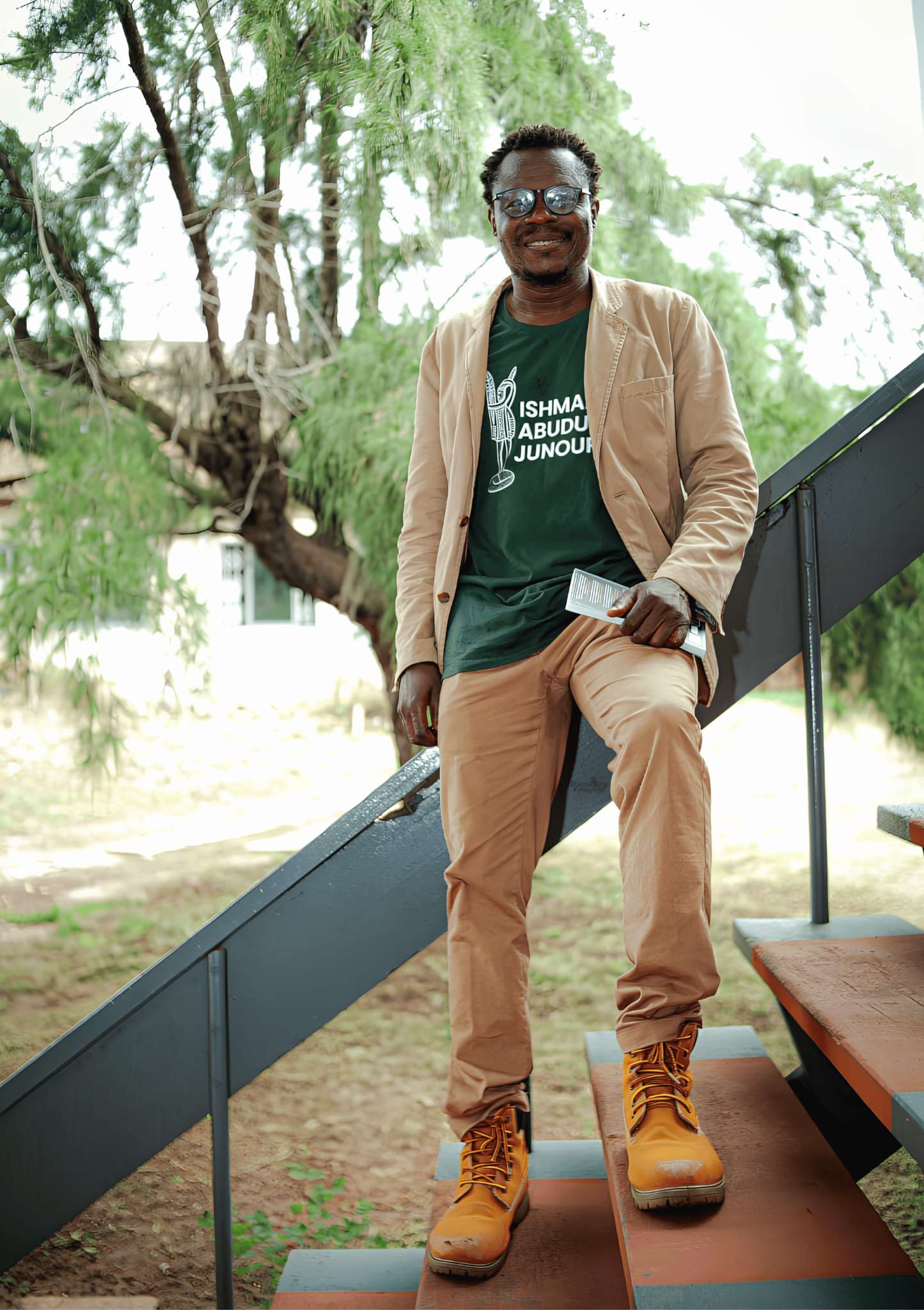
There are writers who write books. And there are writers who sew nations back together.
Ismael A. Junuorgh belongs to the second group.
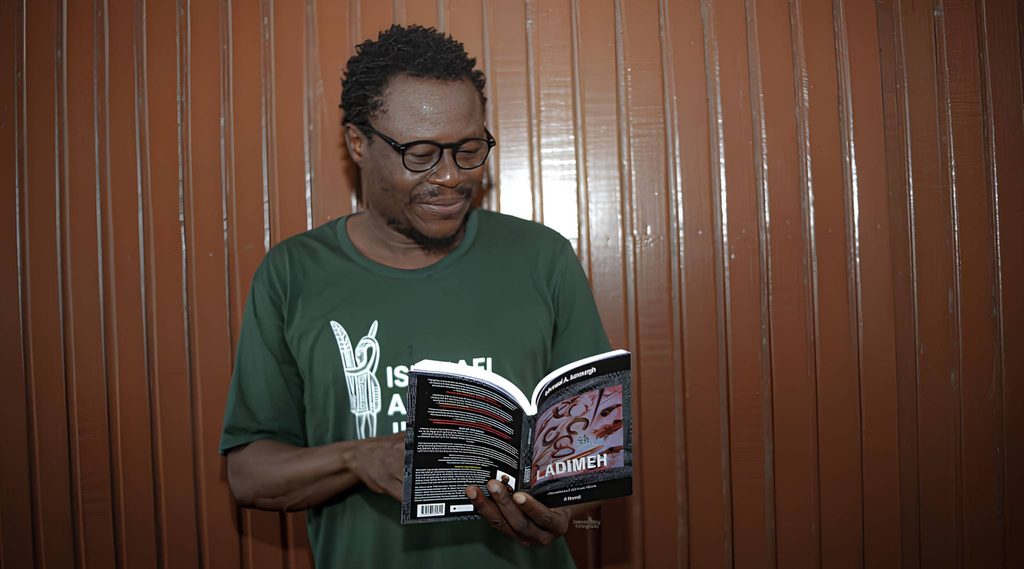
He is an indigenous African writer. He has three novels to his credit: Ladimeh, Ancestral Prologue and Not Forsaken. He is currently working on his fourth novel. But to count his books is to miss his mission. Junuorgh is not counting books. He is counting wounds, and trying to heal them.
According to the writer, his great grandfather left him a needle and a thread before his passing. It was not gold. It was not land. It was not a house. It was a needle and a thread. A small thing. A poor man’s inheritance. But in that small gift, there was a whole philosophy.
A needle pierces. A thread joins. A needle opens a hole so that what was separated can be joined again. That is what Junuorgh does with his pen. He pierces through the silence of African history and he threads story to story, past to present, ancestor to child, village to city, pain to healing.
Many African novels today are written to please the West. They are written in English that tries to sound like London. They are written with African characters who think like Europeans. They are written to win prizes in foreign capitals. Junuorgh refuses that road. He writes to please his ancestors first. He writes for the child in Lawra who has never seen his own story in a book. He writes for the market woman in Wa who knows proverbs but has never been called a philosopher. He writes for the kayayo in Accra who carries other people’s loads but carries her own history on her head.
His style is unique because it is rooted. It does not borrow its soul from elsewhere. It grows from the soil of northern Ghana.
The first root of his style is the traditional African mode of storytelling.
Junuorgh does not write like a Western novelist. A Western novel moves like a train on a straight track: beginning, middle, end. Junuorgh writes like an elder under a baobab tree.
His stories pause. They turn back. They repeat a line for emphasis. They leave the main road to tell a small story inside the big story, and then they return. The narrator is not a cold observer hiding behind the curtain. He is present. He talks to you. He asks you, “Have you heard?” He warns you, “Listen well.” He laughs with you.
In his novels, time is not clock time. Time is memory time. The past is not dead. A grandfather who died fifty years ago can still enter a dream, still give advice, still cause trouble. A woman who was sold into slavery three hundred years ago can still cry in the blood of her descendants. This is how Africans understand the world. The dead are not gone. They are watching. Junuorgh writes that truth without apology.
The second root is African folklore.
Folklore is not decoration in Junuorgh’s work. It is the backbone. He uses folk tales, myths, animal stories, spirit stories and origin stories as truth, not as fantasy.
When he tells a story about the tortoise, he is telling a story about the cunning politician who steals from his own people. When he tells a story about Ananse the spider, he is telling a story about the trickster who survives by wisdom when he has no strength. When he tells a story about a river spirit, he is telling a story about a mother who gives life and can also take it away.
In Ladimeh, folklore becomes a way to explain suffering. The people do not need a textbook from Oxford to understand their pain. They already have a story for it, told by their grandmothers by the fire. Junuorgh honours that. He shows that African folklore is not childish. It is a university without walls.
The third root is the use of indigenous proverbs.
Junuorgh’s pages are full of proverbs. They fall like rain. And like rain, they make things grow.
African proverbs are philosophy in small sentences. When an elder in his novel says, “When the roots are deep, there is no reason to fear the wind,” he is giving you the whole meaning of the novel in one line. When a mother says, “The child who is not embraced by the village will burn it down to feel its warmth,” she is giving you a whole theory of crime, of youth, of rebellion.
He uses Dagaare proverbs, Dagbani proverbs and other northern sayings, and he translates their spirit, not just their words. Through proverbs, he proves that Africans had law, education, morality and wisdom long before the colonial school arrived.
Proverbs also give dignity to his characters. In Junuorgh’s world, wisdom is not only in the university. It is in the farm. It is in the market. Even a poor farmer, a kayayo, or a child on the street can speak a proverb that will silence a professor. That is democracy of wisdom.
The fourth root is the use of chants.
If proverbs are the mind of Junuorgh’s style, chants are its heart and its drum.
His novels contain war chants, funeral chants, birth chants, rain chants and ancestral calls. These chants are not meant to be read silently. They are meant to be heard. They have rhythm. They have repetition. They have a beat that enters your chest.
When you read them, you feel like you are in a gathering. You hear voices rising and falling. You feel the dust on your feet. You feel the drum in your blood.
Chants in his work do three powerful things. First, they connect the living to the dead. When the community chants, the ancestors answer. Second, they give the community power to face danger. A man who chants is not alone. He is carrying his whole village on his tongue. Third, they preserve language. Many of the words in his chants are old words that young people no longer use. By writing them down, Junuorgh is saving them from dying. He is a keeper of words.
The fifth root is his work with African sub culture.
Junuorgh does not write about Africa as one big, flat place. He writes about the small, specific worlds inside Africa.
He writes about the Dagaaba, the Dagomba, the Waala, the market women, the hunters, the blacksmiths, the drummers, the soothsayers, the kayayei. Each group has its own dress, its own food, its own taboos, its own way of greeting, mourning and celebrating.
A blacksmith in his novel does not speak like a chief. A kayayo does not speak like a mallam. A child does not speak like an elder. He respects these differences. He listens to them.
By working with sub culture, he shows that Africa is not one story. Africa is many stories. And to understand Africa, you must go down to the village, to the compound, to the market stall, to the shrine. That is where the real Africa lives, not in the conference halls of Accra or the textbooks of London.
The sixth root is his use of Afro-centric patterns.
Junuorgh writes from the centre, not from the margin.
In many books, Africa is the background. Europe is the centre. The African character must travel to Europe to find himself. The African god is a demon. The African medicine is witchcraft. The African past is darkness waiting for light.
Junuorgh turns that upside down.
In his novels, Africa is the centre. African names are not strange. European names are the strange ones. African gods are not demons. African medicine is knowledge. African history is light.
His patterns are circular, not linear. His stories begin with the ancestor and end with the ancestor. His heroes do not run away to Europe to find themselves. They go back to the village to find themselves. His idea of success is not to become white. It is to become fully African.
This Afro-centric pattern challenges the reader. It forces the African reader to stop apologising for being African. It forces the non-African reader to enter Africa on African terms, to remove his shoes before entering the house.
The seventh root is his anthropological and sociological connection.
Junuorgh writes like a novelist, but he thinks like an anthropologist and a sociologist.
He shows you how marriage works, how land is shared, how chieftaincy works, how a funeral is organised, how a child is named, how a stranger is welcomed, how a thief is punished. He does not just tell you a story. He shows you a whole society breathing.
He also shows how society breaks. How poverty pushes young people to Accra. How migration breaks families. How colonialism broke the family system. How modern politics corrupts traditional leadership. How religion, both Islam and Christianity, sits side by side with traditional belief, sometimes in peace, sometimes in war.
His novels therefore work on two levels. On one level, they are stories to be enjoyed. On another level, they are records to be studied. A hundred years from now, a student can read Junuorgh and understand how northern Ghana lived in this time. That is what the great African writers have always done. They are not just storytellers. They are keepers of the society.
The eighth root is his use of less known African historical narrative on slavery.
Most books on slavery talk about the Atlantic slave trade. The ships. The chains. America. Junuorgh goes deeper and wider, and more painful.
He looks at the less known narratives. The internal slave trade. The raids in northern Ghana. The selling of children for salt, for cloth, for guns. The slave markets in the north. The people who were taken not to America, but to other parts of Africa and to the Arab world.
He tells the stories that were not written in the colonial books. Stories told only by grandmothers in whispers. Stories of villages that disappeared overnight. Stories of mothers who hid their children in yam barns. Stories of young men who were captured while hunting and never returned.
By doing this, he restores a painful but necessary memory. He says slavery was not only what the white man did to us. Slavery was also what we did to ourselves, and what others did to us from the north and the east. To heal, Africa must face all of it. A wound that is not cleaned will never heal, even if you cover it with fine cloth.
The ninth root is the Arab and Islamic influence in northern Ghana.
Northern Ghana cannot be understood without Islam and Arab influence, and Junuorgh understands this better than most.
In his novels, you will see the mallam and the traditional priest sitting in the same compound. You will see Arabic names beside Dagaare names. You will see Islamic prayers beside libation. You will see trade routes that brought not only goods, but ideas, books, and religion from across the Sahara.
He does not present Islam as foreign. He presents it as part of northern identity. For centuries, northern Ghanaians have lived with Islam, traded with Arab merchants, learned Arabic, married across cultures. That influence is in the language, the dress, the food, the architecture, the names, and the way people greet.
But he also shows the tension. The tension between the old way and the new faith. Between the shrine and the mosque. Between the ancestor and the Quran. His characters live in that tension every day, and they must choose, or find a way to hold both without breaking. That tension is the real life of northern Ghana. Junuorgh does not hide it. He honours it.
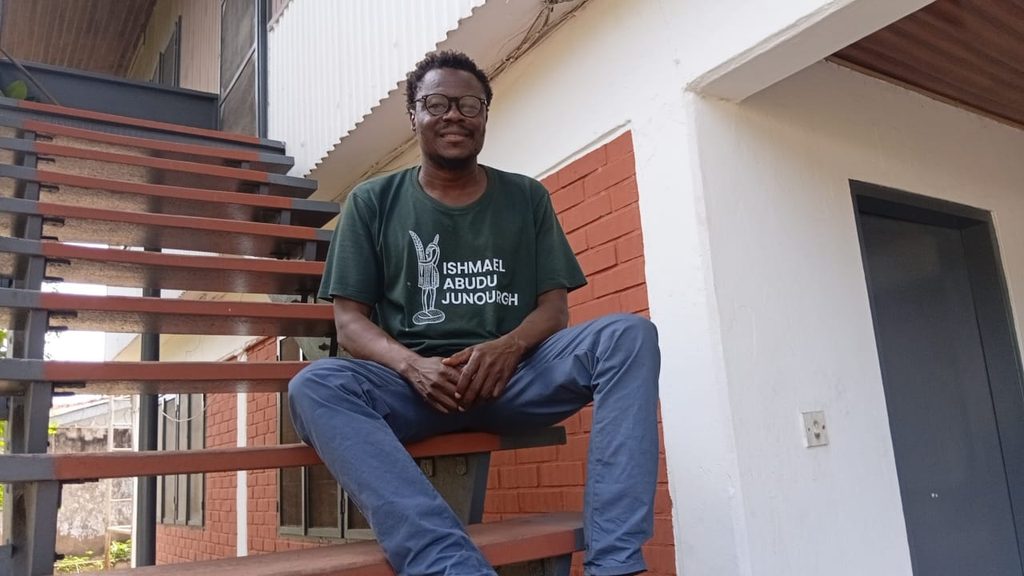
This is why Ismael A. Junuorgh stands apart.
He is not just telling stories. He is sewing. With the needle and thread left to him by his great grandfather, he is sewing together folklore and history, proverb and chant, village and city, past and present, Africa and the world.
His style is African in its roots and universal in its reach. It is old and new at the same time. It is the voice of the village speaking to the world, and the voice of the world listening to the village.
When you finish reading Ladimeh, Ancestral Prologue or Not Forsaken, you do not just close a book. You feel like you have sat under a tree with an elder. You feel like you have heard a chant. You feel like you have been given a needle and a thread yourself.
And you understand that the work is not finished. The sewing must continue.
 Ishmael Junourgh