
 By Ishmael Junourgh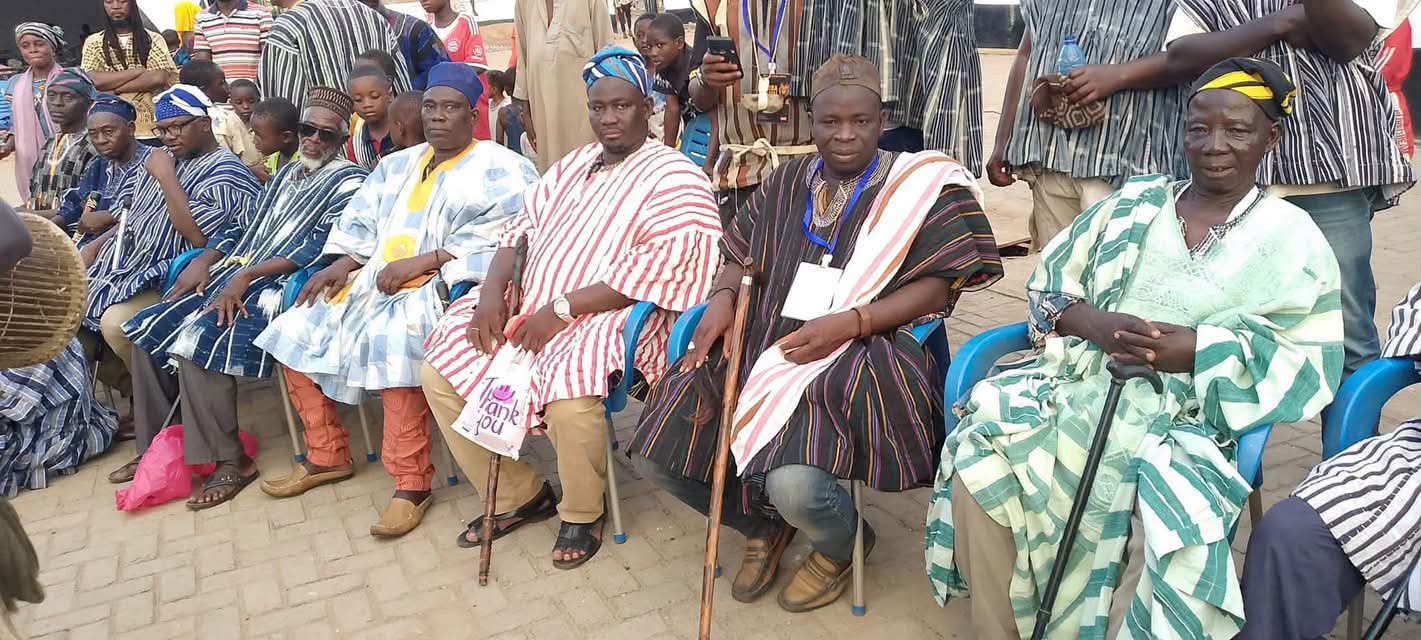
As the Waala Kingdom prepares for another colourful celebration of its historic Dumba festival, attention is turning to the traditions, institutions and rituals that continue to give the festival its distinctive place in the cultural life of the Waala people.
This year’s Waala State Dumba is being led by the Naa Kpaaha Royal Gate, with Duori-Naa Abdulai Bilinto serving as Chairman of the Dumba Organising Committee.
The arrangement reflects a longstanding tradition within the Waala State: every Wa Naa is expected to mobilise his subjects annually for the celebration of Dumba for as long as he occupies the Lion Skin.
To coordinate the festival, an organising committee is constituted from representatives of the four Royal Gates, the Tendaamba and other relevant stakeholders. Leadership of the committee rotates among the four Royal Gates.
For 2026, the responsibility falls on the Naa Kpaaha Royal Gate, with the Duori-Naa leading the committee in carrying out responsibilities delegated by the Overlord of the Waala State, particularly the mobilisation of subjects and colonies for the week-long celebration.
The various Paramount Chiefs, through their divisional and sub-chiefs, mobilise resources and support ahead of the grand celebration, which is held on a date determined by the Wa Naa and his Council.
Traditionally, participation in Dumba is considered a collective responsibility. Contributions may come in the form of money, foodstuffs, personnel or other forms of support. Failure or refusal by a community or colony to participate may therefore require intervention, as it could be interpreted within the traditional system as a sign of weakness or disunity.
Dumba: A Celebration Centred on the Wa Naa’s Palace
One of the defining features of the Waala State Dumba is that no other town or community is traditionally expected to celebrate the Waala State Dumba independently of the Palace of the Overlord.
This centrality of the Wa Naa’s Palace explains why chiefs and subjects from distant colonies, including areas such as Kundungu and Chaasia, travel to Wa to participate in the annual celebration.
According to some oral accounts, the 2026 celebration is the 106th Waala State Dumba.
The festival officially commenced on Tuesday, August 25, 2026, at the forecourt of the Wa Naa’s Palace with Mui Tuuhibu, or the picking of rice, and the ritual picking of Dumba from Fiifamuni, under the supervision of the Overlord of the Waala State, HRM Wa Naa Fuseini Seidu Pelpuo IV.
Mui Tuuhibu — The Picking of Rice
Mui Tuuhibu, literally the picking or cleaning of rice, is among the major activities performed at the Palace on the opening day of Dumba.
Traditionally, when Waali-mui, the local rice, was presented to the Wa Naa for use in feeding patrons during the festival, members of the Palace gathered to remove stones and other unwanted materials from the rice before it was cooked.
The activity carries both practical and symbolic significance.
As the rice is prepared, prayers are offered by the Limaanhi for peace, joy and a successful Dumba celebration. The occasion also provides an opportunity for the Dumba organising committee to account to the Overlord on preparations for the festival.
The Sacred Picking of Dumba from Fiifamuni
The picking of Dumba from Fiifamuni, a sacred royal sanctuary, marks the formal launching of the Dumba celebration.
At Fiifamuni, a group of specially prepared Nabiihi gather and perform a ritual circumambulation until they symbolically “catch” Dumba.
Having done so, they pick it up and proceed through the principal streets of Wa amid drumming, dancing and jubilation, signalling to the people that the festival has officially begun.
Dumba itself is the third month on the Waala calendar. Beyond the festivities, it provides an important traditional period for the Waala Kingdom to reflect on the successes, challenges and losses of the year under review.
The Wa Naa’s Traditional Test
The climax of the five-day celebration carries profound traditional significance.
On the final day, the Wa Naa is traditionally required to demonstrate his fitness and readiness to continue as ruler of the Waala State by performing the ritual act of jumping over a live cow.
The ritual is deeply embedded in the traditional institution of the Wa Naa and forms part of the broader symbolic relationship between leadership, courage, authority and the wellbeing of the kingdom.
The Waala State and Its Traditional Structure
Historically, the Waala State, under the leadership of the Wa Naa, was the only recognised ruling state in what is now the Upper West Region under the 1952 Ordinance No. 2 on Head Chiefs Instrument.
Over time, the traditional state has evolved, with some of its former colonies attaining varying degrees of autonomy while continuing to maintain traditional alliances and relationships with the Waala State.
Today, the Waala State is organised around four Royal Gates, each headed by a Paramount Chief:
1. The Yijiihi
2. The Jonyuohi
3. The Naajeri
4. The Naa Kpaaha
Within these Paramountcies are the Tendaamba, or traditional landlords, who occupy important positions in the traditional governance system.
The Tendaamba play significant roles in safeguarding the land and supporting traditional authorities in maintaining peace, order and stability.
Some notable Tendaamba include Ikuola, Balung, Manyaala and Imuola, among others.
More Than a Festival
Dumba is therefore more than a period of drumming, dancing, food and colourful traditional attire. It is a living expression of Waala identity, traditional authority, collective responsibility and historical memory.
It brings together chiefs, Tendaamba, subjects and communities from across the traditional state, reaffirming relationships that have endured through generations.
So, as the Waala Kingdom celebrates Dumba 2026, lace up your dancing boots, wear your smock or a proudly made-in-Wa outfit, play indigenous music, savour our local foods and join the celebration. Dumba is a celebration of the blessings, heritage, unity and resilience of the Waala Kingdom.