
 By Ishmael Junourgh
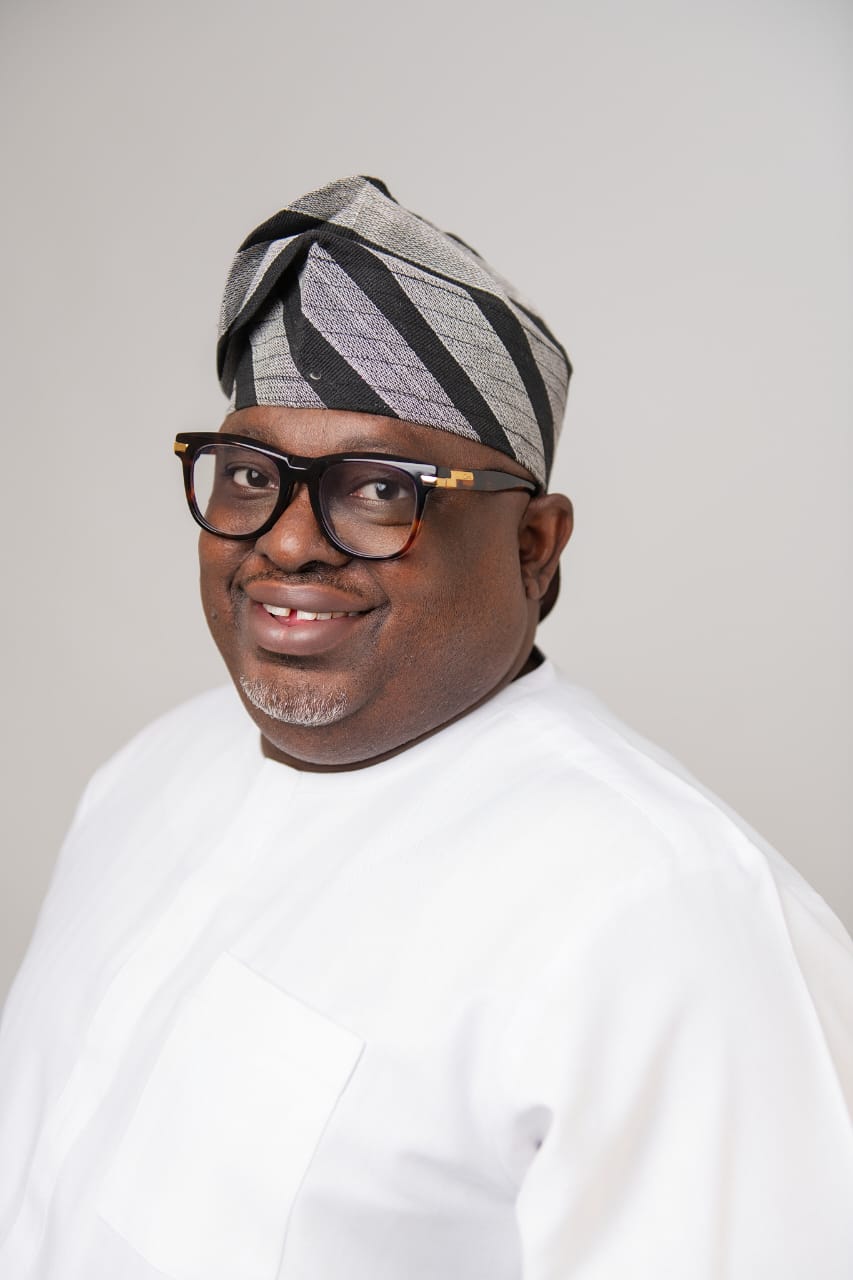
Lawyer Abubakar Mutiu-Rahman
For Lawyer Mutiu, the decision to contest the National Vice Chairmanship of the National Democratic Congress (NDC) is not an overnight ambition. It is, in his own description, the culmination of decades of political experience, service, defeat, resilience and grassroots engagement.
From the party branch to the constituency and regional levels, he says he has deliberately built his political career from the bottom up. He has served as a constituency secretary, regional youth organiser and contested for the position of National Youth Organiser in 2014. Although he lost that contest, he did not retreat from the party.
Instead, he turned the experience, relationships and networks he had accumulated into a new form of service. He subsequently managed the campaign of the current National Youth Organiser in the 2018 and 2022 elections, helping him secure victory on both occasions.
Now, Mutiu believes the time has come to deploy those experiences at the national level.
“When you are a politician, you have to be cautious about your ambition,” he says. “I sincerely think that the experiences I have gathered over the period have now precipitated into a form that will enable me to serve my party very well at the national level if I am given the opportunity.”
A grassroots politician seeking a national platform
His pitch rests heavily on one central claim: he is not a politician who discovered the grassroots only when elections approached. He says his political journey has taken him through virtually every layer of the party’s organisational structure.
“I have served in literally all the levels of the NDC party organisation,” he explains. “From the lowest, which is the branch, to the constituency, as a constituency secretary, to the regional, as the regional youth organiser, and even further contested to become the National Youth Organiser of the party in 2014.”
That experience, he argues, gives him an unusual understanding of the party’s structure and the concerns of its members. It is also the foundation of his argument that he can bridge the gap between the national leadership and the party’s grassroots.
The challenge of translating political power into grassroots opportunity
Having recently engaged constituency executives across the country, the lawyer says he has been refreshing his understanding of the challenges facing the NDC after years in opposition.
One of the most persistent concerns, he says, is the expectation among party faithful that the return of the NDC to government should translate into opportunities for those who have worked for the party. After eight years in opposition, he believes many activists expected the change in government to produce tangible benefits. Yet, he says, dissatisfaction remains particularly strong at the branch and unit-cell levels.
His proposed solution is not simply the creation of more opportunities, but a more deliberate system for ensuring that opportunities reach the party’s base.
“We just need to be intentional, both as a party and as a party establishment, about how we will allocate the opportunities so that everyone can benefit,” he argues.
For him, the situation is particularly significant because of the composition of the current government. He points to what he describes as the unprecedented appointment of many NDC party activists into government positions. That, in his view, should create a stronger relationship between the party and government.
“If the complaints are still all over,” he says, “then it means that we need to put our minds to it and see how we can translate that offer by the President into its intentions.” His answer is therefore simple: intentionality.
Campaigning when the party needed him
He points to several episodes in his political career as evidence of his commitment to the NDC. When the party’s youth wing established a National Youth Campaign Task Force, he served as its coordinator and helped campaign across the country.
But perhaps the episode he considers most significant was his intervention in the Wa Central parliamentary contest in 2020.
He says he took a month away from his professional work to campaign for the NDC’s parliamentary candidate, Rashid Pelpuo, at a time when the outcome was uncertain. His intervention earned him the nickname “the game changer.”
According to him, he worked with Dr Alpha to reconnect the campaign with voters and remind them of the importance of retaining what he described as the NDC’s traditional parliamentary stronghold. The campaign eventually succeeded, with the NDC retaining the Wa Central parliamentary seat.
Beyond election campaigns, he says his support for the party has also been financial and material. He says he has personally supported constituency executives whenever he returns home, regardless of whether an election is underway, and has donated motorcycles to support party activities. For him, however, such contributions are not the centre of his campaign. His strongest asset, he believes, is his relationship with ordinary party members.
“I am not used to being the overall boss”. One of the critical questions facing any candidate for National Vice Chairman is how that person would operate alongside the National Chairman. He does not see working under a chairman as a potential source of conflict.
“I am not even used to working as the overall boss,” he says. “So far, I have not worked as the overall boss, so I don’t see how subordinating should be an issue.”
Rather than presenting the vice chairmanship as a platform for independent power, he describes it as a position from which he can become a useful resource to whoever emerges as National Chairman.
He believes the calibre of candidates contesting the chairmanship means that the next chairman will need people around him who can help translate the leadership’s vision into action. “I know I will be a good resource for that chairman to succeed in his mission and vision.”
That distinction appears central to his campaign: he wants influence without rivalry and advocacy without undermining authority.
The lawyer as an advocate for party reform
his professional background as a lawyer also features prominently in his vision for the position. And that his role as National Vice Chairman would include advocacy on issues affecting party members and institutional reforms within the NDC.
One area he intends to pursue is the welfare of party workers, particularly elected party executives. Another is reform of the party constitution.
He believes former party executives who have served the organisation at branch, constituency and regional levels should retain voting rights in party conferences and congresses.
He contrasts their situation with former government appointees, who, under the party’s current arrangements, retain certain rights after leaving office.
“I have been a branch officer, I have been a constituency secretary, I have been a regional youth organiser,” he says. “But when I exited in 2014, till date, I’ve not had the opportunity to vote in any party conference or congress.” For him, this is an issue of fairness and recognition of institutional service.
Reconnecting national executives with the grassroots
Perhaps the most distinctive element of his platform is his proposal to institutionalise regular visits by national executives to constituencies arguing that the national leadership cannot accurately assess the health of the party simply by meeting regional executives or receiving reports at the national headquarters.
“The complaint is that there’s a complete grassroot neglect,” he says. Abd that his proposal is for national executives to visit constituencies at least once every year. Rather than requiring the entire national executive to travel together, he proposes dividing the executives into groups, assigning them regions and encouraging them to visit constituencies directly.
The purpose, he says, would be more than ceremonial. “When you interact with the constituency executives in their constituencies, then you are able to get the real health of the party.” That information, he believes, would enable national leaders to make better decisions about the party’s preparedness for elections.
“You can determine whether your party is fit enough to win an election or not,” and “when you return to your decision-making table, you’ll be making very informed decisions that will fix your vehicle and make it fit for the purpose of winning elections.”
For a party whose own post-election reflections have repeatedly highlighted grassroots disconnect, Mutiu believes this proposal could help rebuild the bridge between national leadership and the base.
Honesty as a political value, Mutiu does not present himself as a politician who avoids difficult conversations. He identifies honesty as one of his defining personal values. “I will say it as it is,” he says.
He attributes that quality to his upbringing and the influence of his late father, whom he describes as honest and passionate about whatever he did. “My white is my white and my black is my black,” Mutiu says, describing himself as sincere, hardworking and committed to whatever responsibility he undertakes.
Those qualities, he acknowledges, may sometimes create difficulties, but he considers them essential to his political identity.
A campaign built on direct engagement
While some aspirants have launched their campaigns through press conferences and social media, Mutiu has taken a different route travelling to 11 regions to formally declare his intentions and has continued engaging constituency executives directly.
Following the recent election of new constituency executives, he says he has already engaged constituencies in the Upper West and Upper East regions and begun his campaign in Greater Accra. And that for him, the strategy is deliberate. He wants delegates to encounter him directly rather than know him only through campaign materials.
His approach also reflects the central argument of his campaign: political leadership must remain connected to the people who make the party function.
Winning without creating enemies
It must be recalled that he has contested and lost three major NDC elections, and has lost the contest for Regional Secretary of the NDC in the Upper West Region. He also lost his 2014 bid to become National Youth Organiser. He later contested to become the NDC parliamentary candidate for Wa Central and lost again. Yet each defeat, he says, strengthened rather than weakened his commitment to the party.
“Losing an election for me cannot be the reason why I will claw back on my membership of the NDC, or my enthusiasm about the NDC,” he says. That experience now informs his message to delegates. He argues that political parties are ultimately built around people, and that losing candidates should not become permanent casualties of internal elections.
“The food of every political party is human beings,” he says. “The more your human beings, the more likely you will win elections. The lesser your human beings, the less likely you will win elections.” He therefore believes winners have a responsibility to reach out to those who lose.
Having experienced both victory and defeat, he says he understands the emotions associated with each. “If I win, I need to show magnanimity to the people who would have lost,” he says. “Much the same way, some of the defeated comrades need to enjoy the magnanimity of those who would have won, so that we can unite our front and win decisively in the 2028 general elections.”
For delegates deciding who should occupy the National Vice Chairmanship, Lawyer Mutiu’s central proposition is experience. He describes himself as a grassroots politician without geographical or organisational limitations. “When I put on my grassroots jacket, I have no limitation,” he says.
He also points to accessibility as one of his strongest qualities. One of the things that frustrates party activists, he says, is when elected officers stop answering their calls. His promise is different: if he cannot answer a call immediately, he will return it.
He believes his travels across the country have already provided evidence of the relationships he has built. “As I’ve been going around, there have been party activists from the constituency. In fact, there’s no constituency that I will go so far and somebody will not get up and vindicate me,” he says.
Bringing energy, not rivalry
Mutiu is careful not to suggest that the NDC’s national leadership is failing or that his candidacy is designed to correct an incompetent leadership. Instead, he describes himself as a team player who wants to add energy and advocacy to an already experienced national executive structure. “I think that fairly, the NDC executives have always done well,” he says.
His ambition, therefore, is not to replace the strengths of the party’s current leadership but to complement them. “What I’m certain about is that we’ll also bring new energies to the National Executive Committee,” he says.
A campaign he says is keeping its peace
So far, Mutiu says he is satisfied with the tone of the campaign saying candidates have largely avoided personal attacks and direct negative campaigning, and that he has deliberately refrained from mentioning opponents negatively and has not heard his opponents attack him personally.
For a party preparing for another major internal contest ahead of the 2028 general elections, he sees this as encouraging. The bigger objective, in his view, should be to emerge from the internal elections stronger rather than divided. “I can do it, and I will do it for them”
As his campaign gathers momentum, Mutiu’s message to NDC delegates is ultimately a simple one.
He is asking them to look beyond the title and consider the journey behind the candidate: the branch officer, constituency secretary, regional youth organiser, national campaign operative, defeated aspirant, campaign manager, lawyer and grassroots organiser.
His campaign is built on a promise of accessibility, advocacy, institutional reform, grassroots engagement and loyalty to the party regardless of electoral fortunes.
And while he seeks the National Vice Chairmanship, he insists that his ambition is not to become the power behind the chairmanship. It is to become a dependable partner to whoever leads the party.
“The delegates of the National Democratic Congress should believe in Lawyer Mutiu, that I can do it, and I will do it for them.” For a politician who has already lost three major internal contests and remained firmly within the NDC, the current contest represents something more than another election.
 Zakaria Rafique Seinu