
 By Charles Prempeh PhD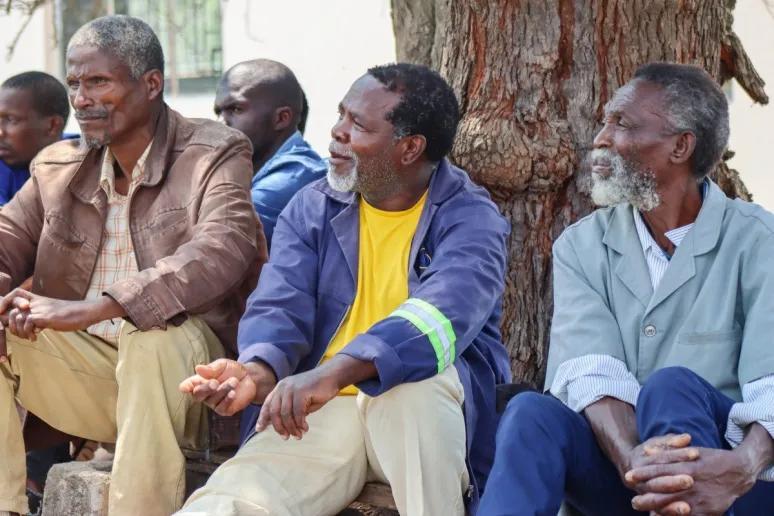
Every day, I sit quietly in my ghetto, which, by now, you should know as the Republic of Baakingota. Geographically, it occupies that curious boundary separating the Maa mo mo mli bii, the people of Alhamdulillai, from our brothers and sisters at Nima. It is at this historic junction that we sit and watch a certain river move progressively, silently, and without seeking anybody’s permission, to join that mighty waterway called the Odawna.
There at Baakingota, we plan everything we intend to do, as well as everything we have wisely decided not to do. We contemplate farauta, invoke the mysteries of gaatanagaatana, and, in the solemn tradition of ancient seers, peer into the destiny of Ghana. We have no crystal ball, but we have something arguably more powerful: time, imagination, and an unshakable confidence in our own interpretations of events.
Naturally, we also discuss matters concerning Ghana. To the uninitiated, we may appear to be sitting at the extreme corner of the world, far removed from the centres of power and the air-conditioned chambers where the fate of the nation is negotiated. But appearances, as we know, can be dangerously deceptive.
It is there at Baakingota that we maintain our own Parliament, with Sarkin Samare as coordinator, entrusted with the sacred responsibility of guiding the matasa through the arduous business of digesting, diagnosing, and prescribing considered answers to the problems of Ghana. Our Parliament has no mace, no Speaker’s chair, and certainly no sitting allowance. Yet, proceedings are robust, interventions are unlimited, and every member reserves the constitutional right to become an authority on any subject at the slightest provocation.
We are intentionally political, but not partisan. We reserve the right to criticise everybody without the inconvenience of belonging to anybody. After all, why should party affiliation interfere with the noble pursuit of finding fault with the government, the opposition, and, where necessary, the entire political establishment?
Let me, however, explain what does not excite us at Baakingota. We have little interest in the technicalities of life, particularly those tiresome questions about how things are to be done. We do not waste our precious hours arguing about whether the 24-hour economy will operate for 24 hours or whether the markets themselves will require a separate constitutional amendment to remain open throughout the night. Neither do we concern ourselves unduly with Agenda 111, Real 111, or whatever numerical miracle the political season has chosen to baptise its latest promises.
Neither do we waste our intellectual resources debating whether the chicken of our collective destiny should be nkoko nkitinkinti, nkoko nketewa, or nkoko mma. These are matters of considerable national importance, but Baakingota has wisely resolved not to allow such poultry affairs to distract us from the higher calling of philosophical speculation. Whether the chicken is small, smaller, or the offspring of another chicken, the fundamental questions remain: who owns the coop, who controls the feed, and who ultimately gets to eat the eggs? These, however, are technical questions, and as I have already explained, Baakingota does not concern itself with such mundane details. We leave the chickens to scratch in the dust while we, the philosophers, soar majestically above the poultry yard in pursuit of eternal truths.
Such matters belong to those who insist on asking practical questions before enjoying the philosophical satisfaction of announcing solutions. At Baakingota, we prefer to establish what a problem means before troubling ourselves with how to solve it. Indeed, there is a certain intellectual freedom in diagnosing a national headache without accepting responsibility for purchasing the paracetamol.
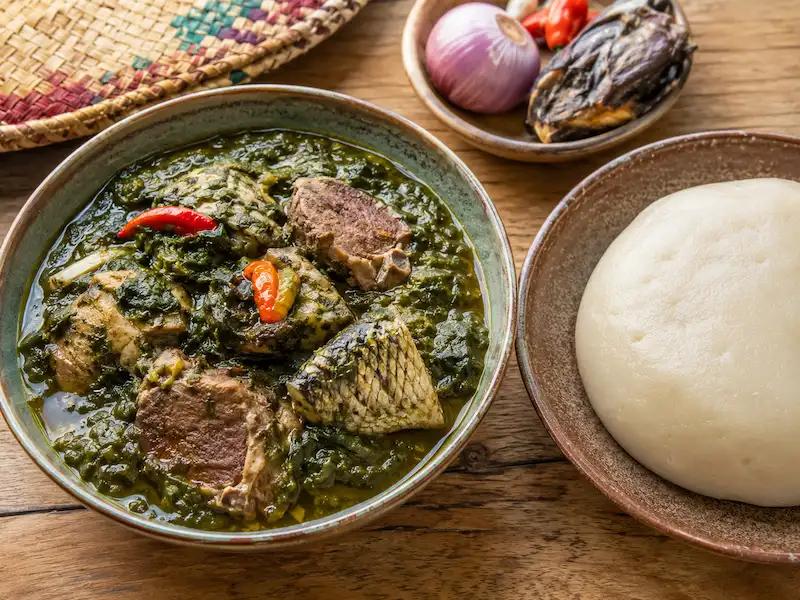
And so, we return to what we do best: the pleasurable business of sharing our Tuo Zaafi with mia kuuka, usually prepared by Aunty Maeli. Her joint occupies a special intersection where four alleys converge, apparently to confer divine wisdom upon the preparation of authentic Zongo Tuo. This is no ordinary culinary enterprise. It is an institution of considerable cultural significance, far removed from the superficial imitations one encounters at Kyempiski.
We call Aunty Maeli’s Tuo Zaafi, with what I can only describe as technonomic alacrity, “Tuo Lungu.”
The name is no accident. Tuo Lungu is an intersection in more than a geographical sense. It is where roads meet, hunger speaks, and human differences are temporarily suspended by the compelling force of a common appetite. At Baakingota, our indebtedness to the instinct and pangs of hunger is perhaps the only debt we acknowledge without first demanding a parliamentary inquiry.
We therefore eat communally. Then, with our stomachs sufficiently persuaded that life is worth continuing, we proceed to the more serious business of verbal intercourse.
It is at this critical conjugation of junctions that we engage in philosophical discussions about life, society, morality, power, and the curious behaviour of human beings who have mistaken public office for private ownership of the republic. As I have already explained, we avoid technical questions. Otherwise, we might as well relocate to some fortified enclave where the people who sit in authority and those who lead us are sufficiently insulated from reality to mistake a press release for progress.
Baakingota, by contrast, is an open space. Here, reality does not need an appointment to gain access. It sits beside us, crosses our paths, interrupts our conversations, and occasionally demands a contribution towards the next bowl of Tuo Zaafi. We see everything, or at least we see enough to sustain several hours of confident commentary.
Above all, we appreciate the beauty of creation. A philosophical mind requires a certain degree of tranquillity, and tranquillity, we have discovered, is best cultivated under trees. We therefore enjoy the pleasures of trees, contemplating the mysteries of existence beneath their generous branches. Unfortunately, the trees are being chopped down with such enthusiasm that one sometimes wonders whether the nation has declared war on shade itself.
As the trees disappear, we are compelled to redirect our attention towards other animated manifestations of creation. We observe them with interest, though always with the necessary precautions. For at Baakingota, the pursuit of wisdom requires not only an open mind but also a guarded heart and a head that has not surrendered its independence to every passing temptation.
We have little patience for those who provoke jealousy through the public display of their disobedience. Such spectacles remind the old guards among us that age, dignity, and the condition of one’s knees must all be considered before engaging in certain acts of supplication. There are postures one may assume in the enthusiasm of youth that become considerably more expensive when one is required to rise again without assistance.
And then, of course, there are creatures whose conduct deserves a special place in our moral philosophy. I speak particularly of the pig. Anyone familiar with the pig’s extraordinary mastery of certain human-like excesses will understand why we do not consider the dog the greatest threat to civilised conduct. Some creatures bark; others grunt; and a few, unfortunately, have acquired the language, clothing, and privileges of respectable society.
But let us not descend too deeply into zoological politics. Baakingota is a place of contemplation, not condemnation, although the distinction can become rather difficult to maintain when the subject of discussion is sufficiently deserving.
Whatever the circumstances, we have the world before us. More remarkably, we have cartographers who have travelled everywhere without ever leaving Baakingota. Their passports have accumulated no stamps, their suitcases have gathered no dust, and their bank accounts have suffered no foreign-exchange transactions. Yet they know Havana; they know the Hollandians; and they know the Malagas.
They can describe with technomimic alacrity distant lands with the authority of men who have not visited them but have personally supervised the movement of their continents. Their geographical knowledge is so extensive that, should the world ever get lost, we would have no hesitation in entrusting its recovery to the Parliament of Baakingota.
This, perhaps, is the secret of our republic. We have discovered that one does not necessarily need to travel to acquire the confidence of a traveller, just as one does not necessarily need to govern to acquire the confidence of a statesman. All that is required is a comfortable seat, a receptive audience, and the ability to speak without allowing the limitations of evidence to interfere with the grandeur of one’s conclusions.
And so, let it be known that life at Baakingota is a life of contentment. We observe everything, comment on nearly everything, and take responsibility for very little beyond ensuring that our Tuo Zaafi is properly prepared and our discussions do not end before the next round of philosophical revelations.
We see the world as it is, or as we have collectively agreed to interpret it. We know its problems, its pretensions, and its perennial promises. We understand its rulers, its critics, its prophets, and its professional custodians of public confusion.
Yet we remain here, at our cherished intersection, enjoying the simple pleasures of life while keeping eternity firmly within view.
For in Baakingota, we have learnt an important lesson: one may not be able to change the world, but one must never allow the world to interrupt a good bowl of Tuo Zaafi or a sufficiently entertaining argument about why the world refuses to change.
And when all has been said, all has been debated, and all the imaginary solutions have been duly adopted by our imaginary Parliament, we return to our seats beneath the remaining trees and wait patiently for another day.
The republic must go on.
Satyagraha
 Ishmael Junourgh