
 By Ishmael Junourgh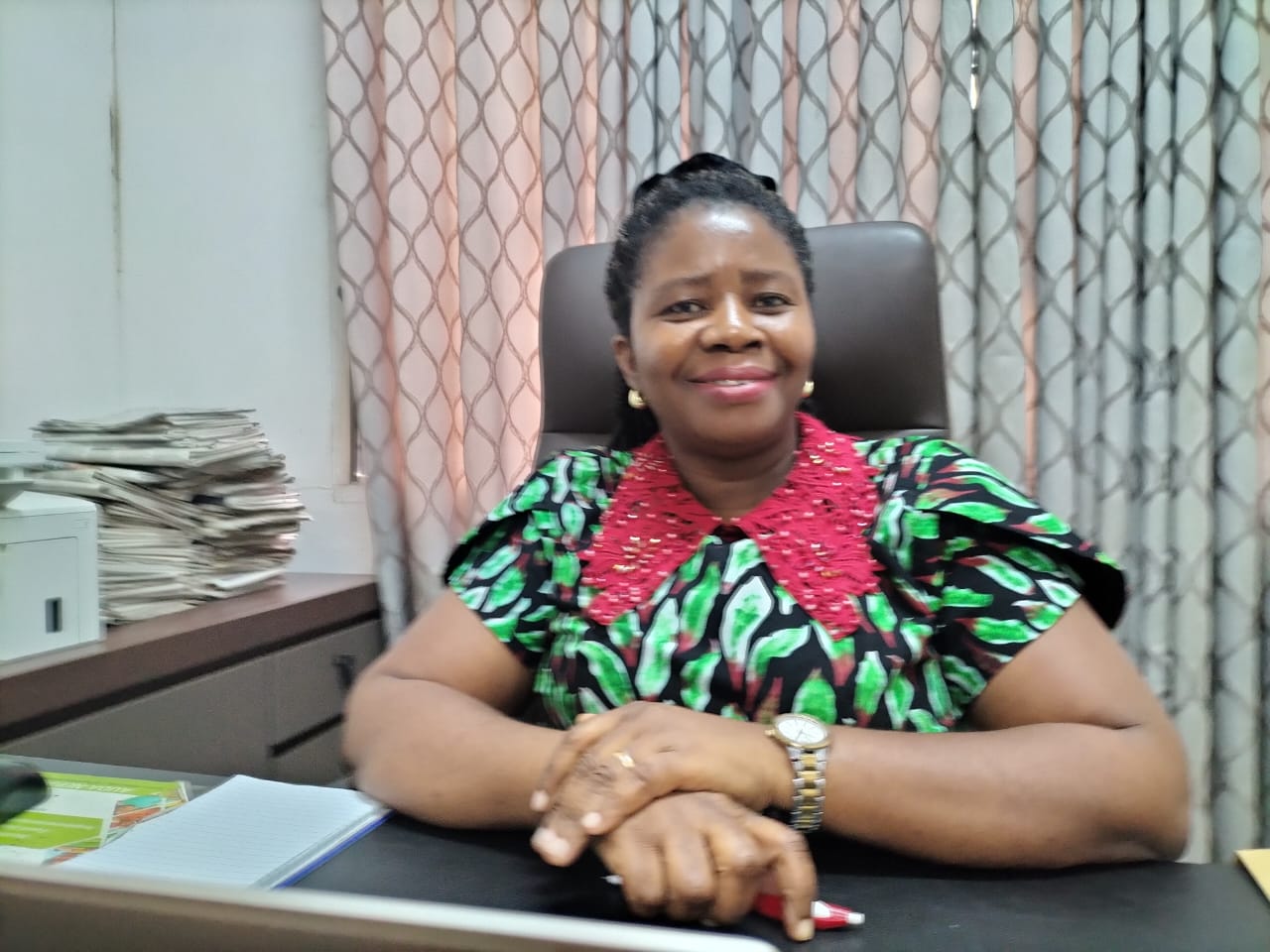
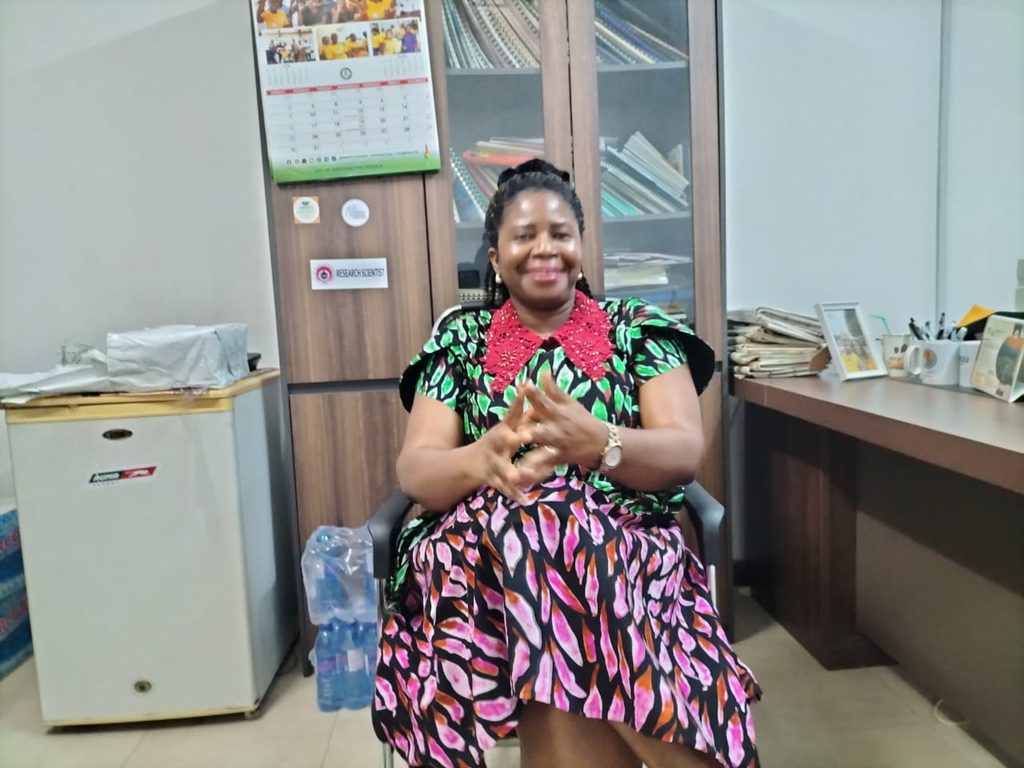
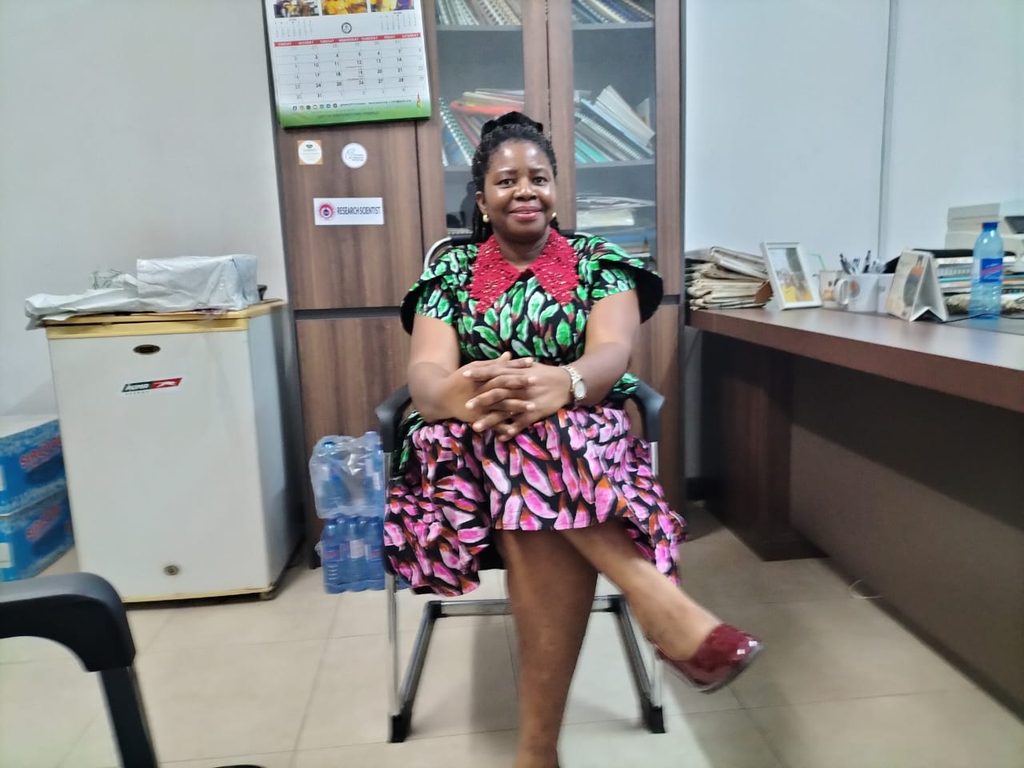
From a gas-lit childhood home in Likpe to becoming Deputy Director of the Science and Technology Policy Research Institute, Dr. Rose Omari’s journey is one of curiosity, resilience, family support and service to Africa.
There are childhood moments that appear ordinary at the time but, years later, become powerful symbols of a life.
For Dr. Rose Omari, one such moment happened when she was only four years old.
Her six-year-old brother was going to Class One, and she wanted to go with him. She cried so much that her parents eventually allowed her to accompany him to school. Although she was only four, her teacher, seeing her eagerness and ability, permitted her to join the class.
It was the beginning of a lifelong relationship with learning.
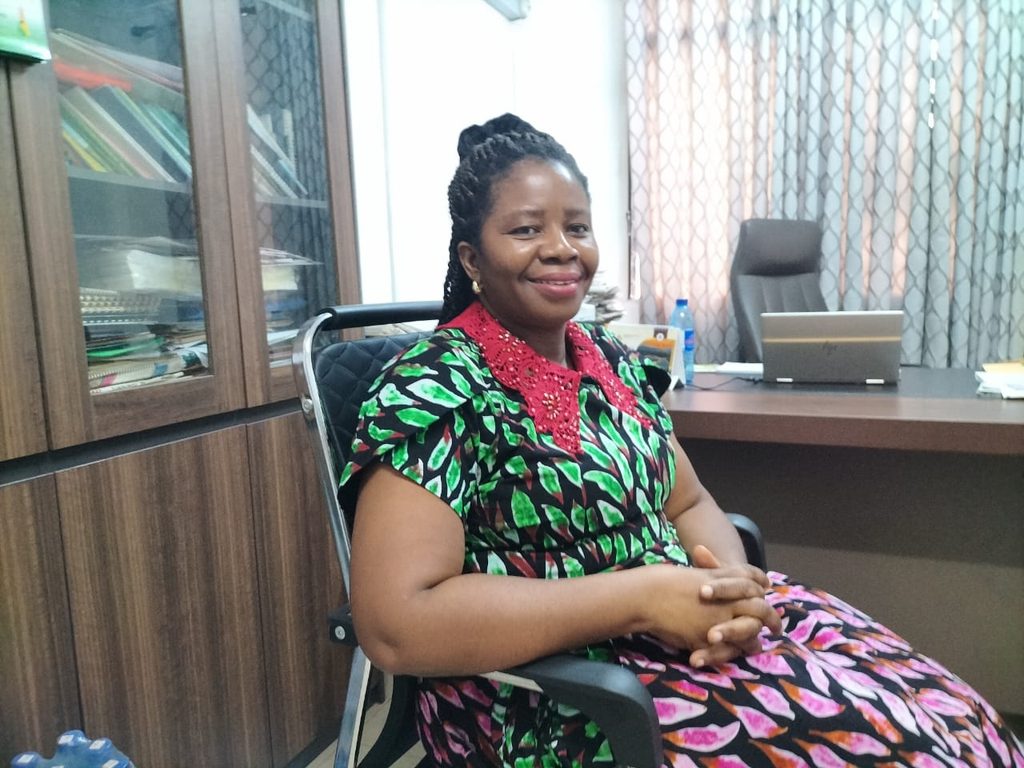
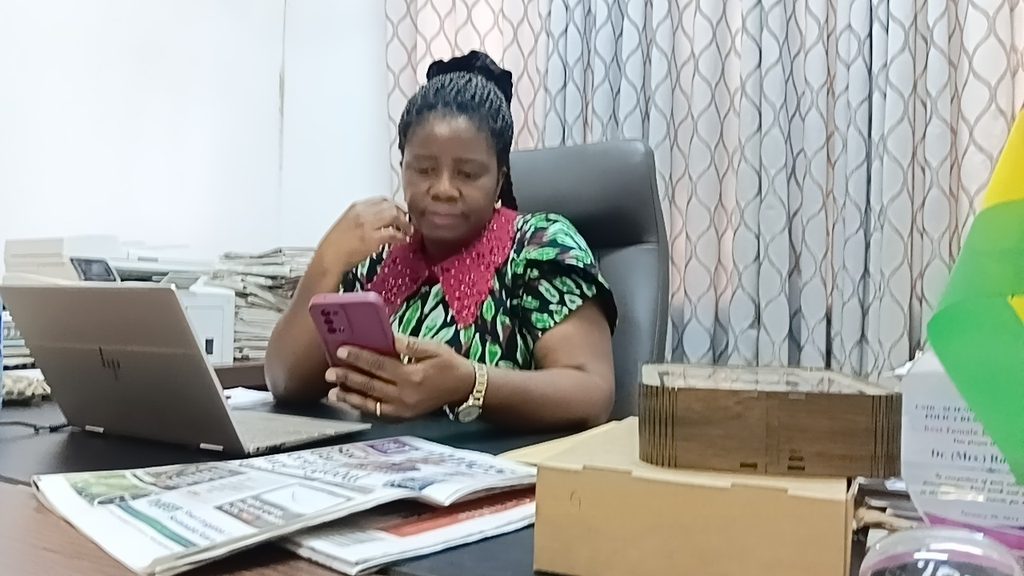
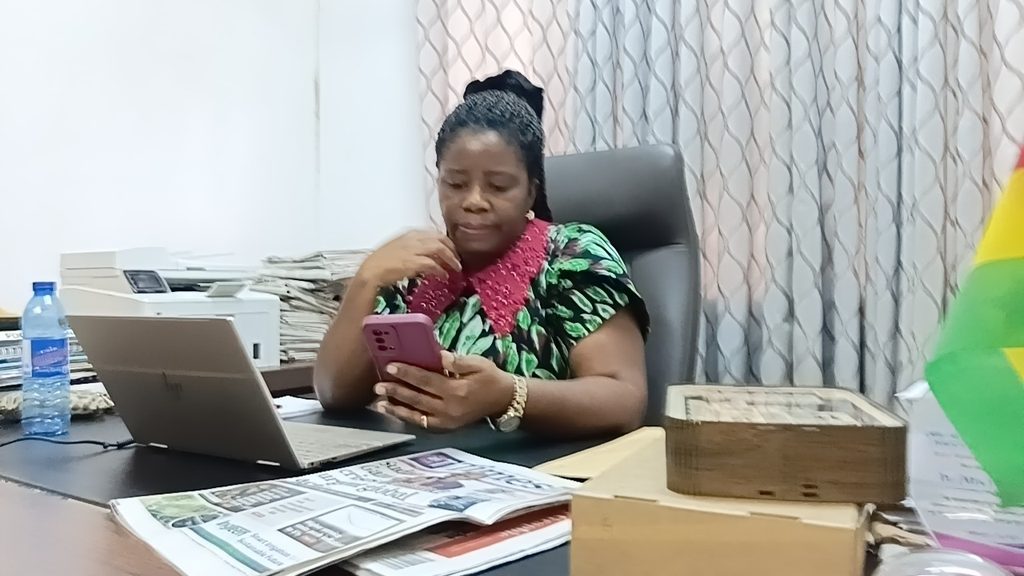
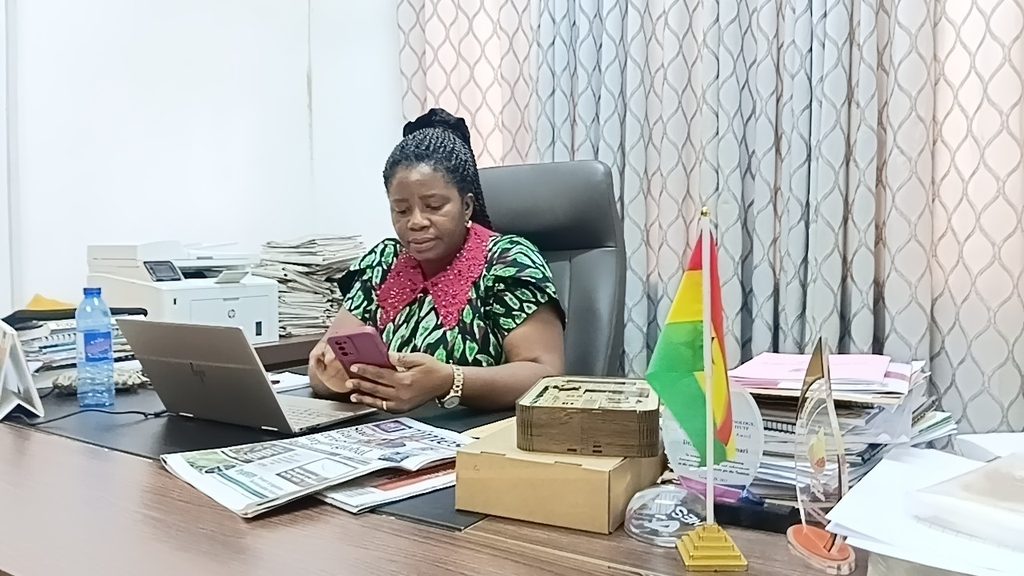
Today, Dr. Rose Omari is the Deputy Director of the Science and Technology Policy Research Institute (STEPRI) under the Council for Scientific and Industrial Research (CSIR). She is a PhD holder who rose through the research ranks to become a Chief Research Scientist, and has contributed significantly to food safety and nutrition at national, continental and global levels.
But behind the titles, policies and international engagements is the story of a girl whose curiosity was nurtured in a home without electricity, where a gas lamp became a source of light for both the household and her education.
A CHILDHOOD IN LIKPE
Dr. Omari was born at Korle Bu Teaching Hospital in Accra to Mr. W.Y. Bonsi and Mrs. Nancy Bonsi. At the time, her parents were living in Kpando, where her father worked as a teacher.
The family subsequently moved to Lolobi before eventually settling in Likpe, their ancestral home.
Likpe, now in the Oti Region but historically part of the Volta Region, is one of the Guan communities of southeastern Ghana. Dr. Omari identifies herself as Guan rather than Ewe.
Likpe, Akpafu, Santrokofi and Lolobi are Guan communities, each with its own language. In Likpe, the language is Sekpele.
Even the traditional greeting remains part of her childhood memory.
The closest expression, she explains, is “Esie”, with the response “Esie o.”
It was in this environment that her early intellectual curiosity began to take shape.
There was, however, no electricity in Likpe when she was growing up. Her father therefore used a gas lamp, and that simple source of light became an important part of the children’s education.
The family home became something of a study centre.
Her father was a chemistry teacher and a university graduate. He bought books for his children and encouraged them to read. He also purchased science activity books and made the children perform some of the activities described in them. He encouraged them to make use of the library.
For Dr. Omari, those experiences were formative.
Her father’s own circumstances also shaped his philosophy of education. He had a disability in one hand and could not easily engage in farming or other forms of manual labour.
As she recalls his message, there was one thing he possessed that could not be taken away: knowledge.
Education, therefore, became the family’s most important investment.
Her mother, Mrs. Nancy Bonsi, was also educated and worked in educational administration before retiring from the EP Education Unit in Ho.
Her father, Mr. W.Y. Bonsi, continued his career in education and eventually retired in 2003 as the Headmaster of Mawuli School.
Together, her parents created an environment in which education was not simply encouraged; it was expected.
FAITH, DISCIPLINE AND CONFIDENCE
The home was also deeply Christian.
The children had morning devotion, and each child was expected to lead the devotion on a particular day.
The practice did more than nurture their faith. It taught them how to read, understand and communicate what they had read. It also gave them confidence.
For a young girl growing up in Likpe, these lessons would become important preparation for a professional life that would eventually require her to speak before researchers, policymakers and international institutions.
“SCIENCE, SCIENCE, SCIENCE”
When asked what she wanted to become as a young person, Dr. Omari’s answer was emphatic.
“Science, science, science.”
She remained in her hometown until she was about 13 before moving on to secondary education.
She attended Kadjebi-Asato Secondary School, where she completed her O-Levels in 1990.
She then proceeded to Mawuli School for sixth-form education from 1990 to 1992.
Afterwards, she undertook national service at Hohoe Government Hospital.
Her interest in science had already been strengthened by an experience that exposed her to possibilities beyond her immediate surroundings.
After her O-Level education, she participated in a STEM clinic for girls.
It was her first major trip to Accra.
She stayed at Accra Academy for about two to three weeks and visited institutions including Korle Bu and the University of Ghana.
The experience opened up new possibilities.
Medicine attracted her.
So did biomedical engineering.
And then she encountered food science.
At the University of Ghana, she saw the equipment and facilities associated with food processing and became fascinated by the possibility of turning scientific knowledge into practical solutions.
She remembers wondering, in effect, how the things people consumed every day were actually produced.
That curiosity would eventually guide her academic and professional path.
WHEN MEDICINE DID NOT WORK OUT
Like many young people, Dr. Omari initially imagined herself becoming a medical doctor.
She applied to study medicine and had strong grades.
She travelled to Accra for the interview.
But she was not selected.
At the time, she had not applied to KNUST because, as she recalls, “all we knew was Legon.”
She was offered admission to study Agriculture, but her heart was still set on food science.
Her interest in health and science continued during her national service.
She spent some time in a pharmacy environment, where she witnessed a heated encounter that left an impression on her. A pharmacist advised her never to go into pharmacy.
She later moved to a laboratory.
There, she encountered a staff member from Likpe who encouraged her to learn as much as possible, particularly because she still hoped to pursue medicine.
Medicine, however, remained elusive.
Food science did not.
A friend from Likpe helped her navigate the university process.
When she was informed that Food Science was highly competitive, she persisted.
She was eventually selected for Biochemistry but insisted that she wanted Food Science.
The result was a combination that would define her career: Biochemistry and Food Science.
“ACADEMIA, ACADEMIA”
After her undergraduate education, another decision had to be made.
For Dr. Omari, the direction was becoming increasingly clear.
“Academia, academia,” she recalls.
She attended a job interview, but her mind was already set on continuing her education.
She proceeded into postgraduate studies and eventually obtained her PhD.
Her career then developed within the research system, taking her steadily into positions of increasing responsibility.
Today, she serves as Deputy Director of the Science and Technology Policy Research Institute (STEPRI), under the Council for Scientific and Industrial Research (CSIR).
Her career progression has included attaining the highest research rank of Chief Research Scientist.
But perhaps more significant than the titles is the reach of her work.
FROM GHANA TO THE CONTINENT AND THE WORLD
Dr. Omari’s professional contributions have extended beyond Ghana.
She has worked at the intersection of science, food safety, nutrition and public policy, contributing to initiatives with national, continental and global significance.
One of the most notable moments in her career came when she became the only African on the team that developed the FAO/WHO Food Safety Risk Communication Handbook.
She was also part of teams that contributed to the development of major continental food safety instruments, including the:
– Food Safety Strategy for Africa;
– Strategy for the Partnership for Aflatoxin Control in Africa;
– ECOWAS Aflatoxin Control Action Plan; and
– Food Safety Strategic Plan for the Africa Centres for Disease Control and Prevention (Africa CDC).
Her work has also taken her into continental advocacy and policy engagement.
She led efforts that contributed to the adoption of biofortification as a strategy for addressing micronutrient deficiencies at the African Union (AU) and AUDA-NEPAD levels.
For a girl who began her educational journey in a village without electricity, the trajectory is remarkable.
But her work has also had a direct impact on Ghanaian policy.
SHAPING GHANA’S FOOD SAFETY POLICY
In Ghana, Dr. Omari coordinated a project that resulted in the development of the National Policy and Technical Regulation for Aflatoxin Control.
The policy was approved by Cabinet and subsequently enacted by Parliament as Legislative Instrument 2428 (LI 2428).
It is currently being implemented through several projects.
More recently, she led a team, serving as national consultant, to develop a costed Food Safety Master Plan for Ghana.
The assignment brought together her scientific background, policy experience and understanding of the country’s food safety challenges.
Her career, therefore, illustrates how scientific research can move beyond laboratories and academic publications to influence public policy and national development.
THE TEACHERS WHO SAW BEYOND THE RESULTS
But Dr. Omari’s journey was not shaped by her parents alone.
Two teachers stand out in her story: Mr. R.C.K. Addom and Mr. Okorwu.
Mr. Addom believed she was brilliant even when her examination results did not necessarily tell the same story.
She had failed the Common Entrance examination twice.
Rather than conclude that she was incapable, he saw something different.
He told her parents that they were wasting her time and helped her secure a late opportunity to enter school.
Mr. Okorwu played another important role.
At one point, her mother considered having her repeat a class because of her age.
But Mr. Okorwu tested her reading ability.
His conclusion was simple: she could read too well to repeat the class.
Those moments may appear small, but they demonstrate the influence teachers can have when they look beyond examination results and recognize potential.
For Dr. Omari, they became part of the foundation upon which her educational journey was built.
A HUSBAND WHO UNDERSTANDS THE WORK
Behind the professional achievements is also a family story.
Dr. Omari is married to an academic who understands the demands of her work.
His support, she says, has been important.
Her professional responsibilities often require her to travel, sometimes for extended periods. When she is away, her husband takes care of the home and the children.
Their children are now young adults and have grown to understand the nature of their mother’s work.
They know that her responsibilities sometimes require her attention and time, and they give her the space she needs.
At times, she also gives them tasks to perform on her behalf.
For Dr. Omari, that support has made it possible to balance professional responsibility with family life.
RAISING INDEPENDENT CHILDREN
Motherhood has also influenced how she thinks about responsibility.
Her goal has been to raise children who can become independent and responsible adults.
She has deliberately instilled in them the values of hard work and independence.
She is particularly passionate about encouraging young girls and women to work hard and acquire skills or means of earning a living.
Her message is practical: women should strive to have something they can depend on in the future.
At home, she has also sought to teach her children humility, respect and compassion.
She raised them not to discriminate against others and to respect people regardless of their background.
Above all, she wanted them to be God-fearing.
THE GAS LAMP AND THE JOURNEY
Looking back, there is a striking symmetry in Dr. Rose Omari’s story.
The child who cried because she wanted to go to school with her older brother eventually became a scientist whose work has influenced food safety and nutrition policy beyond Ghana.
The girl who studied under the light of a gas lamp became a PhD holder and Chief Research Scientist.
The young woman who was not selected to study medicine found another path through biochemistry and food science.
And the curiosity nurtured by parents, teachers and books eventually grew into a career serving communities, Ghana and the African continent.
Her story is not simply about academic success.
It is about what can happen when a child is given books, when parents believe in education, when teachers recognize potential, and when setbacks do not become the final definition of a person’s future.
From Likpe to national policy rooms, from Ghanaian laboratories to continental and global platforms, Dr. Rose Omari’s journey demonstrates the power of sustained learning and purposeful scientific work.
And perhaps it is fitting that her story began with a child who simply wanted to go to school.
A four-year-old girl crying because she wanted to go to Class One with her brother.
She went. And she never stopped learning.
 Zakaria Rafique Seinu